Economic Observer Follow
2026-11-22 09:50

Economic Observer reporter Liu Sixuan
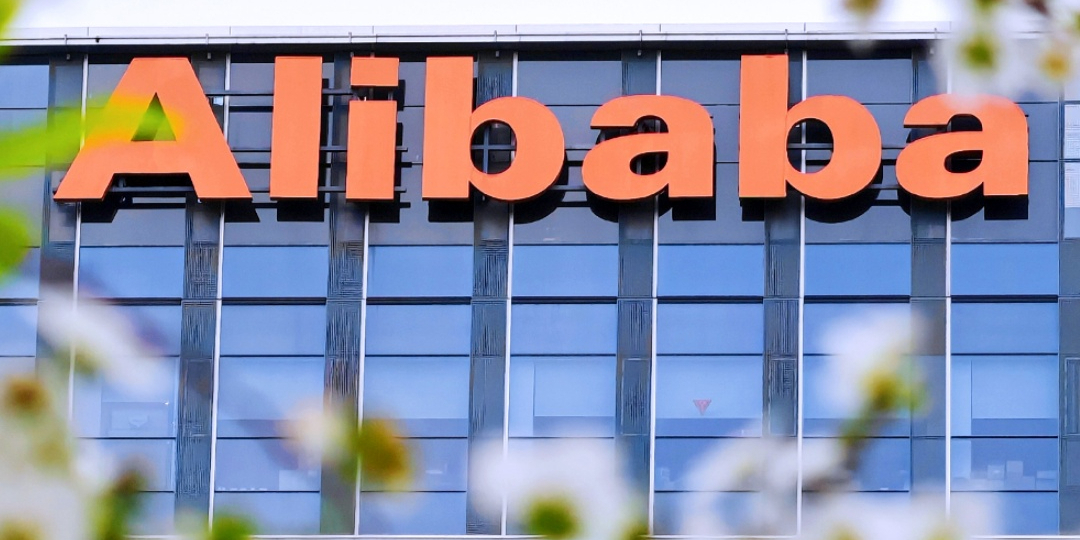
On November 19th, Alibaba Group (09988. HK) released its financial report for the second quarter of fiscal year 2027 (corresponding to the third quarter of 2026).
In the third quarter, Alibaba's revenue was 271.519 billion yuan, a year-on-year increase of 10%; After adjustment, the EBITA (profit indicator) was 32.636 billion yuan, a year-on-year increase of 260%, and the profit margin rebounded from 4% in the same period last year to 12%.
On the day of Alibaba's financial report release, the US Department of Commerce's Bureau of Industry and Security published a notice in the Federal Register titled "Responding to Remote Access to Advanced Semiconductors", which took effect on the same day. During the conference call, Alibaba's director and CEO, Wu Yongming, responded that the new regulations will affect next year's products, and there is significant uncertainty in the global supply chain. However, Alibaba's progress in domestic computing power has exceeded expectations.
Wu Yongming predicts that Alibaba Cloud's revenue growth rate is expected to fall within the range of 30% to 45% in the next fiscal year; By 2028, the growth rate of cloud revenue will return to over 50%.
20 gigawatts target reduction
On August 26th, Alibaba completed a placement to issue 710 million new shares at HKD 112.70 per share, with a total proceeds of HKD 80 billion and a net proceeds of HKD 79.7 billion.
According to the announcement of the Hong Kong Stock Exchange, the proceeds from this round of placement will be invested in full stack AI capabilities, with about 60% used to expand global computing infrastructure, and the remaining about 40% used to accelerate the construction of ultra large scale AI data centers and upgrade traditional cloud infrastructure such as storage, databases, and high-performance networks to support the comprehensive upgrade to Agentic Cloud (Agent Native Cloud) architecture.
On September 22nd, Wu Yongming gave a bigger coordinate at the Yunqi Conference: by 2032, the global data center scale operated by Alibaba Cloud will exceed 20 gigawatts. According to on-site charts, this scale is about 10 times larger than the scale of Alibaba Cloud data centers in 2022.
During the performance conference call, an analyst mentioned a target of 20 gigawatts and asked if it is possible to achieve a positive free cash flow earlier than expected.
Wu Yongming said that there are significant changes in computing power policies in various regions around the world, which will have an impact on data center construction. Preliminary assessments suggest that the long-term goal of 20 gigawatts may be lowered; The overall expenditure plan will also be reduced to a certain extent, but Alibaba will be more proactive in promoting domestic computing power and related supply chains.
The loosening of targets does not mean that Alibaba has slowed down its progress in increasing computing power. This quarter, Alibaba's capital expenditure was 50.477 billion yuan, a year-on-year increase of 60%.
Alibaba's Chief Financial Officer Xu Hong explained in a conference call that the year-on-year increase in capital expenditures was due to the expansion of computing power scale and the rise in prices of a wider range of chip components. In response to the expected increase in customer demand for AI intelligent agents, Alibaba also expanded its CPU computing power in advance. The indicator fell 25.4% month on month, which was attributed to fluctuations in the procurement cycle.
On September 30th, TrendForce, a global high-tech industry research institution, released its forecast for the fourth quarter of 2026 for memory contract prices: general DRAM contract prices will increase by 10% to 15% quarterly, and NAND flash memory contract prices will increase by 15% to 20% quarterly.
On the day of Alibaba's financial report release, TrendForce lowered the price increase of NAND flash memory to 8% to 13%, and predicted that NAND flash memory will experience a supply and demand reversal in 2027, with prices turning from rising to falling. The reason is that Chinese cloud service providers have reduced the total number of enterprise SSD purchase orders due to factors such as GPU supply, inventory adjustments, and token prices, with a reduction greater than the increase of North American manufacturers.
AI application losses narrowed month on month
In the third quarter, Alibaba's AI laboratory and application revenue reached 4.435 billion yuan, a year-on-year increase of 51%. Alibaba stated that it was mainly driven by the rising demand for AI intelligent agent products. The adjusted EBITA of this division was a loss of 10.503 billion yuan, approximately three times the loss of the same period last year, but narrowed by 3.358 billion yuan month on month. This section mainly includes AI applications such as Qianwen Model, Qianwen Office, and Qianwen App.
The financial report attributes the losses to two factors: increased investment in AI capabilities and rising inference costs related to the Qianwen App. The former refers to the training phase, while the latter is closely related to user usage.
On November 16th, three days before the financial report was released, the Qwen4 Max model was unveiled. The total parameters of this model and the previous generation Qwen3.8-Max are both 2.4 trillion, and the activation parameters have decreased by about a quarter, which means that the same task cost is more cost-effective. For the AI laboratory and application sector, which is still losing money, lower activation parameters are particularly important.
In the Work360 evaluation covering 721 segmented fields within Alibaba, the model scored 52.69, an improvement of over 10% compared to the previous generation. Under the same performance, the token consumption of the two levels of inference intensity was 24% and 35% lower than the previous generation, respectively; On the bill, the average cost of a single task decreased from 26.58 yuan to 11.16 yuan, a decrease of 58%, and the API price also decreased accordingly.
But the downward shift of the cost curve does not automatically mean that the loss curve continues to narrow. The cost structure of AI applications is different from that of traditional Internet products. The expansion of user scale and the increase of task complexity will be converted into bills in the form of token consumption.
According to data released by QuestMobile, in September, Qianwen App had 158 million monthly active users, ranking second among AI native apps, while Doubao App had 419 million; Qianwen users open 17.8 times and stay for 22.7 minutes per month, while Doubao data is 72 times and 132.5 minutes respectively.
The idea of Alibaba and major manufacturers at the product level is to shift model capabilities from answering questions to delivering results, in order to support willingness to pay. For enterprises, Alibaba launches Qianwen Office 2.0; Targeting the C-end, leveraging the ecological advantages of the group, Qianwen App provides service capabilities in various service areas such as shopping, local services, travel, and work; In October, Alibaba launched its personal AI assistant "Qianwen Go!" in the Qianwen App, testing the waters of cross platform execution of multi-step tasks and further enriching the AI application matrix.
But how profitable this matrix really is, Alibaba has not yet disclosed the absolute size and renewal rate of paying users, only revealing at the Qianwen Office E-commerce Conference in October that e-commerce users account for 20% of its paying users.
During the conference call, Wu Yongming said, "Two quarters ago, we began to see Alibaba's AI investment cross the commercialization inflection point. ”This turning point is mainly realized by cloud business, rather than the AI laboratory and application division mentioned above.
In the third quarter, Alibaba's AI cloud and computing power services revenue was 60.973 billion yuan, a year-on-year increase of 53%; Adjusted EBITA was 8.838 billion yuan, a year-on-year increase of 121%. Renting computing power and model services to enterprises is still the clearest "AI makes money" narrative on Alibaba Group's books.


 Subscribe