2026-11-12 18:32

The "3-hour cleaning 26 times for the whole family bucket" is the best-selling service product on this year's JD Double Eleven Super Service Day.
Its form is a card: 26 home cleaning visits, enough inventory at once, and verification on a per visit basis. Among those who place orders, some are three bedroom households that require regular deep cleaning, some are elderly households that require regular scrubbing, and some are just calculating one amount - a single cleaning cost of over 100 yuan, with a discount of nearly 50% for hoarding cards. Since it is a household necessity, it is more cost-effective to lock it in advance.
Following the same logic, some people hoarded pet service packages for home feeding, some bought nursing home accompaniment services, and some ordered medical examination packages, clothing and shoe care, and moving and storage services. These things cannot be found on the shelves of the past Double Eleven shopping festival. They used to be called 'services' instead of' goods' - they were only sought after when needed, and the reliability of those who came depended entirely on luck. Sometimes the price also varied from person to person. But this year, they were priced, discounted, and made into a form that can be hoarded, and placed on the shelves of the big promotion along with tissues, laundry detergent, and mobile phones.
In the 18th year of Singles' Day, the attractiveness of the gameplay of full discounts, pre-sales, and staying up late to grab coupons to both consumers and merchants is diminishing marginally. A consumer survey covering 10000 samples shows that about 80% of consumers still believe that big promotions should exist, but "conventional gameplay cannot arouse enthusiasm". The question is not whether to launch a big promotion, but what else can be sold and what should be seen during the promotion. When low prices have become the infrastructure of e-commerce platforms, the new question that big promotion needs to answer is: besides selling mature products cheaper, can it also turn those "things that don't look like products" into products for the first time?
The three aspects of JD's Singles' Day this year are exactly three answers: services have been put on the shelves as commodities for the first time, AI has entered consumption from concept, and offline outlets have shifted from selling terminals to nodes of experience and fulfillment. Putting three things together, they point to the same judgment - the validation field where big promotions are becoming a new form of consumption.
Service has transformed from an 'accessory' to a 'subject matter'
In the past, when it comes to services in the industry, most of them were related to the supporting capabilities extended from physical goods, such as integrated delivery and installation services, and after-sales support services. JD is doing something else this year: household cleaning, elderly care, pet home feeding, physical examination, and car maintenance services have been productized into products that can be priced, hoarded, and participate in major promotions. Services have transformed from "accessories" of goods to "subject matter" of transactions.
But when services become commodities, they cannot be sold simply by being pushed out. The supply side needs to undergo a round of transformation first.
First Of AllService StandardizationOn the one hand, JD.com has broken down over a hundred segmented services into standardized SKUs that can be described, priced, and traced. Each service also specifies core measurement parameters such as service frequency, duration, and equity boundaries, becoming a rich form of product such as single card, multiple card, and hourly billing, making it easy for consumers to match and flexibly purchase according to their needs.
On the other hand, standardizing service processes can stabilize service quality and ensure the stability of services as commodities. The standardization of service processes involves breaking down non-standard labor services that rely on personal experience into trainable, replicable, and verifiable standard service units. For example, JD Housekeeping standardizes five dimensions: personnel and materials, service processes, training management, performance delivery, and after-sales processing; Break down elderly care services into five standardized operational processes, covering food, daily life, bathing assistance, health monitoring, emergency response, psychological care, and home rehabilitation. Nurses are required to establish 64 standardized service projects in 7 major categories upon arrival at home. Nurses must hold a nursing professional title or above, have more than 3 years of clinical experience, and undergo four rounds of verification: real name authentication, qualification authentication, professional title authentication, and service capability authentication. There is a "golden eight step" service process for car maintenance. Moving and polishing involves 60 standard actions in 5 major stages. The core value of standardization is to enable different service providers and scenarios to deliver stable and predictable service quality. Quality stability is another important foundation for the cyclical use and ordering of service products.
Next IsTransformation of transaction formTransform instant consumption services into forms such as secondary cards, exchange coupons, and stored value cards, giving them the attribute of "hoarding". The digital shelf transformation enables services to be searched, recommended, ordered, and evaluated.
Going forward, it'sTrust AssuranceJD.com has launched the "333 Plan", targeting the three major pain points of hidden charges, uneven standards, and lack of after-sales service. It releases the three major standards of price transparency, service standardization, and after-sales guarantee, and releases the three major commitments of "no transparency, no standardization, and no responsibility".
The foundation that supports all of this isProfessionalization Of PeopleJD has established the world's largest blue collar training system, with a total self training base area of over 500000 square meters and a cumulative training of over one million blue collar workers. Among them, JD Home Economics has carried out school enterprise cooperation with colleges and universities, participated in the compilation of Beijing's special vocational ability assessment standards, and transformed JD standards into industry standards.
The market has verified the feasibility of this renovation through orders. JD 11.11 saw a year-on-year increase of over 550% in the transaction volume of household multiple card cleaning services, a 46 fold increase in pet room hair removal services, and a strong demand for home appliance cleaning services due to seasonal changes and year-end cleaning nodes. Among them, range hood cleaning increased by over 250% year-on-year, and refrigerator cleaning increased by nearly 6 times year-on-year. JD's moving services have expanded to 12 cities across the country, with orders increasing by nearly 300% year-on-year. The order volume of JD's car maintenance services increased by 167% year-on-year, and the order volume of second round on-site maintenance services increased by over 140% year-on-year. The installation service orders for newly upgraded charging stations have increased by nearly 100%. Health services continue to heat up, with the number of JD physical examination users increasing by 300% year-on-year, JD medical beauty service transaction volume increasing by 3.6 times year-on-year, and hospital home testing service orders increasing by 6 times year-on-year.
Behind these numbers is a group of people who were not previously considered "commodity producers". Hanti, a post-2000 young man from Xinjiang, became a home-based elderly care caregiver for JD Home Economics after graduating with a major in elderly care, specializing in bath assistance services. In one year, he served 300 elderly people and provided home services to the same elderly person 36 times. The elderly person specially wrote letters and poems to express their gratitude. Chen Jingyi, a post-90s elderly care trainer, and less than 10 out of over 200 graduates in the same class remain in the elderly care industry. She stayed behind the scenes to polish the SOP, breaking down home-based elderly care services into replicable and trainable actions. The foundation of service commodification is not traffic, but the professionalization and specialization of people. Without these people, that 26 times cleaning card is just a piece of paper.
JD.com is one of the few platforms in the industry that can turn services into "service goods", not because of traffic, but because of its standardized transformation ability on the supply side. The macro background that the growth rate of service consumption is faster than that of commodity consumption is a footnote, but the growth rate will not automatically become a large increment. The missing link in the middle is the transformation of the supply form.
AI goes from concept to consumption
AI is very popular, but the real question is: after investing so much money, has it actually been implemented? Can it be turned into consumption?
The answer given on this year's Singles' Day is more specific than in previous years - AI is no longer just concept videos at press conferences and marketing labels on product pages, but has become a real and tradable consumer product.
In terms of hardware, AI products have truly upgraded. AI glasses, AI headphones, and AI cameras are not "old things labeled with AI", but new scenes have grown by incorporating model capabilities into wearable forms. JD's 11.11 full cycle saw a year-on-year increase of over 100% in the transaction volume of AI trend products such as AIPC, AI workstations, AI cameras, AI glasses, and AI recording equipment.
It is worth noting that computing power was first priced and sold as a consumer good. During the entire period of JD.com 11.11, the search volume for "Token" increased by more than 13 times compared to the previous period, and the sales volume of JD platform's large model Token package increased by more than 10 times compared to the previous period. The significance of this matter lies not in the transaction volume, but in the fact that the supply side has pulled the technology narrative originally aimed at enterprises into the context of mass consumption - tokens, like tissues and laundry detergent, have become something that can be ordered.
The deeper value of AI is to become an "incubator" for new categories. JD.com relies on consumer data and AI capabilities to identify segmented scenarios where "demand exists but supply is lacking", such as real-time recording of posture and speed during skiing, and the need to generate subtitles and transcripts during live broadcasts or interviews. These demands are scattered among niche groups and traditional manufacturers cannot see or are not worth doing. JD.com provides feedback on demand to upstream manufacturers, uses incubation mechanisms such as Aidol to promote products, and then puts them on the shelves of Double Eleven for market validation. During the first half of JD's Singles' Day, the transaction volume of over 50 new products, represented by AI skiing sensors, AI work handheld devices, AI keyboards, AI printers, and other products, increased by over 130% month on month.

The three tub washing machine is a reference that has already been run through. The Leader brand under Haier exclusively launched a three drum lazy washing machine on JD.com, with a "one large, two small" three drum design, accurately solving the pain points of not wanting to mix and wash underwear and socks, and the tedious hand washing process. On the first day of pre-sale on JD.com in March 2025, 87000 people made reservations, and the sales volume exceeded 80000 units within five days of pre-sale; After its official release in April, the sales volume exceeded 10000 in the first 48 minutes and 100 million in the first 16 hours; By November, the cumulative sales volume of JD platform exceeded 200000 units, with over 300000 units sold across the entire network, ranking first in the sales volume of the washing machine category in the region. A washing machine that started from the "attention to detail of a few people" has grown into a recognized new product category in the industry in less than a year.
AI is still playing a role in promoting a wider range of areas. During the Double Eleven period, hardware products equipped with JoyInside have seen an increase in daily conversation frequency, effective interaction growth, and expanded application scenarios. JoyInside also offers free access and invests 1 billion yuan to build an AI product ecosystem. In addition, there are AI doctor "Dawei", AI nutritionist, AI pharmacist and other "AI Jingyi" intelligent agent clusters, as well as self owned AI service products such as AI car butler. In the full cycle battle report of JD 11.11, there are several vivid scenes, such as JD Health AI doctor "Dawei" helping 36 year old Ms. Li "translate" the physical examination report, and JD Auto AI Car Manager helping Ms. Zhao diagnose the problem of the fault light suddenly appearing on the dashboard. Continuous iteration without model capability results in a lack of support for front-end incubation and sales.
Offline stores have transformed from "sales terminals" to "infrastructure for experience and fulfillment"
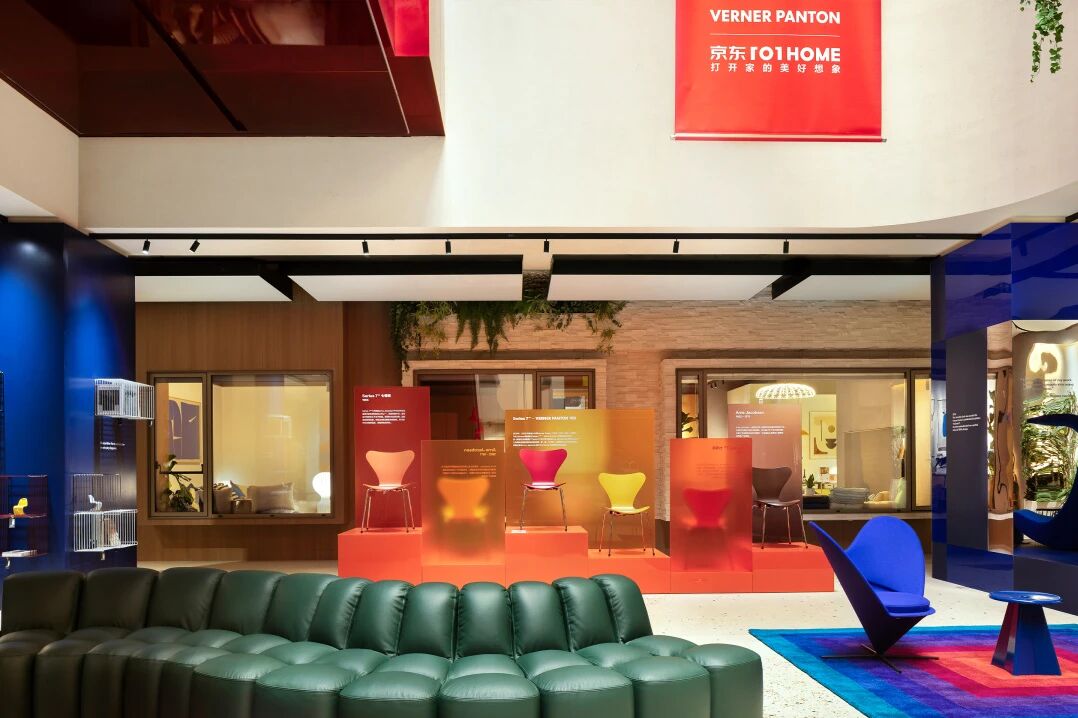
Against the backdrop of the industry's general contraction of offline stores, JD.com has 7472 offline new stores participating in the Double Eleven promotion for the first time this year. From its opening to 18:00 on October 30th, over 200000 people have checked in at JD 101HOME, the world's first store. On November 11th, the passenger flow of Suqian Jingdong Tiandi has exceeded 380000. The first half of the new stores participating in JD 11.11, including JD MALL, JD Electric City Flagship Store, and JD Home Appliance Store, saw a cumulative customer flow of over 6.2 million.
The logic of counter trend expansion requires finding answers from the consumer end. Consumers' demands for shopping scenarios are becoming increasingly specific: for example, daily restocking needs to be close to home, temporary needs need to be delivered immediately, purchasing home appliances and appliances needs to be experienced first and then obtain a complete solution, buying mobile phones needs to be easily applied with film and activated, and professional personnel are required for car maintenance, health and other consumption needs to be present for service. Different needs correspond to different scenarios, and a single online platform or offline store can no longer meet all of them. JD expands and creates offline formats that cater to different needs, essentially placing stores in the closest places to users, so that each type of demand can find corresponding scenarios to undertake.
As a result, the functions of offline stores have undergone a triple extension. The first priority is to experience the exhibition hall. AI glasses need to be tried on, chess robots need to be tested, and large household appliances need to be measured based on size. These high decision-making cost categories' experiential needs cannot be replaced online. The second is the living proposal space. 101HOME targets a certain group of people and presents a scenario based combination of multiple spaces and categories, such as IKEA model rooms, to meet the needs of "what kind of lifestyle do I want". It is no longer just displaying goods, but providing life proposals. The third level is professional service outlets. 3C stores provide film application, data guidance, and simple maintenance services; JD car maintenance stores provide car maintenance services; Seven fresh and discount supermarkets meet the high-frequency consumption needs of the community; JD.com connects these dispersed nodes together, enabling stores to have experience, service, and instant fulfillment capabilities simultaneously.
This means that the relationship between online and offline is no longer a "mutual diversion", but two necessary links of the same consumption. Consumers experience offline and complete purchases online; Online hoarding of service cards and offline store delivery. In the era of "strong supply and weak demand", offline stores are responsible for helping consumers screen out the right products from massive supply and completing the function of service landing. For example, JD Auto Care has over 4000 stores covering more than 1200 districts and counties. These stores are not sales terminals, but the infrastructure for service fulfillment.
The online and offline linkage has been discussed for many years, and this year's change is not about how many more stores have been opened, but about the redefinition and extension of the value of stores: they are no longer just terminals for displaying goods, but new experiential infrastructure and fulfillment nodes.
Looking back at this year's JD Double Eleven battle report, over 50 million AI products were sold and over 300 million service orders were generated. Behind these numbers, things that originally did not have the attribute of a big promotion are being priced, compared, and treated by consumers with the logic of hoarding for the first time.
The service has been dismantled from non-standard labor into standard parts and loaded into hoardable coupons; AI has evolved from concept videos at press conferences to trial on glasses and tokens for placing orders; Offline branches have transformed from display terminals for goods to experience halls for new product categories and infrastructure for service fulfillment. These three things point in the same direction: big promotions are becoming a validation field for new forms of consumption.
On a deeper level, the new value of the big promotion is not only to provide a reason for the platform to continue, but also to provide a centralized answer window for "what will the next stage of consumption look like". Home appliances going to rural areas and exchanging old for new have driven a round of industrial upgrading, relying on technological iteration and channel sinking; In this round, the growth rate of service consumption continues to be faster than that of commodity consumption. AI has moved from concept to consumer level products, and online and offline have moved from fragmentation to collaboration. Singles' Day is the first time these trends have been concentrated and voted for by consumers with real money. It is becoming more and more like AWE and CES in the consumer field, serving as a shining platform for new supply and a stress testing ground before scaling up.
The spotlight of a big promotion is the scarcest launching resource for new categories, services, and collaborative models. JD.com will provide services this year AI、 The simultaneous push of the three offline main lines into this spotlight is essentially an active industry exploration: can the platform take another step forward, participate in defining "what can be greatly promoted", and participate in incubating "the next stage of consumer forms". Whether this judgment is valid or not depends on whether these categories will still be on daily shelves next year and whether consumers will still treat them with hoarding logic.
Changan Automobile listed for transfer of 10% equity of Avita Technology, with a minimum price of approximately 3.2 billion yuan
The "golden nine and silver ten" in the car market have faded domestically, but exports have surged

Post Friendship Period "has become a hot search and hit the screen, becoming a dark horse in variety shows in 2026