Economic Observer Follow
2026-11-11 19:45


Wu Lichuan/Wen On November 10th, the Chinese Football Confederation issued the "Implementation Rules for Financial Health Audit of Chinese Professional Football League Clubs (Trial)", which clarifies that the total annual expenditure of Chinese Super League clubs shall not exceed 600 million yuan from 2027, and the maximum pre tax salary for local players shall be 5 million yuan per year, and the maximum pre tax salary for foreign players shall be 3 million euros per year (equivalent to approximately 22.33 million yuan).
Those familiar with the Chinese Super League know that the relevant regulations are not innovative. On December 3, 2025, the Chinese Football Confederation issued a notice on the issuance of financial agreement indicators for Chinese Professional Football League clubs, with the same project limits. This standard can even be traced back to several years ago: on November 25, 2020, the Chinese Football Association held a working conference on the Chinese Super League in Suzhou and announced the detailed rules for "increasing salary limits" in the Chinese Super League: in the 2021 season, the total expenditure of each club in the Chinese Super League cannot exceed 600 million yuan per season, and the maximum salary for local players is 5 million yuan per year before tax, and the maximum salary for foreign players is 3 million euros per year before tax.
If we talk about the peak salary of the Chinese Super League during the Jin Yuan era (a period characterized by huge capital investment), it is common for local players to earn an annual pre tax salary of over 10 million yuan, and the pre tax income of foreign players is even more astonishing. For example, Tevez once ranked first in the Chinese Super League with an annual salary of 37.5 million euros (now equivalent to 279 million yuan). This is also the background for the Chinese Football Association to launch a salary restriction order at the end of 2018: clubs have burned money to an astonishing extent.
After many years, why is there still a high-profile salary restriction when the Golden Yuan football has already come to an end? This is because the implementation of the salary restriction order was not carried out properly.
This directly leads to excessively high costs for the club's staff. Standing on the "vertical line" of time, we can more intuitively examine the background of the repeated introduction of salary restrictions. The total revenue of Chinese Super League clubs in the 2016 season was 7.082 billion yuan, with a total cost of 11.014 billion yuan, and the total losses of each club reached nearly 4 billion yuan. Ten years later, the situation has improved somewhat, but far from reaching an optimistic level. The 2025 financial report indicates that the vast majority of Chinese Super League clubs are in a loss making state. There are multiple reasons for the losses, but the fact that player salaries account for the majority of the club's revenue is an important factor. For example, in an interview with CCTV's "Football Night" program, Zhang Dong, the general manager of Qingdao Manatee Club, stated that in order to avoid relegation in 2024, the club will invest around 80 million yuan, of which player salaries and bonuses will account for nearly half.
The excessively high cost of raising people will inevitably lead to clubs tearing apart walls and making up for them, resulting in insufficient income and affecting the survival of the club and even the development of the Chinese Super League. If the cost of raising people continues to be high, some small and medium-sized clubs will be forced into a desperate situation. In recent years, several clubs including Chongqing Liangjiang have successively withdrawn from Chinese football. This year, Zhang Dong publicly stated on multiple occasions that "survival is now the top priority", reflecting the immense pressure on the club's survival.
The China Football Association has proposed that starting from the 2027 fiscal year, the net assets of clubs must not be negative, and negative values must be reduced. This is a consideration made to help Chinese Super League clubs improve their quality of life, and in order to increase their net assets, in addition to making more money and attracting more investment, efforts must be made from the perspective of "cost reduction". Controlling the cost of raising people at a reasonable level has become the trend.
Of course, the cost of raising people is a necessary expense. In the cost structure of professional clubs, a high proportion of labor costs is a common situation in the world of football. However, even so, the data from the Chinese Super League still appears abrupt. Data shows that in the total cost of Chinese Super League clubs, labor costs (coaches, players, staff) account for the largest proportion, accounting for 67%, far exceeding the labor costs of the English Premier League, Bundesliga, and J-League in Japan. Considering that the commercial revenue of the Chinese Super League is very small and incomparable to the English Premier League and Bundesliga, even compared to the J-League in Japan, there is still a considerable gap. This "inverted" situation further exposes the hidden concerns for the survival and development of the club.
It is worth exploring to what extent salary restrictions are appropriate; But the urgency of implementing the salary reduction order is beyond doubt.
The primary task in implementing the salary restriction order is to crack down on "yin-yang contracts". The so-called "yin-yang contract" refers to two contracts usually signed between clubs and players, one of which complies with the relevant regulations of the Football Association and is filed with the Football Association, and the other is the actual execution agreement, which includes the player's real transfer fee, salary, etc. Over the past decade, the phenomenon of "yin-yang contracts" has become commonplace and has repeatedly sparked heated discussions in public opinion. In the face of chaos, managers should establish dynamic verification mechanisms and expand social supervision channels to make the "yin-yang contract" invisible.
One major result of the strict implementation of salary restrictions is that there will be more low-cost operating teams in the Chinese Super League. Will this affect the level of competition and viewing experience in the Chinese Super League? Dalian Yingbo gave the answer: it will not affect.
In the recently concluded 2026 Chinese Super League, Dalian Yingbo made a comeback and won the Chinese Super League championship after falling behind by 18 points, writing the annual "myth". And five years ago, it was just a mid crown team. This civilian team, which belongs to the "low-cost production" category, has left a shining "Yingbo model" in Chinese football by relying on its sharp playing style, united team, and the number one football market in Asia, despite years of careful budgeting and "flat salary support". The fact shows that as long as we follow the laws of football development and move forward step by step, even without high salary incentives, a team can achieve great dreams.
What Dalian Yingbo can do, other teams also have hope to do.
(The author is a senior media professional)
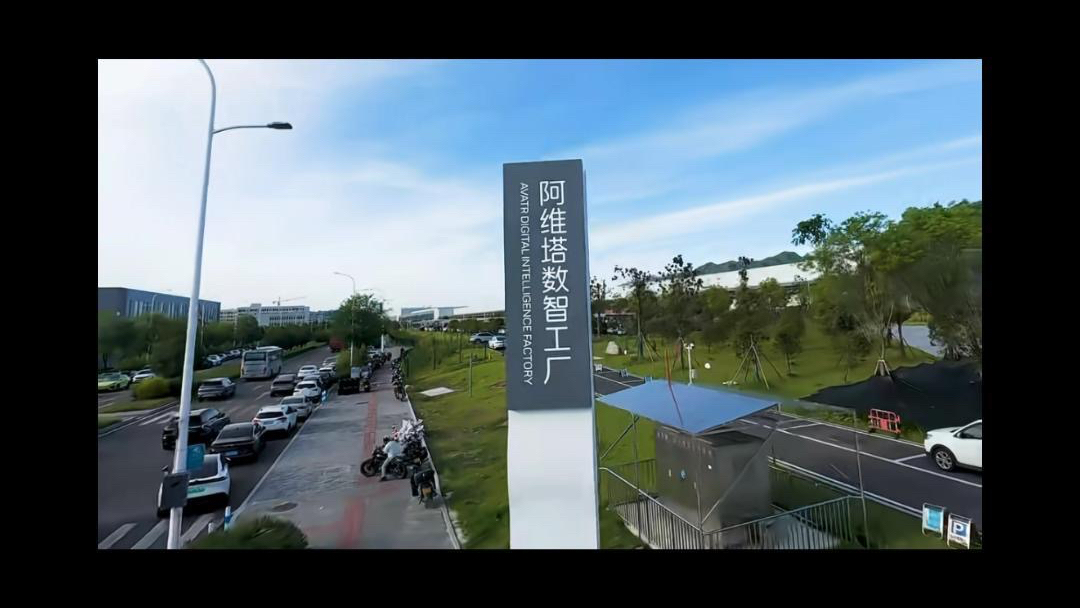
Changan Automobile listed for transfer of 10% equity of Avita Technology, with a minimum price of approximately 3.2 billion yuan

The "golden nine and silver ten" in the car market have faded domestically, but exports have surged

Post Friendship Period "has become a hot search and hit the screen, becoming a dark horse in variety shows in 2026