2026-11-11 09:39

The "Double 11" promotion in 2026 is entering its final sprint, and the promotion logic of bank credit cards is also undergoing a transformation. In previous years, card opening gifts and first swipe gifts, which were the mainstay, have significantly decreased. Consumer spending discounts, installment discounts, and interest free have become standard features on many bank activity pages. In addition, the marketing focus of bank credit cards has also shifted this year, with small payment discounts maintaining user stickiness, while large installment discounts have become the core race for various companies to compete for high-quality customer resources.
Active small-scale insurance, promoting installment payments for large amounts
Unlike previous years' widespread and inclusive subsidies, this year's "Double 11" bank credit card game presents different strategies. In the daily consumption scenario of small and high-frequency transactions, immediate payment reduction remains the fundamental tool for maintaining user activity. The Bank of Communications credit card launched a secret free payment of 6 yuan less than 100 yuan on Taobao platform, and the SPDB credit card can enjoy a maximum of 10 yuan of erasure when paying 100 yuan on Tiktok, Jingdong and other platforms. This type of activity has a low threshold and wide coverage, with the core purpose not being short-term gains, but to seize the user's preferred payment binding position.
The real resource tilt occurs at the large installment end. Bank of China launches a discount of 150 yuan for installment orders over 8000 yuan and 200 yuan for installment orders over 10000 yuan on JD.com; Postal Savings Bank of China will deduct 160 yuan from designated goods on Taobao and Tmall for installment payments over 5000 yuan; China CITIC Bank carried out stepped full amount reduction on Alipay, Taobao Tmall and JD simultaneously; Guangfa Credit Card will directly stack the general ledger installment with the fiscal interest subsidy, with an annual interest subsidy ratio of 1%. In high unit price categories such as 3C digital, the subsidy intensity has been further amplified: taking 10000 yuan models such as iPhone Duo as an example, 16 banks participated in the 24 period interest free payment, covering 6 state-owned banks, 8 joint-stock banks, and 2 city commercial banks, with an entry-level monthly payment of about 667 yuan.
Dong Ximiao, Chief Economist of CMB, stated: "Banks maintain customer daily activity through small payment reductions, while focusing resources on large-scale consumption scenarios such as 3C, home appliances, and automobiles. Through installment interest free and full reduction, they provide precise services to customers with real consumption needs and a good credit foundation, promoting the marketing logic from 'traffic priority' to 'value priority', from 'reissuing cards' to' reusing cards', promoting the coordinated growth of interest bearing assets and intermediate income, improving customer stickiness and asset quality, and reflecting the direction of credit card business service consumption, stable operation, and high-quality development. ”
Financial Subsidy Increases
One important reason why this year's "Double 11" credit card marketing differs from previous years is the policy support of government subsidies.
In January 2026, the Ministry of Finance, the People's Bank of China, and the State Administration for Financial Regulation jointly issued a document that for the first time included installment credit card bills in the scope of financial interest subsidies for personal consumption loans, with an annual interest subsidy ratio of 1 percentage point. In August, the three departments further included various new credit card installment businesses such as special installment, consumption installment, and advance cash installment in the scope of interest subsidies. The annual cumulative interest subsidy limit for a single person in a single institution was increased from 3000 yuan to 5000 yuan, and the policy came into effect on August 1st.
The key significance of this adjustment is that it changes the cost structure of banks promoting installment business. Previously, the funding cost of interest free or low interest products was mainly borne by banks themselves, but after the intervention of interest subsidies, some of the costs were shared by government funds, allowing banks to provide more attractive installment conditions without significantly eroding profits.
Su Xiaorui, a senior researcher at Suxi Zhiyan, stated that the mainstream activities of banks, such as consumer discounts and interest free installment payments, are a recalibration of the cost structure and revenue anchor of credit cards under the dual constraints of industry volume reduction and risk escalation. This move aims to optimize the direction of marketing investment, shifting from the old and uncertain rigid equity costs to the conversion of installment business directly linked to consumption scale and interest bearing assets.
Currently, multiple banks have included "financial interest subsidies" in the installment plan for the "Double 11" event. For example, Bank of China explicitly states that eligible installment payments can enjoy government subsidies and additional discounts, and some products can also enjoy up to 24 interest free periods; Bank of Communications has launched payment discounts and installment discounts on multiple platforms, with most installment discounts not having a limit on the number of periods. Taobao offers a discount of 160 yuan for installment discounts over 5000 yuan; Agricultural Bank of China has launched the "Double 11" Taobao installment shopping discount activity, which can offer a maximum discount of 160 yuan and also enjoy up to 24 periods of zero installment interest discounts.
More intense competition among existing stocks
Behind the transformation of marketing tactics is the proactive adjustment of the credit card industry into a stock cycle.
According to data from the central bank, as of the end of the second quarter of 2026, there were 677 million credit cards and combined debit and credit cards in China, a decrease of about 10 million from the end of the first quarter and nearly 20 million from the beginning of the year. On average, more than 100000 credit cards were withdrawn from the market on a daily basis. Compared to the historical peak of 807 million sheets in the third quarter of 2022, the cumulative pressure drop has exceeded 130 million sheets. At the same time, the contraction of credit card exclusive institutions is still continuing, with 16 credit card institutions confirmed to shut down so far this year.
In addition, what is more alarming than scale contraction is the change in asset quality. In the first half of 2026, the credit card non-performing rate of several listed banks increased compared to the same period last year: Industrial and Commercial Bank of China's credit card non-performing rate rose to 5.37%, Bank of Communications rose from 2.68% to 3.8%, Minsheng Bank rose to 4.22%, and Industrial Bank rose to 3.79%. According to a research report by Guosen Securities, the scale of non-performing loan write offs and disposals for 42 listed banks reached a historical peak of 651.7 billion yuan in the first half of 2026, with credit card non-performing loans being the largest asset class. It is inferred that 2026 will be the peak of concentrated credit card risk outbreaks. In this context, banks are concentrating their resources on large installment payments, which is undoubtedly competing for "high-quality assets", but also means that the tension between the rise of consumer leverage and risk control is increasing synchronously.
The offline marketing ecosystem has exposed another layer of hidden concerns. According to the Daily Economic News, some shopping malls in Beijing have seen the phenomenon of multiple banks jointly setting up stalls and issuing cards to exchange for high-value gifts: two cards can be exchanged for 200 yuan bicycles, 10 cards are required for luxury electric bicycles, and 13 cards are required for the highest end bicycles. The event is jointly handled by seven banks, and credit cards can also be used to "team up" to make up for the numbers. This customer acquisition method, which is still in the gift driven stage, forms a sharp contrast with the online refined installment strategy. Against the backdrop of shrinking card issuance, it may create new sleep cards, which goes against the original intention of "promoting activity".
Zeng Gang, the director of Tianfu Liyan Financial Research Institute, stated in an interview with Caixin that after the credit card business enters the stage of stock competition, banks are re evaluating the relationship between marketing investment and business revenue. Compared to simply providing high cost equity, investing resources in consumption scenarios that can generate installment business income is more beneficial for banks to coordinate costs and benefits.
For consumers, this "Double 11" event requires a closer look at the "discounts". Installment interest free, government subsidized, and full reduction combined may sound like a bank offering a discount, but the prerequisite is often a designated platform, designated product, and designated number of periods. How to deduct interest subsidies, whether handling fees are calculated separately, and whether early repayment still incurs fees all need to be confirmed item by item before placing an order. Especially be wary of applying for multiple credit cards for the purpose of making up for discounts or receiving card opening gifts. Large installment payments should be based on one's ability, first checking whether the monthly payment is within the disposable income range, and then calculating the total cost, rather than being led by "up to 24 interest free periods" or "over 5000 minus 160". Discounts can be withdrawn, but leverage cannot be increased. Once overdue, the money saved from interest subsidies and full reductions is far from enough to cover the cost of credit damage and penalty interest.
(The author of this article is a researcher at the Jingguan Research Institute)
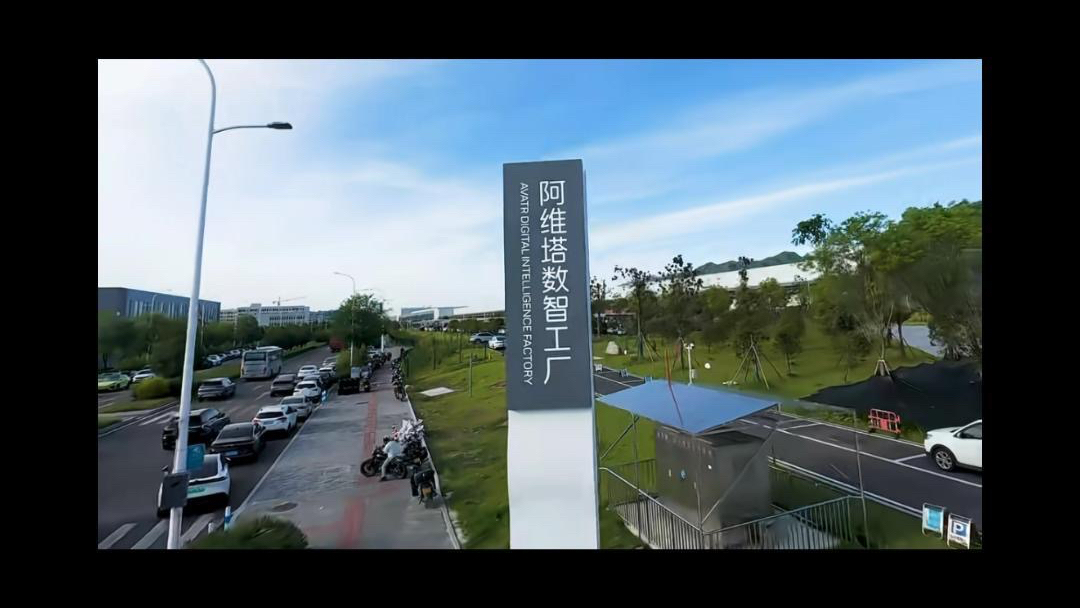
Changan Automobile listed for transfer of 10% equity of Avita Technology, with a minimum price of approximately 3.2 billion yuan

The "golden nine and silver ten" in the car market have faded domestically, but exports have surged

Post Friendship Period "has become a hot search and hit the screen, becoming a dark horse in variety shows in 2026