Economic Observer Follow
2026-10-25 18:46

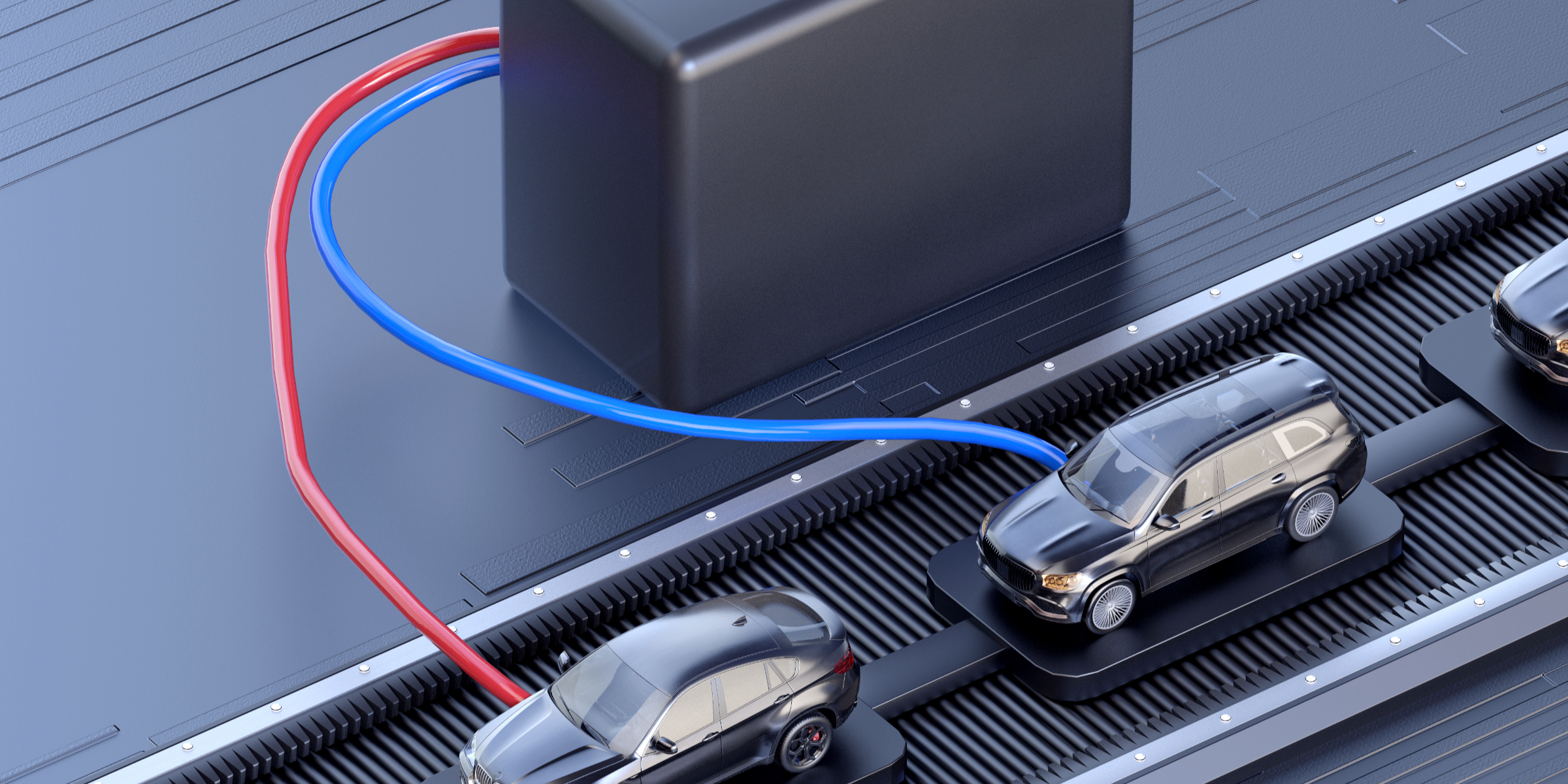
Solid state transformers are designed to serve data centers, but data centers require very high power supply reliability. In the short term, solid-state transformers are difficult to be widely used in data centers and will first be used in the field of heavy truck overcharging, "said Chi Yongning, Chief Engineer of Power Electronics at TBEA (600089. SH), in an interview with the Economic Observer and other media at the New Power System and Source Grid Load Storage Collaborative Development Conference on October 25th.
Solid state transformers are the core components of the 800V (volt) DC power supply architecture in data centers. Nvidia released the 800V White Paper V2.0 in August this year, explicitly listing solid-state transformers as the future power supply solution for the 800V DC architecture.
The distributed data center power supply system based on traditional power frequency transformers has an overall power supply efficiency of about 86% from the power source to the chip. The power supply system based on components such as power electronic transformers and solid-state transformers can achieve a power supply efficiency of up to 90% from the power source to the chip.
According to Chi Yongning, solid-state transformers are mainly composed of components such as silicon carbide and high-frequency transformers. After adopting solid-state transformers, the power supply system can complete current conversion in just one step, improving power supply efficiency while significantly reducing footprint.
Chi Yongning stated that taking a 1MW (megawatt) rack as an example, it is estimated that it can save about 280000 kWh of electricity per year. The solid-state transformer solution reduces copper usage by about 45%, which can lower the material cost of data centers in the context of high copper prices. In addition, it saves about 60% of land compared to traditional power supply solutions.
Chi Yongning said that data centers have the financial strength to implement solid-state transformers, but they cannot accept unstable power supply. Both domestically and overseas, solid-state transformers have not undergone long-term live testing, and data centers currently only provide testing and verification opportunities for solid-state transformers.
Therefore, he believes that overcharging heavy trucks will be the first scenario for solid-state transformers to be implemented.
He said that heavy truck supercharging stations usually have multiple charging guns in operation, and even if the solid-state transformer occasionally malfunctions, it will only affect individual charging guns, while the rest of the charging guns can still operate normally. Heavy truck supercharging stations have high power and high electricity demand, mainly for commercial use, and are suitable for business entities to improve electricity efficiency through solid-state transformers. TBEA's solid-state voltage regulator products have been implemented in heavy-duty truck supercharging stations, and will further be implemented in some heavy-duty truck supercharging stations under the Southern Power Grid and on highways within Sichuan Province in the future.
According to Chi Yongning, the current domestic solid-state transformers have the capacity for mass production, but the total shipment volume is still relatively small.
In addition to power supply stability, price is an important factor limiting the large-scale application of solid-state transformers. Chi Yongning stated that the cost of solid-state transformer power supply scheme will be higher than that of traditional power frequency transformer scheme.
The cost of solid-state transformers mainly comes from silicon carbide. According to Chi Yongning, the cost of silicon carbide in solid-state transformers can account for 70% or more.
Since the beginning of this year, the price of silicon carbide, especially high-end models, has increased. 6-inch industrial grade silicon carbide rose to over 5000 yuan/piece in the first half of this year, and will be less than 2000 yuan/piece by 2025.
Chi Yongning stated that as solid-state transformers gradually move towards mass production in the future, costs will decrease, but ultimately it depends on the price of silicon carbide. The current shipment volume of solid-state transformers is relatively small, and there has been no disturbance to the price of silicon carbide. The updating and iteration of silicon carbide is one of the upgrading directions for future solid-state transformers.
In response to the current phenomenon of domestic manufacturers seizing the solid-state transformer track, Chi Yongning stated that solid-state transformers are power electronic devices, and theoretically small companies can produce products in a short period of time. The main bottleneck of solid-state transformers lies in the reliability of power supply. Large companies have advantages in large-scale production, production processes, debugging and testing, and long-term product operation.


 Subscribe