Economic Observer Follow
2026-10-25 11:07

Gao Ruoying/Wen
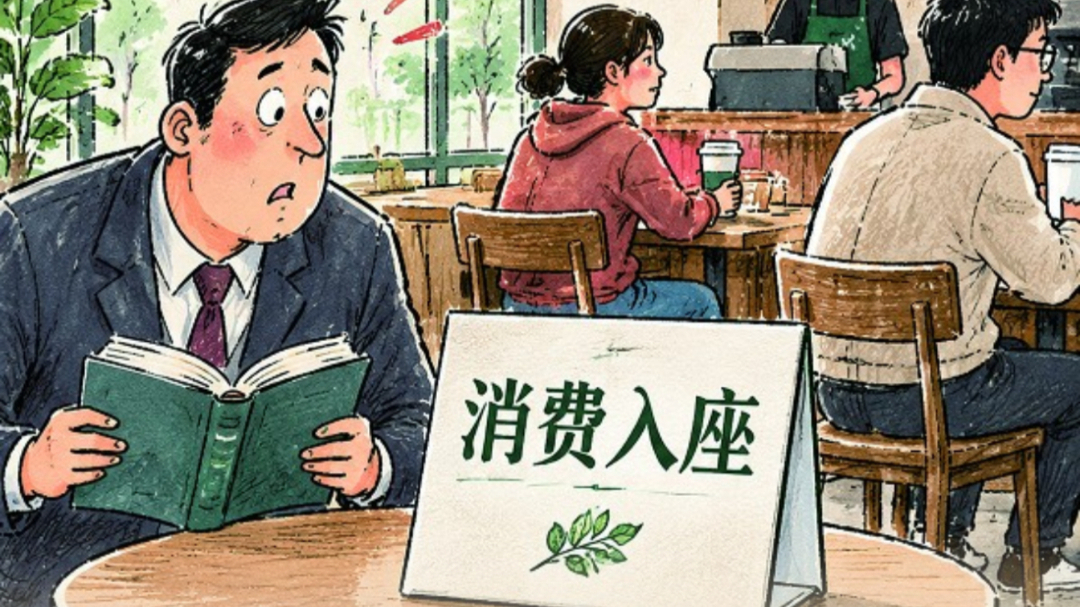
Starting from October 22nd, people must buy something before sitting down at any Starbucks in China. This company, labeled as the "third space," has for the first time turned "sitting down" into a right that only comes after consumption.
The synchronized release of the 'Third Space Initiative' has left some room for pregnant women, people with limited mobility, food delivery riders, rain shelter pedestrians, and those on duty in the surrounding areas to rest without spending money; Unlimited purchase time; When encountering someone who hasn't placed an order, the salesperson only reminds them and doesn't rush them. So many detailed exception clauses indicate that Starbucks knows that it is the story it has been telling for over 20 years that is shaking.
In today's Chinese market, this story is a bit difficult to tell.
In June of this year, a "tomato juice occupancy" incident occurred at Starbucks Wanda store in Huzhou: three women had zero consumption throughout the entire process, went out to eat halfway, and occupied seats with a glass of tomato juice that was almost finished. A customer who bought coffee was asked to give up their seat after sitting down, but refused and was verbally abused, ultimately leading to the incident being reported to the police. In August, "Starbucks should only manage people who don't buy" even made a hot search. Paid consumers roast about uncivilized behaviors such as taking off shoes, playing music outside, and bringing foreign food, which are destroying the consumption experience of "the third space".
Putting these things together, we will find that a space without boundaries for a long time will be filled by those who use it at the lowest cost, while those who pay will be squeezed out. A cup of coffee at Starbucks sells for over thirty yuan, a significant portion of which is for the environment, seating, and service. Having collected fees but unable to realize their value, Starbucks' high price is left as an empty shell.
In the past, whenever Starbucks raised the entry threshold, it was criticized for being "insensitive" and abandoning the values and concepts of the third space. But the "third space" of businesses has never been a public domain: tables and chairs, air conditioning, wireless internet, sockets, music, toilet paper, all behind it are rent and labor. A city will not settle the bill for a coffee shop just because it allows people to sit for half an hour for free. Enterprises must survive first before they can talk about goodwill.
In the second quarter of fiscal year 2026, Starbucks' revenue in China was 799.8 million US dollars, a year-on-year increase of 8%. Upon closer inspection, we can see that same store sales only increased by 0.5%, transaction volume increased by 2.1%, and average order value decreased by 1.6%; The number of stores has decreased by 20 compared to the end of last season. Customer flow is earned through bargaining, and the value per customer is decreasing. A space that relies on emotions to overdraw income for a long time is unlikely to end up with warmth and sustainability. It is very likely to close down or increase prices, and the cost will eventually be quietly passed on to the buyers and shop assistants. No matter how finely managed Starbucks is, it cannot withstand the continuous friction between ideals and growth reality.
In addition, Starbucks' equity structure has also changed. At the end of March, the joint venture transaction between Starbucks and Boyu Capital was delivered, with Boyu holding 60% of the shares and Starbucks retaining 40% and continuing to license the brand. Nearly 8000 directly operated stores were converted to franchising. The new model quickly improved Starbucks' parent company's financial statements: in the third quarter of the 2026 fiscal year, the international segment's profit included nearly $53 million in net income from the China business, with an operating profit margin of over 100%.
But compared to whether the brand story "Third Space" sounds good or not, new shareholders are more concerned about profit margins and how many cups of coffee a store makes in a day. 'Consumption positioning' is no longer just a cultural declaration for brand owners, but more of a business challenge that new shareholders must face.
The crowded coffee market in China has been making it difficult for Starbucks to catch its breath. Local brands priced at 9.9 yuan and 8.8 yuan quickly spread out through small shops and in store stores, without the cost of seats and a "third space", and the prices are beyond Starbucks' reach.
Starbucks China is still willing to continue investing in space, with an additional investment of over 300 million yuan in the 2027 fiscal year, focusing on frontline working hours, digital systems, core equipment, and store atmosphere; Starting from January 2027, intelligent mobile POS machines with over 70 new functions will be launched in stages, covering approximately 1000 stores. Under the "Thousand Stores, Thousand Noodles" policy, store managers can customize playlists, organize community activities, and add their own drinks to electronic menus.
But whether investing heavily can yield returns tests whether Starbucks can balance its "face" and "substance". The reason why 'consumption seating' has stirred up such a great social emotion indicates that Starbucks' '' third space 'has long been a part of many Chinese people's imagination of the city. This is the brand's wealth accumulated over the past 20 years and Starbucks' face. Lizi is a cost account that Starbucks cannot avoid: how to expand from 8000 to 20000 stores, increase scale while still making money for a single store?
Please leave those who do not consume, it is just a step towards Starbucks' change. Next, Starbucks needs to fill the gap with more products, services, creativity, and efficiency. Every step requires answering the question: Is the cup of coffee in the hands of the person who stayed behind worth thirty yuan.



 Subscribe