

Economic Observer Follow
2026-10-12 21:50

Wen/Chen Yongwei
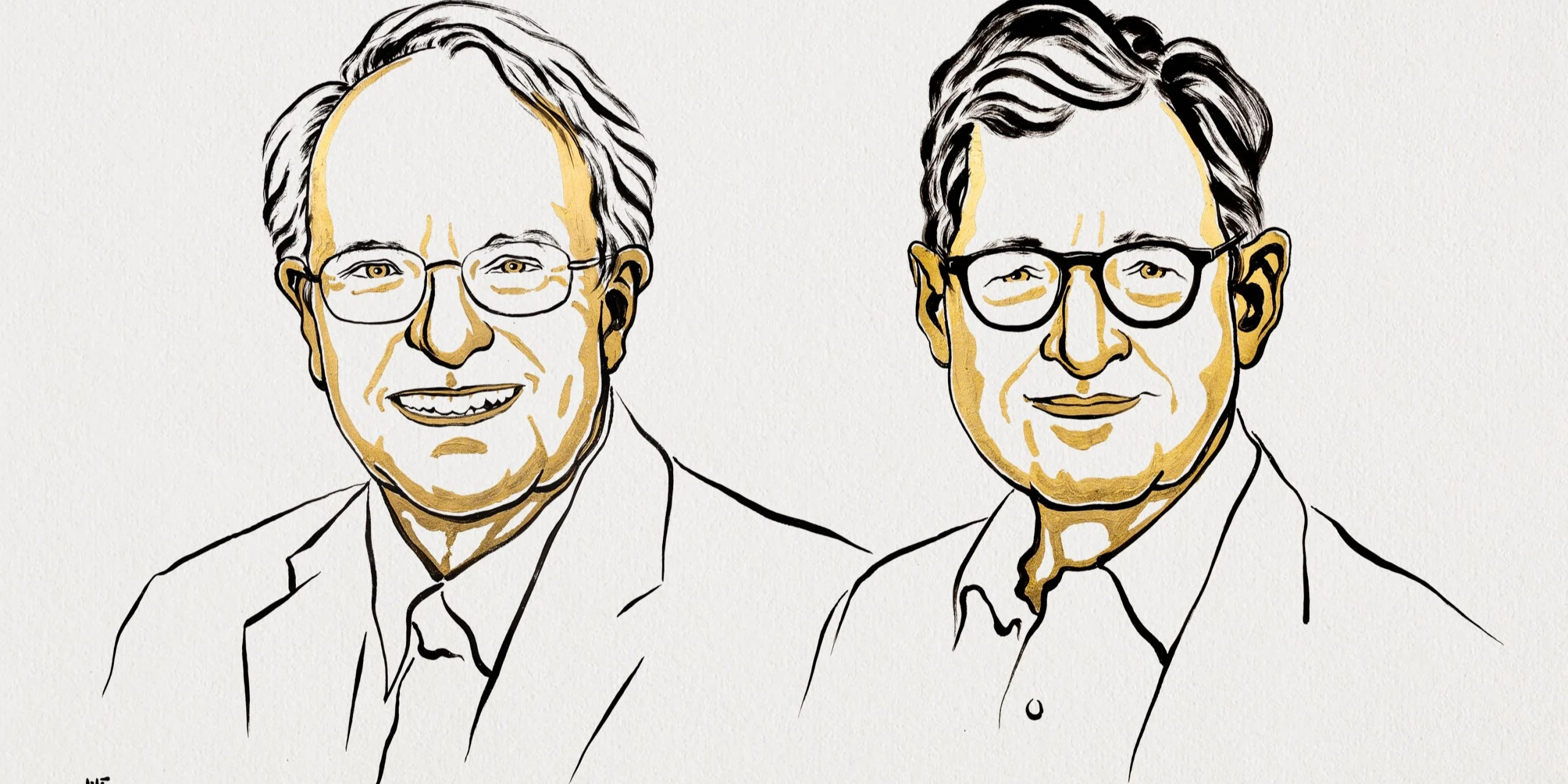
On October 12, 2026, the Royal Swedish Academy of Sciences announced that the Nobel Prize in Economics for this year would be awarded to American economists Robert E. Hall and Michael Woodford, in recognition of their contributions to laying the microeconomic foundation for macroeconomic stability policies. The two winners are from Stanford University and Columbia University, and have long been dedicated to research on consumption, economic fluctuations, and macroeconomic stability policies.
At first glance, this award seems somewhat abstract. Macroeconomics discusses unemployment, inflation, economic growth, and monetary policy, while microeconomics studies the decisions of consumers and businesses. Why does macroeconomics need to establish a microeconomic foundation? What does this have to do with how the government should respond to economic downturns and how the central bank determines interest rates?
To understand the contributions of these two scholars, we need to go back to an economic crisis half a century ago. In that crisis, Keynesianism, which had once dominated, was fiercely criticized, and there was a long-term ideological division in the economic community. Hall and Woodford followed different research paths, attempting to re answer a fundamental question posed by Keynes: since the market is composed of countless individuals and businesses pursuing their own interests, why does the entire economy still fall into recession, and how can economic fluctuations be mitigated through appropriate policies?
This issue has not lost its practical significance to this day. In recent years, macroeconomic policies are facing new challenges, ranging from global inflation to the boom in artificial intelligence investment, from the effects of fiscal stimulus to debates over the independence of the Federal Reserve. From this perspective, understanding Hall and Woodford means understanding how modern economics has formed today's policy analysis framework, as well as the limitations that still exist within this framework.
1、 Why did macroeconomics fall into crisis after stagflation?
In 1936, John Maynard Keynes published "A General Theory of Employment, Interest, and Money," which changed economists' understanding of economic recession. In traditional economic theory, adjustments in market prices and wages typically promote the restoration of supply-demand equilibrium. Keynes pointed out that the entire economy may fall into sustained unemployment due to insufficient effective demand, and even if businesses and workers are willing to expand production and employment, it may not automatically restore full employment.
After World War II, Keynesianism became an important theoretical basis for Western macroeconomic policies. Economists such as Paul Samuelson and Robert Solow combined Keynes' ideas with traditional microeconomics to form the neoclassical synthesis. This school of thought proposes that the government can regulate total demand through fiscal expenditure, taxation, and interest rates to mitigate economic fluctuations. In the 1950s and 1960s, this theory seemed quite successful.
However, the stagflation of the 1970s shattered economists' previously optimistic expectations. After the oil crisis, European and American countries faced both high inflation and high unemployment. The Phillips curve, which seemed to be able to balance inflation and unemployment, has become unstable, and traditional macroeconomic models continue to encounter difficulties in policy predictions.
At this time, Robert Lucas of the University of Chicago proposed the famous "Lucas critique". His core viewpoint is that once policies change, the behavior of residents and businesses may also change accordingly. Therefore, macroeconomic relationships summarized based on past data may not necessarily be able to predict the effectiveness of new policies.
For example, the government may reduce the unemployment rate by expanding demand in the past, but if workers and enterprises expect that the government will continue to implement the expansion policy, they will adjust wages and prices in advance, and the original relationship between inflation and unemployment will also change. Economic entities will learn, predict, and adjust their decisions based on policies, and the government cannot always use the same set of statistical relationships to manage the economy.
Lucas' critique presents a daunting task for macroeconomics: to derive macroeconomic relationships such as consumption, employment, and inflation from the optimal behavior of consumers, workers, and businesses. At the same time, Keynesian concerns about insufficient aggregate demand, price stickiness, and unemployment still need to be explained.
As a result, macroeconomics experienced a sustained division that lasted for many years. On one hand, there is neoclassical macroeconomics that emphasizes rational expectations, market equilibrium, and microeconomic foundations, while on the other hand, there is new Keynesianism that emphasizes market friction and macroeconomic stability policies. The debate between the two factions later became intertwined with theories of real economic cycles, monetarism, and other research directions.
The special status of Hall and Woodford lies precisely in their absorption of the method of rational expectation revolution and the re establishment of theoretical tools for analyzing Keynesian problems. The award presentation of the Royal Swedish Academy of Sciences this year also summarizes this contribution as the reconstruction of macroeconomic stability policy theory.
2、 Hall: From unpredictable consumption to persistent unemployment
Robert Ernest Hall was born in Palo Alto, California in 1943. He received his undergraduate education at the University of California, Berkeley, and then pursued a doctoral degree at the Massachusetts Institute of Technology. He graduated in 1967 under the guidance of Robert Solow, who later won the Nobel Prize in Economics. Afterwards, he taught at Massachusetts Institute of Technology, Berkeley, and Stanford University, and entered Stanford University in 1978 to engage in long-term macroeconomic research.
Hall's academic experience is quite characteristic of the times. He received neoclassical synthesis training from MIT, but resonated deeply with the rational expectations revolution initiated by Lucas and others. He not only studies rigorous intertemporal optimization models, but also always pays attention to unemployment, insufficient demand, and economic recession in the real economy. Against the backdrop of increasingly heated debates between the two factions at that time, this research stance made him somewhat unique.
It is interesting that the two famous names in the field of economics, "freshwater school" and "saltwater school", were first used by Hall in 1976. He vividly summarized the division of American macroeconomics using geographical location: the "freshwater school" represented by inland academic centers such as the University of Chicago and the University of Minnesota tends to emphasize market equilibrium and rational expectations; The "saltwater school" represented by coastal universities such as Harvard and MIT places greater emphasis on price stickiness, market failure, and government intervention. A originally humorous term that later became a classic label in the history of macroeconomic thought.
Hall has another unusual job. In 1978, he served as the chairman of the Economic Cycle Determination Committee of the National Bureau of Economic Research (NBER) in the United States, and subsequently led the determination of the start and end dates of the US economic recession for a long time until 2024 when he stepped down. When the US economy will enter a recession and when it will emerge from the bottom has long been judged by this committee based on comprehensive data such as employment, income, and industrial production.
But Hall's more important identity has always been that of a theoretical and empirical researcher. His most famous contribution comes from a surprising 1978 paper: If consumers are rational enough, why should changes in consumption be difficult to predict?
In 1978, Hall published "The Random Meaning of the Life Cycle Permanent Income Hypothesis: Theory and Evidence" in the Journal of Political Economy. This paper later became an important cornerstone of modern consumer theory, but its conclusions were once difficult for peers to accept.
Economist David Romer recorded an anecdote in "Advanced Macroeconomics": when Hall first introduced this study, a renowned macroeconomist told him that he must have been "on drugs" when writing this paper. Romer did not disclose the name of the economist, but this exaggerated comment reflects the impact that Hall's discovery had on the academic community at the time.
So, what surprising viewpoint did Hall put forward? In Keynes' consumption theory, consumption mainly depends on current income. As income increases, consumption usually also increases. This relationship later became an important foundation for traditional Keynesian multiplier theory. However, Friedman proposed the permanent income hypothesis in 1957, while Franco Modigliani and others proposed the life cycle hypothesis, emphasizing that consumers will arrange their consumption based on long-term income prospects. Assuming someone receives a temporary bonus, they may only spend a small portion of it; If one obtains a job with better lifelong benefits, it may significantly improve their living standards.
Hall accepted this idea and pushed it forward using rational expectations and dynamic optimization methods. He pointed out that if consumers have already made reasonable arrangements for future consumption based on the information they have, only new and previously unpredictable information will make them change their original plans.
For example, if a person already knows that their salary will increase next year, they can increase their consumption appropriately from now on, without having to wait until they receive their salary next year to suddenly change their expenses. If next year's salary indeed rises as scheduled, this news itself will not prompt him to rearrange his consumption. What can truly change consumption plans are sudden unemployment, unexpected inheritance of property, or other unforeseen events.
Thus, Hall arrived at a counterintuitive conclusion: under specific assumptions, the level of consumption should approximate the characteristics of a random walk. The information already known today should not, in principle, systematically predict changes in tomorrow's consumption. More strictly speaking, this conclusion comes from the cross period Euler equation of consumption; The marginal utility of consumption satisfies the corresponding dynamic optimal conditions, and under conditions such as quadratic utility, specific interest rates, and time preferences, the consumption level exhibits strict random walk properties.
The most clever aspect of this paper is that it changes the previous method of testing consumption theory. Previously, economists had been striving to find variables that could predict consumption, but Hall, on the other hand, proposed that if the permanent income hypothesis and rational expectations hold true, economists should test whether changes in consumption are indeed difficult to predict. According to post-war data in the United States, he found that past disposable income lacked significant predictive power for future consumption changes. This provided important support for the theory and established clear benchmarks for subsequent research.
But Hall soon discovered that the real world was more complex than this concise theory. In 1982, he collaborated with Frederic Mishkin to study the response of consumption to income changes using microdata from approximately 2000 households. They found that the data is compatible with a hybrid model where approximately 80% of consumer behavior conforms to the lifecycle permanent income theory, while the remaining 20% is closer to behavior where consumption changes proportionally with current income. This estimate is the result under specific sample and model conditions, and cannot be simply understood as the fact that there are always 20% of households lacking savings in reality.
Subsequently, Marjorie Flavin discovered that consumption is overly sensitive to changes in expected income; John Campbell and Gregory Mankiw further investigated the role of current income consumers. Economists gradually realize that many households, although hoping for smooth consumption, are constrained by borrowing, income risk, and asset liquidity. Just because people know they may earn more in the future doesn't mean they can borrow enough money today.
Hall's research had a dual impact as a result. On the one hand, it introduces intertemporal optimization and rational expectations into consumption theory, laying the foundation for modern macro models; On the other hand, it provides a clear theoretical benchmark that enables later scholars to identify the importance of financial constraints and consumer heterogeneity. The subsequent development of consumer theory was carried out through the continuous testing and revision of the Hall model.
Hall's academic interests are not limited to consumption. After entering the 21st century, his research has increasingly focused on unemployment, the labor market, and economic recession. One important question is: why does a small decrease in productivity sometimes lead to a significant increase in unemployment rate?
This issue is closely related to the development of modern labor market theory. The search matching theory developed by Peter Diamond, Dale Mortensen, and Christopher Pissarides suggests that unemployment is not always caused by high wages. Enterprise recruitment takes time, and finding suitable jobs for workers also incurs costs, so even if the market reaches equilibrium, there may still be some unemployment. However, standard search matching models are difficult to explain the drastic fluctuations in job vacancies and unemployment rates in the real labor market. Later, Robert Shimer's 2005 study further highlighted this issue.
In the same year, Hall published "Employment Fluctuations with Equilibrium Wage Stickiness" in the American Economic Review, proposing an important explanation: wages can remain relatively stable under equilibrium conditions, and this stability amplifies cyclical fluctuations in recruitment and unemployment.
Traditional economists often question wage stickiness. Since reducing wages can enable companies to hire more workers, why don't companies and workers negotiate to achieve this mutually beneficial arrangement? Hall pointed out that established labor relations themselves have value. Enterprises need to recruit and train new employees when they lose them, and employees also have to bear the cost of finding new positions when they lose their jobs. Therefore, as long as the current salary is within the range that both parties are willing to maintain the employment relationship, even if economic conditions change, there is no need to immediately adjust the salary.
Salary is relatively stable, but it can make companies more sensitive to changes in productivity when recruiting. When the economy is prosperous, productivity increases but wages do not rise synchronously, resulting in a significant increase in the revenue of adding a new position to the enterprise; During a recession, if profits decline and wages fail to decrease synchronously, companies may quickly reduce recruitment. Thus, Hall explained the amplification mechanism of unemployment fluctuations while retaining rational decision-making and equilibrium conditions.
This study also brings an important policy insight: the rise in unemployment during a recession may not be primarily due to companies suddenly laying off a large number of employees, but may also be due to a sustained decline in recruitment activities, making it difficult for the unemployed to find new jobs. Hall's research on labor market mobility data in the United States particularly emphasizes this mechanism.
The 2008 financial crisis further changed Hall's research direction. In 2011, he analyzed the difficulties caused by insufficient aggregate demand, declining housing investment, and the zero interest rate floor in his speech "The Long Slump" by the President of the American Economic Association. He pointed out that under normal circumstances, a decrease in demand in a certain sector can be offset by lowering interest rates to stimulate spending in other sectors; But when interest rates are close to zero, the regulatory ability of traditional monetary policy is limited, and insufficient demand may continue to exist.
This almost goes back to Keynes' problem back then. Hall challenged the traditional Keynesian consumption function through rational consumer theory in his early years, but later re examined aggregate demand deficiency and long-term unemployment using modern micro foundations.
He also studied the fiscal expenditure multiplier. Around 2009, Hall estimated the fiscal multiplier using data on changes in government spending during wartime, and believed that the impact of government purchasing expenditures on output cannot be simply determined by traditional Keynesian models, but depends on specific mechanisms such as price markups, employment adjustments, and monetary policy responses.
Hall's research process shows that the evolution of macroeconomic thought is not simply the replacement of Keynesianism with neoclassicism. After the rational expectations revolution, economists have re recognized the importance of market friction, insufficient demand, and macroeconomic stability policies, but the methods used to explain these phenomena have fundamentally changed.
3、 Woodford: How can central banks change people's expectations for the future?
Compared to Hall, Michael Woodford's academic experience is more unique. In 1955, he was born in Chicopi, Massachusetts. He was initially interested in physics when he entered the University of Chicago, but later turned to cognitive science. After obtaining his bachelor's degree in 1977, he went on to study at Yale Law School and earned a Juris Doctor degree in 1980. He then went on to study economics at MIT and obtained a PhD in economics in 1983.
This path from physics, cognitive science to law, and then to economics is not common among renowned macroeconomists. Woodford demonstrated extraordinary academic potential early on. In 1981, at the age of only 26 and before obtaining a PhD in economics, he was awarded the first MacArthur Genius Scholarship. Afterwards, he taught at Columbia University, the University of Chicago, and Princeton University before returning to Columbia University in 2004.
Woodford's early research involved multiple equilibria and self actualization expectations in dynamic economies. In such models, even if economic fundamentals remain unchanged, people's shared expectations for the future may change their behavior today, thereby driving the economy along different paths. This interest in dynamic systems and expectations later became an important starting point for his research on monetary policy.
In 2003, Woodford published his representative work "Interest and Prices: Foundations of a Theory of Monetary Policy". The title of the book is obviously a tribute to the eponymous work of Swedish economist Viksell in 1898. Wicksell once proposed that the difference between natural interest rates and market interest rates is an important factor driving changes in price levels. If the loan interest rate continues to be lower than the natural interest rate, investment and demand may continue to expand, bringing pressure for price increases.
Woodford redeveloped Wicksell's ideas. He pointed out that modern central banks have mainly regulated the economy through policy interest rates, and monetary economics should also establish theories around interest rates, prices, expectations, and intertemporal equilibrium. In this framework, the central bank does not need to mechanically control the growth rate of a certain monetary aggregate, but can also influence economic activity and inflation through interest rate rules.
This study precisely responds to the real changes faced by modern monetary economics. Since the 1980s, many central banks have gradually abandoned strict monetary quantity targets and instead used short-term interest rates as their main policy tool, but the development of theoretical models has lagged behind practice.
Woodford's contribution is to integrate research scattered in the fields of rational expectations, consumer optimization, monopolistic competition, and price adjustment, and establish a monetary policy analysis framework with clear micro foundations.
Woodford's "Interest and Prices" is often regarded as one of the foundational works of modern Keynesian macroeconomics. It inherits the research on price stickiness and imperfect competition by economists such as Julio J. Rottenberg, Guillermo A. Calvo, Olivier J. Blanchard, Nobuhiro Kiyotaki, and Mark L. Gertler, as well as the dynamic optimization and rational expectation methods emphasized by the Lucasian Revolution.
The basic structure of modern Keynesian models is actually not complicated. In simplified form, it mainly consists of three equations.
The first one is the dynamic IS equation, used to explain the total demand. Unlike traditional IS curves, it starts from the optimal behavior of cross period consumption of households, indicating that today's consumption depends on future expectations and the level of real interest rates relative to natural interest rates. If the central bank raises real interest rates, current consumption will become more expensive compared to future consumption, and households may reduce current spending, resulting in a decrease in total demand.
You can see the direct impact of Hall here. The arrangement of future income and consumption by consumers has been extended to become a key mechanism determining aggregate demand in the new Keynesian model. The current income relationship in the traditional Keynesian consumption function has been replaced by consumption decisions based on dynamic optimization.
The second one is the New Keynesian Phillips Curve, used to explain inflation. It is based on the optimal pricing behavior and price stickiness of enterprises. Due to the inability of enterprises to adjust prices at any time without cost, or limited opportunities for price adjustment, enterprises must consider future costs and price levels when deciding on current prices. Therefore, current inflation depends not only on demand pressures in the economy, but also on companies' expectations for future inflation.
The third one is the interest rate rules of the central bank, usually linked to the Taylor rule. The central bank adjusts policy interest rates based on the degree of inflation deviation from the target and the gap between actual output and natural output, thereby affecting demand and price changes.
The three equations are interrelated to form a dynamic system: interest rates affect consumption and investment, aggregate demand affects output gaps, output gaps and expectations jointly affect inflation, which in turn prompts the central bank to adjust interest rates.
The importance of this model lies primarily in its establishment of a complete transmission mechanism for macro policies from micro behaviors to overall economic outcomes. For example, why can central bank interest rate hikes lower inflation? The answer is no longer just historical data showing a certain statistical correlation between the two, but can be traced back to household consumption arrangements, corporate pricing decisions, and market equilibrium adjustments.
Secondly, Woodford clarified the significance of the output gap. It represents the gap between actual output and natural output, which usually refers to the level of output that the economy can achieve under specific conditions such as flexible price adjustments. It should be noted that natural output may not necessarily equal the socially optimal output, and the output gap in actual policies is also difficult to accurately measure.
This concept helps explain why the same output change may imply different policy choices. For example, when energy shortages lead to a decrease in the potential production capacity of the economy, even if actual output also decreases, total demand may still be too high relative to the new supply capacity. If the central bank only sees a slowdown in economic growth and adopts large-scale stimulus measures, it may actually exacerbate inflation.
Woodford also reinterpreted the welfare objectives of monetary policy. Under certain standard models and specific conditions, stable inflation and stable output gaps can be coordinated with each other; But in the presence of cost push shocks, wage stickiness, or other distortions, the two goals may conflict. At this point, the central bank must weigh the social costs of inflation fluctuations and output fluctuations.
Therefore, Woodford's work developed New Keynesianism from a theory of price rigidity to a research framework that can systematically analyze optimal monetary policies. The dynamic stochastic general equilibrium model (DSGE) used by many central banks today inherits this tradition to varying degrees.
Another important contribution of Woodford is the systematic study of how central banks implement policies by influencing public expectations.
This issue is closely related to the policy time inconsistency proposed by Finn E. Kydland and Edward C. Prescott in 1977. Assuming that the central bank promises to maintain low inflation, businesses and workers believe in this promise and adjust wages and prices according to lower inflation expectations. But after these decisions are made, the central bank may hope to stimulate employment through unexpected monetary expansion. If the public anticipates this temptation, the initial promise will be difficult to gain trust.
On this basis, Woodford further pointed out that the role of policy commitments is not limited to preventing central banks from creating unexpected inflation. Due to the forward-looking nature of consumption and price decisions, the central bank's credible commitment to future policies can itself change today's economic behavior.
In 2003, Woodford collaborated with Gauti Eggertsson to study the zero lower bound problem of nominal interest rates. They proposed that when interest rates are close to zero and the central bank cannot continue to stimulate the economy through traditional interest rate cuts, it can promise to maintain loose policies under certain conditions in the future, and even allow price levels to temporarily exceed the usual path, thereby increasing current inflation expectations, lowering real interest rates, and stimulating consumption and investment.
This idea later became an important theoretical basis for Forward Guidance. After the 2008 international financial crisis, the Federal Reserve, European Central Bank, and Bank of Japan have all used policy statements and future interest rate commitments to varying degrees to influence financial markets and private sector expectations.
It has changed the way people observe monetary policy. In the past, the market was mainly concerned about whether the central bank would raise interest rates or cut interest rates today; Now, the implications of a policy statement for the future path of interest rates may sometimes be more important than the current interest rate adjustment itself.
Woodford also did not overlook fiscal policy. In 2011, he published "Simple Analytics of the Government Expenditure Multiplier", which pointed out that the effectiveness of fiscal stimulus depends on price and wage stickiness as well as the policy response of central banks. If the central bank raises real interest rates synchronously to control inflation after the government expands spending, fiscal stimulus may be significantly offset; If the economy is at the lower limit of zero interest rates and monetary policy cannot be further relaxed, the government spending multiplier may significantly increase, and even exceed 1 under certain conditions.
This echoes Hall's research on fiscal multipliers. Both economists emphasized that the effectiveness of fiscal stimulus needs to be judged based on individual behavior, market frictions, and monetary policy environment. The basic idea of Keynesianism that government spending can affect aggregate demand has been retained, but the interpretation of the degree of impact and applicable conditions has become more stringent.
4、 When the model encounters reality: what are the macro policy challenges?
Hall and Woodford's theory did not end the macroeconomic debate. On the contrary, they provided a starting point for a large number of subsequent studies, among which the most noteworthy are the further development of heterogeneous subject models, bounded rationality, and financial frictions.
Firstly, consumers are not exactly the same. Hall's research in 1978 established a theoretical benchmark for rational consumers, while Woodford's standard new Keynesian model typically adopts the representative household assumption. But in reality, some families have a large amount of financial assets and are able to freely arrange intertemporal consumption; Some families have unstable income and insufficient savings, and even if they know their future income will increase, they may not be able to expand consumption in advance.
In 2018, Greg Kaplan, Benjamin Moll, and Giovanni L. Violante published "Monetary Policy from the HANK Perspective," establishing the Heterogeneity Subject New Keynesian Model (HANK). They found that in the standard representative subject model, interest rate cuts mainly affect consumption through intertemporal substitution; However, in models that include households with different asset conditions and liquidity constraints, the indirect effects of interest rate cuts on employment and labor income may far outweigh the direct intertemporal substitution effects.
Subsequently, Adrien Auclert et al. included the redistributive effect of monetary policy in their analysis. Raising interest rates will simultaneously change labor income, asset returns, and debt burden, but different households will be affected differently, thereby changing the consumption demand of the entire economy. This means that macro policies cannot completely ignore income and wealth distribution. The allocation status itself is a part of the policy transmission mechanism.
Secondly, the assumption of rational expectations is also being increasingly tested. The standard new Keynesian model sometimes predicts that central banks announcing interest rate cuts in the distant future can have a significant stimulating effect on today's consumption, and even the farther the commitment date, the greater the current effect in some models. This is known as the 'forward guidance dilemma'.
In 2016, Alisdair McKay, Emi Nakamura, and J ó n Steinsson pointed out that if households have income risks and borrowing constraints that cannot be fully insured, they will reduce their response to forward rate commitments for precautionary savings motives. In this way, the effectiveness of forward guidance may be much smaller than the predictions of the standard model.
Woodford himself has also begun to pay more attention to bounded rationality, cognitive ability, and information processing issues in recent years. In new research, people may not be able to correctly understand the complex economic environment, and their expectations for the distant future may also be very inaccurate. In this way, how policy statements affect actual behavior cannot rely entirely on the assumption of standard rational expectations.
Again, the 2008 financial crisis and inflation in the 2020s have made macroeconomics pay more attention to financial markets and supply structures. Financial frictions can make it difficult for households and businesses to obtain loans, and may also amplify economic fluctuations through asset prices, risk premiums, and balance sheets; Supply chain disruptions and energy price shocks may cause significant nonlinearity in the traditional Phillips curve.
It should be pointed out that these subsequent studies did not abandon the micro foundational framework established by Hall and Woodford, but continuously revised their assumptions about markets, information, and economic agents. In fact, an important characteristic of modern macroeconomics is the ability to accommodate increasingly diverse economic mechanisms within a common dynamic analysis framework.
This year's Nobel Prize in Economics has a special practical background. Just a few days before the award ceremony, the conflict between the US government and the Federal Reserve over central bank independence escalated once again.
In September 2026, under the leadership of Chairman Kevin Warsh, the Federal Reserve raised the policy rate and raised the target range for the federal funds rate to 3.75% -4%. The Trump administration has repeatedly called for interest rate cuts and criticized this decision. On October 7th, the White House established an investigative committee through a memorandum to further investigate the mortgage application dispute involving Federal Reserve Governor Lisa D. Cook, and plans to hold a hearing. It should be pointed out that in June of this year, the US Supreme Court made a ruling emphasizing that the removal of Federal Reserve directors must have legal reasons and follow necessary procedures.Although the White House emphasized that the investigation aims to investigate suspected illegal behavior, Cook himself denied the allegations, but some comments linked this move to Trump's long-standing demand for the Federal Reserve to cut interest rates, fearing that the investigation would become a means of exerting political pressure on the Fed and further weakening its independence. Thus, the extent to which the central bank should be independent of the government has once again become a focal point of debate in US economic policy.
Although the controversy between the Federal Reserve and the White House involves political factors, the economic issues behind it can also be understood from Woodford's theory.
In the modern new Keynesian framework, the policy effectiveness of central banks largely depends on the expectations of the private sector for future policies. If the public believes that the central bank will continue to take necessary measures to control inflation, businesses and workers may adjust their long-term price and wage expectations accordingly, reducing the sustainability of inflation. On the contrary, if the market believes that the central bank may change its policies at any time due to political pressure, even if tightening measures are taken now, it may not be able to stabilize long-term expectations.
This precisely reflects the importance of policy credibility. Trustworthy monetary policy commitments can influence today's economic decisions and even enable central banks to achieve better stability effects with relatively small policy adjustments.
However, based on Woodford's theory, it cannot be simply concluded that the more independent the central bank, the better. Economics needs to distinguish between the setting of policy objectives and the use of policy tools. What goals does the central bank pursue, involving social value judgments on inflation, employment, and economic growth, should have clear public authorization; How to use tools such as interest rates under established goals requires relatively professional and stable institutional arrangements.
Policy independence cannot replace policy accountability. Central banks may misjudge natural interest rates, underestimate the risk of economic recession, or overly rely on certain macroeconomic models. If independence lacks transparency, supervision, and error correction mechanisms, it may also bring serious problems.
Hall and Woodford's research also reminds us that monetary policy is not without costs. Although raising interest rates can suppress demand and inflation, it may weaken the willingness of companies to recruit, increase debt costs, and exacerbate the consumption difficulties of certain households. The later HANK model further indicates that these costs are not evenly distributed among different groups. Therefore, the effectiveness of monetary policy cannot be evaluated solely by how much inflation rate decreases, but also by examining the impact on employment, consumption, and economic welfare.
The supply shocks in recent years have made this trade-off even more complex. Rising energy prices, trade frictions, and supply chain disruptions may simultaneously cause a decline in economic growth and an increase in inflation. If the central bank controls prices entirely by suppressing demand, it may incur significant output costs; But if inflation expectations are allowed to rise, temporary price shocks may evolve into sustained wage and price adjustments.
From this, it can be seen that the core of the current debate on central bank independence actually includes several interrelated issues: how the central bank can maintain the credibility of policy commitments, how to make appropriate trade-offs between inflation and employment, and how to accept effective public supervision while avoiding short-term political intervention.
In summary, the economic significance of the central bank lies in establishing a relatively stable, predictable, and error correcting macroeconomic policy system. This also indicates that the independence of the central bank cannot be understood solely as a power distribution issue between the central bank and the government.
5、 In the era of intelligence, macroeconomics is still searching for answers
Today, the development of artificial intelligence and digital technology has posed a new set of questions for modern macroeconomics.
Artificial intelligence may improve long-term productivity and alter the potential supply capacity of the economy; Large scale investments in data centers and computing infrastructure may also drive up demand for energy, equipment, and capital goods in the short term. At the same time, the impact of intelligent technology on employment varies significantly across industries, with some workers facing income decline while others may gain new income opportunities.
If these phenomena are put into the research framework pioneered by Hall and Woodford, several thought-provoking questions will be found: how should central banks identify output gaps when technological progress simultaneously changes potential output and aggregate demand? Is the traditional Phillips curve still stable when artificial intelligence changes the way businesses price and workers negotiate? If technological changes cause changes in income distribution, how will they affect the macro economy through the consumption behavior of different households?
These issues indicate that modern macroeconomics still needs to continue to develop.
Looking back at half a century of intellectual history, the contributions of Hall and Woodford have clear positioning. Keynes made economists realize the danger of insufficient aggregate demand; Friedman and Modigliani promoted intertemporal analysis of consumption; Lucas demanded that macroeconomic policy research must consider the reactions of economic entities to policies; Hall transformed this idea into a testable consumption theory and further applied it to understand employment fluctuations; Woodford integrated individual decision-making, price stickiness, and expectations into a theoretical system that can analyze macroeconomic stability policies.
This development process also demonstrates an important way of advancing economic theory. The problems raised by old theories may not necessarily disappear with the emergence of new theories. They may undergo rephrasing, rigorous deduction, and empirical testing, and obtain deeper explanations in new analytical frameworks.
Hall and Woodford helped economists establish a more solid connection between micro behavior and macro volatility, and also provided important theoretical foundations for macro stability policies. However, the micro foundation does not guarantee that the model will always be correct, and the real economy will always generate new mechanisms that have not been fully considered in theory.
Perhaps the most memorable aspect of this year's Nobel Prize in Economics is the research spirit of macroeconomics: starting from the real behavior of individuals and businesses, understanding how the entire economy operates; Continuously testing theories with reality, and then using revised theories to understand new realities.

Following American Express and Mastercard, Visa China has been approved to prepare for the establishment of a bank card clearing institution

Zheng Qinwen wins the championship, which brand is taking advantage of this?

Home Appliance Chapter of the "Shandong Artificial Intelligence Vertical Domain Large Model" Series Short Films: Home Appliance Production Line "Evolution", Master's Skill, AI Learned


