Economic Observer Follow
2026-10-08 12:52


Chen Xia, a senior investor living in Zhejiang, no longer prioritizes high returns when choosing trust products. Compared to others, how to 'save money' has become her primary investment goal.
Chen Xia is a high net worth client who is approaching retirement age. She has accumulated nearly ten million yuan in investments in trust, bank wealth management, funds and other fields over the years. When the reporter talked to her about the changes in investment this year, she said calmly, "During the economic downturn, don't expect too high investment returns. The most important thing is to keep the principal
Ten years ago, Chen Xia was a fan of trust products, and she would renew her investment once the product expired. At that time, her return on trust investments could reach around 8%, with some even exceeding 10%. Moreover, the trust products she invested in will be redeemed smoothly upon expiration. Nowadays, with the continuous decline in the yield of trust products and the frequent occurrence of non-standard defaults, Chen Xia's investment philosophy has undergone a significant change. This is related to the delayed redemption of a universal trust product she held three years ago.
Zhang Tao, a high net worth client from Beijing, told reporters that he is no longer investing in traditional non-standard trust products, but has turned to investing in standardized securities trust products. I am currently focusing on stability in my investments and dare not be aggressive. Even a lower return is acceptable, "Zhang Tao added.
Behind the shift in the concept of high net worth trust clients is a profound change in the business structure of the trust industry. The Notice on Standardizing the Classification of Trust Business of Trust Companies (CBIRC Regulation [2023] No. 1) issued by the State Administration of Financial Supervision and Administration (formerly the China Banking and Insurance Regulatory Commission) will be implemented from June 1, 2023. The core is to divide trust business into three categories: asset service trust, asset management trust, and public welfare and charity trust, totaling 25 business varieties. The China Trust Industry Association pointed out that from the perspective of business structure, asset management trusts and asset service trusts under the "three classification" policy have replaced the traditional "financing trust+channel trust" business model. The trust industry is gradually bidding farewell to the extensive growth model and returning to its roots.
The Yunnan Trust Research Report points out that asset management trusts that invest in standardized assets are gradually becoming the main engine of business growth for institutional systems. The trust industry is actively undergoing business transformation under continuous regulatory guidance, and the asset allocation structure has undergone fundamental changes. The traditional business model centered on real estate financing and government platform non-standard debt is gradually shrinking, and the proportion of trust assets and inherent assets invested in fixed income and equity markets continues to rise.
Bid Products
The era of 'trusts can live well on interest' has passed, "said Zhang Tao.
Zhang Tao recalled that around 2016, it was not uncommon for the yield of trust products to reach 8% or 9%, and even earlier there were times when it was about 10%. He calculated that if he invested 5 million yuan in trust products, estimated at a 5% return rate, the annual income could reach 250000 yuan, which is enough to sustain daily life with interest, and he doesn't even need to work to earn money. Zhang Tao said that at that time, he always believed that trust investment was stable and safe.
The turning point occurred in 2021. Zhang Tao's purchase of a product under Beijing Trust has defaulted, with a holding amount of approximately 4 million yuan, accounting for 80-90% of his trust assets. After stepping on the thunder, Zhang Tao gradually began to pay attention to standardized trust products and gradually moved away from non-standard trust products with higher returns.
The solution for Beijing Trust is coming out soon. It has been delayed for 3 years, and finally the result is waiting, "Zhang Tao excitedly told reporters on September 29th. He reflected that when buying trust products, one must pay attention to the underlying projects. Previously, the defaulting product under Beijing Trust that he invested in had a political and credit related project at the bottom. Although the product was delayed for more than three years, hope still came in the end. And the other underlying default project is in the real estate category, and there is still no repayment plan.
Zhang Tao said that standardized products can clearly show the present value and net value of the product, and there are relatively few situations where investors lose all their money.
At present, Chen Xia only retains a small amount of standardized products in her trust holdings, while non-standard trusts are completely removed from her allocation list.
Currently, the financial market has become the main battlefield of the trust industry. In its "2026 Trust Industry Report" released on August 21, 2026, KPMG pointed out that from the perspective of investment scale and growth trend, the securities market has become the largest area for trust asset allocation, with its scale rapidly increasing from 7.22 trillion yuan in 2023 to 13.48 trillion yuan in 2025, with growth rates of 51.22% and 23.53% in 2024 and 2025 respectively. The strong growth momentum reflects trust companies' efforts to standardize their asset layout, such as equity and fixed income.
In addition, according to data disclosed by the China Trust Industry Association, as of the end of June 2025, wealth management service trusts amounted to 4.37 trillion yuan, administrative management service trusts amounted to 2.80 trillion yuan, risk disposal service trusts amounted to 2.60 trillion yuan, and asset securitization service trusts amounted to 1.43 trillion yuan.
Yunnan Trust stated that with the acceleration of new stock issuance in the capital market, more and more trust companies are participating in the capital market through new listings. At present, the standard investment of trust companies is still mainly based on fixed income assets, with a relatively low proportion of equity assets. The increase in the proportion of standard investment also reflects the continuous enhancement of the industry's proactive management capabilities.
Guarding Wealth
Zhang Tao said, "Ten years ago, the domestic economy was very hot. I was a little reckless and could afford to lose my principal. But now, I can't afford to lose several million yuan all at once. I don't want to make a big deal out of small gains, I just want to steadily hold onto my current assets and cash flow
Chen Xia is no longer fixated on the level of returns. She reminded ordinary investors not to constantly fantasize about obtaining high returns. 'If you don't manage your finances, finance won't care about you' is not an absolute truth. In many fields, you may not return to poverty if you don't invest, "she said. When investing in finance, it is important to recognize the underlying assets and profit models. If the underlying configuration cannot support it, it may be a Ponzi scheme.
In addition to configuring standard assets on the trust side, depositing money in the bank has also become a common choice for Chen Xia and Zhang Tao. Zhang Tao gave an example that in January 2023, he purchased a large deposit certificate from Hana Bank with an interest rate of 4.0% and a term of 5 years, expiring on January 20, 2028. In his opinion, the biggest advantage of this product is the monthly interest payment, which can generate interest income every month.
In addition, he also configured a portion of Industrial and Commercial Bank of China's large denomination certificates of deposit with an interest rate of 2.7%. In the past few years, the yield of bank wealth management has continued to decline, from an annualized yield of about 4% in 2020 to less than 2% currently, with the yield level almost halved. When asked about his investment philosophy, Zhang Tao said, "I am currently focusing on stability
Chen Xia told reporters that in addition to standardized products, nearly half of her cash is allocated to bank wealth management. She recalled that the income from the bank wealth management she purchased in 2025 was still around 2% to 3%, but now it has significantly decreased to less than 2%. Currently, high interest bank certificates of deposit are difficult to purchase. Chen Xia stated that half of her funds are in deposits, which significantly reduces the yield compared to other investments. For people like us who are approaching retirement age, our ability to create wealth is limited, and preserving wealth is our top priority, "she said.
On September 22, 2026, the Private Wealth Management Association of the United States officially released the "White Paper on the Development of China's Private Wealth Management Industry in 2026", which cited research data showing that as many as 60.8% of high net worth respondents strictly controlled their tolerance for capital fluctuations within 10%, while 78.1% of financial asset returns in the past year fell within the range of 0-10%. The previous set of data indicates that customers actively compressed their risk exposure, while the latter set of data shows that the market return center has synchronously shifted downwards - the wealth management logic of high net worth individuals has shifted from "growth priority" to "safety as anchor, allocation as guideline, and inheritance as priority".
I don't want to be reckless anymore. Now I just want to securely hold onto my current assets and cash flow, "Zhang Tao told reporters.
(At the request of the interviewee, Zhang Tao and Chen Xia are given pseudonyms in the article)
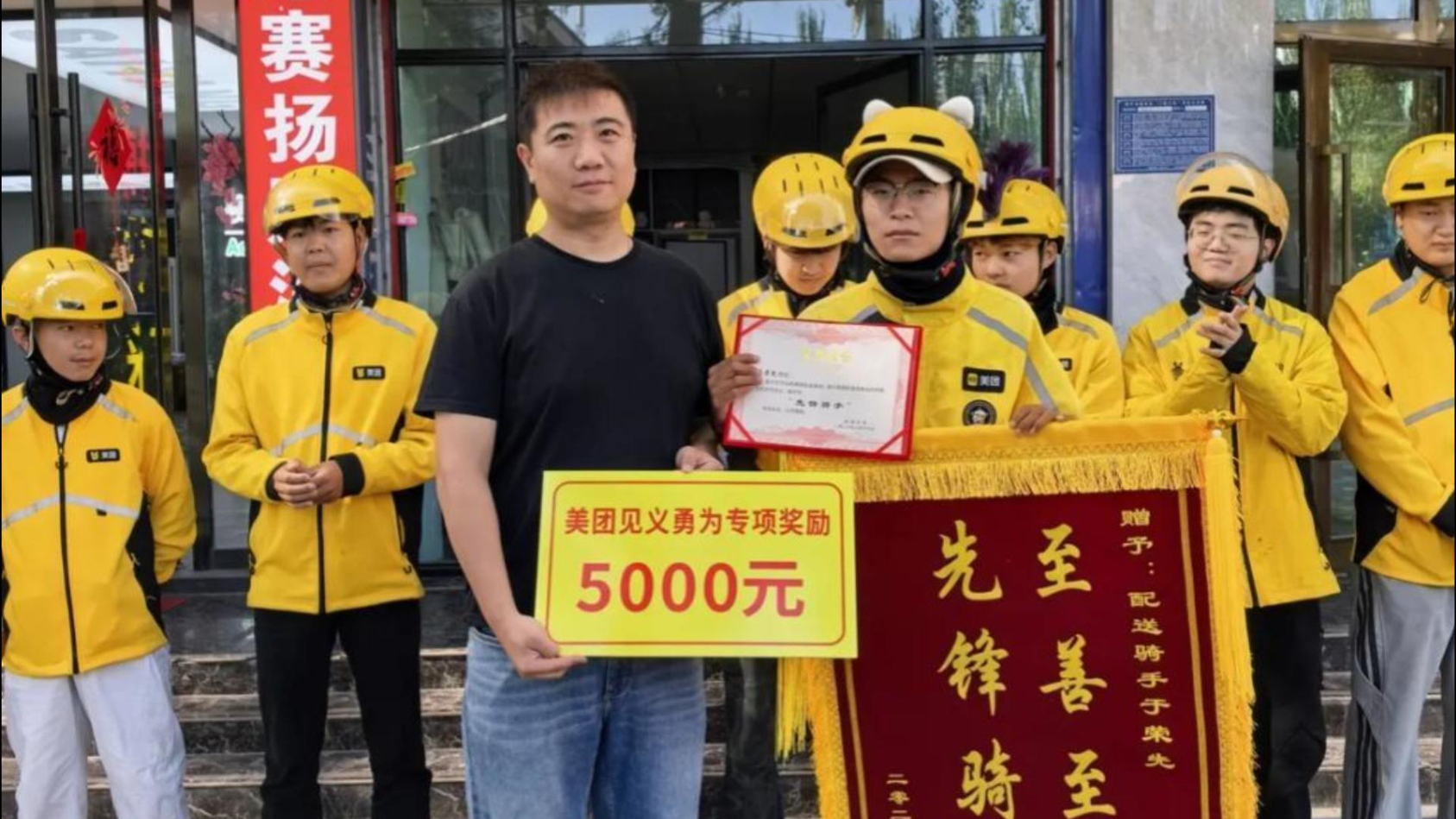
The Central Political and Legal Affairs Commission has released the list of brave warriors for the third quarter of 2026, with Meituan riders Guo Yabin, Yu Rongxian, and Cheng Jianfeng on the list

New "Three Piece Set" in Shopping Mall: Market, IP First Exhibition, First Store
Up to 4.35%! Which bank in mainland China or Hong Kong has a higher fixed deposit interest rate for US dollars?


 Subscribe