Economic Observer Follow
2026-10-08 11:49

Wen/Li Peishan
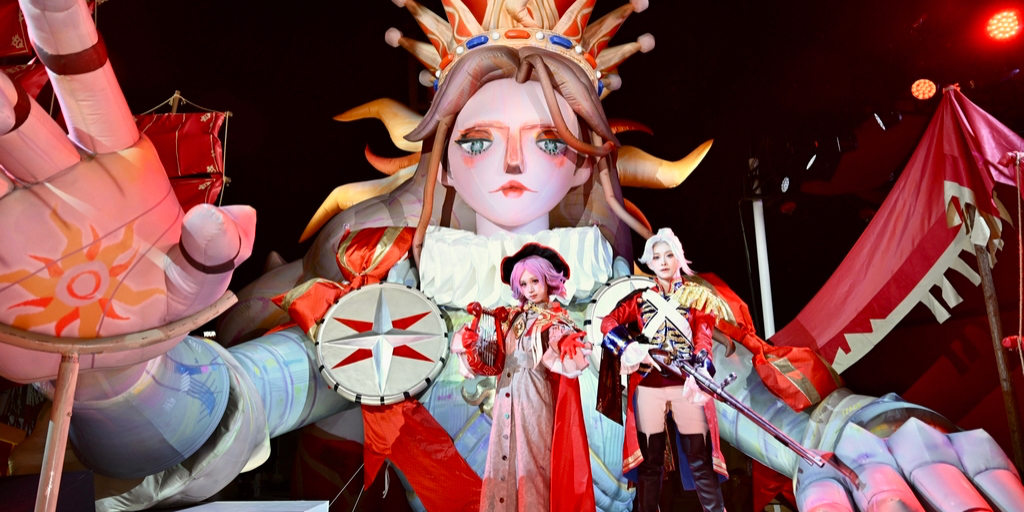
This National Day, 51 comic exhibitions were held in 15 cities across the country, including 21 in Beijing, Shanghai, and Shenzhen. Comic exhibitions in third tier cities also blossomed everywhere. It is worth noting that in addition to traditional exhibition companies and game manufacturers, Internet platforms such as Station B and Little Red Book are also accelerating their entry into the offline market; Some local governments have taken the initiative to include anime exhibitions in the toolbox of promoting cultural and tourism consumption.
Capital and platforms have a keen sense of smell. This year, the veteran comic exhibition ChinaJoy (China International Digital Interactive Entertainment Exhibition) attracted 438900 visitors in four days, of which 63% were visitors from other provinces coming to Shanghai. According to the comprehensive calculation of the organizers and big data, the exhibition has driven about 709 million yuan in consumption in catering, retail, accommodation, transportation, etc. Roughly speaking, it is equivalent to driving about 1600 yuan in related consumption per person per visit. Red Land (Open World Adventure Island), hosted by Xiaohongshu, sold out on average within 20.6 seconds for each of its five rounds of ticket sales, with 80% of ticket buyers coming from outside of Shanghai. The answer to why local governments, platforms, and capital are all eyeing comic exhibitions is already written in these young people who are willing to come across cities.
Why are comic exhibitions becoming increasingly popular?
"Anime" is a highly digitized culture. "Second dimension" people are used to "chasing fans" online; Even in the era when "guzi stores" (referring to IP merchandise such as anime and games) were scarce, online "buying guzi with groups" was still a common community culture, allowing users to "circle their own territory and become cute" without leaving their homes. Anime consumption did not rely on offline consumption. But nowadays, more and more people are willing to spend time grabbing tickets, queuing up, and even bear the cost of cross city transportation and accommodation for a comic exhibition.
The reason is not complicated. Manzhan provides not only commodity trading, but also a highly participatory offline consumer experience.
Ordinary exhibitions are generally "one-dimensional", and the audience mainly watches the exhibition content arranged by the organizer. But the comic exhibition is' bidirectional '. Take cosplayers as an example, some well-known cosplayers may be invited by organizers or manufacturers, but more often they are spontaneous ordinary audience members - as long as they buy a ticket, anyone can play their favorite character and come to the scene. As long as the character is interesting enough and the cosplay is realistic enough, it will also become the object of everyone's "stamp collecting" (group photo). I have heard of a father accompanying his child to a comic book exhibition for role-playing, and pretending to be Lu Xun himself. As a result, more people came to collect stamps than the child.
Moreover, the amount of energy invested in a comic exhibition does not affect the enjoyment you receive. You can bring your own self-made 'no material' (which can be understood as homemade peripherals) to distribute to your peers, or you can come empty handed to collect others' '' no material '; You can be a "social ox" and exchange millet with strangers, or you can be a "little transparent" and silently take pictures of everything you are interested in. The appeal of comic exhibitions comes not only from IPs and guests, but also from the collision of love in this "two-way" manner.
This "two-way" model has also changed the "economic account" of Marvel Comics. ChinaJoy and RED LAND both have a significant proportion of out of town audiences. For them, a ticket is often just the starting point of consumption, and a few hours of exhibition viewing can easily be extended into a "mini vacation" of one or two days, which in turn drives accommodation, dining, transportation, and shopping expenses. The remarkable aspect of the comic exhibition economy lies in the ability to transform an interest that originally occurred online into "destination consumption" - people travel to a city specifically for a certain event and continue to consume locally. This is the key to turning comic exhibitions from small circle activities into "hot cakes".
French consumer research scholar Bernard Kova once proposed the concept of "connected value", which means that some goods and services are valued because they can support communication between people. The unique feature of the comic exhibition economy lies in the fact that "ba chi" (badge peripherals) and "pain bags" (bags decorated with badges, pendants, and other peripherals) are both consumer goods and interest symbols, and it is difficult to completely separate products from social activities.
There is a widely circulated "breaking circle" moment on social media platforms. In the video, a cleaning lady at RED LAND took the initiative to greet a female Coser and praised her for jumping and being "quite cute" on site; Coser also responded enthusiastically, and picked up the comb to let her experience the charm of anime modeling.
This warm and subtle interaction may help people understand why comic exhibitions can constantly break through boundaries. The cleaning lady may not know who the girl is playing, but it doesn't prevent her from appreciating the other person's happiness.
What capital and cities value is the ability of Marvel to transform online interests into offline "destination consumption"; But what supports this consumption is not only IP and products, but also the "connectivity value" between people. People are willing to queue up to grab tickets and come from afar, not just to take away a few "bars" and complete a "check-in", but also to experience the on-site feeling and social experience that are difficult to completely replace online.
However, the entry threshold for small and medium-sized comic exhibitions is not particularly high. After the proliferation of comic exhibitions, this business will soon enter the knockout stage, and the real challenge is to keep the audience. When an interest not only brings like-minded people together, but also allows outsiders to see and understand it, it can become a consumption increment that a city can undertake from within a small circle.
For platforms and places, what is truly worth fighting for is not holding more comic exhibitions, but whether they can turn one lively event into a reason to be willing to come again next time.


The Central Political and Legal Affairs Commission has released the list of brave warriors for the third quarter of 2026, with Meituan riders Guo Yabin, Yu Rongxian, and Cheng Jianfeng on the list

New "Three Piece Set" in Shopping Mall: Market, IP First Exhibition, First Store
Up to 4.35%! Which bank in mainland China or Hong Kong has a higher fixed deposit interest rate for US dollars?


 Subscribe