Economic Observer Follow
2026-10-08 11:54

Chen Bai's article A report by the well-known American technology investment firm a16z has poured cold water on the booming AI industry.
According to its latest report on consumer grade AI applications, only 4.5% of American consumers have purchased personal subscriptions for ChatGPT, Gemini, or Claude, based on a sample of electronic receipts from American consumers in August this year. Among the observed AI consumption expenditures, the top 1% of paying users spend an average of $903 per month. Their contribution to the expenditure exceeds the sum of the 50% of paying users with the lowest expenditure.
Similar phenomena also exist in the Chinese market. During the just passed National Day holiday, a tech blogger wrote that the booming topics of AI and computing power do not exist in the gatherings and travels in their hometown.
I'm sure many people have this feeling. AI is almost ubiquitous on social media, with model updates, computing power investments, and application releases happening almost every day, as if the whole world is accelerating around this technological revolution. But when we return to our familiar daily lives and discuss work, income, and family, we find that AI seems to be a long way from the real lives of most people.
It is this distance that constitutes the key to understanding the bottleneck of current AI business models. The AI industry is accustomed to iteration speed on a weekly or even daily basis, which can easily lead people to mistakenly believe that the improvement of technological capabilities will naturally lead to an increase in user demand. However, there is still a huge gap that needs to be bridged between knowing AI, trying AI, being inseparable from AI, and being willing to continue paying for it.
In Rogers' theory of innovation diffusion, a new technology that enters society is usually first attempted by innovators and early adopters, and then gradually accepted by early, late, and more cautious populations. The earlier people are exposed to technology, the more easily they are attracted to the possibilities of new things and more willing to tolerate their immaturity; Most ordinary people often need to see that the people around them have benefited from it, confirm that it is useful, reliable, and can integrate into their existing lives, in order to be willing to change their habits. This further indicates that the enthusiasm of early users does not automatically become a public demand, but requires a continuous process of exploration.
From the current situation, for programmers, designers, and content creators, the time saved by AI can be converted into income, so paying for AI may be a cost-effective production investment. But this group of people is still a minority. For ordinary people who occasionally ask a question or modify a paragraph, free tools are often sufficient and there is no need to add a fixed expense. Therefore, the "AI productivity revolution" that has been repeatedly discussed in the industry still needs to answer a simple question in practical life: what does it mean for ordinary people?
If we examine the entire industry chain, we will find a huge inversion on the ledger. The market value of upstream NVIDIA has soared to trillions of dollars, with giants such as Microsoft, Google, and Meta investing billions of dollars in GPU clusters, massive data centers, and power consumption. This unprecedented infrastructure frenzy is based on a core assumption: the application end will eventually explode with commercial value several times greater than this. But the reality is that the underlying big models are burning money crazily, constantly rolling up parameters and multimodality, while on the application side closest to users, they still rely on less than 5% of early explorers to support them.
The problem is becoming increasingly acute now: without a broad consumer base and stable public cash flow, how should the sky high cost of computing power be amortized? How long can the patience of investors in the primary market and the foam in the secondary market last? This in turn explains why we feel such a strong sense of disconnection during the 'folded reality' of the National Day holiday.
People in the technology industry are partying all night long for the logical reasoning ability and running scores of the latest models, while the general public outside the industry is still concerned about traffic congestion, price fluctuations, and the daily necessities of life. AI is not embedded into people's daily life as quickly as the smart phone or mobile Internet in those days.
For AI entrepreneurs and tech giants trapped in commercialization anxiety, it may have reached a critical point where they must shift their perspective. Commercialization is a more urgent issue than blindly pursuing the improvement of model technology rankings. From Google's recent actions of reducing the number of free models, it can be seen that the giants have realized that new technologies never lack enthusiastic followers, but the victory of business will ultimately return to the common choice of the majority of ordinary people.
(The author is a senior media professional)
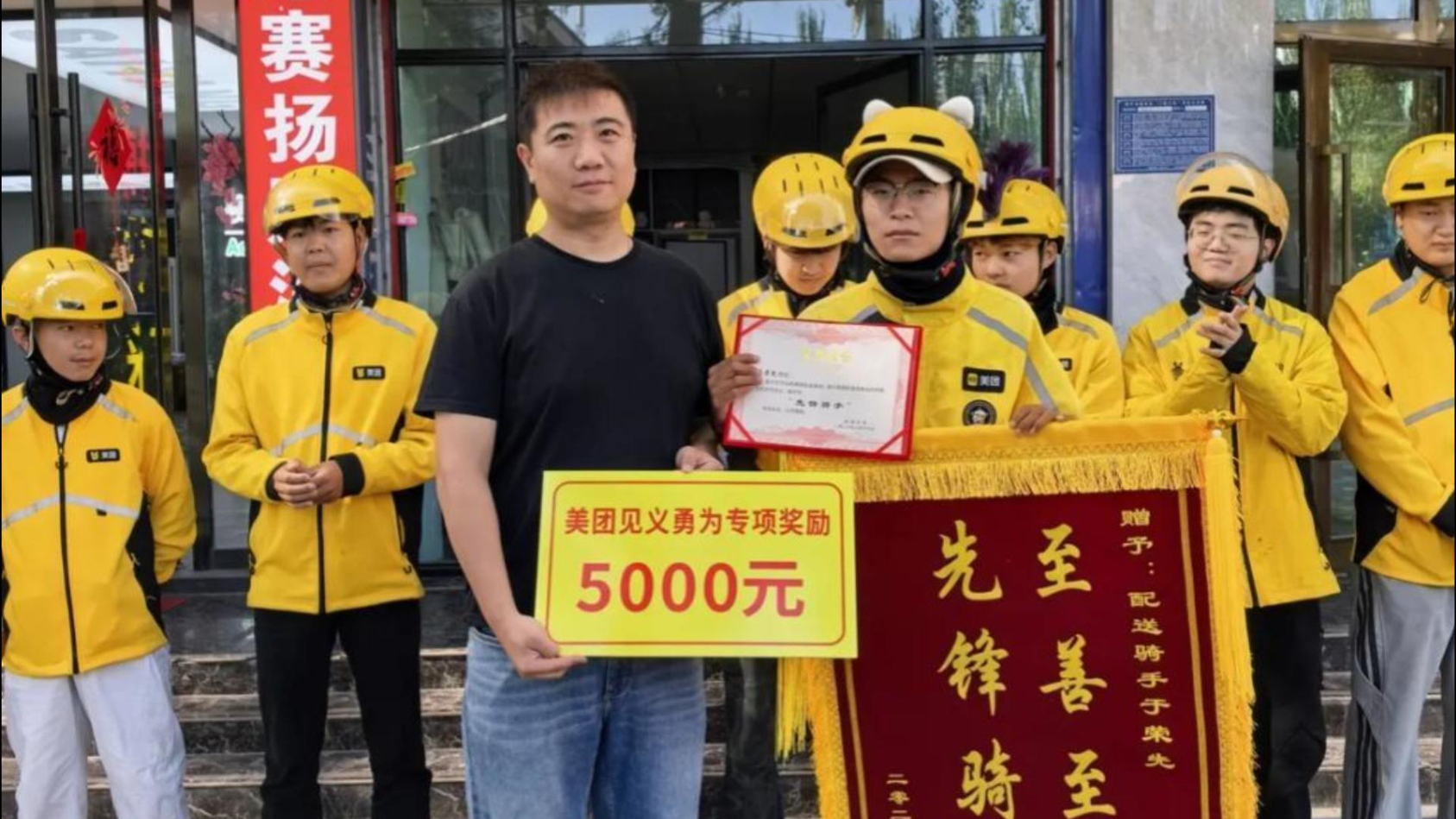
The Central Political and Legal Affairs Commission has released the list of brave warriors for the third quarter of 2026, with Meituan riders Guo Yabin, Yu Rongxian, and Cheng Jianfeng on the list

New "Three Piece Set" in Shopping Mall: Market, IP First Exhibition, First Store
Up to 4.35%! Which bank in mainland China or Hong Kong has a higher fixed deposit interest rate for US dollars?