Economic Observer Follow
2026-09-19 22:59

<编者按>
In recent years, with the increase in the supply of sports events and the expansion of sports consumption, the sports economy has gradually developed from a single competition activity to an industrial network connecting manufacturers, teams, cities, clubs, fans, and communities. The commercial value of a competition is not only reflected in ticket sales, broadcasting, and sponsorship exposure, but also includes multiple aspects such as youth training system, track operation, brand cooperation, equipment consumption, and urban tourism.
In September, Economic Observer reporters went to Spain and Italy, visited the Aspar Team in Spain, and observed the 2026 MotoGP race on site. We plan to use international teams and competitions as a starting point to examine the operational methods, industrial cooperation, and commercial value of mature racing systems. We will also observe the challenges faced by Chinese brands as they transition from products and sponsors to long-term participants after entering the European racing system.
Economic Observer reporter Wang Yajie reports from Spain
In early September, a reporter from the Economic Observer visited the Aspar Team in Spain, a long-standing Spanish championship team with decades of experience in participating in and winning the World Motorcycle Championships.
This is the first time that the fleet has opened its office and display areas to Chinese media.
The on-site investigation by reporters found that the value of mature events lies not only in race days, tickets, broadcasting, and sponsorship exposure, but also in long-term cooperation between teams, manufacturers, cities, clubs, youth training, media, tourism, and communities. Once the sports economy forms a stable network, it will become a mature industrial chain.
One
Before entering the convoy, a huge SHOEI (Japanese helmet brand) helmet sculpture was seen on the square.
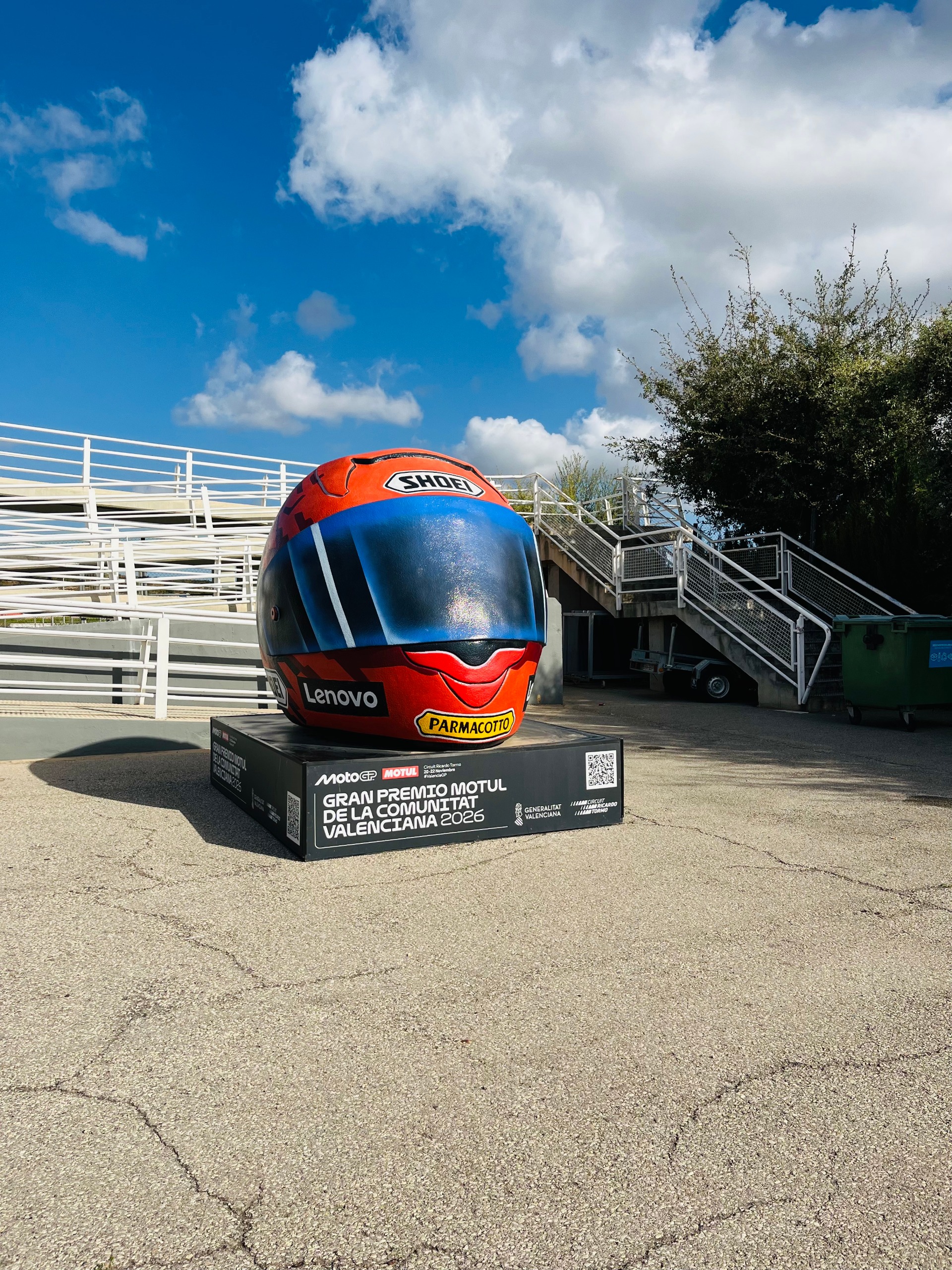
The sculpture is located in front of the entrance of the office area. Before entering the motorcycling office area, the closest object to the body and the most dangerous object in motorcycle sports has already appeared in front of me. After entering the interior area of the convoy, the line of sight first falls on the helmet.
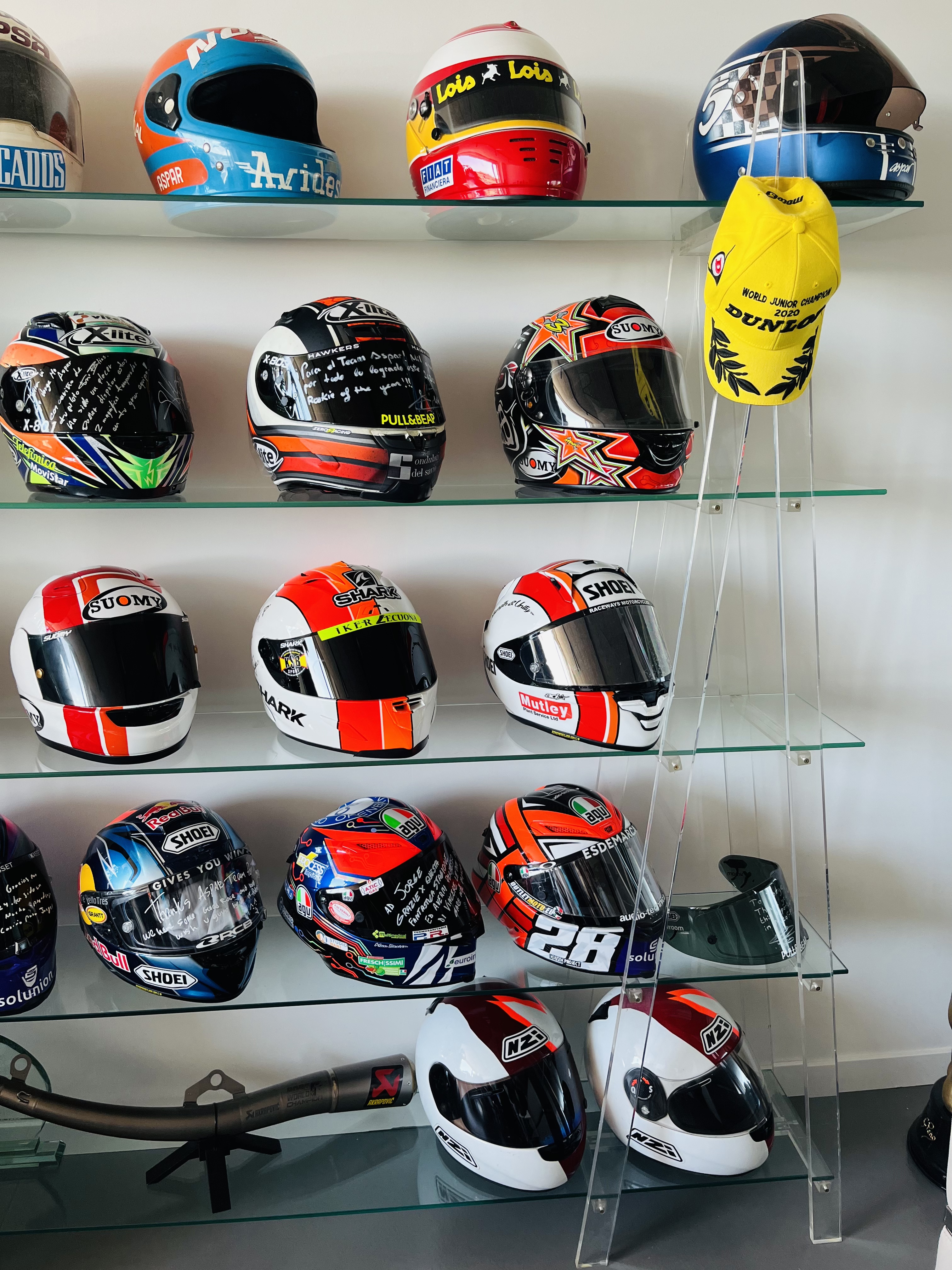
Rows of helmets are placed on the glass shelves of the Aspar team. The helmet still retains the paint, number, signature, and sponsor logo. Some of them belong to Valentino Rossi, an Italian legendary motorcycle rider and one of the most representative riders of the MotoGP era. MotoGP is the highest level category of the World Motorcycle Championship and holds a position close to F1 in road motorcycle racing. Some belong to Marc Marquez, a Spanish motorcycle rider known for his aggressive driving style and multiple injury comebacks. There are also some helmets from earlier season riders.
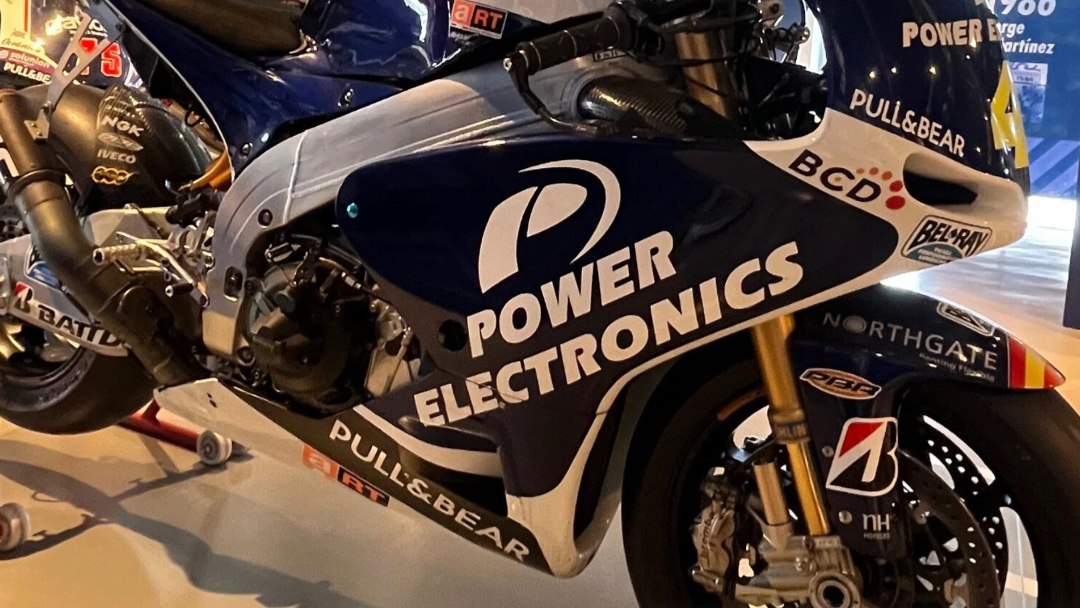
The display space of the Aspar team also houses racing cars, jumpsuits, and trophies. Those leather jackets are hanging there, with visible wear and tear. Long ago, the one-piece leather jackets of racing drivers did not have the airbags and protective gear they have today, with limited protection and even the need to stuff newspapers inside. Looking at those old leather jackets now, you will see another side of this sport. It has speed, applause, and victory, as well as constant falls, pain, and long recovery.
Rosie's career is a microcosm of this. He has won 9 world championships and has also experienced lows, doubts, and waiting. In Rossi's hometown of Tawulia, when he won the Grand Prix, the local church rang the bell for his victory.
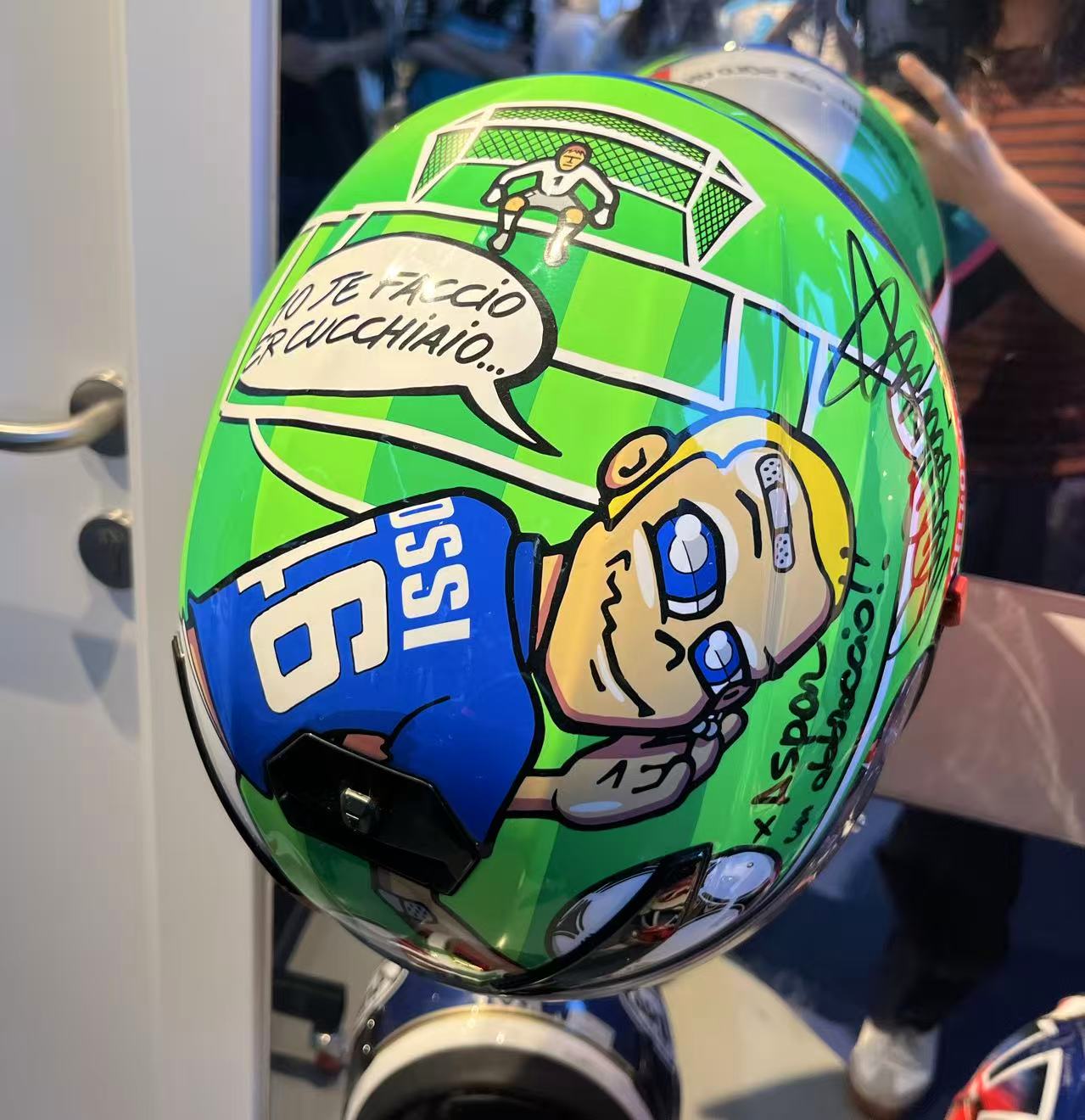
The trophy is placed on the other side.
The trophy nameplates in the white display cabinet record the specific time and location of each game. A Moto3 (lightweight category in the World Motorcycle Championship system, often regarded as an important starting point for young riders to enter the international Grand Prix system) manufacturer's championship trophy, with the nameplate indicating the German Motorcycle Grand Prix, taking place at the Sachsenling Circuit in Germany from July 5th to 7th, 2024. Another trophy at the Japan Grand Prix, with the inscription 'MOTUL Grand Prix of Japan', will be held at the Maoki Circuit from October 4th to 6th, 2024. There are also two Brazilian manufacturer championship trophies, with nameplates indicating the Estrella Galicia 0,0 Grand Prix of Brazil and Ayrton Senna Circuit, Goi â nia GO (Ayrton Senna Circuit, Goi â nia, Brazil), and other words.
Victory has coordinates and origins here.
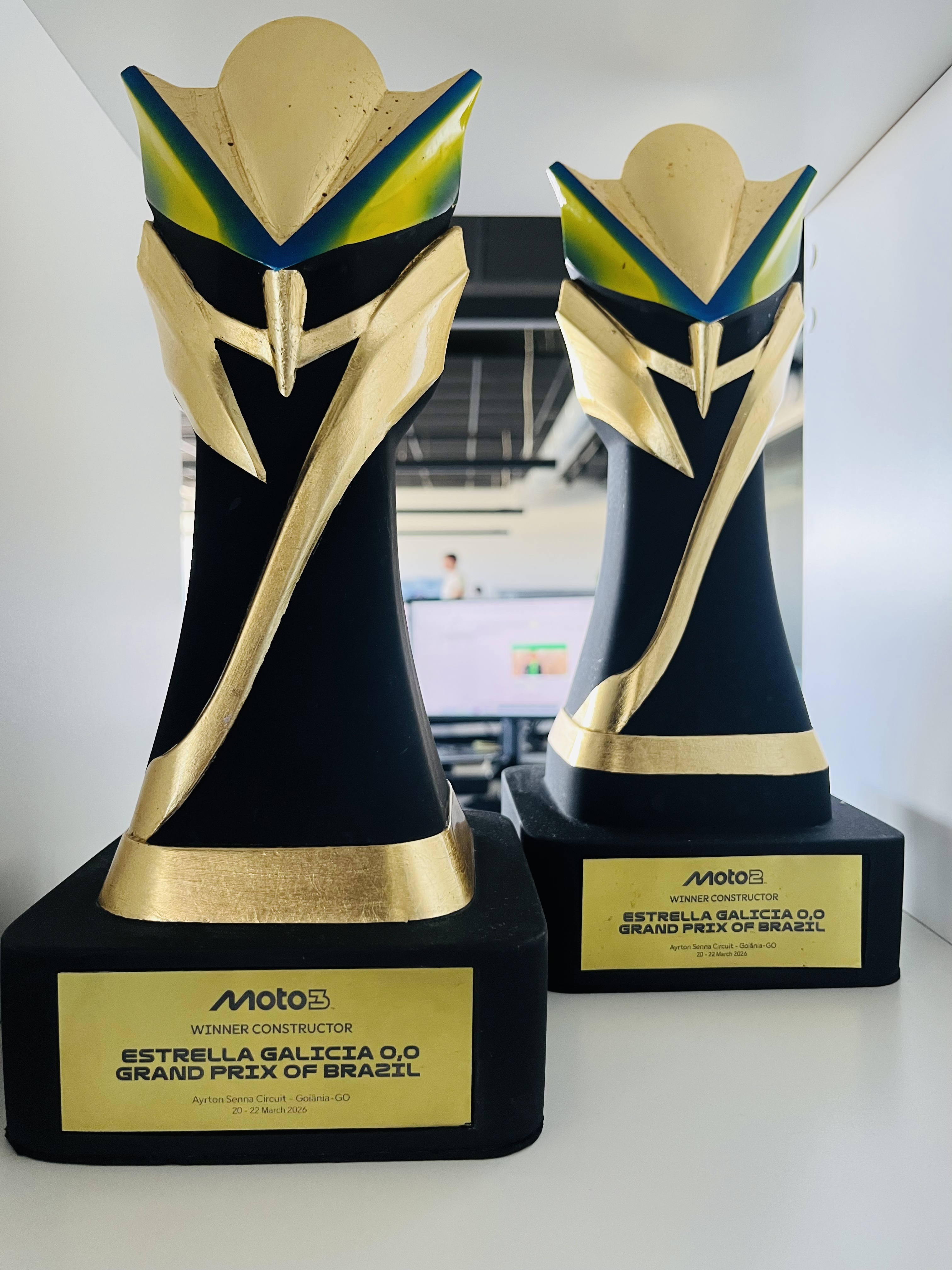
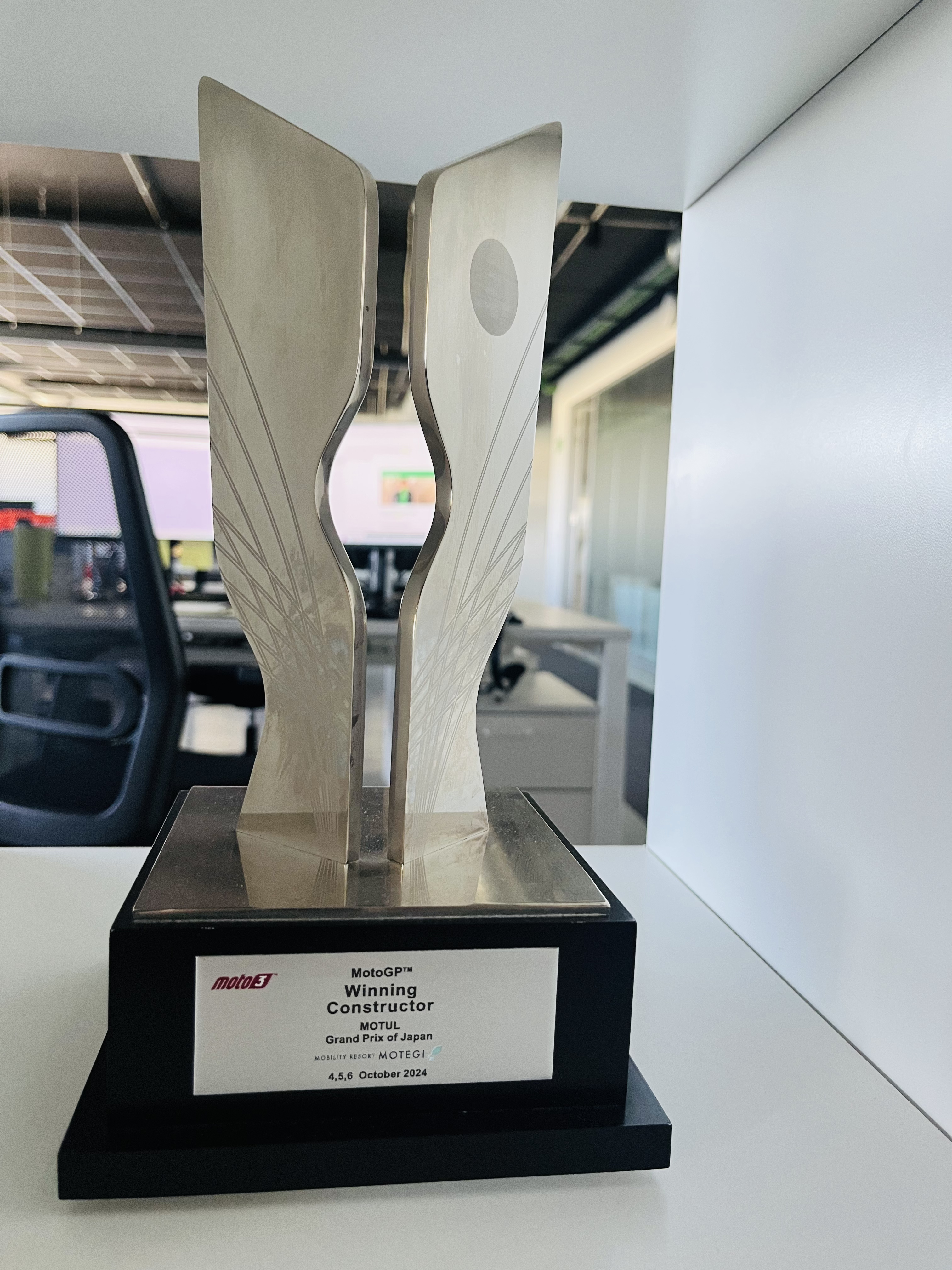
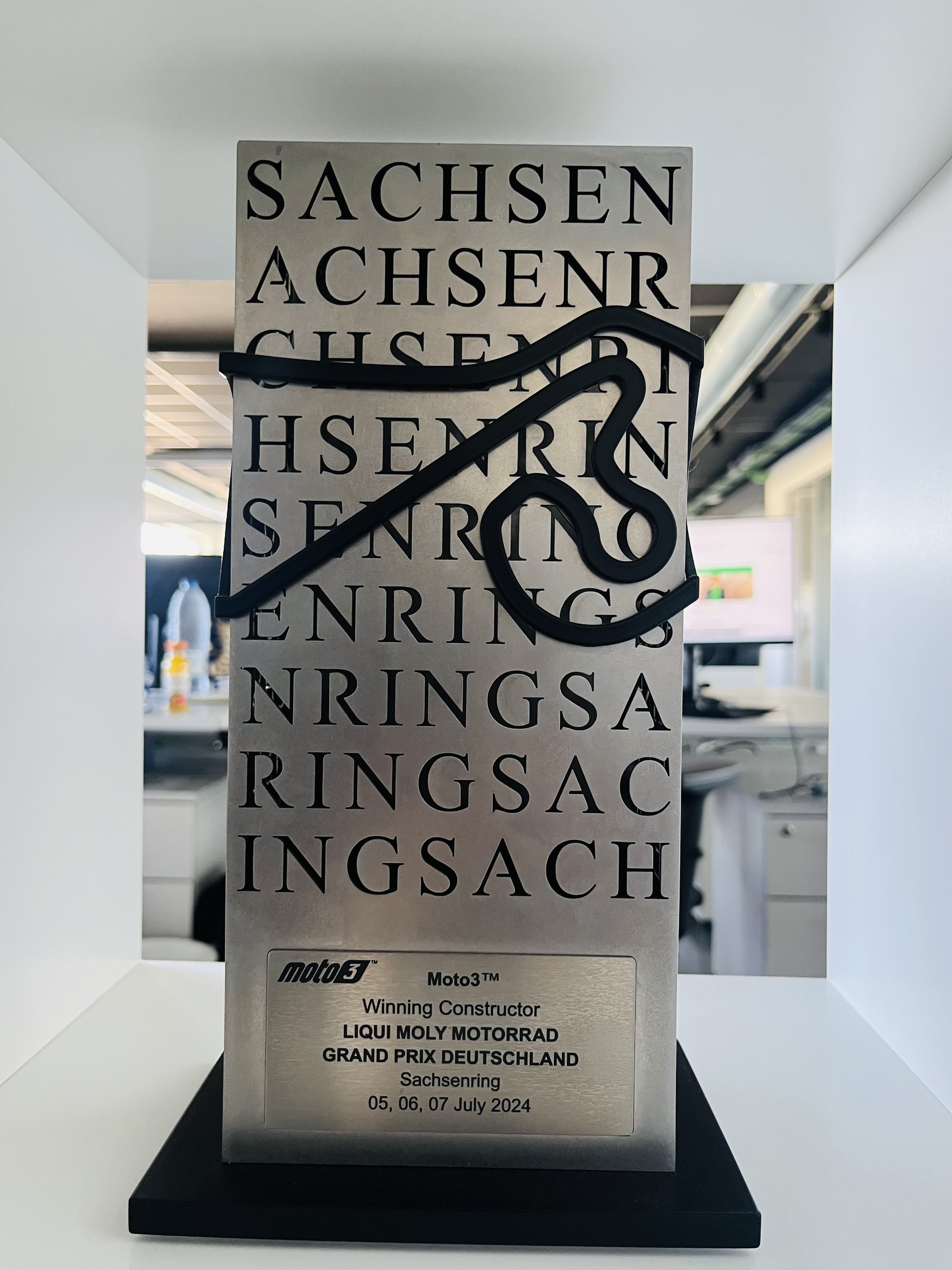
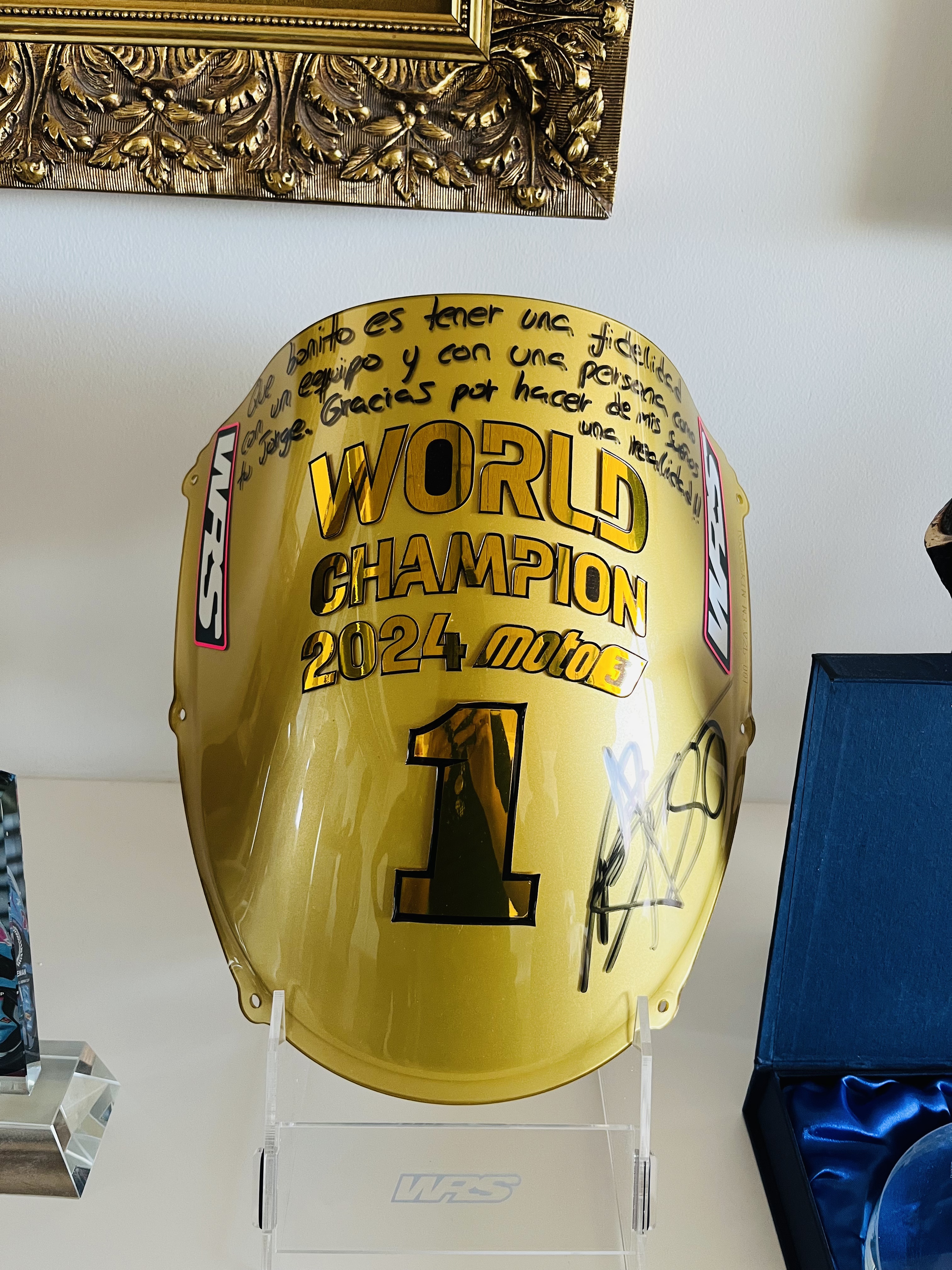
According to public information, the founder of Aspar Racing Team, Jorge Martinez "Aspar", has won four motorcycle Grand Prix world championships, accumulated 37 Grand Prix victories in his career, and was awarded the official "Legend" title by the MotoGP event operator.
Compared with the highest level MotoGP, Moto2 is a mid-level category in the World Motorcycle Championship system, located below the highest level MotoGP, and is an important channel for young drivers to enter top-level events. Moto3 also belongs to the World Motorcycle Championship youth training system, with a lower level than Moto2, and is the starting point for young drivers to enter the GP track.
The above trophies represent achievements and represent the team's ability to hold onto a weekend (as mentioned above, Moto practice, qualifying, and race were all completed on the same weekend).
Behind these trophies are the calculations of engineers, the hands of mechanics, the resources pledged by sponsors, and the technology repeatedly verified by manufacturers.
The charm of racing is also here, it pushes everyone's efforts to the highest point and then leaves it to one person to embark on the adventure.
A mature team will gradually take victory, failure, pain, sponsorship, technology, and fan emotions into their own space, and then bring these things to the next race.
The helmets, leather jackets, and trophies placed in this room are the physical ledger of this industry chain.
The victory and defeat will pass, and the assets will be retained.
Two
Sitting in the Aspar Racing team office area, the track can be seen through the glass window.
On the day of the media open day, there are still drivers training on the track. Waves of engine noise poured in from outside the window, as if pulling the exhibition cabinets, workstations, and conference tables in the office back to the track.
Motorcycle sports in European countries such as Spain usually start from schools, communities, and families, enter professional events through the club system, and then have a reverse impact on public consumption, urban culture, and brand awareness through professional events.
The economic value of a motorcycle race goes far beyond ticket and venue consumption. The audience's cross city viewing of the competition will stimulate a series of industries such as hotels, transportation, catering, retail, maintenance, equipment, training, advertising, tourism, etc.
The competition operates continuously throughout the year, and the club needs to maintain stability, the track remains open, and the youth training continues to provide drivers. Sponsors expect long-term profits, and audiences also need the motivation to participate repeatedly. The scale of registered drivers, youth participation, number of clubs, race density, venue utilization, sponsorship period, media copyright value, and derivative sales may not be impressive in the short term, but they determine whether a race can grow from a single event to a mature industry.
The transformation of the manufacturing industry is reshaping this ecosystem. Manufacturers provide products, engineering capabilities, and supply chain support, teams provide extreme scenarios, data feedback, and brand displays, and events transform technological achievements into content that the public can perceive.
Three
The Chinese sports economy is shifting from project logic to ecological logic. In the past, many competitions were led by governments, enterprises, or platforms, with time nodes, budget goals, dissemination effects, and organizational efficiency as the core. In the short term, they can shape the city's image, gather resources, and drive consumption. But with the increase in event supply, differentiation of audience demand, and intensified market competition, the problem has begun to shift: how can venues continue to operate after the event ends? How can one-time spectators be transformed into long-term users? Can local enterprises obtain stable profits? How can adolescent participants be included in the complete training system? How can sports brands accumulate sustained commercial value?
For Chinese companies, the significance of participating in overseas competitions is shifting from appearance to embedding.
Exhibition booths, advertising placements, and team naming can only bring short-term exposure. Long term sponsorship of teams, participation in technology research and development, support for youth training and local competitions are necessary to integrate into local sports culture and consumer networks. Selling motorcycles to Europe, but exporting the products overseas. To truly take root, it is necessary to deeply embed into the local track, team, fan community, and trust system.
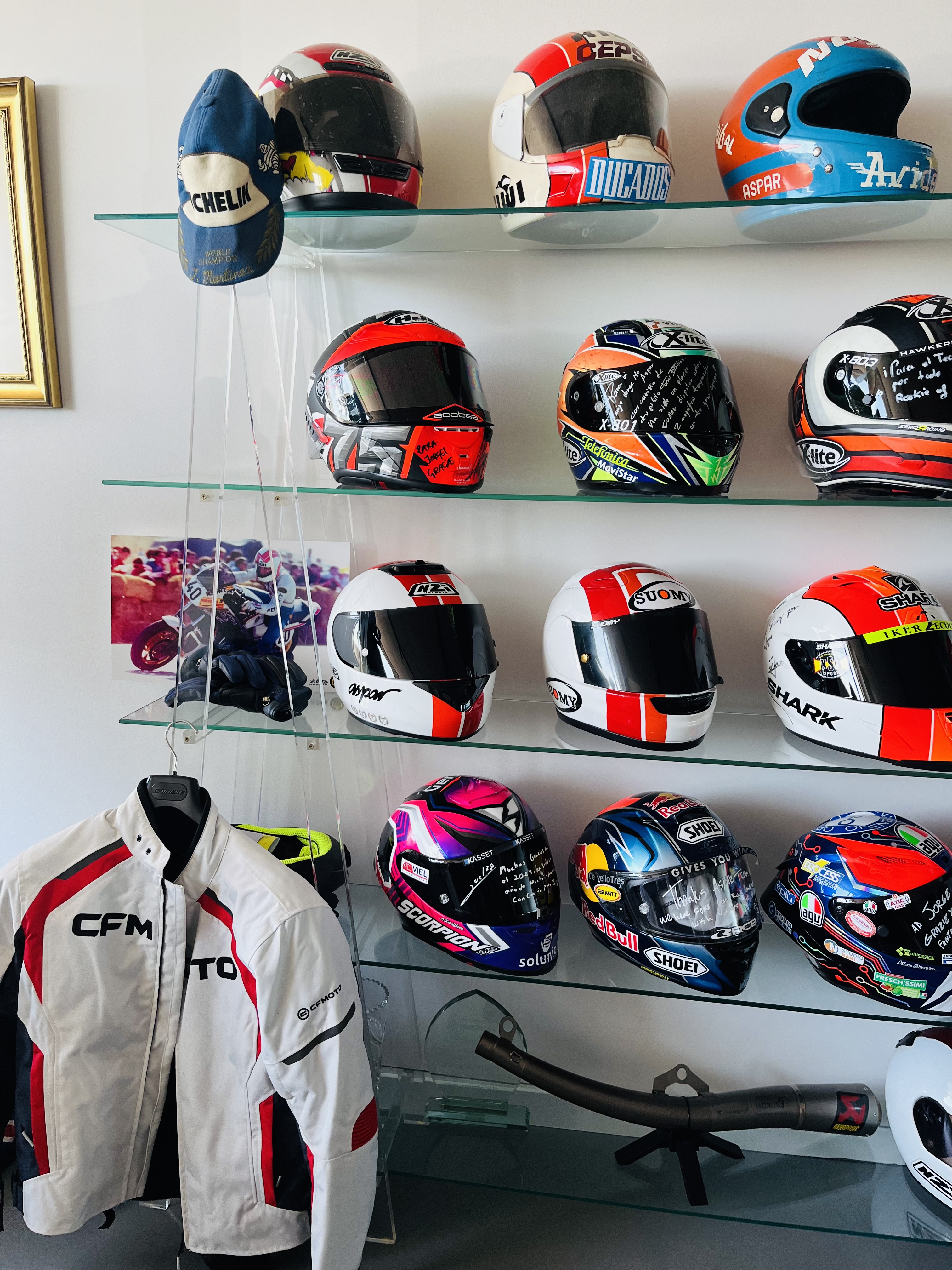
Chinese brands can only enter this type of racing ecosystem season after season, training after training, relying on vehicle performance, after-sales response, technical feedback, and on-site service to gradually accumulate reputation.
According to public information, CFMOTO, a brand under Zhejiang Chunfeng Power Co., Ltd., has been cooperating with the Aspa Racing Team on projects such as Moto2 and Moto3 since 2024, and the partnership has been extended until the 2031 season.
In the past, when it came to motorcycles going global, industry discussions often focused on price, channels, configuration, and sales volume. Nowadays, China's manufacturing industry entering the European competition system means accepting higher institutional requirements, such as safety regulations, technical rules, insurance liability, environmental protection requirements, and commercial contracts. Any mistakes in any link may affect performance and brand reputation.
Manufacturing advantages can help companies enter the arena, and sustained localization capabilities determine whether companies can truly stay.
From suppliers to co builders of events, this will be the next direction that Chinese manufacturing aims to reach.


 Subscribe