Economic Observer Follow
2026-08-18 08:11


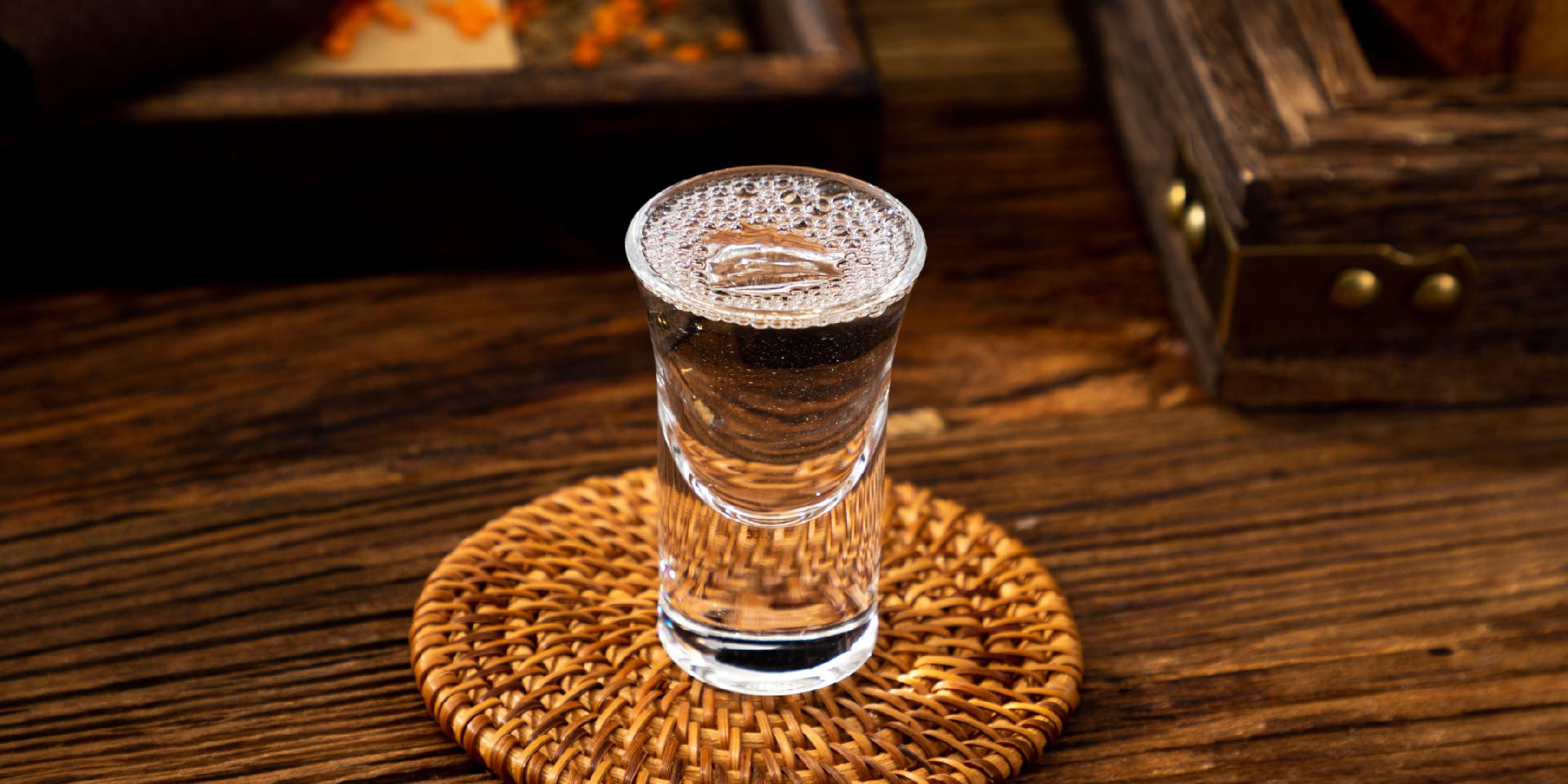
In the midsummer of 2026, the Baijiu industry handed over the coldest half year report card in recent years. As of the beginning of August, of the eight listed Baijiu companies that have disclosed their semi annual performance forecasts, except Wuliangye, which achieved an increase in advance due to a sharp reduction in the base number in the same period of last year, the remaining seven companies all suffered from a decline in profits or losses. The last time such a large-scale loss occurred was traced back to the industry's deep adjustment period after the introduction of the "Eight point Regulations".
Losses are just the tip of the iceberg, beneath the surface lies the comprehensive pressure on the price system. Previously, core products such as Puwu, Maotai 1935, and Guojiao 1573, which had maintained a stable price range of 1000 yuan, collectively fell below the 1000 yuan mark. According to the industry analysis, the price of Baijiu products in the whole industry will generally decline by 30% in 2026, with the most obvious callback of secondary high-end and middle end liquors. At the same time, the turnover days of dealer inventory have been further extended from 854 days in 2024, which is equivalent to two and a half years to digest the existing inventory. A Baijiu dealer in Sichuan told the reporter frankly: "Now selling famous liquor is not profitable, it is purely to maintain customer relations. The goods are too heavy to go out, and the cost of capital is still increasing every day."
In sharp contrast, the prices of high-end foreign brands are still rising, whiskey imports are still increasing, and market demand remains strong. Louis XIII, Hennessy and other cognacs are frequently out of stock in the Chinese ultra high end market; The prices of famous wineries such as Longdai Winery and Opus One have been steadily rising, with clear price differences between vintages and strong liquidity.
This contrast is not accidental - the differentiation between Chinese and foreign liquor industries is essentially a division of two value logics: one anchoring prices with quality, and the other driving prices with emotions.The predicament of China's liquor industry may appear to be cyclical fluctuations, but in reality, it is a structural flaw in the brand value system.
Chaotic Brand Positioning
Although Maotai is a globally recognized high-end brand, its wine business presents a different positioning. The Maotai dry red wine, which was launched in 2002, was priced at only a few tens of yuan and aimed at the mass consumer market. Although high-end products have also been launched, the prices of several wine series that have been selling well for a long time have always hovered in the mid to low range, and the overall brand image is more inclined towards the low-end. Over the past 20 years, the positioning of Maotai wine has always been blurred in the minds of consumers.
In 2026, Wang Li, the general manager of Maotai Group, publicly reviewed and admitted that previous cross-border collaborations (such as ice cream, sauce flavored latte, chocolate, etc.) "did not boost the overall brand" and that "Maotai wants to be a" long-lasting "brand, not an" internet celebrity "brand". This is a rare self correction by the management. However, there is still no clear adjustment plan for the positioning of Maotai wine.
Lafite's layout in China provides a completely different approach. Since its debut in 2019, Longdai Winery has always adhered to its high-end positioning, and its pricing strategy is in line with Lafite's value system in the global market. Longdai did not launch low-priced and high-volume products under the name of "Lafite", but rather aimed at high-end consumers who truly understand wine culture through its independent winery identity and expression of Chinese terroir. The annual production is limited, the quality standards are strict, and every bottle of wine tells the dialogue between Lafite craftsmanship and Chinese land.
With Maotai's brand strength and capital reserves, it is fully capable of creating a wine brand on par with Longdai. The problem lies in strategic awareness: Maotai always wants to make liquor that consumers can drink and buy, but the essence of high-end brands is precisely "not covering everyone", and Maotai's scarcity is its value foundation.When Maotai wine appears on shelves for tens of yuan, consumers naturally ask: Who represents the true "Maotai", Feitian Maotai or Maotai dry red?
The misplacement of price and value anchoring is common in the Baijiu industry. In foreign countries, prices are determined by value, while in China, positioning is determined by price, and positioning lacks value.
In the past 20 years, Baijiu has taken a path of "buying more and more". Core products such as Wuliangye and Guojiao 1573 have been continuously raising prices to boost brand momentum - price itself has become a positioning tool, rising means high-end, falling means falling. This logic is effective in the incremental market driven by government and business consumption: face consumption follows the simple rule of "the more expensive, the more face", and price increases directly translate into the appreciation of social currency. But the problem is that this price positioning lacks the underlying support of quality value. When the external environment changes and demand shrinks, the price system loses its anchor point.After the contraction of the business banquet scene, consumers are no longer willing to pay for the "face premium", and brands cannot provide sufficient product value justification to support the price.
The pricing logic of foreign renowned wineries is completely different: Lafite establishes a transparent price discovery mechanism through annual wine trading, based on a comprehensive evaluation of vintage quality, aging potential, and market supply and demand, rather than unilateral pricing by the manufacturer. Regardless of whether the market is hot or cold, consumers have a stable consensus on the price of "Lafite value" - because this consensus is based on centuries of quality accumulation and verifiable terroir value, rather than social face that fluctuates with the market.
So a strange phenomenon appeared: the price of famous liquor has been rising steadily for a long time, while Chinese Baijiu fluctuates violently with the market sentiment. The price of the same Baijiu varies greatly in different channels and periods, and consumers cannot judge whether it is worth the price or not - because the price itself has never established a stable correspondence with the quality. Baijiu established its position by increasing the price, but it also buried the hidden danger of unstable value foundation because of the increase in price. Once the logic of price increase fails, the entire price system will be like a tower on the sand.
The value of the production area is underestimated
Chinese Baijiu has the most complex production area system in the world: Maotai Town's Maotai flavor, Yibin Luzhou's Luzhou flavor, Fenyang's Fenyang flavor, Suqian's Mianzhou flavor... The uniqueness of these production areas is extremely rare in the global liquor territory. The soil differences between the left and right banks of Bordeaux have resulted in vastly different wine styles. Whisky from Speeche and Isle of Arrey in Scotland have their own distinctiveness due to differences in water sources and peat - the production area itself is a credit endorsement of quality.However, for a long time, Baijiu enterprises have been focusing more on "brand" than "local conditions", and the value of production areas has been seriously underestimated.
Bordeaux, France provides a clear reference. In 1855, during the Paris World's Fair, Bordeaux established a classification list, dividing 61 wineries into five levels. This classification, based on market prices and reputation at the time, relied on the social consensus formed by decades or even centuries of quality accumulation in an era without any modern testing methods. 171 years have passed, and this classification is still valid. It is not a law, but it has become the benchmark for global wine pricing. As a first tier estate, Lafite always stands at the top of the pyramid in terms of price, regardless of the vintage, because the market believes in the terroir commitment behind the label of "first tier estate".
The protection of Bordeaux's production areas goes beyond grading. The AOC (Appellation d'Origine of Origin) system legally delineates the origin boundaries of each bottle of wine - grapes must be grown on specific plots, using specific varieties, and brewed in specific ways, otherwise the production area name cannot be labeled. The futures wine trading system allows wine to be pre sold to global wine merchants before it is bottled, and the price is determined by the market's collective judgment of the vintage and quality to form a consensus. The winery is open for tourism, transforming local experiences into brand loyalty. The combination of four factors - grading, law, market, and experience - constitutes a complete expression system of the value of the production area.
The same goes for Scottish whisky. Scotland is divided into five major production areas: Speese, Highlands, Lowlands, Isle of Aire, and Campbell Town. The law clearly stipulates that only whisky aged entirely within Scotland for at least three years can be labeled as' Scotch Whisky '. On the label of each bottle of Scottish whisky, the region information is equally prominent as the brand name - consumers choosing the Isle of Arrey region means expecting a strong style of peat smoking; Choosing Spessar, one expects an elegant and delicate floral and fruity aroma. The boundary of the production area is the promise of flavor.
China's liquor producing areas have not yet established this system. Wine companies within the same production area imitate each other's formulas and compete with each other through homogenization, failing to form a differentiated and complementary ecosystem. Maotai Town once gathered thousands of "sauce liquor" workshops, using various borderline flags to pass off inferior products as good. In 2025, Tiktok will close all unauthorized Maotai stores and ban 600000 high profile Maotai diversion accounts. The proactive cleaning up of e-commerce platforms is certainly a positive start, but the restoration of the reputation of production areas is far from overnight.
The lack of production area protection directly restricts the internationalization of Chinese Baijiu.A senior person who has been engaged in the international trade of alcohol for a long time told the reporter that in the European and American mainstream spirits exhibition, most of the people who stopped in front of the Baijiu booth to ask questions were novelty hunters. Whisky has clear regional labels such as Scotland, Bourbon, Canada, and cognac has clear grading systems such as VSOP and XO, while Baijiu is still a vague "strange East Asian liquor" in the eyes of overseas consumers.
The lack of production area labels means that quality cannot be expected - consumers do not know where the wine comes from, what characteristics it has, or what flavor they should expect - and therefore cannot form stable purchasing decisions. Chinese Baijiu needs to promote international standard certification at the industry level, establish a geographical indication protection and unified quality grading system - like "Champagne" and "Cognac", so that the world not only knows "Moutai is very expensive", but also understands "what Chinese Baijiu is and where it is good".
Single brand category, lacking multi brand and multi category narrative
The growth of China's liquor industry has long relied on the single path of Baijiu.Song Shuyu, president of China Wine Association, pointed out in May 2026 that in 2025, Baijiu will take 74% of the revenue and 86% of the profits of the whole industry with 8.5% of the output, and will remain the absolute pillar of the industry.
But structural changes are happening in the industry: by 2025, all sub industries of beverage and liquor will experience varying degrees of decline, while beer will achieve a year-on-year increase in profits of 12.1%, and other regulated enterprises such as Lujiu will see a significant year-on-year increase in profits. Although the wine type pattern is still the largest in Baijiu, the increment is moving to beer, liqueur and other categories. The drinking scene of young consumers has shifted from "table socializing" to "small gatherings to entertain oneself", with a compound growth rate of 37% from 2020 to 2025 for new alcoholic beverages such as low alcohol drinks, fruit wine, and pre mixed drinks.
Suntory Japan provided a sample of transition for comparison. Suntory's predecessor was just a wine importer, and in 2024, after deducting wine taxes, its revenue exceeded 3 trillion yen for the first time, with more than half coming from overseas markets. Its category map has expanded from whiskey (Yamazaki, Shirakawa, Shochu, Horn Bottle) to beer, whiskey, pre mixed drinks, tea drinks, coffee, forming a three-dimensional matrix of "spirits+low alcohol drinks+non-alcoholic beverages".
The starting point of Suntory is similar to the situation faced by Chinese liquor companies. The traditional local alcoholic beverage in Japan is sake, while whiskey is an imported distilled spirit. In 1923, when Suntory founder Noboru Torii decided to build the first malt whisky distillery in Japan, there was no whisky brewing experience in Japan, and the market had no recognition of this "foreign liquor". But he did not stick to sake, but chose to enter a global category of spirits, using localized improvements - reducing smoky flavor, adjusting taste to suit Japanese taste buds - ultimately allowing whiskey to take root in Japan and export to the global market in reverse.
The enlightenment for Chinese liquor enterprises is that Baijiu has become saturated in the domestic market, with limited incremental space. To break through the ceiling, we should not only focus on Baijiu. Wine, whisky, beer, and pre mixed liquor are all globally accepted wines, and they are also the expansion paths that China's liquor industry can enter.
Three must use a hundred years to grow from a country dominated by sake culture to an important pole in the global whiskey industry - proving that a foreign category can be deeply cultivated and developed locally. There is no reason why China cannot achieve the same profound brewing tradition and huge consumer market.
But Suntory's expansion has a key principle: multi brand. Yamazaki, Baizhou, and Xiang, three whiskey brands, are independently named, positioned, and accumulated brand assets. Consumers do not need to recognize them through the parent brand "Suntory". Each brand grows independently in its own track.
In the 1980s, when Japanese whiskey consumption was sluggish, Suntory promoted the highball drinking method and launched canned products, using independent product lines such as "corner bottles" as a lever, rather than forcefully endorsing an aging category that was despised by young people with the parent brand. The core logic of this multi brand architecture is that different categories require different brand personalities, and forcibly hanging under one parent brand will only make each sub brand grow small.
In contrast to Chinese Baijiu, the leading enterprises are highly concentrated in a single flavor and single price zone. Maotai represents the high-end of Maotai flavor Baijiu, and Wuliangye represents the high-end of Luzhou flavor Baijiu - this simple brand recognition has no problem in maintaining the basic market in the stock market, but it is not enough to expand new people and new scenes.
Category expansion is the way out, but the approach cannot be wrong.Yanghe launched the "Zhongshi Ji" whiskey in 2019, jointly created by Yanghe and Diageo. After a wave of sales, there was no further movement. A Baijiu dealer in Jiangsu said: "This wine has no popularity, and consumers can't figure out whether it is Baijiu or foreign wine."
The failure of "Zhongshiji" is superficially due to the ambiguous brand positioning - both the mellow Baijiu and the rich flavor of whisky, which sounds like both sides are occupied, but neither is relied on. On a deeper level, Yanghe endorses a completely different category with a main brand that has solidified its recognition of "Luzhou flavor Baijiu". When consumers see the word "Yanghe", they activate the taste memory and consumption scene of Baijiu in their minds, which can't be changed into whisky. The brand equity accumulated by "Yanghe" in the Baijiu circuit can not help but become an obstacle in the whisky circuit.
Lost Brand Spirit
Jingjiu unexpectedly became popular in 2025 with the title of "Aunt Artifact". This health wine, originally intended for male consumers, unexpectedly opened up the female consumer market due to the spread of folk remedies on social media that suggest drinking strong wine when experiencing menstrual pain. In October 2025, Wang Nanbo, the president of Jinpai, revealed that the topics spontaneously spread by users on social media platforms in the past two years have brought 9 million young users (aged 18 to 30) to the brand, including 4 million female users, and Jinjiu's performance has grown by over 20%.
This is a typical sample of the traffic era. But a marketing industry observer pointed out that this "meme style" marketing has significant short-term effects, but lacks systematic brand strategy support. "If Jinjiu does not have a complete set of female market brand logic in the future, this wave of popularity will come and go quickly. The brand spirit of Jinjiu has suddenly shifted from the restrained care of "although Jinjiu is good, don't be greedy for drinks" to the social topic of "aunt artifact", and there has been a gap in the spiritual core - consumers remember memes, not brands, and even less quality.
Luzhou Laojiao previously promoted the "aged cellar wine" series with the value proposition of "aged cellar, good wine". Later, it turned to "ice drinks" in an attempt to attract young people. Now, it has set up live streaming rooms and cocktail tables at sugar and wine fairs. Each time is like a new direction, but none of them persist until the brand spirit is formed. A young consumer who has attended a sugar and liquor fair told reporters, "Those live streaming rooms and cocktail tables look quite lively, but the liquor is still the same, it feels like it's a different packaging selling the same thing
The deep dilemma of Baijiu culture lies in that it has long served such utilitarian scenes as "business banquets", "government reception", and "human face", while ignoring emotional needs such as "pleasing oneself", "healing", and "social sharing". China has never lacked the cultural foundation of alcoholThe prosperous Tang Dynasty atmosphere of the "grape wine night light cup" and Li Bai's heroic and free spirited "five flower horses, precious gold fur, calling out to exchange for wine" - these poems can still touch people's hearts even after thousands of years, precisely because they express sincere emotions between people. But in recent decades, commercial development has turned "etiquette" into grandeur and hierarchy, "emotion" into debt and exchange of benefits, and alcohol into a tool for power relations, no longer a medium for emotional connections.
The core scenarios of traditional business banquets and government consumption have significantly shrunk, while the proportion of "self pleasure" emotion driven scenarios such as drinking alone, family gatherings, and outdoor light socializing has increased, becoming the main force of new consumption. When "slight drunkenness" replaces "deep drunkenness", when young people define drinking as "dialogue with themselves" rather than "expression to leaders", Baijiu brands are still trapped in the discourse system of "national liquor", "banquet" and "face" - there is a huge mismatch between the two.
From a global perspective, the success of high-end spirits stems not only from cultural premiums, but also from the sustained and stable export of this culture. Scottish whisky has talked about the "craftsman spirit" for two hundred years, cognac has talked about the "French art of living" for a century and a half, and Japanese whisky has talked about "ultimate craftsmanship" and "natural aesthetics" for decades. Each narrative has undergone long-term precipitation, forming a brand spirit that can be repeatedly verified by consumers. Suntory's pioneering spirit of "striving for novelty and daring to take action" runs through the entire category matrix, and even in the process of expanding its product line, this spiritual mainline has never been broken.
Industry scale is constrained, relying on individual brands to fight on their own
Global liquor giants dominate the world through group based and multi brand matrices, while Chinese liquor companies still fight on their own with individual brands. The export volume of Baijiu accounts for a negligible share of the global liquor trade. The export is still dominated by the single brand of Moutai, and the category and brand structure are highly single.
Mergers and acquisitions integration is the inevitable path to scale expansion.Diageo built a multi category and multi regional liquor empire through capital mergers and acquisitions - in 1997, Metropolis merged with Guinness, and subsequently acquired American bourbon whiskey brand Bulleit, Irish whiskey brand Roe&Co., and others. In 2001, Pernod Ricard acquired a portion of the business of Schlumberger, and in 2005, it acquired United Distillery in the UK, bringing under its umbrella Chivas Regal, Ballantine's, and Granway. Suntory acquired Beam Corporation in the United States for approximately 1.6 trillion yen in 2014, acquiring bourbon whiskey brands such as Kinbin and Meige, and rising to the forefront of global spirits.
Chinese top liquor companies have sufficient capital and a huge local market, theoretically fully meeting the conditions for mergers and acquisitions integration. But the reality is that thousands of small and medium-sized distilleries repeatedly produce similar products in the same production area and price range, leading to vicious competition. The direct consequence of this' involution 'is that the industry has fallen into low-level scale expansion while neglecting the core asset accumulation.
The high growth of China's liquor industry in the past 30 years is basically the growth of Baijiu category. However, the consumption situation of Baijiu has changed. When the performance has been declining, we found that there are few things that have really taken root in consumers' hearts for so many years. Consumers remember how much money was spent on treating guests, not the value of the bottle of wine.
The next battle is a stupid battle. Wine companies need to truly understand brand value and accumulate trust through quality. Wine culture is regional and global, and they need to break the narrative of Chinese wine, establish a multi brand and multi category narrative based on world wine culture, and expand categories and effective scale through mergers and acquisitions. There is no shortcut to this matter. Only by enduring this long period of value reconstruction can China's liquor industry usher in spring.


Following American Express and Mastercard, Visa China has been approved to prepare for the establishment of a bank card clearing institution
Zheng Qinwen wins the championship, which brand is taking advantage of this?

Home Appliance Chapter of the "Shandong Artificial Intelligence Vertical Domain Large Model" Series Short Films: Home Appliance Production Line "Evolution", Master's Skill, AI Learned


 Subscribe