Economic Observer Follow
2026-07-26 13:23



In recent years, Wang Zhenyu, Dean of the Institute of Local Finance at Liaoning University, has been continuously monitoring and researching the operational status of grassroots finance.
In his eyes, county-level generally refers to county-level. Due to the widespread implementation of "township finance and county management" in various regions, the scope of county-level finance covers both county-level and township level finance. The commonly referred to grassroots finance mostly refers to the county and township levels. In recent years, the contradiction between district level fiscal revenue and expenditure in urban areas has become prominent. Therefore, in a broad sense, grassroots fiscal difficulties cover all county and district level finances.
He found in his research that grassroots finance is currently facing the dilemma of tight cash flow, which forces grassroots finance bureau directors to constantly focus on the scheduling of national treasury cash flow. Cash flow management ability has also become an important criterion for testing current financial management capabilities. This also forces grassroots finance bureau directors to move between holding the bottom line of the "three guarantees", not misappropriating special funds, inflating income, and other "red lines".
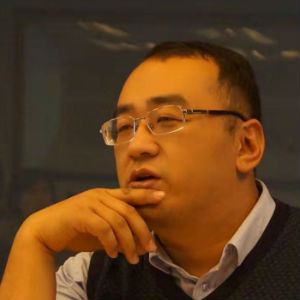
On July 22nd, the Economic Observer interviewed Wang Zhenyu on the current operation of grassroots finance and why grassroots finance bureau directors are hovering between the "bottom line" and "red line". Wang Zhenyu once served as the director of the Finance Department of Liaoning Province and has been focusing on research related to local finance in recent years.
Wang Zhenyu told the Economic Observer that in reality, there are usually two "paradoxes" that belong to multiple dilemmas. Paradox 1: Reasonable, reasonable, and appropriate, but non compliant, illegal, and non audited, commonly known as soft budget constraints or relaxed fiscal discipline. A typical case is to ensure certain rigid expenditures, such as securing the bottom line of grassroots "three guarantees", by squeezing and misappropriating funds to ensure timely and sufficient expenditure when financial resources are insufficient; Paradox 2: Compliance, legality, and suitability, but they are not reasonable, unreasonable, or appropriate. The current excessive promotion of franchise projects and asset revitalization projects is a typical case.
Wang Zhenyu believes that in reality, there is a significant difference between the "bottom line" and "red line" standards faced by grassroots finance bureau directors, and they are constantly changing. To overcome certain "bottom line" and "red line" constraints, it is necessary to address both the symptoms and root causes, clarify the powers and expenditure responsibilities of governments at all levels, implement effective market and proactive government boundaries, promote coordinated governance across sectors, and rely on long-term mechanisms to ensure and improve people's livelihoods. These are the main directions for optimizing and improving fiscal governance.
Economic Observer: From your understanding, how is the current operation of grassroots finance?
Wang ZhenyuOver the past decade since 2014, data shows that county-level fiscal revenue accounts for about 50% of local revenue, and county-level fiscal expenditure accounts for about 50% of national expenditure. The reality of two "half of the country" highlights the position and role of county-level finance in China's fiscal system.
When financial resources are sufficient, grassroots fiscal revenue and expenditure activities are stable, budgets are executed step by step, and administration and financial management are carried out in accordance with the law, which belongs to a typical orderly finance.
The operation of grassroots finance under tight and weak balance reflects more underlying logic, following the order of importance and urgency of fiscal expenditure, usually manifested as a situation of "ten bottles with several lids".
For grassroots finance bureau directors, the highest level of legal administration is to manage finances in accordance with the law, and its measurement standards are both reasonable, appropriate, compliant, legal, and audited. In reality, there are usually two "paradoxes" or difficult choices. Paradox one: Reasonable, reasonable, and appropriate, but non compliant, illegal, and unapproved, which is commonly referred to as soft budget constraints or relaxed fiscal discipline. A typical case is to ensure certain rigid expenditures, such as securing the bottom line of grassroots "three guarantees", and ensuring timely and sufficient expenditure through means such as embezzlement and misappropriation of funds when financial resources are insufficient; Paradox 2: Compliance, legality, and suitability, but they are not reasonable, unreasonable, or appropriate. Typical cases include certain excessive and excessive franchise projects, asset revitalization projects, etc.
Adequate treasury guarantee is a necessary condition for grassroots finance bureau directors to manage their finances in accordance with the law. Currently, grassroots finance is facing the dilemma of tight cash flow, which forces them to constantly focus on the dispatch of treasury cash flow. Cash flow management ability has also become an important criterion for testing current financial management capabilities.
Economic Observer: What is the "bottom line" and what is the "red line" for grassroots finance bureau directors?
Wang Zhenyu:In reality, it is conditional for the financial department to be a good home and manage finances well, which is commonly referred to as the "bottom line" and "red line". The so-called 'bottom line' is more reflected in certain fiscal expenditure responsibilities, such as ensuring basic livelihood, guaranteeing wages, guaranteeing operation and transfer, repaying principal and interest on maturing government debts, certain temporary emergency expenditures, and new corrective expenditures under the 'three guarantees' caliber. These belong to the category of strong rigid expenditures and must be paid, repaid, and implemented on time and in full. Touching the above' bottom line 'will lead to various risks to varying degrees.
The so-called 'red line' is more reflected in certain irrational fundraising behaviors during the financial management process, such as the increase of implicit debt, the emergence of new 'three chaos', and excessive activation of' three capital ', which to varying degrees constitute a' high-voltage line '. Any behavior that breaks through the "bottom line" or "red line", or touches the accountability mechanism to varying degrees, constitutes the final "defense line" of the finance bureau directors.
Economic Observer: What are the reasons why local finance bureau directors are jumping between the "bottom line" and the "red line"?
Wang Zhenyu:The local fiscal difficulties that emerged after the implementation of the tax sharing system can be referred to as the "troubles" in the growth of local finance, as well as the "pains" in the process of transitioning from "investing in goods" to "investing in people". The financial difficulties at the grassroots level are mainly due to three "bottom line" mechanisms: the practice of certain remaining expenditure responsibilities being covered by the grassroots; The practice of relying on the general public budget to cover the budget gap of the social insurance fund; The combined effect of certain public risks being covered by grassroots finance has gradually evolved into current grassroots finance issues.
For grassroots finance bureau directors, the "bottom line" is also known as the "lower limit", and the "red line" is also known as the "upper limit". The difference between the two actually constitutes fiscal space. The lower the "bottom line" and "lower limit", and the higher the "red line" and "upper limit", the sufficient fiscal space. Conversely, the opposite is manifested as a tight fiscal space, specifically manifested as a contradiction between fiscal revenue and expenditure. The scarcity and limitation of financial resources, as well as the infinite demand for expenditure, constitute the universal law of current finance. For local finance bureau directors, the "bottom line" and "red line" specifically constitute their financial principles, considering their financial management ability, financial art, and ability to expand fiscal space.
Economic Observer: Will this situation improve in the future, or what needs to be done to improve it?
Wang Zhenyu:Realizing the safe operation of local finance is a complex systematic project, which has a strong practical urgency. It can not only stay at the academic level. Moving from concept to practice is also an important chapter of local financial practice in the process of Chinese path to modernization.
It is difficult to achieve effective results by continuing to use general "prescriptions" to ensure the safe operation of local finances. Traditional measures such as increasing transfer payments and reducing "three public" expenses can only solve the current local liquidity problem, but cannot fundamentally address and respond to the accumulated risks of the past and the challenges brought by future changes. Only by truly endowing local finance with financial power, financial authority, and emergency response power that match the security level, improving the ability of local finance balance sheets to withstand risks across cycles, and improving the local finance ecology, can we implement and implement fiscal security. Therefore, we need to liberate our minds, innovate our thinking, take extraordinary measures, and systematically promote them.
In reality, there is a significant difference between the "bottom line" and "red line" standards faced by grassroots finance bureau directors, and they are constantly changing. To overcome certain "bottom line" and "red line" constraints, it is necessary to address both the symptoms and root causes, clarify the powers and expenditure responsibilities of governments at all levels, implement effective market and proactive government boundaries, promote coordinated governance across sectors, and rely on long-term mechanisms to ensure and improve people's livelihoods. These are the main directions for optimizing and improving fiscal governance.
At present, the national level is launching a pilot program to integrate and coordinate the use of transfer payment funds. With the popularization of pilot policies, it is conducive to improving the financial ecology of grassroots finance bureau directors.


 WeChat registration or login


 Subscribe