Economic Observer Follow
2026-07-20 20:21


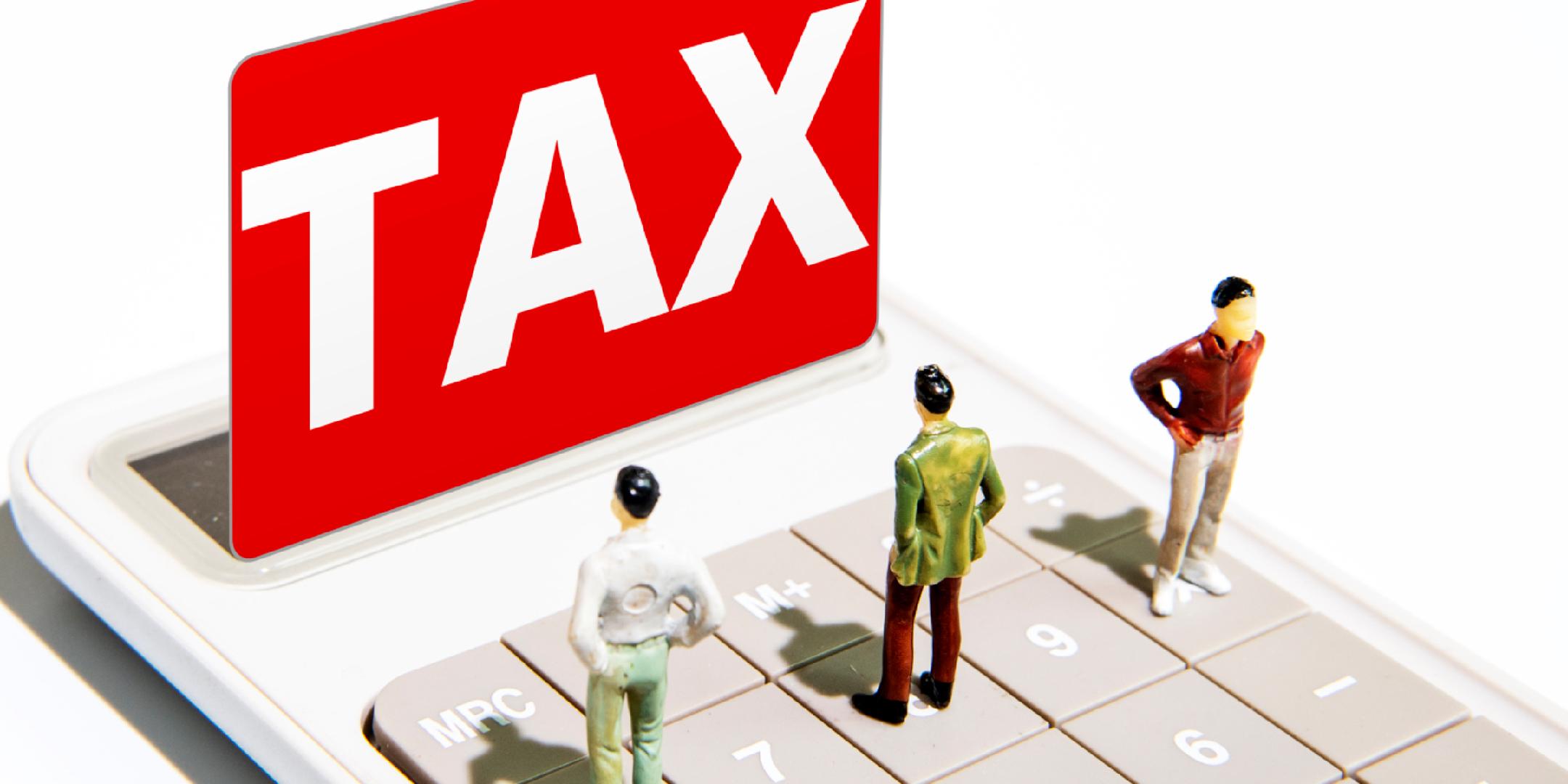
Recently, the Ministry of Finance, the General Administration of Customs, and the State Administration of Taxation jointly issued a notice on adjusting the consumption tax policy for some batteries, gradually restoring the collection of consumption tax on mature energy storage, power, and photovoltaic cells, and providing a window period for phased tax exemption for sodium ions, solid-state, fuel cells, and new photovoltaic cells.
This new policy bids farewell to the universal tax exemption for batteries that has been in use for more than ten years. It is part of the reform of the national new energy tax system, along with the adjustment of the purchase tax for new energy vehicles and the adjustment of the vehicle and vessel tax for new energy vehicles launched this year. The successive introduction of multiple tax policies means that the entire new energy vehicle industry chain is bidding farewell to the era of universal subsidies, and the industry chain will also usher in a new round of reshuffle and upgrading.
Tax preferential ladder reduction
From the perspective of policy adjustment, the battery consumption tax, like the new energy vehicle purchase tax, will gradually be subsidized through a step-by-step taxation approach. Among them, for widely used and technologically mature lithium-ion batteries, lithium primary batteries, nickel hydrogen batteries, and all vanadium flow batteries, a consumption tax of 2% will be levied from September 1, 2026. After a transition year, the tax rate will be increased to 4% from September 1, 2027. For photovoltaic cells (also known as solar cells) that have continued to expand production in recent years, a consumption tax of 2% will be levied from April 1, 2027; Similarly, a one-year transition period will be set, starting from April 1, 2028, with the tax rate increased to 4%.
For cutting-edge innovative categories such as sodium ion batteries, solid-state batteries, perovskite cells, stacked cells, and gallium arsenide cells in fuel cells and photovoltaic cells, phased tax exemption will be implemented from September 1, 2026 to December 31, 2028.
The above three types of differentiated taxation standards present a policy setting logic of stepwise regression taxation for mature products and extending the tax exemption window period for innovative technologies. This not only helps the industry transition smoothly, but also avoids the impact on emerging technology batteries that are still in the stage of industrialization.
The background of the adjustment of battery consumption tax is very clear: China has included batteries in the scope of consumption tax since February 2015, with a benchmark tax rate of 4%. But a large-scale tax-free list has been set up to cultivate the new energy industry chain, including mercury free primary batteries, nickel hydrogen batteries, lithium primary batteries, lithium-ion batteries, photovoltaic (solar) cells, fuel cells, and all vanadium flow batteries, all of which are exempt from consumption tax; Only lead-acid batteries with high pollution levels have been subject to a fixed 4% tax since 2016. After more than a decade of support, the production capacity of lithium-ion batteries, crystalline silicon photovoltaic cells, and other products has grown to the world's top, with a complete industrial chain and ample commercial application and market competition.
Inclusive tax incentives are no longer precise enough to tilt towards the next generation of innovative technologies. In this context, the three ministries have launched the optimization of the battery consumption tax, re calibrated the tax orientation, constrained and eliminated low-end production capacity, and stimulated and accelerated the research and development of cutting-edge low-carbon technologies.
Ten year tax dividend period ends
Lithium ion batteries, which are widely used in new energy vehicles, have been the first to resume taxation, in line with the overall tightening of the new energy tax system.
Under the leadership of the Ministry of Finance, the State Administration of Taxation, and the Ministry of Industry and Information Technology, the purchase tax for new energy vehicles will be adjusted from full exemption to half reduction starting from January 1st this year. At the same time, the tax reduction ceiling will be lowered, with a maximum tax reduction of 15000 yuan per new energy passenger vehicle. On July 3rd, three ministries and commissions issued a notice clarifying that from January 1st, 2027, the policy of halving the vehicle and vessel tax on energy-saving vehicles will be cancelled, and the policy of exempting pure electric commercial vehicles, plug-in (including extended range) hybrid electric vehicles, and fuel cell commercial vehicles from vehicle and vessel tax will be cancelled.
In terms of time cycle, the launch time of the vehicle and vessel tax new energy tax exemption preferential policy, vehicle purchase tax new energy tax exemption preferential policy, and battery consumption tax exemption preferential policy were January 2012, September 2014, and February 2015, respectively, spanning more than a decade from the initial germination to explosive growth of new energy vehicles. From 2015 to 2025, the domestic new energy upstream and downstream industry chain will implement a wide range of inclusive tax exemptions, such as full exemption of consumption tax for lithium-ion batteries, full exemption of purchase tax for new energy vehicles, and full exemption of vehicle and vessel tax for pure electric commercial vehicles. These policies have been favorable factors in promoting the rapid development of the new energy vehicle industry.
Nowadays, the countdown to the withdrawal of three types of tax preferential policies is gradually approaching, clearly indicating the direction of the policies, that is, when the industry matures, inclusive preferential policies will be orderly phased out, achieving fairness in the oil and electricity tax system, phasing out low-end production capacity with tax leverage, providing targeted support for cutting-edge innovation, and improving the green finance and taxation system.
The battery consumption tax targets upstream battery manufacturing and battery cell technology iteration, the purchase tax targets automotive consumption and vehicle energy-saving upgrades, and the vehicle and vessel tax covers the vehicle usage process. The three types of tax adjustments cover the entire chain of "production, purchase, and holding" of new energy vehicles.
Under the support of more than ten years of inclusive tax exemption policies, China's new energy vehicle and battery industries have achieved leapfrog development. At present, the penetration rate of new energy passenger vehicles has exceeded 60%, entering a turning point of stock competition and upgrading. Meanwhile, the long-term zero tax negative pressure has lowered the industry's cost threshold, leading to structural contradictions such as low price competition and weak profitability of passenger cars. This is the main reason that prompted the financial and tax departments to implement preferential policies and restart tax regulation functions.
The upcoming adjustment of battery consumption tax, based on the mainstream factory price of 0.35-0.40 yuan/Wh for lithium iron phosphate batteries, will increase the battery cost of a passenger car equipped with a 60kWh lithium battery by approximately 400-700 yuan (2% tax rate) and 800-1200 yuan (4% tax rate), respectively. This means that the costs of both battery companies and vehicle manufacturers will rise. Leading battery manufacturers and vertically self-developed vehicle manufacturers can moderately transmit costs downstream, with limited profit pressure. However, small and medium-sized battery manufacturers and vehicle companies that purchase batteries from external sources face the risk of direct cost compression from taxes and fees.
In addition, according to the regulation that "taxpayers who produce taxable battery products for their own use and use them for continuous production of taxable batteries/automotive products are not required to pay consumption tax", if the self-produced batteries of car companies are directly installed for self use, they can be exempted from battery consumption tax. This may force vehicle companies to accelerate the development of self-developed batteries and promote the industry towards vertical integration. Meanwhile, the two-year tax-free window reserved for solid-state batteries and other emerging fields is expected to accelerate technological breakthroughs in these areas.


 WeChat registration or login


 Subscribe