2026-06-27 15:28


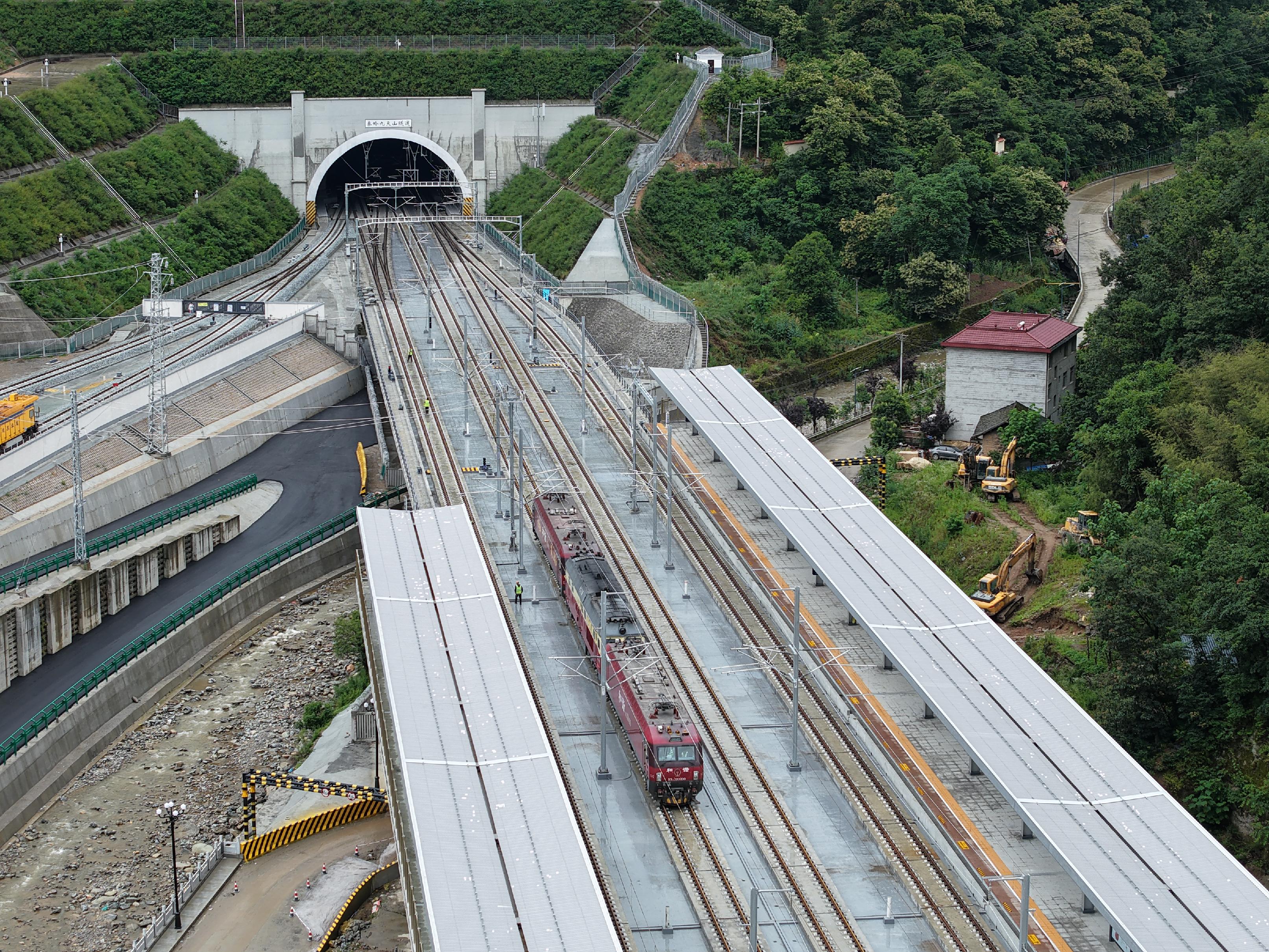
Xinhua Finance Xi'an, June 27th - According to China Railway Xi'an Group Co., Ltd., on the morning of June 27th, as the 57611 professional inspection train slowly departed from Xi'an East Station and crossed the Qinling Mountains all the way towards Ankang West Station, it marked the beginning of the joint debugging and testing phase of the entire Xikang high-speed railway line.
Joint debugging and testing are key steps for high-speed rail to move from the construction phase to the operation phase, just like conducting a "full body physical examination" for the line. During the joint debugging and testing of the Xikang high-speed railway, the railway department conducted comprehensive testing, verification, and optimization of the matching relationships between various systems and interfaces such as track, subgrade, bridge and tunnel, power supply, signal, communication, and customer service by simulating the operation status of the line. It timely discovered and rectified problems in equipment operation, providing important technical support for the opening and operation of the line.
This is the Xikang high-speed railway under construction. (Drawing provided by China Railway 12th Bureau)
The Xi'an Ankang high-speed railway is an important component of the national medium - and long-term railway network plan's "Eight Verticals and Eight Horizontals" high-speed railway corridor, including the Baotou (Yinhai) Passage and the Beijing Kunming Passage. The newly built main line has a total length of about 171 kilometers and a design speed of 350 kilometers per hour. It has six stations: Xi'an East, Niubeiliang, Zhashui West, Zhen'an West, Tongmu, and Ankang West.
After the completion and opening of the Xikang high-speed railway, the running time of the railway from Xi'an to Ankang will be shortened from the current 3 hours to less than 1 hour, which will significantly shorten the time and space distance between the Guanzhong Plain urban agglomeration and the Qinba Mountain area in southern Shaanxi, and is of great significance for promoting local economic development.
Editor: Zhang Yu


 WeChat registration or login