Economic Observer Follow
2026-06-25 21:36



Chen Yueqin/Wen
On June 23rd, the topic of "no more screen ads" topped Weibo's hot search list. Gaode Maps, Baidu Maps, Tencent Maps, and other navigation systems have urgently taken down screen opening advertisements. Users have finally achieved the function of instantly entering the homepage by clicking on the icon - a feature that you should have thought was almost bought with the life of blogger "Boss Li".
Five days ago, this blogger opened a navigation app while driving down the highway on a rainy day. However, due to a slight vibration in the car, the phone page redirected to an e-commerce platform, causing the navigation interface to be lost and almost being rear ended by a large truck behind. This thrilling encounter quickly resonated with a large number of car owners, with public opinion pointing directly at the platform's "trading lives for conversion rates".
Major application vendors always boast that their big data technology has reached a state of perfection and can accurately guess user preferences, but this algorithm appears extremely absurd in the face of screen jumping. It's hard to understand why they default. When users open the map navigation on rainy days, they may want to go to Taobao, JD.com, or Xianyu first; When opening Bilibili to watch videos, I prefer to go to 1688 for wholesale procurement; Even when you use the property app of the community to lock the door and go home, you want to swipe Kwai first or watch a short play
The world has been struggling with screen jumping advertisements for a long time. On social media, some netizens have spread word of mouth about an automatic ad skipping software called "Li Tiaotiao", and have shared it with unofficial download channels. In August 2023, Li Tiaotiao, a developer, announced that they had received a letter from Tencent's lawyer accusing the app of unfair competition - "the involved software attracted users to download and use the involved software by blocking and filtering browser advertising services... ultimately causing a reduction in consumer welfare.
We do not know whose well-being has been compromised and which users can benefit from redirect advertising. At major e-commerce promotion events such as "6.18" and "Double 11", billions of users spend seconds every day closing jump ads, exiting accidental applications, and even uninstalling unknown applications downloaded without permission.
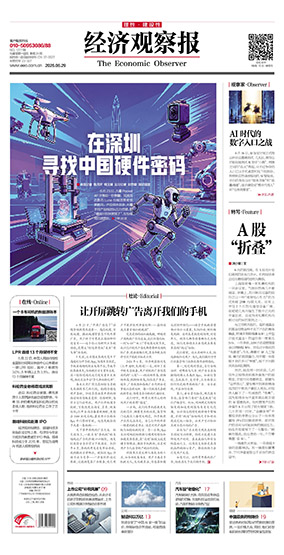
In June 2024, the Economic Observer newspaper published an article titled "Open the APP, Don't Move", analyzing the business chain: the "three highs" that users detest about jump ads - high frequency of placement, high frequency of accidental touches, and high jump frequency - are precisely the KPIs that advertisers, media, advertising alliances, and advertising agencies at all levels dream of. Behind every forced jump, there is a real transfer of benefits.
We call on all applications to stop cyberbullying end users.
On the one hand, our mobile phones are equipped with more advanced chips, faster internet speeds, and regulatory authorities have repeatedly issued clear regulations, but mobile phone users still cannot decide what they see at first glance when they open the software. This is a violation of users' right to choose and right to know. On the other hand, the app forcibly calls on gyroscopes and acceleration sensors without explicit authorization, sets many illusions on the "close" button, and controls the phone to jump, which is a blatant infringement on the user's personal digital property.
Technology was supposed to be a tool for extending human abilities, but now it is taking the lead. Users are no longer the owners of their phones, but have been tamed by algorithms, sensors, and business logic - even the posture of holding the phone must be careful, afraid of shaking or tilting triggering jumps. This high-sensitivity trap is particularly cruel to vulnerable groups such as the elderly and visually impaired, who find it harder to accurately click the "skip" button hidden in the corner of the screen.
We hope to return tools to tools and give users the right to choose. Therefore, we strongly demand that industry regulatory authorities take substantive governance measures:
Firstly, establish an absolute restricted zone and implement graded management. For strong tool attribute apps directly related to personal and property safety, such as travel navigation, emergency medical care, payment, etc., any form of screen jumping advertisements should be completely prohibited. The safety bottom line does not allow any commercial compromise.
Secondly, quantitative standards should be introduced to standardize technical parameters: regulatory authorities should strictly quantify "high sensitivity". For example, specifying the acceleration threshold and angle change range triggered by the gyroscope, such as the requirement to reach a specific swing arm amplitude, and setting a uniform standard for the size and contrast of the "skip" button, so that users can easily turn off ads they are not interested in.
The realization anxiety and growth dilemma of enterprises and advertisers can be understood, but it must not be based on kidnapping user time or even threatening human safety. Excessive overdraft experience is consuming the core assets of the brand, and forcing redirection will only cause user aversion.
If possible, please remove all screen jumping ads from our phones completely. This is not an excessive demand.


 WeChat registration or login


 Subscribe