Economic Observer Follow
2026-06-25 17:19


Economic Observer reporter Wang Yajie
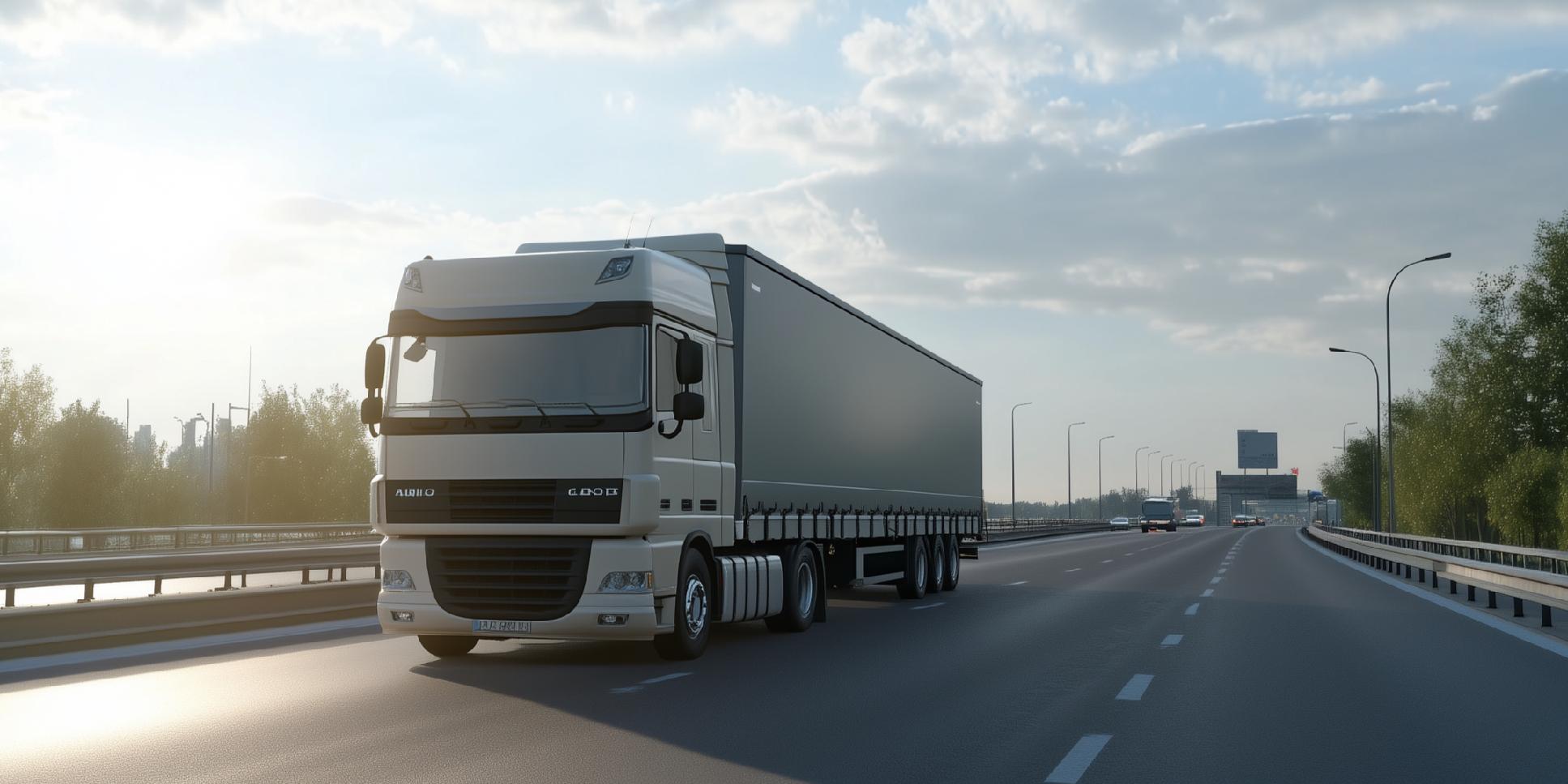
Zhang Guosheng, a driver who has been running steel logistics business for more than ten years in Tangshan, Hebei, just sold the last three diesel heavy trucks in his fleet in May.
He didn't dare to place an order for a new energy heavy-duty truck. A 49 ton short distance battery swapping pure electric heavy-duty truck has a local landing price of 850000 yuan, while a regular diesel heavy-duty truck of the same tonnage has a landing price of only 400000 yuan, with a price difference of more than double.
He also heard about the plan of buying only the chassis and renting batteries, with a monthly rent of seven or eight thousand yuan. It sounds like the cost can be calculated, but when he asked, that plan is not yet applicable to his route. It's not that I don't want to replace it, it's that I can't afford to replace it, and I still can't use it.
Shortly after Zhang Guosheng sold his last diesel car, on June 12th, the Ministry of Transport and eleven other departments jointly issued the "Implementation Plan for Promoting the Large scale Application of New Energy Heavy Trucks" (hereinafter referred to as the "Plan"). This is the first national level special coordination document for new energy heavy-duty trucks that fully covers the entire chain of car purchase, energy replenishment, operation, finance, land, and insurance.
Wu Xiqing, Director of Technical Policy Research at the China Automotive Strategy and Policy Research Center, told the Economic Observer that heavy trucks are major consumers of oil, and promoting new energy heavy trucks is a key measure to reduce China's dependence on crude oil and ensure energy security. The joint document issued by eleven departments is a long-term strategic deployment made at the national level to coordinate ecological and environmental protection, energy security, and high-quality development of modern logistics. The trend of heavy truck electrification transformation has been determined, and there is no possibility of going back.
Zhang Guosheng currently has no plans to purchase a car and is waiting to see if there will be a turning point after the new policy is implemented in June.
The greater the gap between policy goals and individual accounts, the more difficult it is for Zhang Guosheng and his team to turn the steering wheel.
850000 yuan, I can't afford to exchange it
Zhang Guosheng used to travel a short distance of about 300 kilometers a day from Tangshan to Qinhuangdao for steel transportation. His 7 diesel heavy-duty trucks were gradually phased out, and the last 3 were also disposed of in May. The environmental protection policies in the Beijing Tianjin Hebei region continue to tighten, and the restricted area for old diesel vehicles continues to expand. He is afraid that the diesel heavy-duty trucks in his hands will become less valuable.
He went to the dealer to ask for the price of a pure electric heavy-duty truck, which was 850000 yuan. The diesel heavy-duty truck he bought last year only landed for 400000 yuan.
He calculated that switching to a pure electric heavy-duty truck would save 1 yuan per kilometer on electricity compared to diesel, 300 yuan per day, and 90000 yuan per year for 300 days of operation. But 850000 yuan is 450000 yuan more expensive than 400000 yuan, and it will take 5 years just to equalize this price difference.
The actual service life of a heavy truck in Tangshan under such working conditions is generally only 4 to 5 years.
It's like only earning back the price difference in the last year and paying off debts in the previous years, "said Zhang Guosheng.
This is not his personal ledger.
A spokesperson for a state-owned automobile company's new energy business told the Economic Observer that the high price of new energy heavy-duty trucks is mainly due to the high cost of power batteries. A 49 ton pure electric heavy-duty truck is equipped with a lithium iron phosphate battery pack with approximately 282 kWh of electricity, which accounts for 40% to 50% of the total vehicle cost. The core component of fuel heavy-duty trucks, the engine, accounts for a much lower proportion of the cost. In addition, new energy heavy-duty trucks also need to be equipped with three electrical components such as drive motors and electronic control systems, which require higher R&D investment and manufacturing costs than the transmission systems of traditional fuel vehicles.
The battery is the biggest cost item, and in recent years, the prices of battery raw materials have fluctuated dramatically, making vehicle manufacturers very passive in cost control, "the person said.
The high cost of the entire vehicle is transmitted to the terminal, which is the landing price of 850000 yuan faced by Zhang Guosheng.
Dealer Lao Zhang has been selling heavy trucks in Baoding, Hebei for over a decade. He observed that there have been many more customers inquiring about new energy heavy trucks this year compared to last year, but less than 20% have actually placed orders. Most people just ask a few questions about the battery life and how much it costs, and when they hear the price, they leave, "he said.
Liu Yu, the person in charge of the logistics fleet that operates cross provincial trunk lines in Shijiazhuang, calculated a different account. The high-speed range of pure electric heavy-duty trucks is significantly reduced, and a car with a nominal mileage of 400 kilometers can only run for just over 300 kilometers. For routes with a one-way distance exceeding 600 kilometers, the vehicle must be recharged at least twice and wait for 1.5 hours each time. Freight drivers calculate their income on a per trip basis, and the waiting time can directly reduce their ability to receive orders.
The driver is unwilling to drive because they earn less. The boss is also unwilling to buy because the car is expensive, cannot run, and has a slow return on investment, "he said.
The above-mentioned person from the new energy business of the state-owned automobile enterprise further revealed that in the first five months of this year, the company's cumulative sales of new energy heavy-duty trucks exceeded 12000 units, with a monthly sales of 4190 units in May, winning the industry's monthly sales crown for three consecutive months. But the profit margin of a single car is being sharply compressed. "Now selling a new energy heavy-duty truck, the profit is less than 10000 yuan. The terminal transaction price of some competing car models has been pushed close to the cost line," the person said.
Zhong Weiping, Secretary General of the Commercial Vehicle Professional Committee of the China Automobile Dealers Association, told Economic Observer reporters that from January to May 2026, the total retail sales of various types of heavy-duty trucks in China will be 336000, a year-on-year increase of 16.8%. Among them, the retail sales of new energy heavy-duty trucks will reach 104000, and the remaining sales will be traditional energy heavy-duty trucks such as diesel, CNG, and methanol. Currently, there is no detailed statistical data on the purchasing entities.
The main driving force for sales growth comes from policies such as environmental restrictions on old diesel vehicles, rather than economic choices made by end users after actively settling accounts.
The "Plan" released on June 12th has painted a new development picture for the industry.
The Plan clearly states that by 2030, the number of new energy heavy-duty trucks in China will exceed 1.6 million, accounting for about 20% of the total number of heavy-duty trucks, and the penetration rate of new vehicles will reach 40%; The electrification rate of heavy-duty trucks in key areas of Beijing Tianjin Hebei and Fenwei Plain, as well as fixed short haul lines, exceeds 80%; Build a 30000 kilometer zero carbon freight corridor based on the high-speed road network, and guide the construction of about 3000 heavy-duty truck charging and swapping stations in various regions; The freight volume of new energy heavy-duty trucks on high-speed trunk lines accounts for 18% of the overall heavy-duty truck freight volume.
The direction has been set, and the goal has been achieved. Zhang Guosheng's question became a more specific inquiry, can the 'Plan' help him cross the threshold of 850000 yuan?
Policies provide new solutions
The solution provided in the 'Plan' points to a key keyword: vehicle electric separation.
The so-called separation of vehicle and battery refers to trading the vehicle and battery separately. Logistics companies only purchase "frames" without batteries, while batteries are leased to professional asset management companies for monthly rental payments. The maintenance, replacement, and residual value disposal of batteries are all borne by the operator, and users are only responsible for using the car.
If this mode is implemented, the car purchase threshold will be directly reduced from 850000 yuan to around 400000 yuan.
The above-mentioned new energy business personnel of the state-owned automobile company explained to the Economic Observer the operational logic of vehicle electric separation - after the user purchases the chassis, they sign a lease agreement with the battery asset company and can operate on the road by paying monthly rent. In battery swapping mode, after the battery is depleted, it takes a few minutes to replace the fully charged battery at the swapping station, which is equivalent to the refueling time of a gasoline car. The attenuation, maintenance, and scrapping of batteries are all covered by asset companies, and users do not need to bear the risk of battery residual value depreciation.
Liu Yu said that the purchase cost of a frame for a battery swapping heavy-duty truck is about 420000 yuan, and the monthly rental cost of the battery is between 7000 and 8000 yuan. There are also certain discounts for annual leasing. The comprehensive cost of electricity, rent, and daily maintenance has approached or even slightly lower than the lifecycle cost of diesel vehicles.
He said, "The key is not whether the unit price is cheap or expensive. It's not about making me pay hundreds of thousands of yuan at once. I can handle monthly payments
If this logic runs smoothly, Zhang Guosheng's ledger will be rewritten. It's no longer about emptying 850000 yuan at once, and it's no longer about getting back to work in 5 years. The frame costs just over 400000 yuan, and the monthly rent is around 7000 to 8000 yuan. The saved fuel costs each month can almost offset half of the rent. The cash flow pressure of monthly payments is much lighter than spending 850000 yuan at once.
The new energy business personnel of the above-mentioned automobile state-owned enterprises believe that heavy trucks, as production materials, are highly sensitive to the full life cycle cost of end users, and the one-time expenditure pressure in the car purchase process is often the biggest decision-making obstacle. The separation of vehicle and electricity precisely targets this pain point, converting one-time capital expenditures into monthly operating costs that match the revenue rhythm of the freight industry.
The Plan saw the strategic value of this model, and proposed in the section of "Encouraging business model innovation" that "guide the innovation of new business models such as vehicle electricity separation, battery leasing, integrated energy services, and vigorously develop emerging industries such as battery asset management, new energy transportation equipment finance leasing."
The intention of the policy is very clear, to try to break down the price threshold and make it affordable for users. The account has been calculated and the business model support has been included in the document. In theory, Zhang Guosheng can place an order now.
But he hasn't done it yet.
In reality, changing the battery still doesn't work
To truly run a car with electric separation, a key link is essential, which is battery swapping.
There is no battery on the frame, and the battery is rented. If it runs out of battery, go to a battery swapping station to replace it with a fully charged battery. There are three roles in this chain that must collaborate: the driver can easily find the battery swapping station, the battery swapping station has compatible batteries, and financial institutions are willing to provide financial support for this system. If any link falls off the chain, it will be difficult for the car to land due to the separation of electricity and vehicle.
The reality is that there are problems in all three aspects.
The first obstacle is that the relevant standards of the battery swapping station are not completely interchangeable.
The new energy business personnel of the above-mentioned automobile state-owned enterprises told the Economic Observer that currently, the battery packs put into operation by various automobile companies and battery swapping station operators are not interchangeable in terms of size specifications, interface standards, and communication protocols. The battery swapping stations built by his company in Hebei and other places can only serve specific brand car models equipped with his customized batteries.
For example, if a driver drives from Tangshan to Shijiazhuang, changes the battery once, and then drives to Handan, if the station in Handan is not within our system, the battery cannot be replaced, "he said.
The separation of car and electricity is' separated ', but it cannot be' replaced '. The user is facing a fragmented and self-contained battery swapping network. This is like the era when mobile phone charging interfaces are not unified, different brands of chargers are not compatible with each other, but when the phone runs out of battery, it can be charged at home, and when a heavy truck runs out of battery on the highway, it can only wait for rescue.
The above-mentioned person from the new energy business of a state-owned automobile enterprise revealed that the industry is currently promoting the development of group standards for the standardization of battery packs, but it will still take time to transition from group standards to industry wide mandatory standards.
The uneven construction of the battery swapping station network has further exacerbated the problem. The person in charge of a provincial-level transportation platform charging and swapping project in Hebei Province provided a set of data to the Economic Observer: The group has invested in a heavy-duty truck swapping station on a major highway in Hebei Province, with a designed daily service capacity of 150 trains. However, in the past six months of operation, the daily average number of swapping cars has been less than 30, with a utilization rate of less than 20%. The person said, "We have calculated the static investment payback period and optimistically estimate it to be twelve years. The equipment life of a battery swapping station is only eight to ten years, which means that the cost may not be recovered throughout the entire life cycle
Drivers dare not buy new energy heavy-duty trucks because there are too few high-speed charging and swapping stations. The operator dare not continue to invest in the construction of battery swapping stations because there are too few vehicles coming for swapping. The negative cycle of 'waiting for the bus at the station, waiting for the bus at the station' occurs simultaneously in multiple provinces.
The second obstacle is that even if the battery swapping station is built and interconnected, there is a deeper issue - no one can say for sure how much the battery is worth.
The above-mentioned personnel in the new energy business of state-owned automobile enterprises stated that batteries are the asset with the fastest depreciation in the entire vehicle, with a theoretical cycle life of 3000 times or 5 to 8 years. However, the actual residual value is greatly affected by multiple factors such as usage conditions, charging and discharging habits, temperature environment, etc. The remaining value of the same battery after running for three years on Tangshan Iron and Steel Short Circuit and three years on Hainan Mainline Expressway is completely different.
The current industry lacks a unified battery health testing standard and residual value evaluation system.
The unclear value of battery assets directly leads to the third obstacle, which is the inability of financial support to keep up. Banks and other financial institutions cannot evaluate the value of batteries as collateral, making it difficult to provide credit products.
The above-mentioned new energy business personnel of state-owned automobile enterprises told the Economic Observer that "financial support cannot be closed loop", for example, policies encourage financing leasing, but financial institutions cannot see the value of batteries clearly and dare not easily enter the market. Without financial support, asset management companies do not have enough funds to purchase batteries in bulk and lay out battery swapping station networks. The entire chain is stuck on the three words' unclear '.
Liu Yu confirmed this judgment, even if they are willing to accept the vehicle electric separation model, the actual financing threshold is still higher than the policy design expectation. The approval process of banks is long, and the collateral requirements are high. As someone with a small fleet, we are the most awkward, "he said.
The three obstacles are interrelated, the power exchange stations are not interconnected, and the power exchange network is fragmented; The residual value of the battery cannot be explained clearly, and financial products cannot keep up; Finance cannot keep up, and asset management companies do not have enough funds to purchase batteries and build networks, making it even more difficult to improve the density and interoperability of battery swapping stations.
The separation of vehicle and electricity is a common path in policy documents, but in reality, it requires breaking down these obstacles.
Changes Are Happening
Zhang Guosheng went to the dealership several times and heard about the separation of car and electricity, as well as the monthly rent of seven or eight thousand yuan. However, after asking around, no one could tell him if there were any stations on the Tangshan Qinhuangdao line that could replace the battery, how to calculate if the rented battery broke, or whether the bank could approve a loan for him.
But the changes are advancing in two directions simultaneously.
The above-mentioned person from the new energy business of a state-owned automobile company revealed that the industry is already promoting the development of group standards for the standardization of battery packs. Multiple vehicle manufacturers, battery manufacturers, and battery swapping station operators participated in the discussion. But the person also admitted that there is still a long way to go from group standards to industry wide mandatory standards, involving the transformation of existing batteries, upgrading of existing battery swapping stations, and coordination of interests among all parties. "Every step is not easy".
At the same time, multiple provincial transportation platforms have started laying out the charging and swapping networks for mainline heavy trucks.
Jiangxi Provincial Highway Investment Co., Ltd. (hereinafter referred to as "Jiangxi Referendum") has established multiple heavy-duty truck charging stations on national and provincial trunk lines throughout the province. In June of this year, 12 heavy-duty truck charging stations on the G60 Shanghai Kunming Expressway were simultaneously launched for public bidding. The project focuses on the Shanghai Kunming freight mainline, with the goal of filling the gap in high-speed energy supply.
On the evening of June 23rd, a person close to the Ministry of Transport told the Economic Observer that after the issuance of the "Plan", multiple provinces have been studying and formulating supporting implementation measures, with a focus on the construction planning of charging and swapping facilities in highway service areas and land security. The policy intention is very clear, to first get infrastructure running, and then reduce costs through economies of scale.
Wu Xiqing told the Economic Observer that the industry still faces practical obstacles such as high purchase costs for new cars, difficulty in obtaining insurance and high insurance premiums, and immature business models for separating cars and electricity. Eleven departments have jointly issued a special implementation plan, with the core value of promoting each department to perform its own duties and work together from different dimensions such as supervision, finance, and energy to accurately clear and promote these obstacles. If there is no resistance to market-oriented substitution, the introduction of special policies will lose its necessity, "he said.
Wu Xiqing further pointed out that as the price of power batteries falls, the overall selling price of new energy heavy-duty trucks also decreases synchronously. Early mainstream models were only equipped with 280 degree batteries and had a range of around 200 kilometers; Nowadays, mainstream car models generally have a battery capacity of over 400 degrees and a range of over 300 kilometers, with some announced models having a range of up to 500 kilometers or even higher. At the same time, a large number of old fuel heavy trucks are entering the scrapping and elimination period, coupled with the mandatory emission reduction control requirements faced by high energy consuming and high emission enterprises. Multiple favorable factors are jointly promoting industrial and mining enterprises to accelerate the replacement of existing fuel heavy trucks with new energy heavy trucks.
Zhang Guosheng is unaware of these. He only knows that he has sold his diesel car and hasn't bought a new energy vehicle yet.
Wu Xiqing told the Economic Observer reporter that users are more concerned about personal short-term economic accounts, which also reflects that the green transformation of the entire freight industry needs to bear long-term costs, and the industry will inevitably suffer from the pain of transformation in the short term. However, the large-scale landing of new energy heavy-duty trucks is an inevitable choice to balance industrial upgrading, environmental protection, and energy security. "This implementation plan is a guiding document for the field of new energy heavy-duty trucks, providing clear policy guidance for the development of the industry during the '15th Five Year Plan' period, and the long-term trend of electrification will not change," he said.
Zhang Guosheng thought that now policies need to pave the way, and what should be on the road is not yet fully equipped.
He decided to wait a little longer.


 WeChat registration or login


 Subscribe