

Economic Observer Follow
2026-06-06 10:18


Economic Observer reporter Lao Yingying
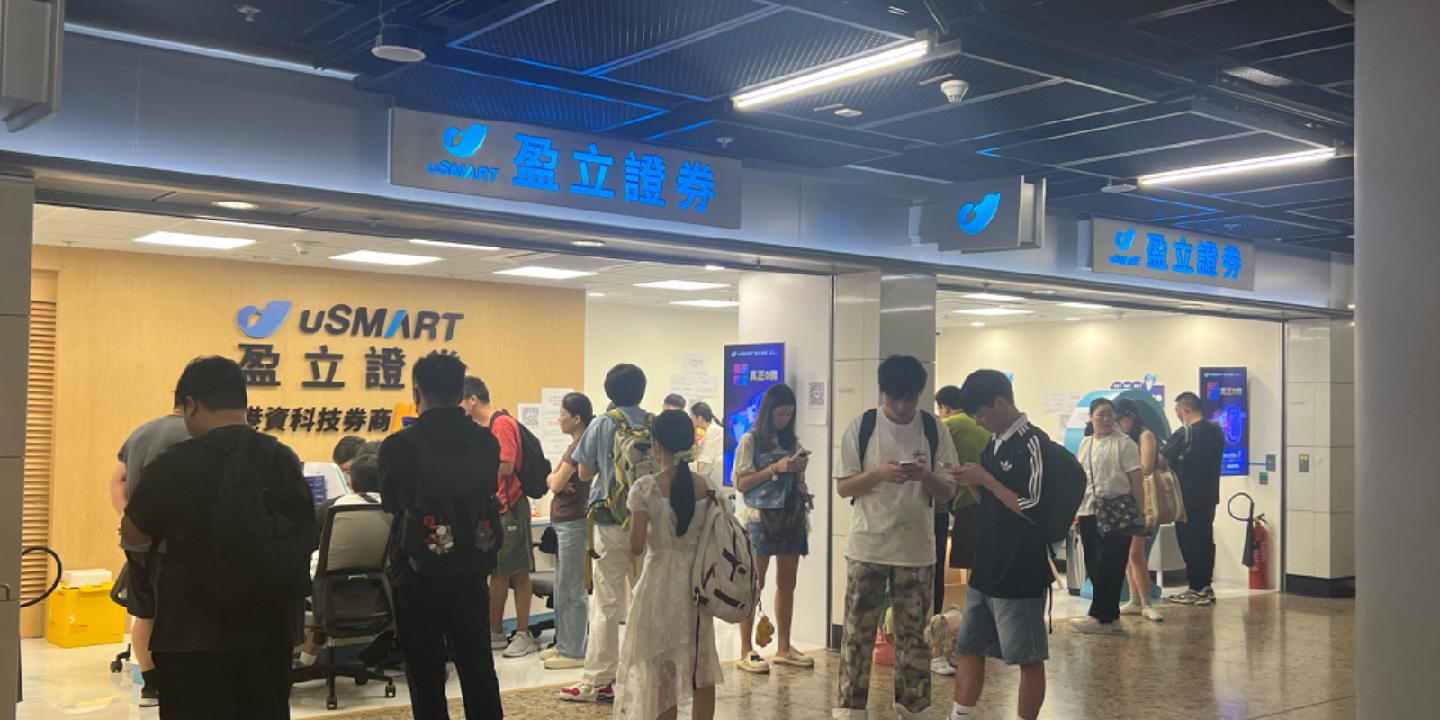
In the exit area of the West Kowloon High Speed Rail in Hong Kong, the small store of Fortune Securities in West Kowloon is crowded with investors from mainland China who come to open accounts. It doesn't matter if you don't have a Hong Kong bank account, just open a securities account first, and then bind the bank account later, "said a staff member of Wealth Securities to the applicant.
Due to limited seating in the store, many people can only stand with their phones to open accounts. On one wall of the store, there is a piece of paper that reads: "Please prepare the following documents: ID card, pass, entry receipt, bank account, must be connected to our store's WiFi. The staff of Rich Securities will ask the account holder to first connect to the store WiFi, ensure that they can download their company's mobile application software, and confirm that the account holder's network address is in Hong Kong.
On June 4th, a reporter from the Economic Observer inquired about account opening matters with Rich Securities as an investor. The staff of the securities company stated that investors do not need to deposit funds to open an account with the company. After filling in the relevant information according to the prompts, the system will review the information in about ten minutes. If there are no problems with the review, the securities account will be opened; After the investors have successfully opened their Hong Kong bank accounts, the staff will assist them in linking their securities accounts.
On May 22, the China Securities Regulatory Commission announced on its official website that it had recently launched investigations into the illegal operation of securities business by domestic and foreign entities such as Tiger Brokers (NZ) Limited (hereinafter referred to as "Tiger"), Futu Securities International (Hong Kong) Limited (hereinafter referred to as "Futu"), and Changqiao Securities (Hong Kong) Limited (hereinafter referred to as "Changqiao"), and had given prior notice of administrative penalties.
The Hong Kong Securities and Futures Commission and the Hong Kong Monetary Authority have also simultaneously issued regulatory notices to constrain licensed securities firms and banking institutions - licensed institutions must obtain written statements from investors when opening personal investment accounts for mainland investors, promising that all funds used to support investment activities and related settlements are legal funds from outside mainland China.
Local securities firms in Hong Kong are favored
Yingli Securities' West Kowloon store is located across from the West Kowloon store of Fufu Securities, and two local securities firms in Hong Kong have started "cross-strait" business. Yingli Securities has high requirements for opening accounts for mainland investors. In addition to requiring a mainland ID card and a Hong Kong bank account, opening an account also requires a transfer of HKD 10000 or USD 1500 to enter the final review process. The reporter noticed that even with the requirement of deposit, there are still many mainland investors who consult and operate account opening at Yingli Securities West Kowloon store.
The staff of Yingli Securities told reporters that there are a large number of people applying for account opening, and the workload of review is relatively heavy. After entering the final review stage, it takes about 1 to 2 working days to complete the account opening process.
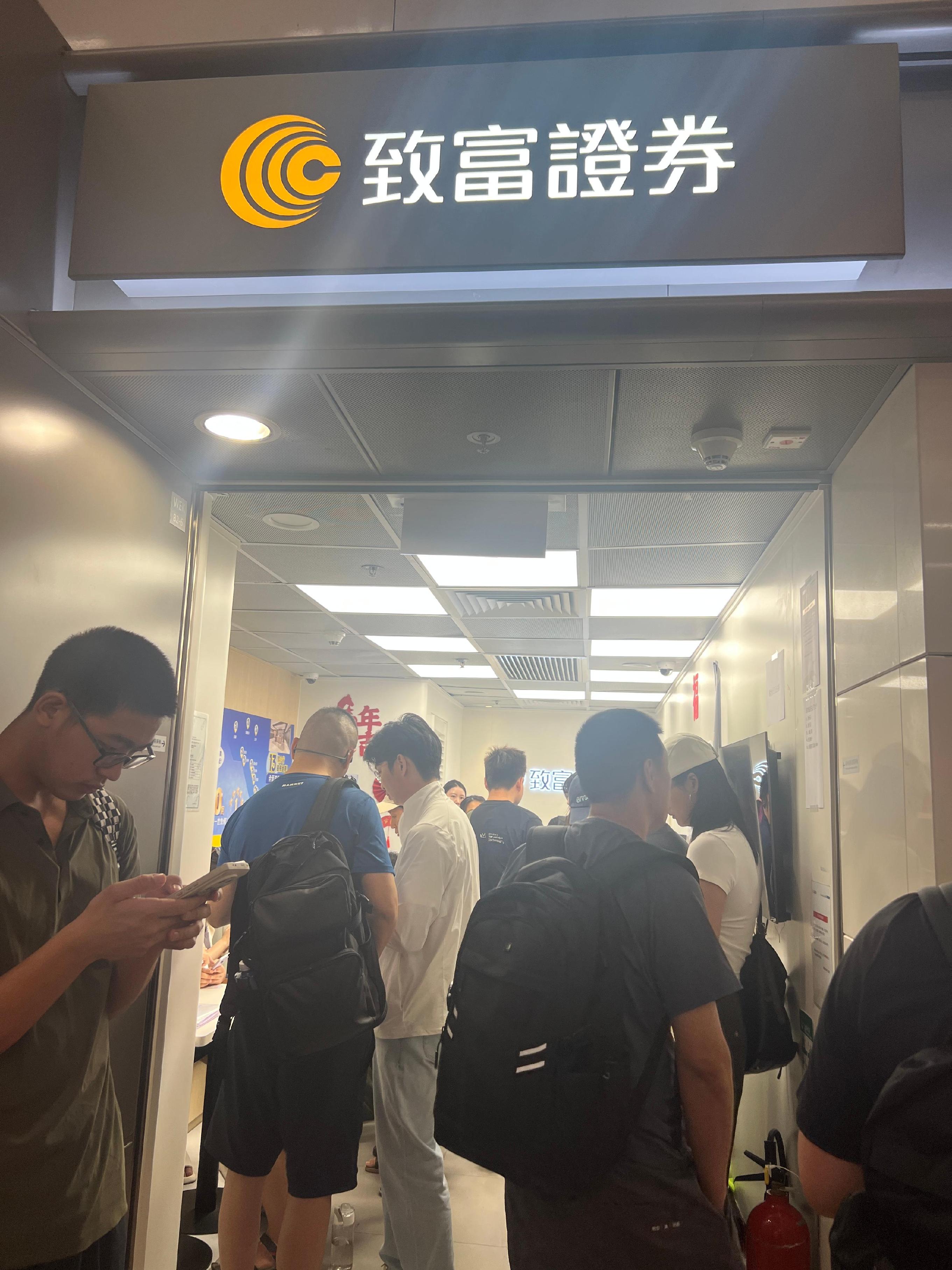
(Photo by Lao Yingying, a mainland investor at the Rich Securities store)
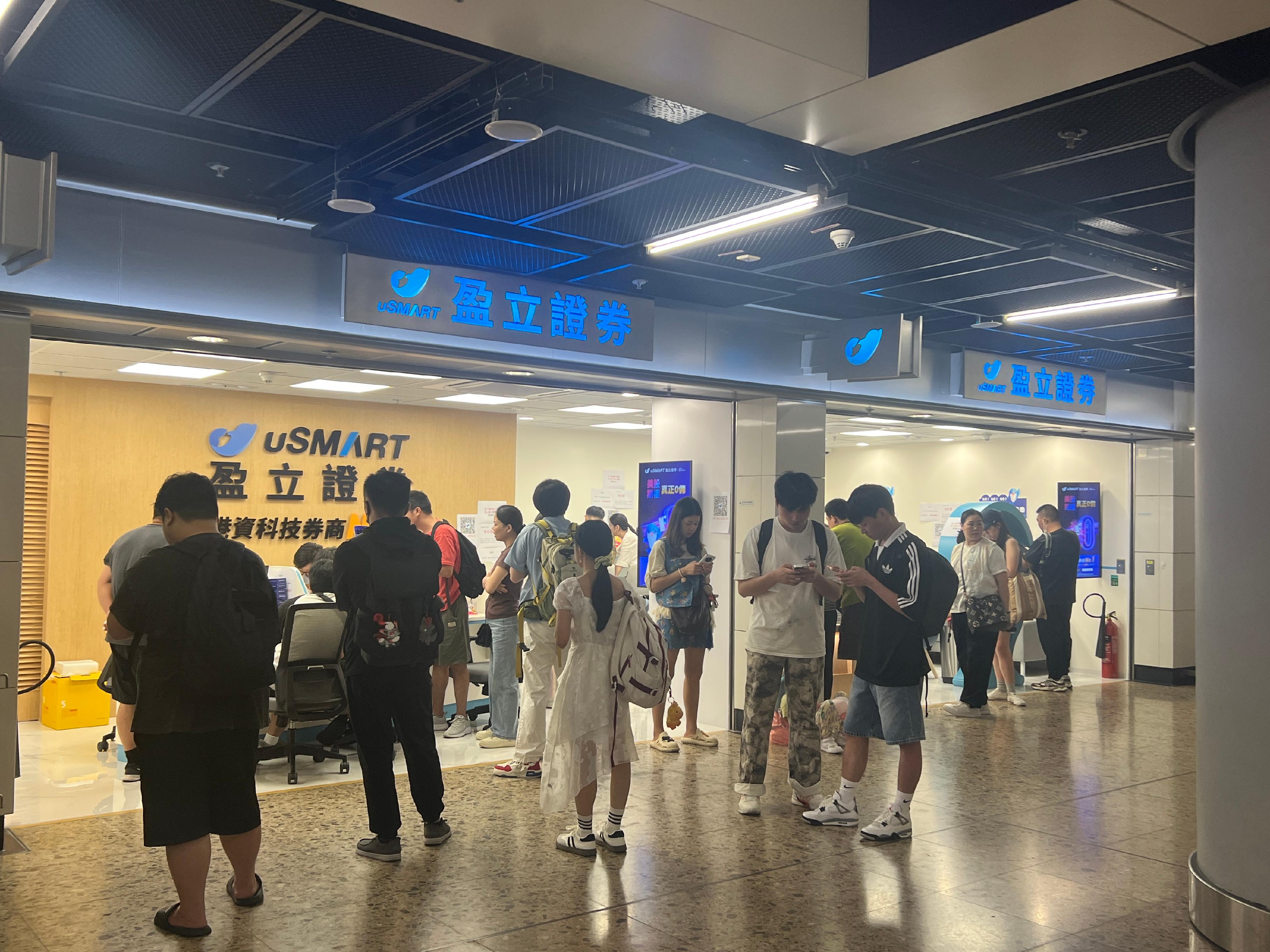
(Photo by Lao Yingying, a mainland investor at Yingli Securities store)
The reporter visited Haiphong Road in Tsim Sha Tsui (once a very famous "street" for Hong Kong securities account opening) and found that only three or four sporadic securities companies such as Futu Niuniu, Tiger Securities, and Fangde Zhitou were conducting local promotion, and all of them were opening accounts for Hong Kong identity investors. The Tsim Sha Tsui stores of Rich Securities and Yingli Securities are still very lively, with many account holders from mainland China.
In Tsim Sha Tsui, the reporter saw that staff from Fosun International Securities were also conducting ground promotion. Fosun International Securities is also a local securities firm in Hong Kong. A staff member of the company stated that they can open a Hong Kong securities account for mainland investors. If the Hong Kong bank account is not yet open, mainland investors can first open a securities account, open a Hong Kong bank account within one month, and transfer HKD 10000 to activate the securities account for trading.
Recently, after the China Securities Regulatory Commission (CSRC) filed an investigation on the relevant subjects at home and abroad of three cross-border Internet securities firms, Tiger, Futu and Changqiao, and notified them of administrative penalties in advance, all three securities firms issued relevant notices to implement regulatory requirements.
On June 2nd, Tiger International issued a notice stating that in order to implement the latest industry regulatory requirements, starting from June 12th, domestic trading permissions will only support selling and closing operations, and new opening and adding trading of all varieties such as stocks and options will be suspended; Suspend fund transfers and keep the transfer function normal.
On June 3, Long Bridge Securities issued a notice stating that since June 12, the services provided to customers visiting from Chinese Mainland have been adjusted as follows: only selling, closing positions and capital transfer out are supported; Opening new positions, adding positions, and transferring funds for all types of stocks are not executable operations.
On June 4th, Futu Holdings also issued a similar announcement as mentioned above.
It is against the backdrop of the aforementioned "restricted domestic trading" that some mainland investors have begun to turn to local securities firms in Hong Kong.
The staff of the above-mentioned Wealth Management Securities, Yingli Securities, and Fosun International Securities stated that when mainland investors open accounts, they need to sign a statement stating that "all funds come from legal sources outside mainland China". They also stated that mainland investors can use their company's software for normal trading within the country.
Hong Kong bank account opening 'tightened'
Usually, providing a Hong Kong bank account is a necessary condition when opening a Hong Kong securities account. Nowadays, mainland visitors opening Hong Kong bank accounts are also facing varying degrees of tightening.
In the past one or two weeks, Hang Seng Bank and Standard Chartered Bank have tightened their account opening rules. The staff of the two banks mentioned above told the Economic Observer that currently, for mainland Chinese, opening a new bank card can only open a savings account and cannot open an investment account. This type of savings account only supports fixed deposits, remittances, foreign currency trading, and other operations, and cannot handle any investment product business, including structured deposits, funds, stock trading, and other investment categories other than fixed deposits.
In addition, Hang Seng Bank staff stated that there have been feedback from mainland customers that remittances from existing accounts to securities firms have also been restricted.
The staff of CCB Asia told reporters that mainland Chinese can open investment accounts, but when mainland customers open this function, they must sign a written statement promising that all investment funds come from outside mainland China and are legal; Mainland residents opening ordinary savings accounts are not subject to additional declaration constraints and can handle basic businesses such as fixed deposits, cross-border remittances, and foreign currency exchange normally.
The staff member also reminded that if subsequent verification reveals that the investment funds actually come from mainland China, there is a risk of account restriction, and the bank cannot guarantee the normal use of the account. Investors need to bear the relevant responsibilities on their own.
Daxin Bank has stricter requirements for mainland Chinese to open investment accounts and general savings accounts. The staff of the bank told reporters that when opening an investment account, mainland Chinese not only need to sign the written statement mentioned above, but also need to provide other relevant certificates.
Some Chinese banks in Hong Kong will refuse to allow mainlanders to open accounts for various reasons. For example, the offline account opening review of Bank of China Hong Kong is very strict, and the bank's staff will verify the actual purpose of the account opening. Unaccepted account opening purposes include pure travel, daily consumption, ordinary savings, and transfer of funds to relatives and friends. They believe that these services can be processed in mainland China and cannot be used as a basis for account opening. In their view, a reasonable reason for opening an account is to study and work in Hong Kong, and mainland Chinese studying and working in Hong Kong are required to provide supporting documents such as admission notices and labor contracts when opening an account. If opening an investment account, proof of overseas income and assets is required.
The staff of the bank also reminded that mainland Chinese can try opening an account online, and the system will determine whether it can be opened online. The reporter saw at the Bank of China Hong Kong Tsim Sha Tsui branch that many mainland visitors were trying to open accounts through the bank's mobile application on site.
A mainland visitor told reporters that there are many difficulties in opening an online account. On the page for uploading entry records, the Bank of China Hong Kong mobile application cannot recognize it and has been stuck on this page, unable to proceed to the next step.
A staff member of Chuangxing Bank also told reporters that mainland Chinese people are basically unable to open accounts solely for tourism purposes, and the difficulty of opening investment accounts is even higher. At present, Hong Kong banks are generally tightening the requirements for opening accounts for mainland visitors, and the documents and proof of information required for mainland residents to sign have significantly increased compared to the past. The staff of the bank remind that in addition to enrollment and work, purchasing property in Hong Kong can also be used as a reason for opening an account.
A mainland visitor told reporters that she has successfully opened an account with HSBC and also signed the relevant declaration. HSBC adopts a full online account opening process, and reporters saw many mainland visitors standing to complete the online account opening operation at HSBC Hong Kong's Tsim Sha Tsui and West Kowloon branches.
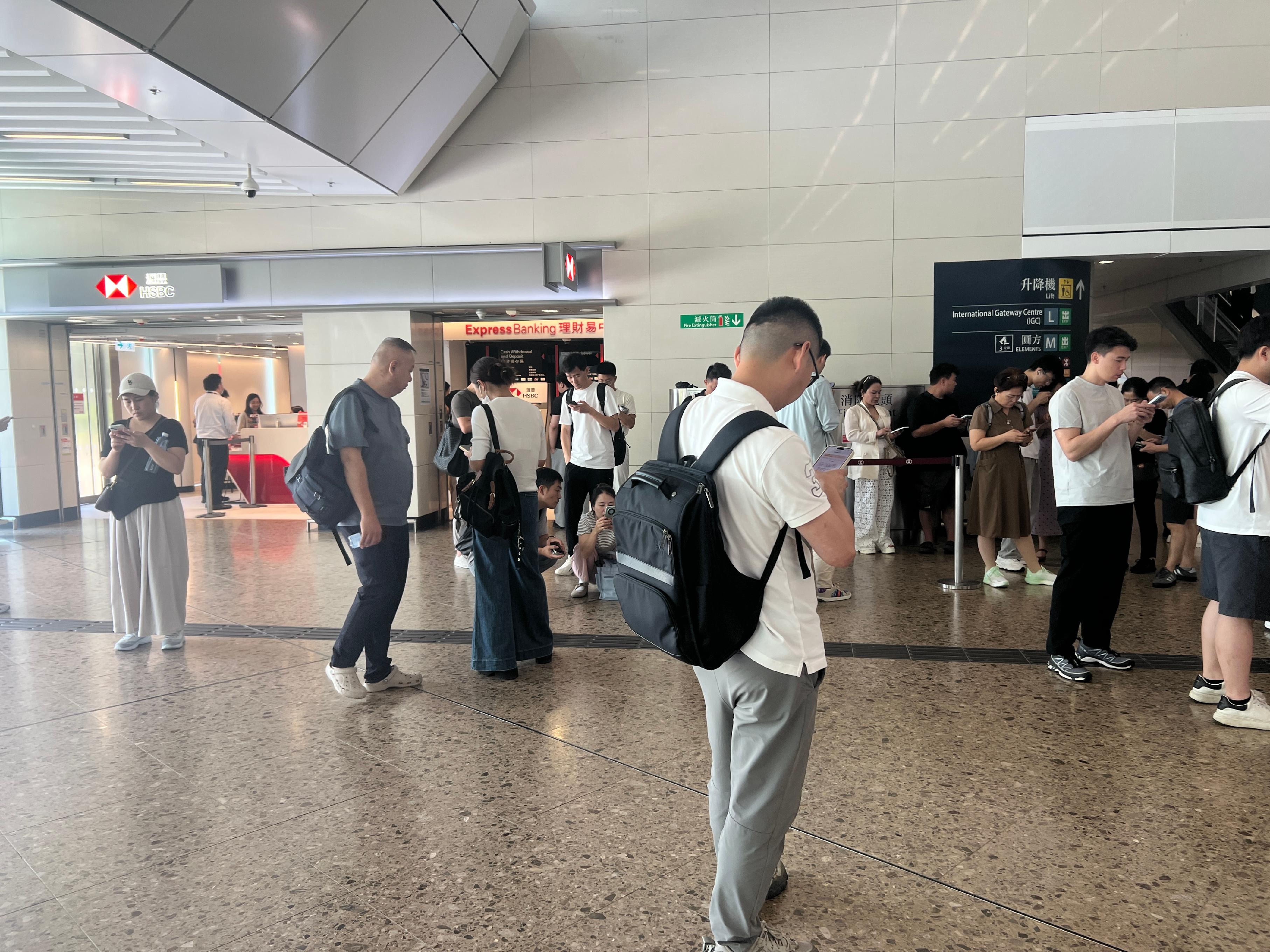
(Mainland investors at HSBC's Lao Yingying/Photo)
Individual cross-border investment enters the era of comprehensive compliance supervision
On May 22, the official website of the China Securities Regulatory Commission released the "Implementation Plan for Comprehensive Rectification of Illegal Cross border Securities and Futures Fund Operation Activities" (hereinafter referred to as the "Implementation Plan") jointly issued by eight departments including the China Securities Regulatory Commission, the Ministry of Industry and Information Technology, the Ministry of Public Security, the People's Bank of China, the State Administration for Market Regulation, the State Administration for Financial Regulation, the Cyberspace Administration of China, and the State Administration of Foreign Exchange, which requires a two-year concentrated rectification to "completely ban illegal cross-border operation activities of overseas securities and futures fund operating institutions".
A person from the Guangdong Regulatory Bureau of the China Securities Regulatory Commission told reporters that the "Implementation Plan" aims to enable mainland investors to legally invest in overseas listed stocks and funds through legal channels such as the Hong Kong Stock Connect, Qualified Domestic Institutional Investors (QDII), and Cross border Wealth Management Connect within the existing legal framework.
On June 1st, the Chinese government website released the "Regulations of the State Council on Outward Investment" (hereinafter referred to as the "Regulations"), which will come into effect on July 1st.
In this regard, Wang Huaitao, a lawyer from Shanghai Xingu Law Firm, told reporters that the release of the two major documents marks the official departure of China's individual cross-border investment from its wild growth and the entry into an era of comprehensive compliance supervision. The regulatory core presents a "one body, two sides" orientation. On the one hand, it supports the orderly development of compliant overseas investments that are in line with national strategies. On the other hand, it comprehensively regulates gray cross-border financial activities that are outside the regulatory system, and achieves comprehensive compliance in the industry through two-way regulation.
Wang Huaitao emphasized that this regulatory adjustment is not to close cross-border investment channels, but to promote industry standardization and sustainable development. He also stated that the "Regulations" for the first time include individual residents in the scope of foreign investment supervision, establishing a classification, grading, and full process supervision system. The main purpose is to include individual cross-border foreign exchange funds and financial activities in the foreign exchange, financial, and tax supervision system, and avoid the impact of disorderly capital flows on the foreign exchange management system. At the same time, the Regulation strengthens China's technological sovereignty and industrial security defense line through clauses such as overseas investment security review and technology export restrictions.
Wang Huaitao said that, in cooperation with the Regulations, the eight department special rectification plan targeted at the gray business model of "domestic customers and overseas transactions" of overseas Internet securities companies, and set a two-year centralized rectification cycle, during which existing customers can only sell assets, not buy or increase capital. After the rectification, the relevant domestic trading channels will be fully closed, completely blocking the gray channel of cross-border stock speculation. In addition, after the exchange of CRS (Common Reporting Standard) information and the linkage of individual income tax settlement and payment, overseas investment income generated through grey channels in the past will face the risk of retroactive taxation.
He further stated that regulatory tightening may gradually extend to the cross-border insurance sector. The current compliance channels for capital outflow continue to tighten, coupled with the CRS cross-border information exchange mechanism, resulting in a significant increase in transparency of individual overseas assets and accounts. Exchanging foreign exchange for insurance through illegal means such as underground banks and false trade not only faces foreign exchange penalties, but also has flaws in the legal effectiveness of related policies.


Commercial aerospace companies collectively sprint for IPO
Xiaoma Zhixing responds to the unmanned car collision accident: no injuries were caused, and has proactively reported to the traffic management department and contacted the car owner

Tide Point Research Institute | The World Cup has not yet started, and the "war" among brands has already heated up


 WeChat registration or login


 Subscribe
