Economic Observer Follow
2026-04-19 22:11


Economic Observer reporter Zhang Ling
In the spring of 2026, the Economic Observer interviewed Zhang Erquan, a senior researcher at the Beijing Institute of Life Sciences. He has two main research directions, one is the biological clock (circadian rhythm), and the other is sleep.
In this era where sleep problems are common and the pace of life is disrupted, scientific research on sleep and biological clock has never been so close to our lives.
In the past few years, Zhang Erquan's team has achieved a series of achievements in the fields of biological clock and sleep that have attracted global scientific attention.
In the field of sleep, they found that prolonged sleep deprivation can lead to severe cytokine storms. This reveals how severe sleep deprivation can ultimately lead to systemic organ damage and even death by affecting the brain and immune system.
In the field of biological clock, they pursue the ancient origins and core principles of biological clock, and strive to transform them into practical applications for anti-aging and regulating rhythms. In 2020, they identified cordycepin (3 '- deoxyadenosine) that can rapidly regulate the biological clock. In 2025, they identified the core molecules in the evolution of the biological clock, filling a critical gap in the evolutionary path from blue-green algae to human circadian rhythms. In 2026, they discovered that restoring the vitality of the biological clock in the aging brain through medication can significantly prolong the healthy lifespan of elderly male mice.
In the interview, Zhang Erquan shared many cutting-edge and down-to-earth insights. For example, even if you don't sleep well all night, your physical indicators will show significant changes; Severe sleep deprivation may induce immune factor storm, which is similar to the indiscriminate attack of the immune system on severe patients with COVID-19; In the future, scientists may develop drugs to treat circadian rhythm disorders, helping jet lag sufferers, astronauts, and nuclear submarine crew members cope with chaotic sleep patterns.
The following is a conversation between the Economic Observer and Zhang Erquan:
Lack of sleep is very scary
Economic Observer: There is a widespread phenomenon of long-term overtime in society, and sudden death incidents are also increasing. How can sleep deprivation affect a person's health?
Zhang Erquan:In reality, sudden death caused by insufficient sleep is indeed not uncommon. Serious lack of sleep may induce immune factor storm, which is similar to the performance of COVID-19 severe disease. Once the immune system is abnormally activated, it will indiscriminately attack the entire body.
Economic Observer: Previously, your laboratory revealed the physiological mechanism of inflammation caused by sleep deprivation. Can you talk about the ideas and process of this research?
Zhang Erquan:We all know that sleep is important because a person spends one-third of their life sleeping. A reasonable speculation is that without sleep, it is not possible. As early as 1983, scientists at the University of Chicago subjected rats to sleep deprivation through a series of complex procedures, and one month later, all rats died. This theoretically proves that not sleeping can indeed lead to death. However, the specific cause of death of the rats is unknown, so at that time it could only be classified as all-cause death (referring to death caused by any reason).
When we were working on this project, we chose to use mice for the experiment because the research system for mice is very mature, and we can directly use mice with various gene mutations. We found that using the modified new sleep deprivation method resulted in the death of most mice within four to five days. Simply put, this sleep deprivation method utilizes the habit of mice lying down while sleeping. We spread a thin layer of water on their environment, and as soon as their head is lowered, they will choke and wake up, unable to fall asleep.
Economic Observer: What are the specific causes of death for these mice?
Zhang Erquan:We conducted pathological dissection on 8 mice and found that 3 died from liver problems, 3 died from lung problems, and the other 2 died from other problems. Overall, all organs of these mice were damaged, and there were some overlapping causes of death, but no organ damage was present in all mice. This explains why the 1983 rat experiment can only be attributed to all-cause mortality.
We did one more thing, which was to measure the blood of mice. We found that all mice had high expression of inflammatory genes in their blood. For example, the levels of interleukin-6 (IL-6) in these mice may skyrocket by hundreds or even thousands of times. So we can conclude that inflammation is the main cause of mouse death, as it is the only indicator that is highly expressed in all 8 mice.
As we know, there is a so-called immune factor storm phenomenon in COVID-19 severe death patients. In the study of sleep deprivation, we borrowed this concept. What is an immune cytokine storm? Simply put, inflammation promotes the production of inflammatory factors such as interleukin-6, which in turn can stimulate the production of new interleukin-6. That is to say, once this process is initiated, it is a dead loop, and it is an accelerated dead loop, which is very scary. It is equivalent to the suicidal behavior of an individual's own programming, with great destructive power like a tornado. It must be forcibly suppressed before dealing with the rest of the matter. This is why when there is no other way to treat some COVID-19 critical patients, they can only use hormones to suppress the immune factor storm.
Economic Observer: Mice will die after being deprived of sleep for 4 days. How long can humans endure under sleep deprivation?
Zhang Erquan:There is no precise data, but typically the larger the individual, the stronger their tolerance may be. Rats can last for a month, while mice can only last for four or five days. Although our deprivation efficiency is higher, the general trend is like this.
In addition to causing death, lack of sleep can also cause many problems, with a clear manifestation being accelerated skin aging. When immune factors attack skin tissue, a person's appearance appears older. So, there is a scientific basis for sleeping beauty sleep.
Economic Observer: What intuitive changes will occur if people are deprived of sleep for different durations?
Zhang Erquan:Even if you don't sleep for a night, or even a whole night without sleep, you can have significant changes. For example, if you didn't sleep well the night before your physical examination, the doctor may ask you, "Did you not sleep well last night
Economic Observer: Which specific indicators will change?
Zhang Erquan:The most obvious indicators are an increase in neutrophils and a decrease in white blood cells. In fact, inflammation caused by poor sleep is also common in daily life, such as toothache and skin ulcers.
Economic Observer: Why do some people need to sleep for eight or nine hours, while others only need four or five hours?
Zhang Erquan:There are indeed so-called 'short sleepers' in the field of sleep research. Professor Fu Yuehui from the University of California, San Francisco has found that some people have extremely high sleep efficiency due to specific gene mutations. They do not need to sleep for a long time, but they are still healthy. This may be related to their higher efficiency in clearing metabolic waste in the brain.
Economic Observer: In your speech, you mentioned some practices in Shanxi, known as the "sleeping province". At noon, Shanxi people do not visit their homes, art museums and libraries close, and train station bells do not ring. Do you think it's necessary for other provinces to learn from Shanxi's approach?
Zhang Erquan:I think it can be learned. Anyway, stress can definitely cause many negative effects, even a short sleep can greatly relieve stress. Stress and sleep are a very interesting regulation. Too much stress may prevent you from falling asleep, but if you can fall asleep, it can greatly relieve stress.
Restoring the biological clock can delay aging
Economic Observer: As a scientist studying sleep and biological clock, do you have a regular pattern of sleep and biological clock?
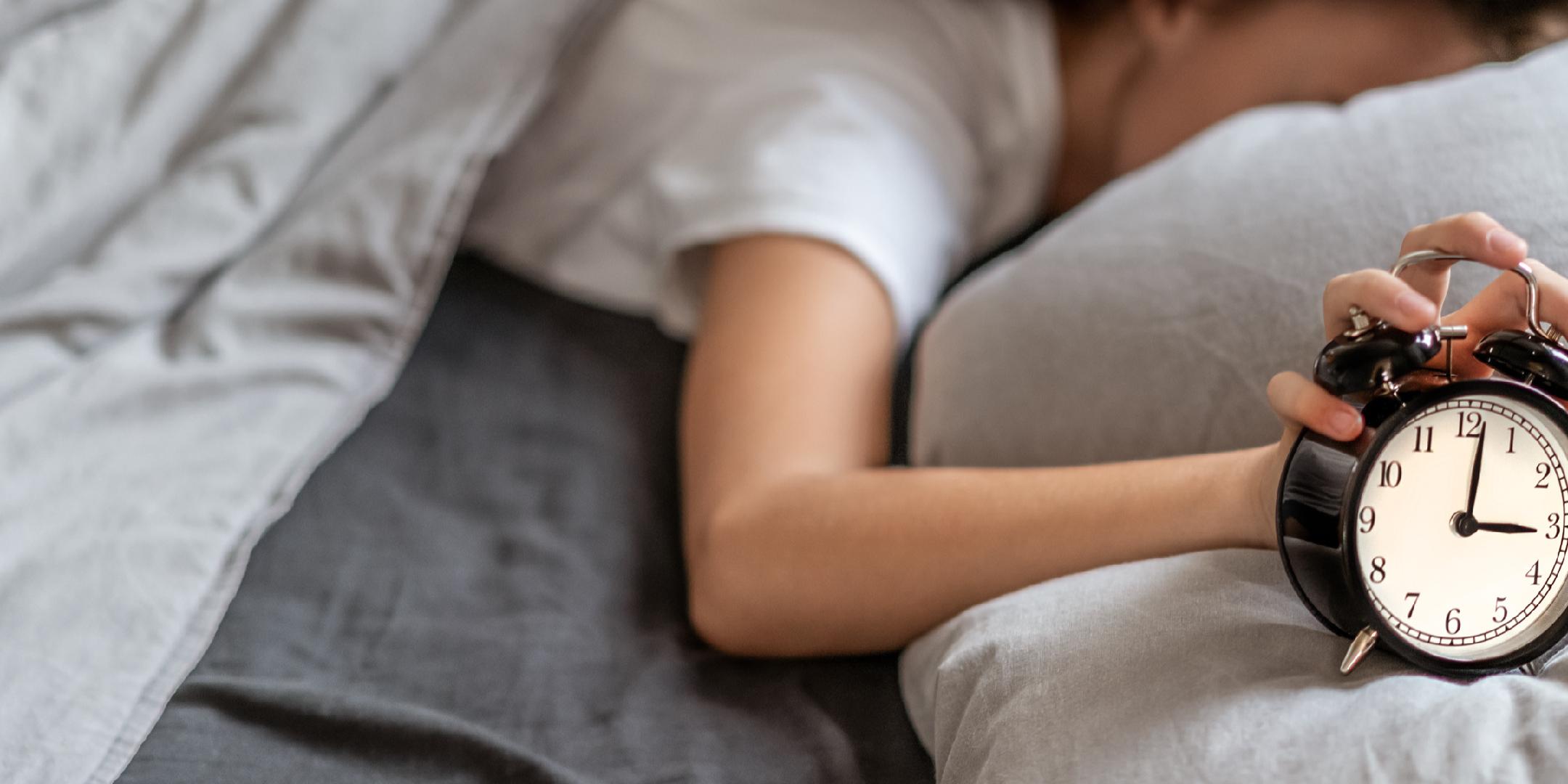
Zhang Erquan:Not very regular, my sleep has obvious circadian rhythm issues. I can basically sleep upside down, but I can't sleep the whole night. I wake up at 3 pm at night. Before, when I woke up in the middle of the night, I always spent an hour scrolling through my phone before going to bed. Now, I forcibly lock my phone before going to bed.
My situation is actually fragmented sleep, which is one of the signs of a weakened biological clock and aging. After aging, the biological clock weakens, which accelerates aging. If we can restore the biological clock through artificial means such as medication, we can delay aging.
Economic Observer: Simply put, what is the biological clock?
Zhang Erquan:From a molecular biology perspective, the biological clock is composed of a series of genes. The mainstream theory in the past believed that the biological clock is a so-called transcriptional negative feedback loop, where some genes activate the expression of other genes, which in turn inhibit the expression of the former, forming a negative feedback loop. That is to say, when one gets up, the other is pressed down, and the thing that was pressed down gets up, and then the other is pressed down, forming a 24-hour cycle.
However, we believe that when the biological clock originated, it should not be so complex and should not require so many things to participate, as this would be a high energy consuming process. At the origin of life, it is clearly not cost-effective and unscientific to spend 75% of energy to maintain the biological clock. At the beginning of life, there should be a highly efficient mechanism that can work with just a little bit of effort.
Our research last year found that in eukaryotes, including humans, the biological clock initially relied solely on an enzyme that slowly hydrolyzed ATP (energy molecules), requiring only a few ATP to achieve day night changes, rather than the previously thought need to consume millions or even billions of enzymes to complete a negative feedback loop.
In fact, as early as 2005, Japanese scientists discovered this enzyme, but the discovery was limited to cyanobacteria. We found that there were corresponding molecules in eukaryotes as well, extending this benchmark from prokaryotes to eukaryotes, which almost includes all life.
This most primitive system may have existed as early as the birth of life 3.5 billion years ago. Why do we have to deduce this mechanism to the earliest stages of life? Because before the emergence of life, the Earth was already rotating, and the phenomenon of day and night alternation existed. So we believe that life has had a circadian clock since its inception.
Economic Observer: Can it be said that organisms without a biological clock cannot appear, and even if they do appear, they will disappear?
Zhang Erquan:In most cases, this is the case, but not in extreme cases. For example, there is no phenomenon of day night alternation in underground burrows, so the system of underground organisms will degrade. For example, nematodes do not have a 24-hour cycle. However, as this system still exists, these organisms can use it when needed, and at that time, the cycle may not necessarily be 24 hours, but could be 8 hours or other. Natural evolution is very fun.
Economic Observer: What is biological clock disorder?
Zhang Erquan:When the biological clock is operating normally, a series of genes will be expressed, and a series of genes will be suppressed. If our daily schedule is fixed, gene expression in the body will be associated with the circadian clock, making us more efficient in our work. Under normal circumstances, we can plot the gene expression of the biological clock as a regularly fluctuating cos curve.
If the biological clock is disrupted, the expression of these genes will no longer be regular. The most obvious disadvantage of a disrupted biological clock is being unable to sleep at night and dozing off during the day. The most common disruption of the biological clock is the time difference and the work of reversing day and night.
Economic Observer: What are the practical applications of the gene you discovered that can precisely regulate the biological clock cycle (RUVBL2)?
Zhang Erquan:This gene is the core clock gene, and if drugs can be developed in the future to adjust it, the cycle of the biological clock can be changed. At present, there are not many application scenarios, and they are quite unique. The biggest application scenario is time reversal, which quickly adjusts the phase of the biological clock to shift the human circadian rhythm curve to a new time zone.
Two other imaginable application scenarios are aerospace and submarines. For example, the cycle of Mars is different from that of Earth, with a day lasting about 24 hours and 40 minutes. The officers and soldiers working on submarines implement a three shift work system, with each shift lasting 6 hours and a work cycle of 18 hours. Every time the submarine officers and soldiers return from sea, it feels like a serious illness. If we could use medication to regulate the circadian rhythms of astronauts and submarine crew members to be consistent with the work cycle, it would be a great thing, as the fatigue caused by the disruption of their circadian rhythms could be alleviated.
Economic Observer: How far do we still have to go from basic research to the emergence of drugs that can truly restore the biological clock and delay aging?
Zhang Erquan:At present, we have identified a chemical small molecule called 3 '- deoxyadenosine. We conducted experiments on middle-aged and elderly male mice (equivalent to 50 years old humans) with disrupted circadian rhythms and found that intervening in their circadian rhythms can extend their lifespan by about 12%. However, this is only data from male mice, and the dosage of 3 '- deoxyadenosine used is high. We also need to chemically modify it to make it more effective.
We found 3 '- deoxyadenosine in a library of 300000 chemical small molecules, and we have applied for a patent for a series of possible modifications based on this natural compound. The next plan is to discuss with collaborators conducting experiments on monkeys. If the monkey experiment is successful, the possibility of pushing it to clinical trials will be much higher, but the specific time cannot be predicted.

Cook hands over the baton, Apple's new CEO is confirmed, and the "hardware soul" of the 4 trillion yuan empire takes over

Volkswagen launches three new energy vehicles in China, AURA and ERA, with "twin" English names. Industry suggests more recognizable Chinese names. Volkswagen responds: There are no plans to change Chinese names for the new cars

Did humans lose? The humanoid robot Half Horse won the championship with 50 points, and behind it is the ultimate test before mass production


 WeChat registration or login


 Subscribe