Economic Observer Follow
2026-04-19 20:44


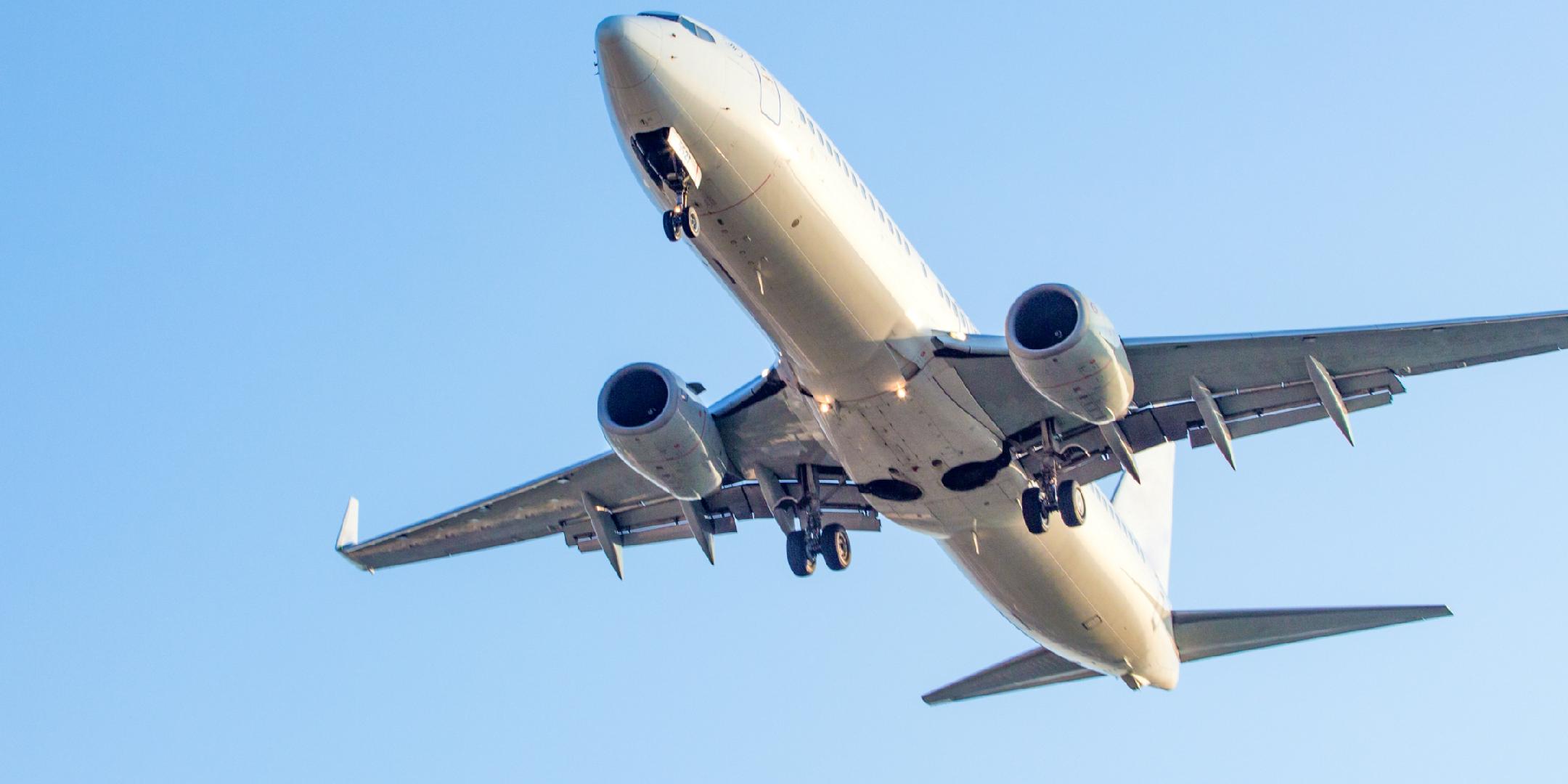
Has your flight scheduled for the May Day holiday been cancelled?
On social media, many people have shared that they have already booked flights, hotels, and itineraries for the May Day holiday, but their flights have been suddenly cancelled. When rebooking, it was found that the ticket price had already increased significantly. A passenger wrote on social media: "The flight to Vietnam on May Day has been cancelled. Although it can be refunded without loss, the direct flight during the same period has skyrocketed to 5000 yuan. Moreover, hotels cannot refund, resulting in even greater losses
According to flight management data, as of April 15th, the cancellation rate of international scheduled flights during the 2026 May Day holiday was 7.4%, which is 3.8 percentage points higher than the actual cancellation rate of flights during last year's May Day holiday. In international scheduled flights, the cancellation rate of overseas airlines is about 0.1%, while the cancellation rate of domestic airlines is as high as 10.7%. The main regions with high cancellation rates are West Asia, East Asia, and Oceania, with cancellation rates of 34.0%, 21.2%, and 14.4%, respectively. The cancelled flights are mainly international routes operated by domestic airlines.
Cancelling flights is a difficult choice for airlines based on the balance between cost and revenue. In April, the price of aviation kerosene skyrocketed, directly pushing up the airline's biggest cost item. In the situation where ticket price increases are far less than oil price increases, airlines are facing enormous operational pressure. For airlines, if they persist in flying despite low occupancy rates, it is likely that the more they fly, the more losses they will incur.
Sound the fuel saving battle
At the end of February, the situation in the Middle East was tense, and domestic aviation kerosene prices began to rise since March, with a significant jump in April. The settlement price of aviation kerosene rose from about 5600 yuan/ton in March to about 9800 yuan/ton in April, a 75% increase. The price of international aviation kerosene has increased by more than 100% within two months.
According to data released by the Civil Aviation Administration of China, in 2024, domestic airlines finally emerged from years of huge losses and achieved a total profit of 4.47 billion yuan. Although this scale is still far from the pre pandemic profit level of about 26 billion yuan in 2019, the industry has achieved a loss reduction and profit increase of 10.2 billion yuan. In 2025, the recovery of civil aviation will continue, with an overall profit of 6.5 billion yuan for the entire industry including airlines, airports, and various support enterprises. The profit data of the airline sector has not been disclosed; Among them, China Southern Airlines and Hainan Airlines have achieved a turnaround and a clear recovery.
But since entering 2026, the price of aviation fuel has risen significantly, directly pushing up the core operating costs of airlines. The profit prospects of the industry, which has just stabilized, are once again under pressure, and airlines have to start a new battle to defend their profits.
Lin Li is a pilot for a large domestic airline company. In early April of this year, the company's flight group issued an urgent notice: starting from April, the price of aviation fuel has risen by over 70%, posing a huge challenge to the company's flight operations. The company has decided to lower the cost index from today onwards, which is an important cost control measure for the company to win the profit battle.
Lin explained that the cost index is a parameter in the flight management system, and lowering it means reducing fuel consumption, resulting in a slight decrease in flight speed.
More changes followed. When formulating the flight plan, the crew will raise the flight altitude - the higher the altitude, the lower the air resistance, and the more fuel-efficient the aircraft. Lin Li said that during the flight, it is also important to pay close attention to whether there is a chance to continue adjusting the altitude. If permission is obtained from the controller, it is necessary to 'adjust as much as possible'.
When Lin Li is currently flying, he often hears other nearby airline pilots applying to the controller to increase their flight altitude on the common frequency of the flight headphones. This was not the case before, as it was unnecessary to raise the altitude again when it was already sufficient. But now the company is particularly emphasizing this point. The frequency of shouting in the air can also be seen, and other airlines are also emphasizing these
Everything is for fuel efficiency. The maintenance personnel of a certain airline in the southwest region also stated that the company has repeatedly emphasized the need to connect external power sources as much as possible when maintaining aircraft, in order to reduce the fuel consumption generated by the aircraft itself for power supply.
Lin Li has been working for this airline for over 10 years, and before that, he had never encountered a situation where the company attached such importance to fuel consumption. Now, if the crew can apply for a higher flight altitude during flight but does not, the company will make a public announcement to the personnel.
According to Lin Li, since the recovery of the aviation industry in 2024, the company's flight personnel schedule has often been fully booked, and the busyness has returned to the level of 2019. But even with such busyness, the industry is still under pressure.
How big is the cost impact?
The surge in oil prices has put significant cost pressure on airlines.
Li Xiaojin, Director of the Institute of Aviation Economics and Development at Civil Aviation University of China, stated that aviation fuel costs account for approximately 30% to 35% of the total costs of domestic airlines. According to estimates, for every 10% increase in oil prices, the costs of China Airlines, China Eastern Airlines, and China Southern Airlines will increase by approximately 2.5 billion yuan, 2.18 billion yuan, and 5.25 billion yuan respectively, totaling nearly 10 billion yuan. In the past two months, aviation fuel prices have skyrocketed, and some routes have incurred losses on a single flight.
At the same time as oil prices skyrocket, the fuel surcharge for tourists purchasing airline tickets is also increasing.
Starting from April 5th, the new standard for fuel surcharges on domestic routes will be uniformly implemented: 60 yuan per passenger will be charged for segments below 800 kilometers, and 120 yuan will be charged for segments above 800 kilometers. Compared with the pre adjustment prices of 10 yuan and 20 yuan, the price of short haul routes has increased by 5 times, and the one-way price of long haul routes has increased by 100 yuan.
But this does not mean that the increased income can offset all the pressure caused by the rise in oil prices.
Civil aviation industry insider Li Hanming stated that the domestic fuel surcharge has implemented a linkage mechanism with aviation kerosene prices, and was subsequently raised in early April this year, but there is a lag. More importantly, surcharges are charged based on the actual passengers who issue tickets, and regardless of the passenger load factor, the vast majority of fuel consumption on airplanes is a rigid expense. According to past industry calculations, fuel surcharges can usually only offset 60% to 70% of new fuel costs, and the remaining one-third of the shortfall still needs to be absorbed internally by airlines.
According to a research report by Zhongtai Securities, based on historical levels, the ex factory price of aviation kerosene in July 2022 was 9715 yuan/ton, corresponding to a fuel surcharge of 100/200 yuan for domestic routes; In April of this year, the ex factory price of aviation kerosene was 9742 yuan/ton, corresponding to a fuel surcharge of only 60/120 yuan. From this, it can be seen that airlines may bear a higher proportion of cost pressure during the current round of oil price increases.
In 2008, there was also a surge in oil prices. At that time, the civil aviation industry was in a golden age of rapid development, and the level of competition was far less intense than it is now. Airlines could still hedge the pressure by raising ticket prices. But now, it is extremely difficult for the bare price of air tickets to rise.
Li Xiaojin stated that the current domestic market competition is fierce, with high-speed rail and self driving diverting short to medium distance passenger sources. Airlines are forced to "increase surcharges and reduce bare ticket prices", with actual comprehensive ticket price increases of only 3% -5%, far below cost increases.
According to data from Qunar platform, after adjusting the fuel surcharge, the booking volume of short haul flights below 800 kilometers has significantly decreased, and the substitution effect of high-speed rail has significantly increased.
Li Hanming estimated in 2025 that with a 100% occupancy rate, the Beijing Shanghai route ticket would need to be sold for around 680 yuan (including fuel surcharges and civil aviation development funds) in order for the airline to avoid losses. Nowadays, with an 80% occupancy rate, the cost per customer needs to increase by 40-50 yuan, and the breakeven line has risen to 730-750 yuan, or even higher.
Li Hanming said that currently, the actual ticket price of the Beijing Shanghai line can usually remain stable at over 1000 yuan, with the core period approaching full price. As the most profitable "cash cow" route in China, its ticket prices have a wide safety cushion from the breakeven line, which not only covers its own costs but also feeds back other loss making routes.
But for routes to second and third tier cities, the situation is not so optimistic. Li Hanming stated that such routes naturally have the characteristics of "low returns and high price elasticity". When oil prices are low and there are local government subsidies, airlines can still maintain a slight profit margin. Once oil prices rise, fuel costs will quickly erode meager gross margins. If local subsidies cannot be followed up in a timely manner, such routes will immediately become a source of losses, prompting airlines to shrink their capacity back to core hubs.
Rigid costs are also rising
Not only are oil prices driving up operating costs, but airlines' own fuel removal costs are also increasing. This means that even if oil prices fall in the future, profit pressure will still exist for a long time.
According to data calculated by Li Hanming last year, the average operating cost per available seat kilometer of Air China before the epidemic was 0.33 yuan, which rose to 0.36 yuan after the epidemic, an increase of 9.1%; China Southern Airlines increased from 0.31 yuan to 0.33 yuan, an increase of 6.5%.
Li Hanming explained that aircraft depreciation, leasing fees, labor costs, and maintenance expenses are mostly fixed or semi fixed costs. Once the daily utilization rate of the aircraft is not maximized, the amount of these costs allocated to each available seat kilometer will be pushed up. At the same time, aviation material reserves, engine overhaul, and some aircraft leasing are settled in US dollars, and exchange rate fluctuations and global supply chain tensions have directly pushed up procurement costs.
Under such pressure, airlines often operate flights at prices lower than cost, fundamentally due to demand price elasticity. Li Hanming stated that on the core routes dominated by business travel demand, passengers are not sensitive to prices, and airlines have some room for price increases. But in the market dominated by mass tourism and family visits, price sensitivity is extremely high. Once the ticket price exceeds the psychological threshold of consumers, demand will plummet sharply, leading to a "quantity price double kill". In the current consumer environment, airlines lack substantial pricing power on most non core routes.
Under the influence of high oil prices, several airlines have adjusted their capacity through official announcements since April: Air China has suspended the Chengdu Kuala Lumpur route, China Eastern Airlines and China Southern Airlines have cut multiple flights to and from Australia and New Zealand, AirAsia has cancelled flights from Shanghai to Bangkok, and Cathay Pacific has reduced flights to and from Australia.
(At the request of the interviewee, Lin Li is a pseudonym)


Cook hands over the baton, Apple's new CEO is confirmed, and the "hardware soul" of the 4 trillion yuan empire takes over

Volkswagen launches three new energy vehicles in China, AURA and ERA, with "twin" English names. Industry suggests more recognizable Chinese names. Volkswagen responds: There are no plans to change Chinese names for the new cars

Did humans lose? The humanoid robot Half Horse won the championship with 50 points, and behind it is the ultimate test before mass production


 WeChat registration or login


 Subscribe