Economic Observer Follow
2026-11-24 20:16


Ma Piao/Wen On the company's 28th birthday, Tencent turned its annual LinkTime event into a podcast. Chairman and CEO Ma Huateng and President Liu Chiping discuss the opportunities, challenges, and choices of the AI era. This discussion has sparked a lot of external speculation, with the first reaction being that 'Tencent is going to lay off employees'. A few days later, the "Tencent Culture" official account compiled the on-site notes into an article as a response.
Various signals indicate that AI is forcing one of China's most representative technology companies to re-examine its business and organization.
In the above discussion, Tencent's management regards AI transformation as a matter of survival for the enterprise, and demands a "re entrepreneurship" mentality to embrace the new era. They also admit that there may not necessarily be a need for so many management positions in the future.
It should be acknowledged that Tencent has ample reasons to accelerate its transformation.
AI is becoming an important driving force for a new round of industrial transformation, and the combination of elements that create value for enterprises is undergoing significant changes due to AI. The work that used to rely on large teams and multi-level management may now be completed by small teams with the help of AI; The large-scale expansion of business may not necessarily require synchronous expansion of personnel and organizational size.
The relationship between capital, technology, and labor is being redefined. Simply sticking to the original organizational structure is not responsible to employees, but may be irresponsible to the future of the company and all employees.
However, these facts do not answer the more important questions. Who will benefit when AI improves productivity? Who will bear the costs that may arise from technological substitution, job adjustment, and skill devaluation?
Technological progress never means that everyone benefits automatically. The uniqueness of AI lies in its ability to reconstruct the way management, research and development, design, analysis, and even professional services work, extending the technological impact to knowledge intensive professional positions that were previously considered relatively stable and challenging.
Enterprises are not obligated to guarantee the permanent existence of every old position, but have a responsibility to avoid unilaterally transferring the costs of technological progress to workers. If the newly added benefits mainly belong to capital and a few technology masters, and the adjustment costs are more borne by other workers, technological progress may also exacerbate income differentiation between different groups.
This is an unavoidable issue in corporate governance in the AI era, and it is precisely why we expect Tencent to set an example.
Tencent is not only a large employer, but also a platform enterprise and AI technology provider. Its organizational practices will be observed and imitated by other enterprises, and the AI tools it outputs may change the production and management methods of other enterprises. AI transformation is also a common reality that many enterprises must face. Therefore, how Tencent reshapes itself is not just an internal management issue, but may also have a broader industry demonstration effect.
Tencent's management has proposed that AI should be "people-oriented" and "controlled by people" and empower people's creativity. These claims should not only apply to the products it provides to the outside world, but should also become standards for testing its internal management.
If AI should empower human creativity, then paid learning time, open internal job transfer mechanisms, fair job access, and reasonable adaptation periods should not be seen as additional benefits for transformation, but should become part of the enterprise's investment in human capital.
For example, the commercial experiment of "getting started first" should not be a reason to avoid major personnel decision-making procedures. Enterprises can require employees to embrace change, but they cannot simply describe reasonable negotiations over positions, compensation, and development opportunities as a lack of courage for change.
Of course, this does not mean that all transformation costs should be borne solely by the enterprise. The government needs to improve vocational education, employment services, and social security, and the education system also needs to transform to meet the requirements of the new era.
There is no automatic transmission mechanism between productivity improvement and social welfare improvement. How enterprises design transformation systems will affect whether these two can be better unified. Large technology enterprises have more direct technological information, stronger resource allocation capabilities, and also have a greater impact on the speed and way technology is applied, and should bear responsibilities commensurate with their influence.
Tencent has the opportunity to prove that a large enterprise can invest heavily in both AI and human adaptability; Not only does it eliminate outdated work methods, but it also creates opportunities for employees to enter new production systems.
A top Chinese business school once taught its students that they should have a "higher pursuit than business success".
When everything goes smoothly, it may seem like a moral initiative about public welfare, charity, and social feedback, but the true test of whether a company has this higher pursuit is at some critical moment.
Tencent is currently undergoing such a test.
(The author is a senior media professional)

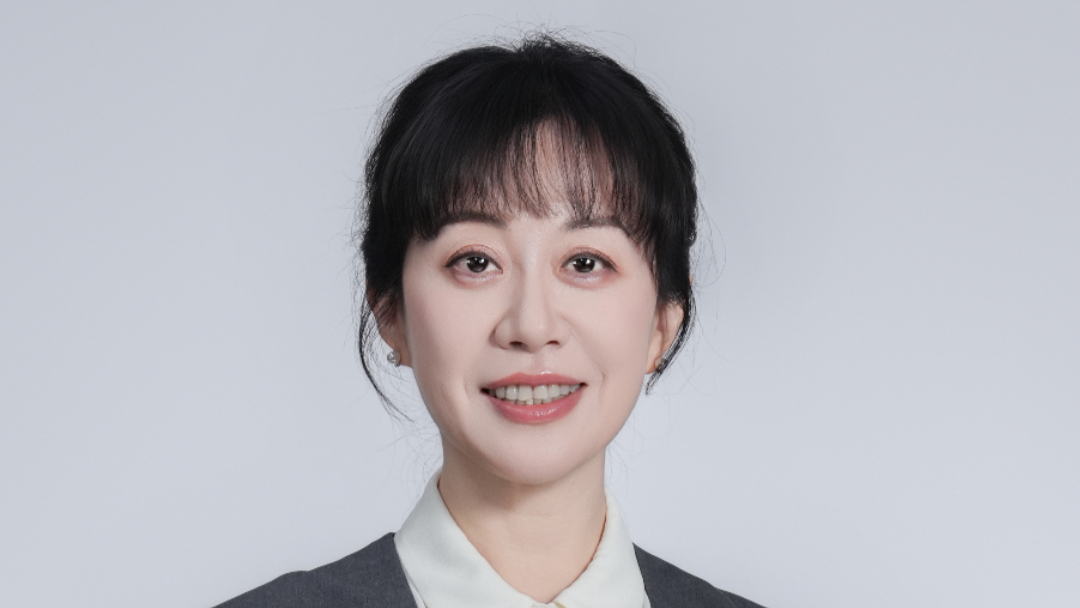
Recently, Liu Yan, Deputy Secretary of the Party Committee and General Manager of Minmetals Trust, stated at the 21st Century Financial Annual Conference that the first pursuit of pension funds is long-term stability and sustainability, and a good combination is more crucial for investors.
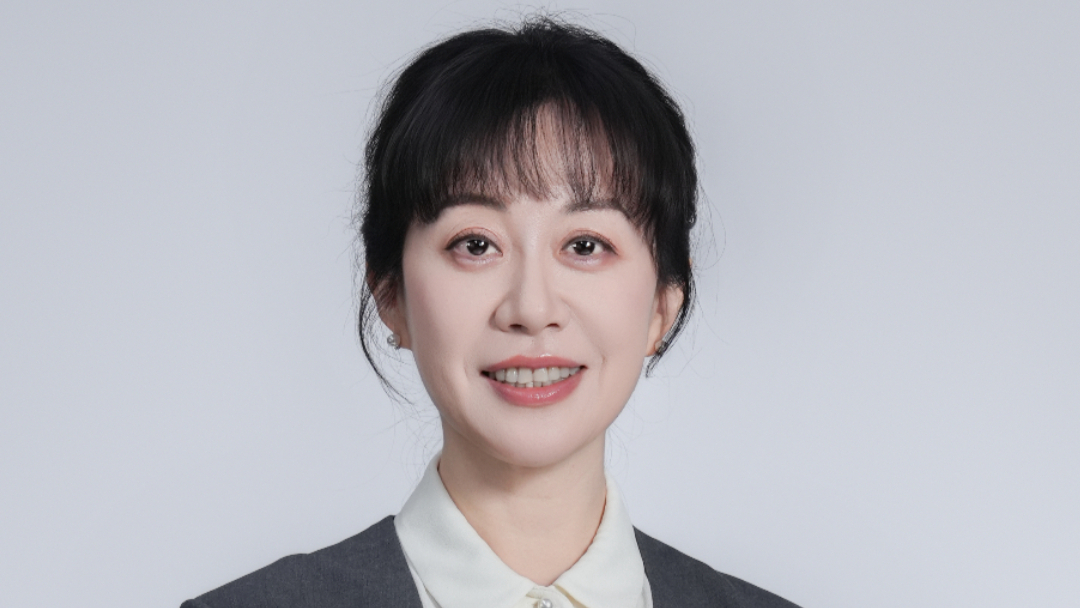
Recently, Liu Yan, Deputy Secretary of the Party Committee and General Manager of Minmetals Trust, stated at the 21st Century Financial Annual Conference that the first pursuit of pension funds is long-term stability and sustainability, and a good combination is more crucial for investors.
Huang Renxun has returned, but Nvidia may be different now


 Subscribe