2026-10-27 10:50

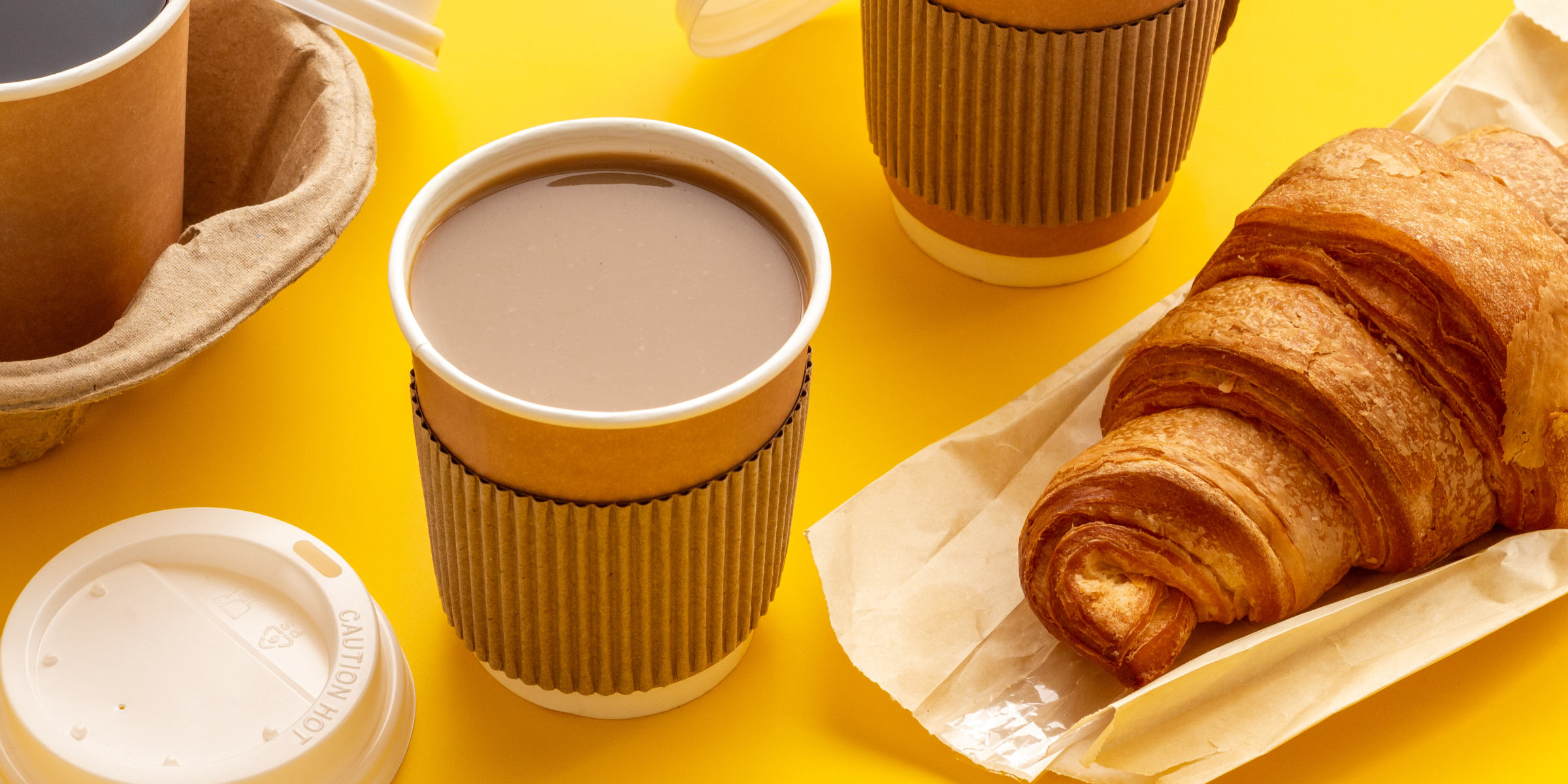
Recently, the boutique coffee brand M Stand has opened concept stores in Shanghai, Guangzhou, Chengdu and other places that specialize in handmade burgers (i.e. specialty stores that focus on showcasing brand concepts and lifestyle experiences, rather than simply selling goods), with burger prices ranging from 28 to 78 yuan; At the same time, the affordable coffee brand Kudi quietly tested the waters at a store in Ningde City, Fujian Province, adding freshly brewed beer and freshly fried snacks. The discounted price for beer is only 7.9 yuan, while the snacks are priced between 6.9 yuan and 12.9 yuan. Two coffee brands with distinct positioning have coincidentally launched light meals and snacks, reflecting that in the coffee industry, coffee brands are also trying to expand their product categories and find new growth points outside of coffee.
In the coffee industry, the path of foodification is becoming more diverse. Tims Tianhao China is using "coffee+bagels" to enter the early lunch market, and will launch lunch boxes in 2025, aiming to make bagels an independent meal line. Starbucks is also expanding its product portfolio around sugar free, high protein, fruit coffee, iced tea, and freshly baked goods based on its coffee business. In contrast, M Stand offers premium burgers priced between 28-78 yuan; Kudi has priced fresh beer at 7.9 yuan and fried chicken at 6.9-12.9 yuan, targeting the lower end market for late night snacks, indicating that coffee brands are exploring new category boundaries. This round of collective cross-border cooperation is not about becoming a "Wallace", but about seeking single store growth that does not rely on opening new stores in the context of store encryption and intensified competition among tea beverage brands.
Upward premium vs. downward penetration
The path of M Stand is to explore prices upwards. As a representative of direct operated boutique coffee that adheres to the principle of "one store, one design", its hamburger products continue the brand's consistent mid to high end tone and aesthetic premium. It focuses on on-site production and uses differentiated ingredients such as Wagyu, Black Tiger Shrimp, and Salmon, attempting to support hamburgers in the price range of 28 to 78 yuan with the concept of "handmade". This type of food often has a good visual effect when paired with coffee and has a certain degree of dissemination on social media. As of October 26th, the topic of "M Stand Burger Store" on Xiaohongshu has 247000 views and 1236 discussions. In addition, the product structure of M Stand is also very unique. The peripheral products sold for a long time in the M Stand mini program include stainless steel coffee bean spoons priced from 29 yuan, home sets priced from 299 yuan, cowhide canvas tote bags priced from 498 yuan, and cups of various materials, shapes, and colors. M Stand is consciously blurring its category boundaries. It does not want consumers to understand it solely as a coffee brand, but rather as a high-frequency entry point through coffee to undertake consumption with higher unit price, higher gross profit, and stronger display attributes.
Unlike M Stand's' upward breakthrough ', Kudi's fried chicken beer business has begun to' penetrate downwards'. Hamburgers and fried foods are easier to standardize compared to other regular meals, and stores can reduce the complexity of serving by using semi-finished products, reheating, or shorter production processes, resulting in faster sales. Public information shows that Kudi has established a cooperation with grilled sausage supplier Longda Food. Longda Food confirmed on the investor interaction platform that the company mainly provides grilled sausage products to Kudi Coffee, and the sales revenue of the cooperation between the two parties has exceeded 20 million yuan. But the problem is that once the smell of oil fumes, fried food, and nighttime fast food scenes form a fixed association with Kudi's coffee store image, the cost of pulling the brand back into the coffee narrative may be higher than laying out a fried chicken line.
Invisible Business Threshold
The most easily underestimated aspect of catering in coffee shops is the hard constraint of kitchen renovation. The original flow of the coffee shop was designed around extraction, refrigeration, and cup serving. Freshly fried and prepared meals require independent frying equipment, smoke exhaust systems, and insulation operation areas. Old stores and convenience stores with limited space have almost no additional installation space. A large number of Kudi stores rely on the joint venture model and the "store in store" form for expansion. Some stores themselves do not have the hardware conditions for hot food production and sales. If meals are made in a "central kitchen prefabrication+store reheating" way, the difference between taste and freshly made will affect the repurchase rate of products.
The certification and environmental supervision of coffee shops are another implicit threshold. Hot food production and sales licenses, oil fume purification, and pollutant discharge inspections are mostly equipped with catering facilities in core business district properties, but community stores and convenience store embedded stores may not meet the conditions. The locations chosen by M Stand, such as Shanghai Changle Road, have commercial catering conditions, and the Kudiningde pilot is also a self operated store. In the short term, they may not be rolled out nationwide, but it remains to be seen whether meals can complement coffee, whether store operations can support new product categories, and whether consumers are willing to pay for hamburgers and fried chicken in coffee shops.
New opportunities and new competition
This wave of coffee catering is driving adjustments in the supply and demand relationship of upstream and downstream industries. Firstly, upstream frozen and processed food and meat processing enterprises are expected to receive incremental orders. In addition to Longda Cuisine, which has already reached a cooperation agreement with Kudi, leading manufacturers of pre made ingredients such as Shengnong Development, Guolian Aquatic Products, and Anjing Food all have the ability to supply semi-finished products such as fried chicken and shrimp burger to coffee shops, and are expected to share in this incremental demand. After adding hot food products to the store, the demand for commercial kitchen equipment such as smokeless fryers and smart ovens that are suitable for small store scenarios will increase, and the equipment industry may usher in a round of updated demand. At the same time, the increase in the proportion of food delivery has also brought incremental benefits to cold chain logistics and instant retail platforms, and the off peak transportation capacity of coffee shops has been more effectively utilized.
At the same time, coffee brands are expanding their dining and late night snack scenes, which will directly compete with traditional Western fast food and affordable fast food to form a customer base. Fast food brands such as Yum China and Hua Lai Shi are facing pressure to divert customers. Yum! China is also targeting urban light food consumers through KPRO's light food layout in the same track. The short-term impact on coffee bean trading and packaging consumables related enterprises is limited, but after coffee shops shift to heavy catering operations, the proportion of beverages in the store's revenue structure will be diluted.
In the future, coffee shops may no longer be just places for selling coffee, but become composite spaces that carry coffee and supporting lifestyles. The menu categories will continue to enrich, but coffee remains the foundation of the business model. Players who can strike a balance between coffee and meals, while maintaining their brand tone while boosting customer orders, are expected to find a self consistent survival position in the industry competition in this discussion about the "end of coffee shops".
(The author is a researcher at the Jingguan Research Institute)