2026-10-22 10:59

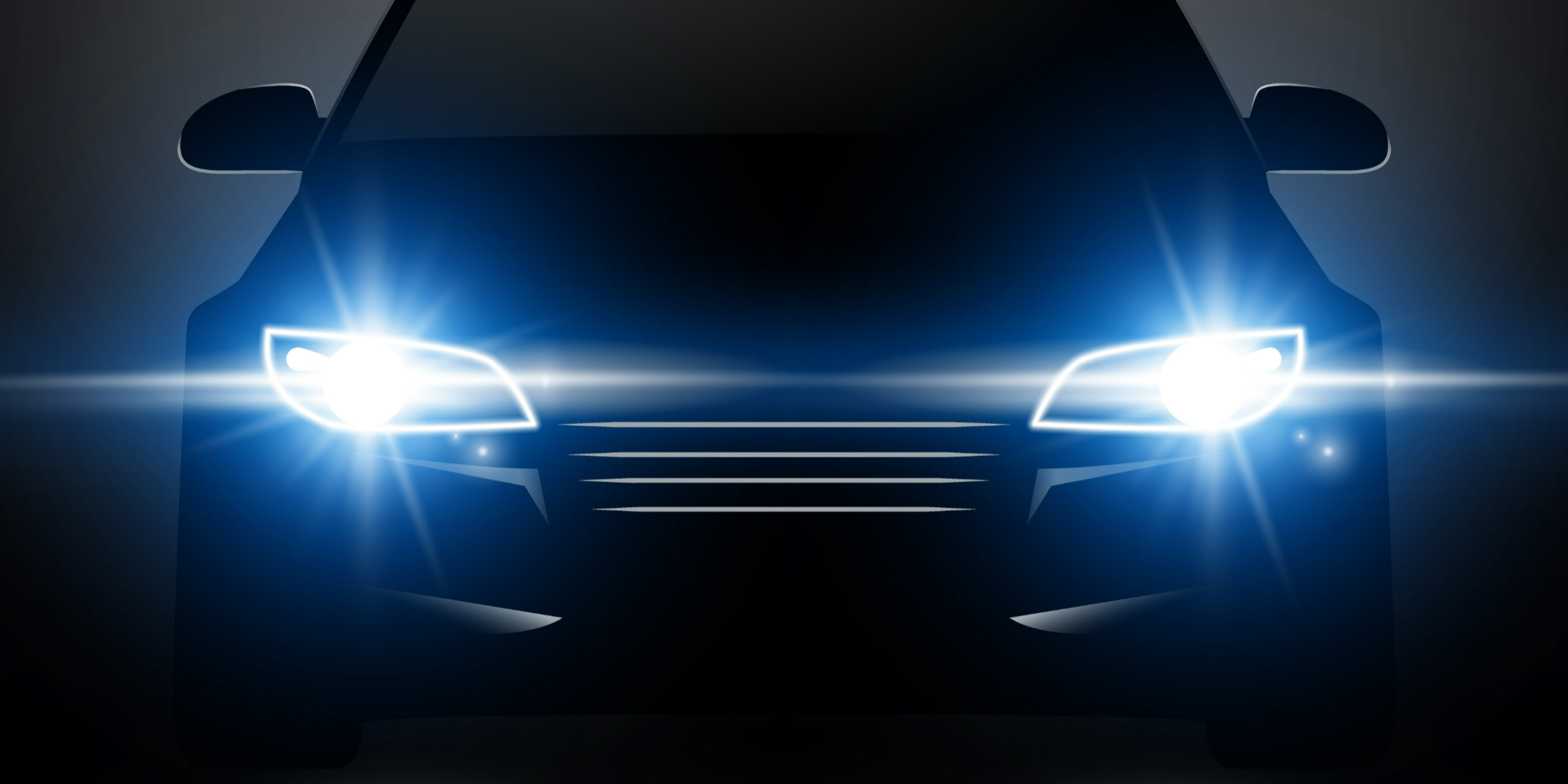
On October 20, the equipment industry of the Ministry of Industry and Information Technology publicly solicited opinions on the "Requirements for the Installation of External Lighting and Light Signaling Devices of Automobiles and Trailers (Draft for Comments)" (hereinafter referred to as the "Draft for Comments"), of which the most noticeable change was the first time that the auto drive system (ADS) marker lamp, commonly known as "Smart Driving Small Blue Lamp", was included in the mandatory national standard system, and its special light color was clearly defined as blue-green.
At this point, the previous chaos of various car companies playing with their own colors on intelligent driving indicator lights has ended, and blue-green has become the only legal light color for external status prompts of L3 level and above autonomous driving vehicles.
Complete the standard empty window of intelligent driving lighting within three months
On July 27, 2026, the 410th batch of new car announcements from the Ministry of Industry and Information Technology was launched, and newly certified passenger cars are prohibited from being equipped with external blue intelligent driving indicator lights, commonly known as "small blue lights".
The original intention of Little Blue Lamp is not complicated. When the vehicle activates advanced driving assistance functions of L2 (combination driving assistance) level or above, this blue light illuminates to indicate that surrounding vehicles and pedestrians are currently in intelligent driving mode. Its essence is to visualize the invisible intelligent driving status, which not only facilitates road participants to judge vehicle movements, but also provides reference for traffic accident liability determination.
This design can be traced back to the "F015" concept car released by Mercedes Benz in 2015. In 2019, the Society of Motor Vehicle Engineers (SAE) formally proposed relevant standards in J3134 Recommended Practice, recommending that autonomous vehicle use blue-green lights to distinguish them from ordinary vehicles. In August 2022, the Ideal L9 became the first mass-produced vehicle in China to be equipped with this feature, and since then, brands such as Xiaopeng, Xiaomi, Wenjie, NIO, and BYD have followed suit.
According to the draft for soliciting opinions, the new standard has added requirements for the blue-green color used exclusively for ADS marker lights. The standard is clear. Vehicles with L3 level and above auto drive system shall be equipped with ADS marker lights at the front, rear and side; When the vehicle activates this function, the indicator light will automatically turn on, and manual opening or closing is prohibited. It will automatically turn off after the system exits; Vehicles without L3 level or above capabilities are prohibited from installation.
At the same time, the draft for soliciting opinions also proposes that vehicles driving on public roads and not using ADS shall not light up undefined lamps. At the same time, the document specifies the composite lighting rules for ADS marker lights: ADS lights can only be mixed with daytime running lights, front position lights, side marker lights, turn signals, rear position lights, and clearance lights; Mixing with rear lights can only share a portion of the light-emitting surface, and different lighting fixtures need to be equipped with light source interlock switching logic. Filament bulb type ADS lamp, prohibited from mixing with side marker lights and turn signals; ADS marker lights are not allowed to integrate illuminated logos.
In terms of lighting control methods, the draft for soliciting opinions also imposes restrictions on gesture and voice control, prohibiting the use of gestures to operate and control lighting fixtures, as well as the use of voice control to turn off lighting fixtures.
The new standard is planned to be implemented from January 1, 2028. For newly applied and already approved vehicle models, a transition period of up to 48 months has been set for some clauses related to technical requirements such as headlight dimming devices.
In July, the "Little Blue Lantern" was suspended, and new regulations were introduced in October. In just three months, the previously unregulated Little Blue Lantern entered the compliance track.
Why does regulation impose heavy pressure on 'one lamp'?
From a color perspective alone, the 'little blue light' is just a blue LED light, which seems like a trivial matter; But it is subtle to every household, so it needs to be clearly regulated and taken seriously.
People's Daily Online pointed out that "fundamentally, the problem with 'Little Blue Lantern' still lies in the inconsistency between rule construction and technological development pace.
From the perspective of regulations and standards, the "little blue light" of intelligent driving does not meet the relevant requirements. According to the "Installation Regulations for External Lighting and Light Signal Devices of Vehicles and Trailers" (GB 4785-2019) in China, the external lighting of civilian vehicles is limited to four colors: white, red, yellow, and amber. Blue is the exclusive lighting for special vehicles such as police cars and ambulances.
Secondly, the essence of the 'little blue light' is a 'responsibility commitment light'. According to the classification of autonomous driving, Level 3 (conditional autonomous driving) and above are considered autonomous driving, and the driving tasks are taken over by the system. The responsibility for accidents is borne by the car manufacturer; L2 level is assisted driving, which is fully taken over by the driver and the responsibility lies with the individual.
Previously, some models with small blue lights on the market were L2 level, and running on the street with blue lights on was equivalent to sending a false signal to other road participants.
Vehicles with this indicator light are more likely to be blocked and followed closely by other car owners, increasing the risk of road traffic. For example, some "experienced drivers" knowingly maintain a safe distance and automatically brake vehicles that have turned on their smart driving "little blue lights". They forcefully use their system's conservative strategy to intentionally add traffic and change lanes at close range, making vehicles that have turned on their smart driving "little blue lights" targets of "bullying" and increasing the risk of rear end collisions and scratches. The warning light that should have protected safety ultimately created more road conflicts.
So, the controversy over the "little blue light" is not a big deal, and the regulation's heavy handed approach to "one light" is a refinement of the rules.
The intelligent driving industry has entered the era of rules
Previously, the issue of usage standards and compliance boundaries for the smart driving "little blue light" has sparked industry discussions.
Wang Ning, Director of the Automotive Industry and Technology Strategy Research Center at the School of Automotive and Energy at Tongji University, told reporters from Shanghai Securities News that the "Little Blue Lantern" incident marks a shift in the development logic of the industry, from encouraging technology to explore first in the past to gradually transitioning to functions involving public road order. It is necessary to first unify rules and then carry out large-scale implementation and application.
In Wang Ning's view, standards are an important foundation for the large-scale commercialization of advanced intelligent driving. Automobile companies, relevant departments, and standard systems need to work together to achieve synchronous promotion of technological innovation and rule construction, guiding the intelligent automobile industry towards a high-quality development path with clear rights and responsibilities, safety and controllability.
Now, there is an answer to the regulatory issues regarding the usage standards and compliance boundaries of smart driving "little blue lights". The new regulations are not about a single lamp, but about the admission boundaries and responsibility attribution.
For car companies, the pace of compliance is diverging. Leading companies such as Geely, Changan, Lantu, and Avita have publicly stated that they will "strictly implement regulations", and most of them are already preparing for the compliance admission of the first batch of L3 level models.
For small and medium-sized car companies that are still relying on vague language such as "L2++" to enter the market, the upcoming intensive introduction of rules will directly raise their survival threshold.
Yu Xiaoming, a senior investment advisor at Jufeng Investment Consulting, has stated that the implementation of the new national standard will unify the access standards for autonomous driving across the country, clearly divide the accident responsibilities between car companies and drivers, raise the technical threshold, and eliminate technologically weak car companies.
In the past, who had longer configuration tables and bolder language compared to others, and in the future, who will incorporate compliance capabilities into their products first.
(The author of this article is a researcher at the Jingguan Research Institute)