Economic Observer Follow
2026-10-20 19:38

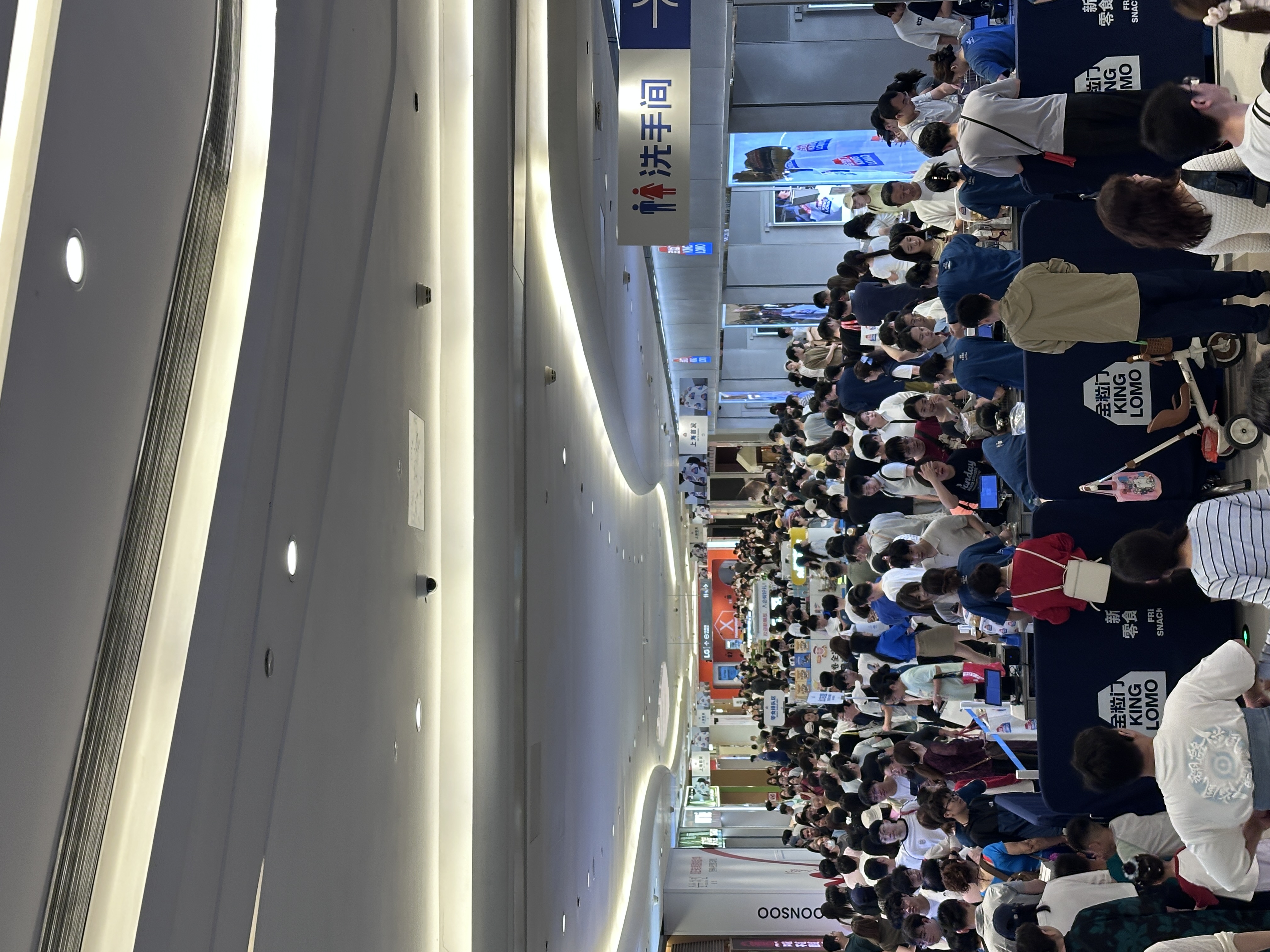
On the evening of October 18th at 6 o'clock, the entrance of the Golden Grain Gate in Shanghai's Wanda Plaza was surrounded by a sea of people, especially in the beverage area, where snake shaped teams circled six times. Almost every person walking out of the store is carrying the iconic red and blue interwoven pattern shopping bag of Golden Grain Gate.
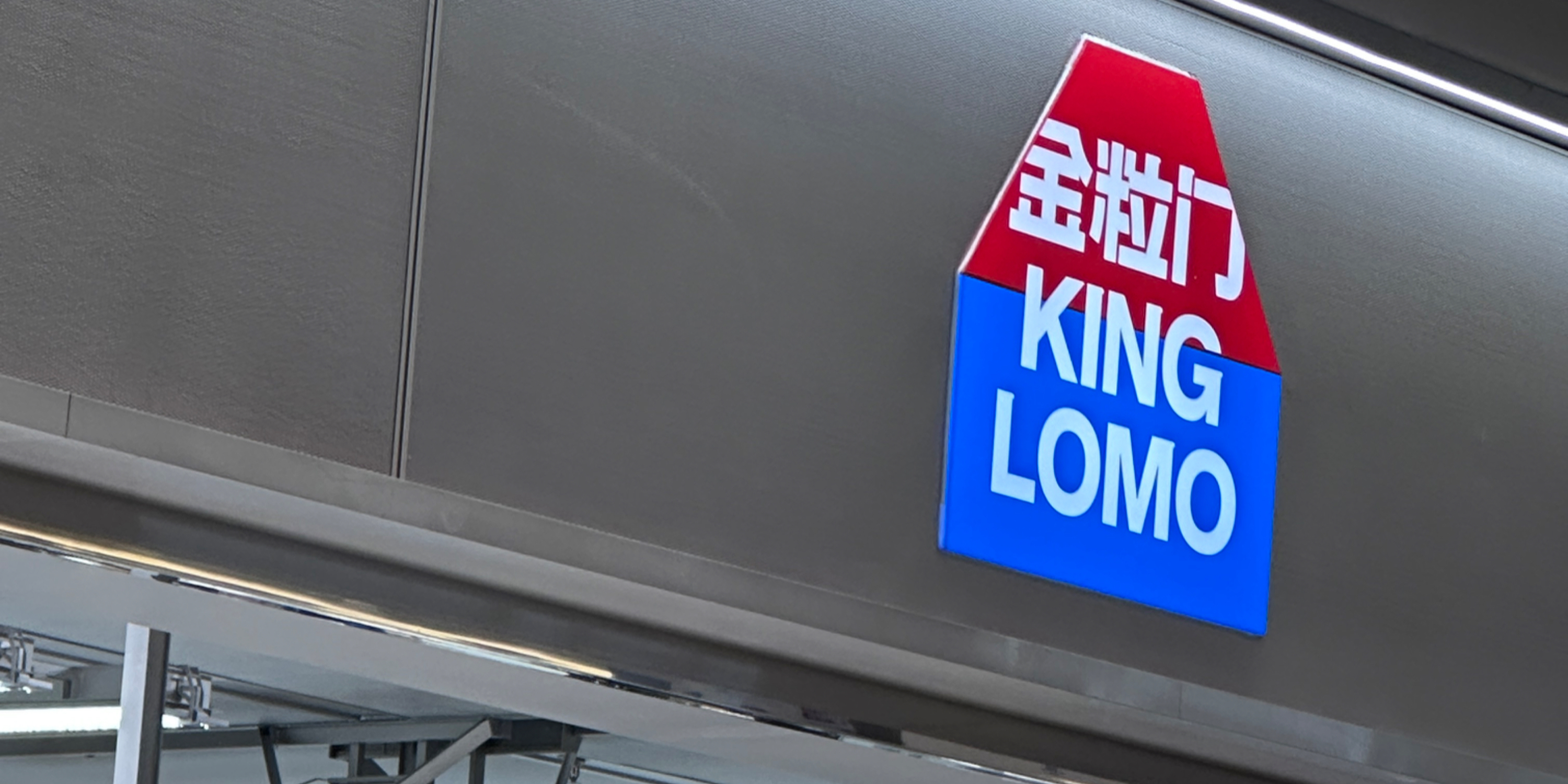
This is the first store opened by Golden Grain Gate in Shanghai on October 15th. Golden Grain Gate positions itself as a pioneer in fresh snacks.
Since the second half of this year, the three words "Golden Grain Gate" seem to have become the traffic code of the snack industry. Whenever it enters a new city, the long queues inside and outside the store quickly become a fixed narrative, as seen in places such as Shenzhen, Nanjing, Hangzhou, Guangzhou, etc.
But at the same time, there are already more than just the Golden Grain Gate who are eyeing "fresh snacks". Jiduoquan, Yili Nutco, Puma Mama, and others are accelerating the opening of stores, while Lai Yifen, Liangpinpuzi, Sanji Squirrel, Juewei, Xueji Stir fried Goods, and Grain Emperor have also launched fresh snack shop types.
It seems like overnight, the fresh snack track is crowded with people, and in terms of store design, product structure, and price range, multiple stores are highly similar.
Mixed Format
According to public information, the operating entity of Golden Grain Gate is Hunan Explorer Brand Management Co., Ltd. The brand's predecessor was the chestnut chain brand "Jinlimen" founded in Changsha in 2015, which transformed into the "Fresh Snack" brand around 2020. According to the information provided by Jinlimen, the brand has currently expanded to multiple provinces and cities including Hunan, Jiangsu, Zhejiang, Guangdong, Hubei, and Jiangxi, with over 50 directly operated stores. Golden Grain Gate has received investments from KK Group and Fuji Capital.
According to Jin Li Men, the Shanghai Jin Li Men store covers an area of about 400 square meters. In the past few days of opening, due to the high foot traffic, Jin Li Men has moved most of the cash register to the outside of the store, causing the mall passage to be crowded and difficult to move.
The distribution structure of products in the store is as follows: on the left side are ready made drinks; from left to right, Nakajima successively distributes stewed food, Chinese style Dim sum, baked cake, puffed food, etc.; on the inside of the wall, dried fruit and preserved meat are displayed. According to the introduction of Jinliangmen, its products mainly focus on fresh short-term warranty and ultra-high quality price ratio, with mainstream single product pricing concentrated between 10-25 yuan.
The "fresh snacks" defined by the Golden Grain Gate are not made and sold on the spot. From the perspective of product structure, the main products that can support the word "fresh" are beverages, braised foods, cakes, bread, and other products with a shelf life of less than five days. This type of product accounts for about one-third of the store area, with baking and braised dishes particularly prominent, clearly occupying the C-position of the store.
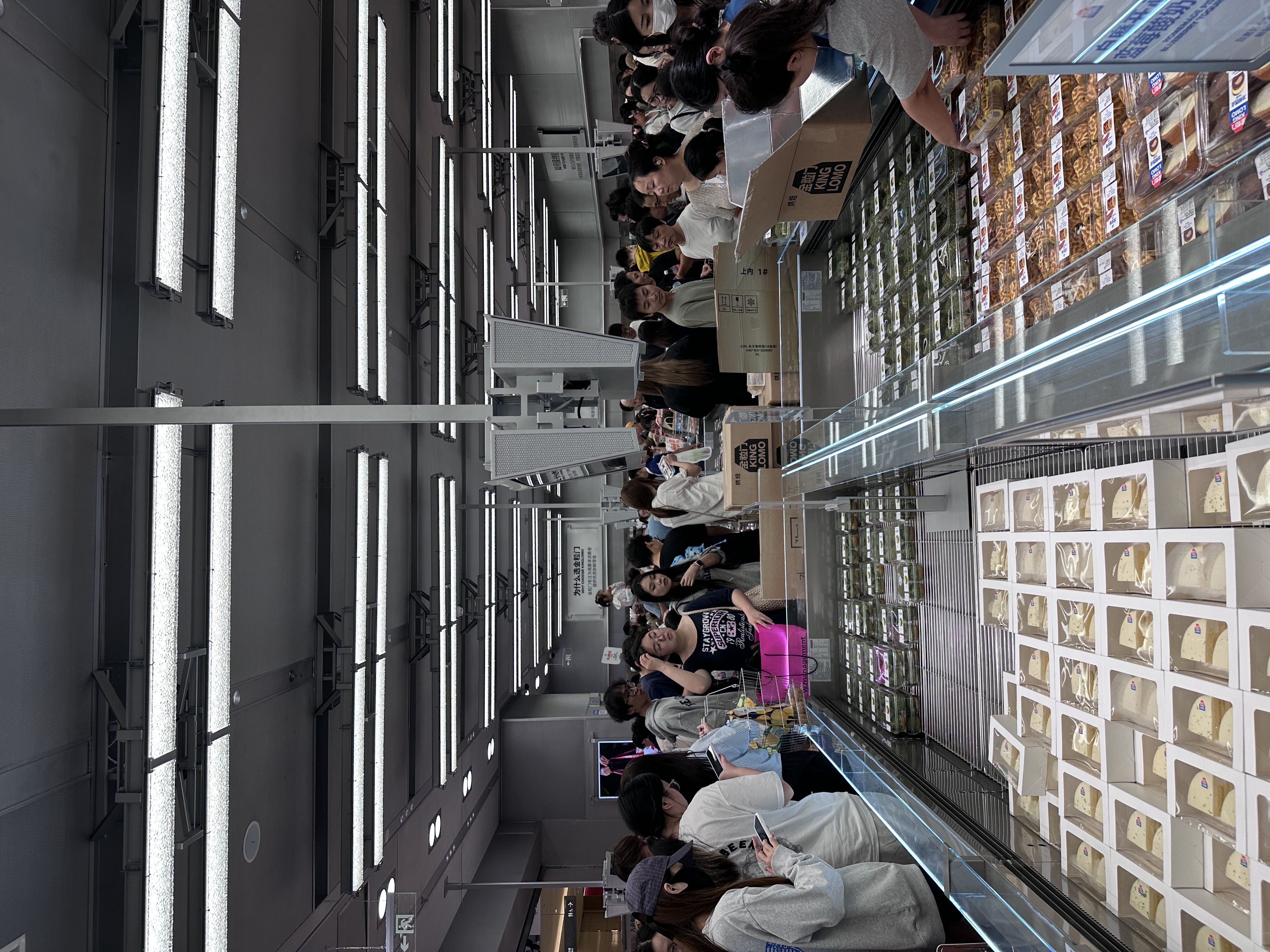
The reporter briefly checked the shelf life of other products in the store and found that: Chinese Dim sum such as egg rolls and peach cakes took about 30 days, puffed food such as crisps and chips took about 2-3 months, biscuits took about half a year to one year, and common dried fruits such as prunes and banana slices took about 9 to 12 months; Mid Island occupies a large area of French fry holding buckets,The shelf life is 9 months.
The beverage area is a popular area within the Golden Grain Gate store. On the day of the reporter's visit on October 18th, staff continuously reminded through loudspeakers that each person is limited to purchasing two bottles, which must be consumed on the same day and have only one day of shelf life.
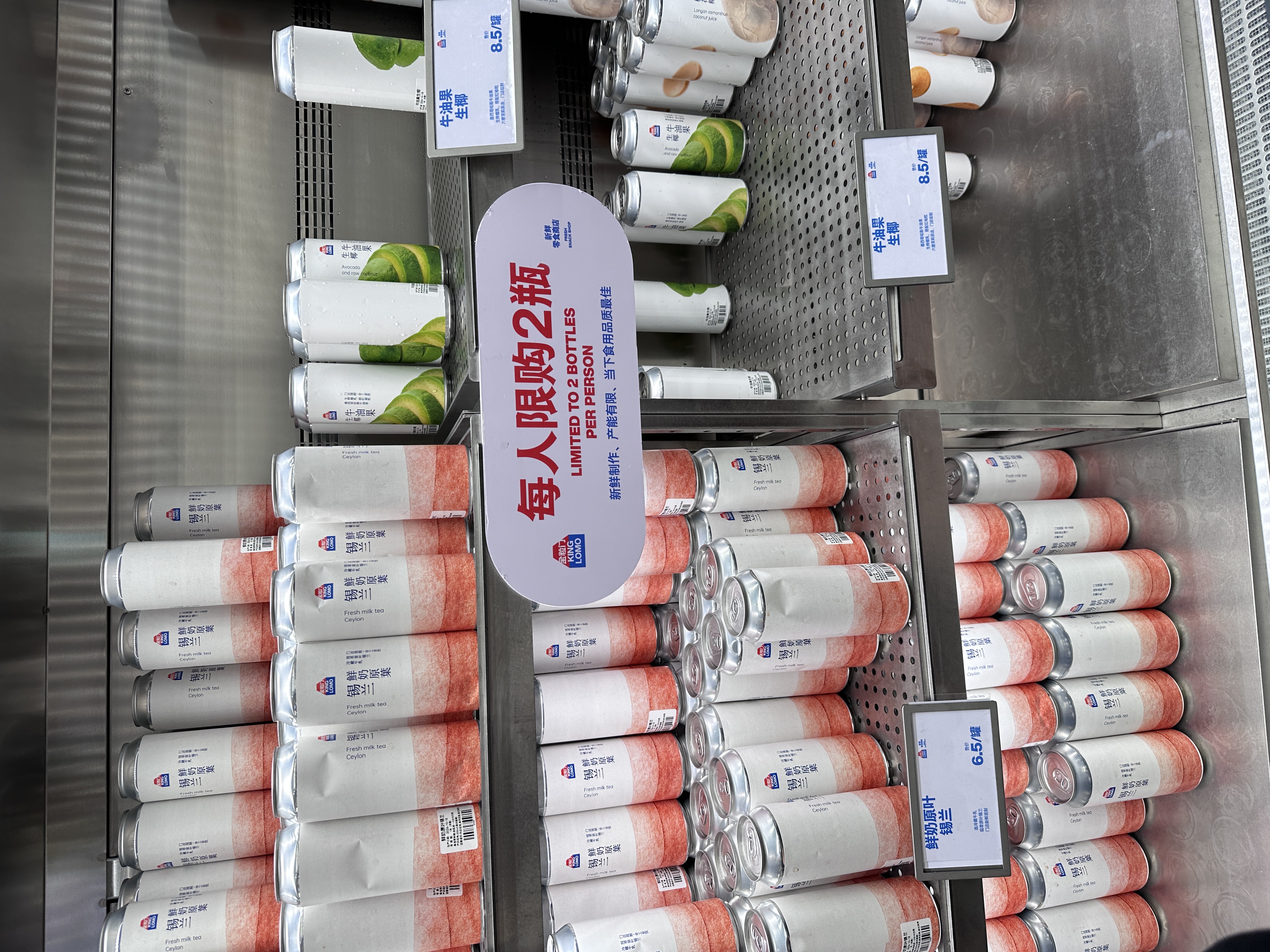
Although Jin Li Men's beverages are packaged in cans, their main focus is on "freshly made". There is no specific ingredient list printed on the beverage bottle. When asked by the reporter why there is no ingredient list, the staff said that it is freshly made, "just like in a milk tea shop".
A snack brand R&D personnel explained to reporters that currently produced and sold food generally does not require mandatory labeling of ingredient lists.
Wang Zhigang, founding partner of Ruishuo Capital and vice president of Shanghai Chain Operation Association, introduced that this type of freshly made beverage is still different from tea shops. A large amount of raw materials are uniformly distributed by the central factory, and the formula has been pre prepared. The store only completes the final few steps of assembly.
From the perspective of product portfolio, braised foods, baked goods, and beverages each have their own top brands in the market. Jinliangmen has incorporated these short warranty categories belonging to different business formats into snack shops.
Wang Zhigang believes that "fresh snacks" essentially belong to a cross mixed business format. CCTV's General Manager of Market Research, Yu Jian, believes that Golden Grain Gate has reconstructed the boundaries of snacks through "short-term guarantee+on-site production".
Highly Homogenized
Fresh snacks are no longer a novelty.
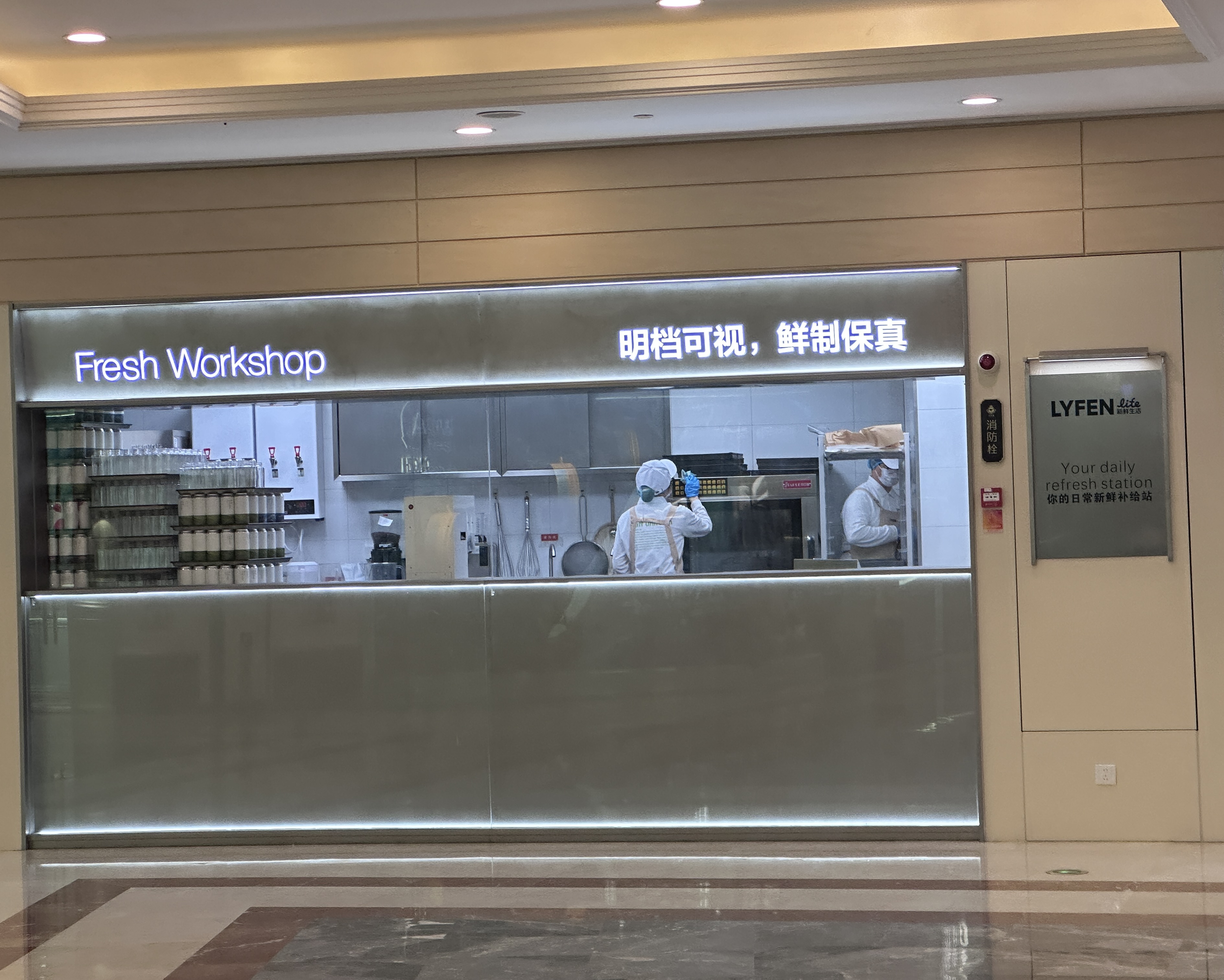
On September 23rd, Lai Yifen opened three LYFEN Life Fresh Life stores in Shanghai, specializing in fresh snacks. Currently, the store has opened five stores. At one of the Global Harbor stores, the reporter noticed that its product portfolio also includes beverages, braised foods, cakes, bread, puffed foods, and more.
Among them, some of the braised products are produced by Jiujiuya. In this product area, some fish roe, tiger skin, and phoenix claws are being sold at a 30% discount due to their approaching expiration date.
There is a clear window on the left side of the entrance to the store, with empty beverage bottles waiting to be filled on the table. On the operating table behind, there are only a few operating tools, which is not as complex as the operating table in a tea shop.
Within the same shopping mall, which is only 500 meters away from the store in Laiyifen, there is another fresh snack brand called Jiushishan. Its product layout is also centered around braised and baked goods, while puffed and beverage products are located on opposite sides of the store.
In the baking area of Jiushi Mountain, the reporter found a product named "Salted Cream Red Bean Ice Bread", whose name and specification are identical to those of the same product in Laiyifen, and it is supplied by the same supplier. Jiushi Mountain sells for 13.8 yuan and Laiyifen sells for 12.9 yuan.
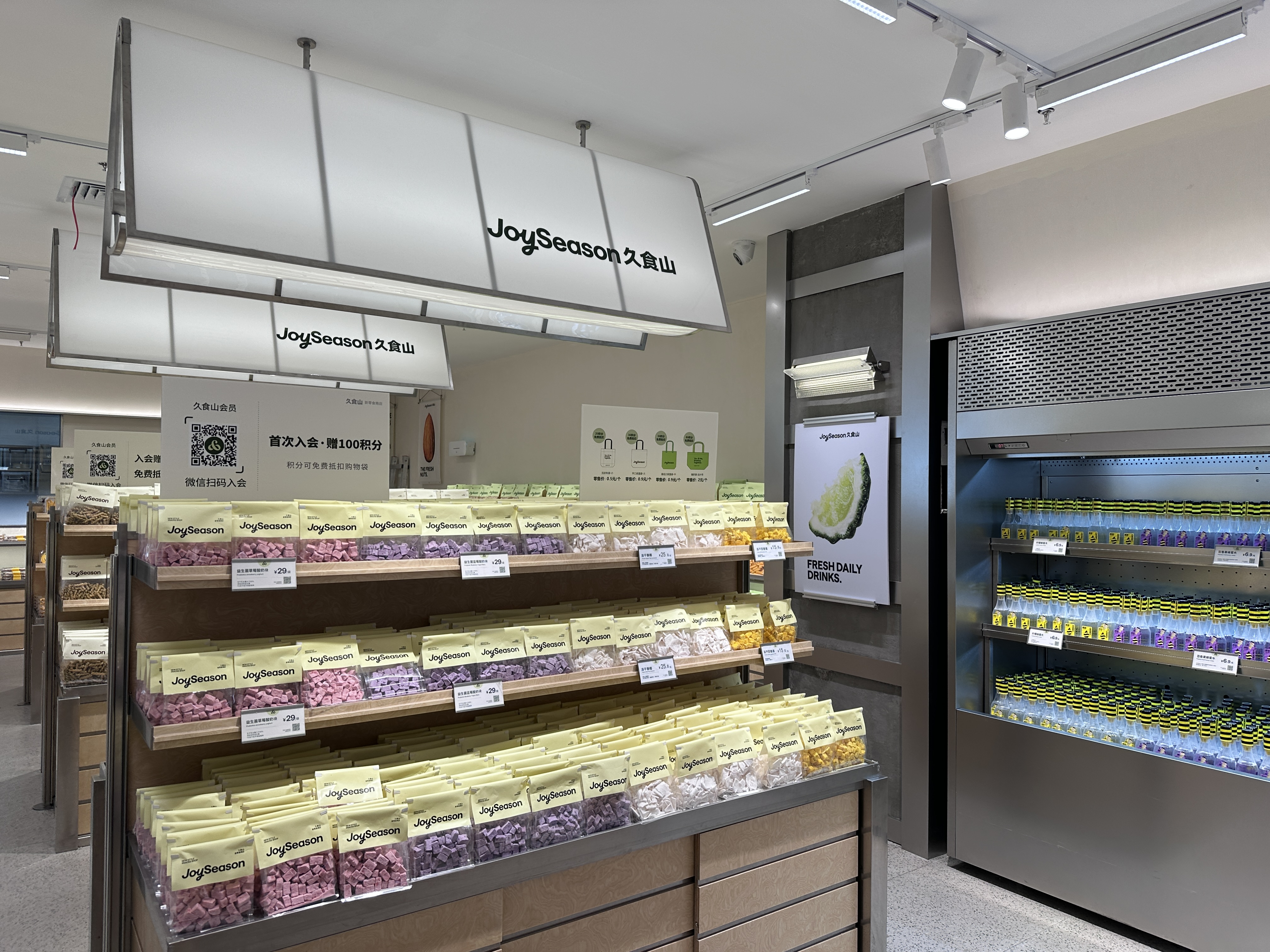
The reporter recently conducted intensive inspections of multiple fresh snack brand stores in Shanghai and found that their decoration styles, product structures, product layouts, and packaging methods are highly similar.
At present, a large number of emerging fresh snack brands have emerged on the market, and even their visual logos are similar to those of Golden Grain Gate. According to the sorting of more than 20 brands' logos such as Wang Xiangqing, Uncle William, Deguocang, Kaidai, etc. in August 2026 this year by the logo design website "Biaoshei", it is found that the combination of red and blue color blocks and geometric frames used in Jinlimen's logo has almost become a "unified template" for fresh snack stores.
The 'two end squeeze' in business models
The pricing of short warranty products in these fresh snack stores is not high. Taking duck collarbones as an example, the prices of products in Jinliangmen, LYFEN lif Fresh Life, and Jiushishan stores are 12 yuan (240g), 14.8 yuan (210g), and 16.8 yuan (220g), respectively. These prices are much lower than those of specialized braised brands on the market, such as duck collarbones. Jiujiuya is 19.9 yuan (200g), and Juewei is 15 yuan (170g). Specifically in Yifen, the price of its duck collarbone is much lower than that of its supplier Jiujiuya.
A snack industry insider who has long been interested in this industry said that braised food is generally a popular product in fresh snack stores.
According to a research report by Guosheng Securities, in terms of product categories, there are approximately 150-200 SKUs in Jinliangmen stores, of which snacks account for 38%, baking accounts for 25%, nuts and dried fruits account for 15%, meat braised flavors account for 7.7%, and beverages account for 11% and fruits account for 4%. According to a research report by Huachuang Securities, the proportion of high-frequency consumer products with short term insurance for 1-5 days in Jinlimen stores is 46.1%, and the expected sales revenue is over 60%.
Wang Zhigang, who has been deeply involved in the catering industry for 30 years, is not optimistic about this model. His judgment is that fresh snacks are facing a double squeeze of higher front-end costs and lower terminal prices.
The front-end costs of cold chain logistics and warehousing for short-term insurance products are already higher than those for long-term insurance products, and the losses are also higher. However, in order to maintain the quality price ratio, stores must lower the terminal selling price. This requires brands to have strong control over supply chain operations and turnover efficiency, "Wang Zhigang pointed out. Long term insurance products cannot be sold, and there are also processing channels such as expiration discount stores. Short term insurance products do not have such channels. Once the customer flow is not enough to support rapid consumption, a large amount of losses will occur. The pressure on the cost side also depends on customer flow: low terminal prices require low supply chain prices, and the current ability to obtain lower supply prices relies on the negotiation advantage brought by large procurement volumes. Once the customer flow decreases or the expansion of stores slows down, the procurement scale shrinks, and the price advantage of the supply chain will also be lost.
Yu insists on the same viewpoint. He believes that short-term warranty products have a short shelf life and high losses, so the model is valid in scenarios with high customer flow and repeat purchases. But in the process of nationwide expansion, the key is to maintain supply chain efficiency and loss control.
Wang Zhigang believes that a brand that can produce fresh snacks requires three necessary conditions: having its own supply chain or factory, being able to schedule production, controlling logistics and losses; Strong brand effect can generate sustained consumer enthusiasm; And an output pipeline that can quickly handle losses.
These three conditions are indispensable, and the entry threshold is actually very high. However, the reality is exactly the opposite. Everyone sees fresh snacks as an opportunity for traditional retail transformation and rushes in, "said Wang Zhigang. He believes that in the future, the industry will inevitably clear out some players who do not have real strength.


The new photovoltaic regulations have not yet been implemented, and some components have already exited the competition for large orders

Towards the end of the year, grid connected energy storage encounters an 'invisible barrier'

The new regulations for innovative drugs do not limit BD, but it has become difficult to sell companies


 Subscribe