

2026-10-15 16:40


On October 14th, data released by the National Bureau of Statistics showed that the Producer Price Index (PPI) for September increased by 5.0% year-on-year, reaching a new high since July 2022.
From October 2022 to February 2026, the year-on-year growth rate of PPI has been negative for 41 consecutive months. In March 2026, the year-on-year growth rate of PPI turned from negative to positive, and thereafter the overall increase trend continued to rise.
Regarding the reasons for the increase in PPI, Dong Lijuan, Chief Statistician of the Urban Department of the National Bureau of Statistics, explained in an article that the rise in international crude oil and non-ferrous metal prices in September drove up prices in related industries in China; Changes in the supply and demand situation of some energy and raw material industries have driven up prices; The accelerated development of fields such as artificial intelligence and computer collaboration has driven up demand and price increases in some industries.
In terms of major industries, in September, the prices of coal mining and washing industry increased by 35.3% year-on-year, while the prices of petroleum and natural gas mining industry, petroleum coal and other fuel processing industry, chemical raw materials and chemical products manufacturing industry increased by 24.5%, 21.6% and 12.1% respectively. The prices of non-ferrous metal mining and washing industry, colored metal smelting and rolling processing industry all increased by 21.4% year-on-year.
Zhang Lin, Executive Vice President of Far East Credit Research Institute, said that the price data in September showed a typical structural inflation pattern of "strong upstream and weak downstream". Among them, PPI has risen beyond expectations, CPI is moderate, cost driven characteristics are prominent, and terminal transmission is still weak. The data basically conforms to the judgment of "mild CPI, strong PPI", but PPI growth rate significantly exceeds market consensus expectations.
Liao Bo, Chief Macroeconomic Analyst at Northeast Securities Research Institute, stated that based on comprehensive analysis, the domestic price level is in a moderate recovery stage. In September, both consumer and industrial prices showed a good recovery growth trend, indicating that the speed of filling the supply-demand gap is relatively fast, and also reflecting the contribution of external input factors. It is expected that the overall macroeconomic situation will show a recovery rebound direction in the second half of the year, and the actual GDP growth rate in the fourth quarter is expected to reach over 4.5%. It is not difficult to achieve the GDP growth target of 4.5% -5% for the whole year.
Affected by the high increase in PPI, the scissors gap between PPI and CPI has further widened.
Specifically, from February to June 2026, the scissors gap between PPI and CPI continued to widen, with the year-on-year growth rate difference expanding from negative 2.2 percentage points in February to 3.1 percentage points in June. The scissors gap in July and August remained at 3 percentage points. In September, it further expanded to 4.1 percentage points.
In the past decade, there have been two rounds of significant and sustained widening of the PPI and CPI scissors gap over longer periods. Firstly, from 2016 to mid-2017, under the macro background of supply side structural reform, the characteristic of PPI and CPI scissors gap was that the year-on-year growth rate of CPI was relatively stable, while the year-on-year growth rate of PPI experienced a transition from negative to positive and continued to fluctuate upwards; Secondly, from 2021 to mid-2022, under the influence of global commodity price increases and low base effects, the year-on-year growth rate of PPI continued to rise, reaching a new high of 13.5% in October 2021, which is a nearly 30-year high.
Zhang Lin stated that the long-term price difference between CPI and PPI is essentially a redistribution of upstream and downstream profits between the industrial chain. Generally speaking, when PPI>CPI (positive scissors difference), upstream resources benefit, while midstream and downstream manufacturing and consumption are under pressure; When CPI>PPI (Negative Scissor Difference), downstream consumption, improvement in some services and midstream brand manufacturing, and a decline in upstream resource products. The current scissors gap is large, and the EPS/profit margin of upstream resources and materials (coal, steel, petroleum and petrochemical, non-ferrous metals, etc.) is increasing in the same direction as PPI. The pricing power is strong, the operating leverage is high, and profits are concentrated in the upstream. Downstream consumption and brand manufacturing (such as food and beverage, home appliances, light industry, etc.) are limited by price adjustment, and gross profit is squeezed, which can easily lead to increased income without increasing profits, especially in the retail end where it is more likely to fall into the "price for quantity" trap.
Liao Bo said that from the perspective of PPI and CPI scissors difference, it may indicate that the upstream price increase is greater than the downstream, that is, the price increase in the industrial sector is higher than that in the consumer sector, indicating that more profits are allocated to upstream industrial enterprises. The current policy combination is more aimed at boosting confidence, and the formation and implementation of physical workload may be a gradual process. In the future, targeted incremental aggregate demand side policies will be introduced one after another, which may further determine the sustained rebound signal of prices.
Zhang Liqun, a researcher at the Macroeconomic Research Department of the Development Research Center of the State Council, stated that if the scissors gap between PPI and CPI continues to widen, it may lead to more difficulties in the production and operation of middle and downstream enterprises, especially small and micro enterprises. This is worth paying attention to. Currently, a large number of small and medium-sized traditional manufacturing enterprises are already facing the difficulty of significantly insufficient order demand. If raw material prices continue to rise at this time, the difficulties for enterprises will further increase. In this context, it is necessary to improve the macro environment for the development of small and medium-sized enterprises as soon as possible.


ST Qingyue fined 172 million yuan for suspected fraudulent issuance and illegal letter disclosure
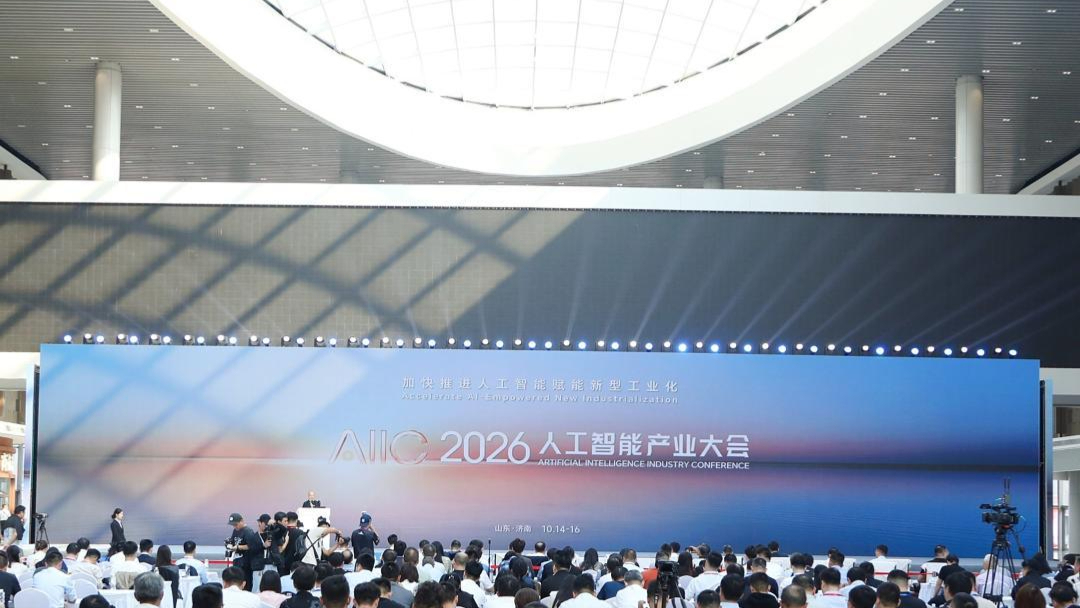
Focusing on "Artificial Intelligence Empowering New Industrialization", the 2026 Artificial Intelligence Industry Conference opens in Jinan

Can Traveler 7 take care of both commuting on weekdays and mountain trips on weekends? This time, the all-new Jetour Traveler 7 will focus on its "Keyo" # Smart Beauty Travel Champion Box # Kecheng Keyo Keyo Travel # 7 Series Square Box New Benchmark # New Traveler 7 Renewal Surprise Price Starting from 125900 yuan


 Subscribe
