

2026-10-14 19:36


2.94 ℃ - This is the September sea surface temperature index for the equatorial central eastern Pacific region, which means that the sea temperature in this area is nearly 3 ℃ higher than the average annual temperature.
The 'fever' of seawater is a hard indicator of El Ni ñ o phenomenon. Recently, the National Climate Center has indicated that a super strong El Ni ñ o event has officially formed in September 2026.
The change has already occurred this summer: the highest temperature at Dongkan Station in Turpan was 49.8 ℃, breaking the observation record of China's national meteorological station; The rainy season in North China is 20 days longer and the rainfall is over 70% higher; 609 rivers across the country are over alert; Super typhoons "Bawei" and "Misak" have made landfall successively
Fluctuations in food prices, disrupted travel plans, and high temperature health risks... Extreme weather not only affects everyone's living expenses, but also impacts areas such as supply chains, energy systems, urban operations, agricultural production, and public health. These impacts will eventually turn into compensation bills in the hands of insurance companies. The insurance industry has received a total of 670000 reports and estimated losses of 13.2 billion yuan from disasters such as heavy rainfall and typhoons in July and August this year alone.
According to a recent report released by Munich Re, global natural disaster losses in the first half of this year amounted to nearly 112 billion US dollars, surpassing 100 billion US dollars for six consecutive years. Only about $44 billion of global natural disaster losses have been covered by insurance, resulting in a coverage gap of 60%.
In conversations with Economic Observer reporters, Chen Shihua, the non life insurance president of Munich Reinsurance Greater China, has repeatedly talked about this topic. Based on Mu Zai's continuous research and data accumulation on global catastrophic risks over the past 50 years, she observed that climate change is gradually reshaping the global risk landscape and presenting stronger uncertainty and cumulative impacts of extreme weather events.
In Chen Shihua's view, the El Ni ñ o event is like an amplifier of the existing risk pattern and an important signal of the continuous evolution of the global risk environment.
How will the map of the insurance industry be rewritten when extreme weather becomes the 'norm'?

[Dialogue]
Economic Observer:El Ni ñ o has become a key term in the climate field for 2026. Based on temperature data, a super strong El Ni ñ o event is forming. From the perspective of a reinsurer, is there any fundamental difference between this year and previous years? What is the expected compensation situation for the industry this year?
Chen Shihua:From a reinsurance perspective, the most noteworthy event this year is not a single heavy rainfall, typhoon, or El Ni ñ o event itself, but rather the increased frequency, expanded impact, and cumulative losses exhibited by extreme weather events. Strong El Ni ñ o is one of the risk signals that deserves special attention, but its specific impact still depends on the combined effects of various factors such as the East Asian monsoon, subtropical high pressure, and regional sea surface temperature.
From the perspective of global loss performance, insurance losses caused by extreme weather still remain at a relatively high level. For the Chinese market, the industry's compensation pressure is expected to remain high this year, but the increase in compensation amounts does not necessarily equate to the deterioration of risks, and also reflects the continuous improvement of insurance coverage and penetration rate.
What is truly worth noting is that in the context of climate change, the risk environment faced by the insurance industry is becoming more complex, uncertain, and difficult to judge solely based on historical experience.
Economic Observer: There is a saying in the meteorological community that extreme weather has changed from "rare" to "new normal". What does the new normal mean for social and economic development, and what changes will the insurance industry face?
Chen Shihua:Extreme weather has become the 'new normal', which means that climate risks are gradually evolving from occasional challenges to long-term development issues that businesses and society need to face. In the past, people paid more attention to the direct losses after disasters occurred; Today, the impact of risks has extended to multiple fields such as supply chains, energy systems, urban operations, agricultural production, and public health. In the context of highly interconnected global industrial chains, the impact of a flood, heat wave, or typhoon is often no longer limited to the affected area itself, but may affect a wider range of economic activities through supply chains and markets.
For the insurance industry, this means that the industry's role is undergoing a transformation. Insurance is not only a post disaster economic compensation mechanism, but also increasingly involved in risk identification, risk reduction, and resilience building. We not only focus on the recovery after disasters occur, but also hope to help customers identify risks in advance, reduce risks, and enhance their ability to adapt to changes in risks.
At the same time, we also see new development opportunities emerging. The construction of green infrastructure, energy transformation, low-carbon technology innovation, and the development of climate adaptive cities all require long-term and stable risk protection and capital support. The insurance and reinsurance industry can better support the development of these fields through professional expertise and long-term capital.
For the industry, an important issue is how to maintain the insurability of risks in the context of continuous risk changes, ensuring that enterprises and society can continuously obtain stable and affordable risk protection.Economic Observer: From a global perspective, what changes have climate change brought to risk factors in different regions?
Chen Shihua:From a global perspective, a significant change brought about by climate change is that the main risk characteristics in different regions are undergoing adjustments.
For example, in North America, the risks of severe convective storms, hail, and wildfires are more prominent; In Europe, the impact of high temperatures, droughts, and floods continues to expand; In the Asia Pacific region, floods, typhoons, and extreme rainfall remain the main sources of risk. Meanwhile, the risks previously known as Secondary Perils (non peak disasters) are increasingly causing significant insurance losses.
For the strong El Ni ñ o and super strong El Ni ñ o events in 2026, we tend to view them as amplifiers of existing risk patterns rather than new risk factors. Its impact ultimately depends on the joint action of the regional climate system, so we pay more attention to its impact on the probability of risk occurrence and loss characteristics.
For the insurance industry, risk assessment, risk management, and product design all need to pay more attention to long-term trends and emerging risks, rather than relying solely on historical experience.
One of the biggest characteristics of China is that the types of risks are more diverse. Multiple natural disasters such as typhoons, floods, earthquakes, landslides, mudslides, and high temperatures and droughts coexist, and the main risks faced by different regions and seasons vary significantly. Meanwhile, with the development of urbanization and the continuous agglomeration of economic activities, the impact of natural disasters on industrial chains, supply chains, and critical infrastructure is also expanding.
We also see that new risk exposures are rapidly increasing. For example, new energy assets such as offshore wind power, photovoltaic power generation, and energy storage facilities are growing rapidly, and these assets are often distributed in areas with higher natural disaster risks. How to enhance the resilience of these new assets is becoming an important issue of concern for the insurance and reinsurance industry.
Economic Observer: A report released by the Global Asian Insurance Cooperation Organization (GAIP) this year shows that climate change is pushing the insurance industry towards a critical point of insurability. How does Mu understand the concept of "critical point of insurability"? How far is it from us? From the perspective of reinsurance, which risks are becoming "uninsured" or "difficult to underwrite"?
Chen Shihua:The so-called 'critical point of insurability' does not mean that a certain risk suddenly becomes completely uninsured, but rather that as the frequency, intensity, or uncertainty of the risk continues to rise, insurance coverage may become increasingly expensive, limited, and even difficult for some groups to obtain affordable insurance coverage.
From the perspective of the insurance and reinsurance industry, the core of insurability lies in whether risks can be reasonably assessed, effectively managed, and diversified on a larger scale.
From a global perspective, what we see is that some risks are becoming 'harder to underwrite'. For example, high-frequency floods, wildfires, long-term droughts and heat waves, as well as some compound disaster risks. These risks are not necessarily inscrutable, but their risk levels and uncertainties are increasing, thus placing higher demands on risk pricing, capital investment, and risk management.
For the Chinese market, we believe that some risks deserve continued attention. For example, in recent years, the overlapping risks of extreme rainstorm and urban waterlogging, typhoon and storm surge frequently occurred in some regions, as well as the impact of high temperature and drought on agricultural production, are constantly challenging the traditional risk assessment methods.
What truly determines insurability is the ability of social management and risk reduction. Historical experience has shown that stricter building standards, more comprehensive disaster prevention and mitigation infrastructure, more effective warning systems, and more mature insurance and reinsurance mechanisms can significantly enhance the insurability of risks.
Economic Observer: It is reported that due to sufficient capital and strong reinsurance underwriting willingness, the global property catastrophe reinsurance rate has decreased by 16% after risk adjustment. Is the Chinese market also following this trend? Does this deviation of "capital adequacy+risk escalation" mean that market pricing has lagged behind or been misjudged? How to solve such problems in actual negotiations when insurance companies hope to reduce reinsurance rates and expand underwriting capacity, but actuarial models may provide opposite recommendations?
Chen Shihua:There is indeed a phenomenon of capital abundance and rising risk in the current global reinsurance market, but it should be emphasized that capital can affect prices, but it cannot change the risk itself.
From a global market perspective, the rate decline in 2026 is mainly the result of increased capital supply, improved industry profitability, and a lack of combined effects of large-scale disaster losses in recent quarters. Global reinsurance capital remains at historically high levels, providing ample underwriting capacity for the market.
At the same time, the risk environment has not fundamentally changed due to the decrease in rates. Long term trends such as climate change, increasing risk exposure, and frequent extreme weather events still exist. Therefore, we tend to believe that the market is rebalancing supply and demand rather than ignoring the risks themselves.
For the Chinese market, we have also observed that the competitive environment has eased, but the overall situation is not entirely the same as the European and American markets. China is still in a stage of continuous improvement in risk protection level and gradual increase in insurance penetration rate. Therefore, in addition to price factors, the scope of protection, risk quality, risk reduction measures, and long-term cooperative relationships are equally important. Many customers are not only concerned about rate changes, but also about whether they can obtain stable and sustainable underwriting capabilities.
We always adhere to the risk oriented pricing principle. If the risk level changes, we need to reflect these changes in a timely manner through data, models, and scientific research; If customers make progress in risk management, disaster prevention and mitigation, or risk quality improvement, we also hope that these improvements can be reflected in underwriting conditions and prices.
As for the situation where the client wishes to expand protection and reduce costs in actual negotiations, but the model evaluation shows that risks are increasing, we often solve it through more refined risk analysis and solution design, such as optimizing the protection structure, increasing retention or adjusting hierarchical arrangements, to improve risk transfer efficiency and capital utilization efficiency.
Ultimately, the responsibility of the reinsurance industry is not to chase short-term market fluctuations, but to continuously provide customers with stable risk-taking capabilities in different market cycles. Whether the market is hard or soft, our focus is always on long-term sustainable risk pricing and risk management.


ST Qingyue fined 172 million yuan for suspected fraudulent issuance and illegal letter disclosure
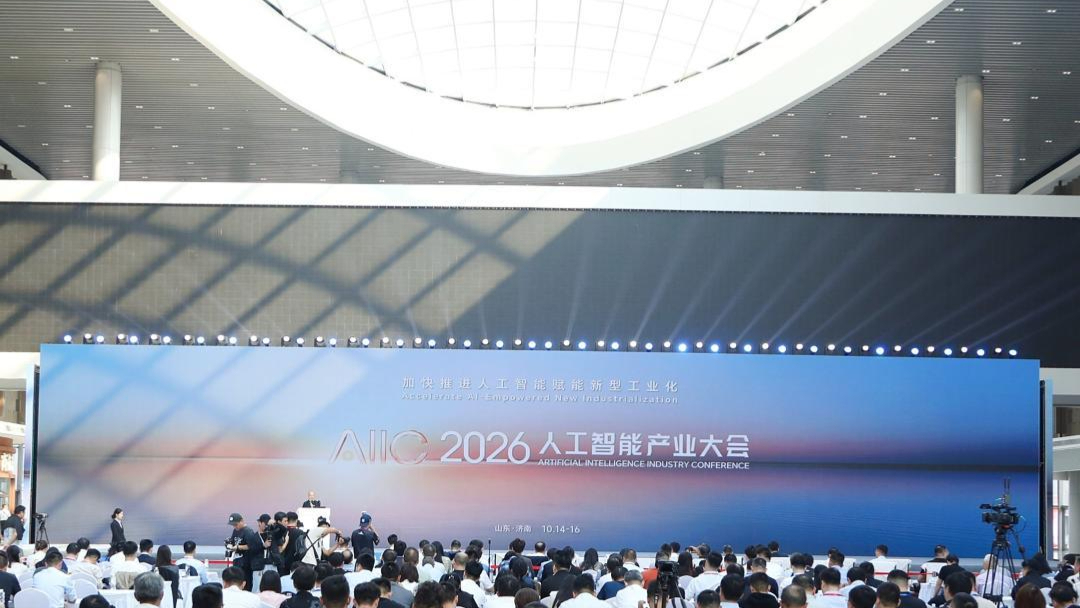
Focusing on "Artificial Intelligence Empowering New Industrialization", the 2026 Artificial Intelligence Industry Conference opens in Jinan

Can Traveler 7 take care of both commuting on weekdays and mountain trips on weekends? This time, the all-new Jetour Traveler 7 will focus on its "Keyo" # Smart Beauty Travel Champion Box # Kecheng Keyo Keyo Travel # 7 Series Square Box New Benchmark # New Traveler 7 Renewal Surprise Price Starting from 125900 yuan


 Subscribe
