

Economic Observer Follow
2026-10-13 15:37


She Zongming | Text After Meta's personal AI (artificial intelligence) agent Muse became popular, Chinese technology companies also took action. ByteDance was developed before the National Day holiday. The Doubao team is promoting the personal assistant project code named "Spell" in the form of an independent app; Tencent launched its cloud based personal assistant LightVela at the end of September and is currently testing a personal agent product called Handy Bot, which runs as an independent app.
Muse achieved 5 million downloads in just 3 weeks of its release, driving giants such as OpenAI, Google, and Anthropic to follow suit. Against this backdrop, it is not surprising that domestic tech giants have taken action, with "Silicon Valley leading and domestic following" becoming the norm.
The question is: from OpenClaw (lobster) to Vibe Coding (atmosphere programming) to AI office, the focus of AI competition has been constantly changing this year. Do BAT still need to dance to Meta's rhythm?
The actions of BAT itself provide the answer: copying Meta assignments may not be suitable for the environment, but in terms of personal AI agents, strategic positioning is inevitable.
Many people think that BAT is going to create a "Chinese version of Muse", but this ignores the differences in implementation paths: as both personal AI agents, Muse adopts an independent cloud virtual machine architecture, focusing on general autonomous task completion; BAT, on the other hand, takes the route of grafting existing ecosystems and tends to embed intelligent agents into its own service system, with significantly more restrained access control.
The reason is simple: the "internet situation" is different. Muse's success in the United States is largely due to its relatively open web ecosystem, while Meta's ability to integrate with Google Workspace is due to its public API (Application Programming Interface) and open licensing protocol system; But in China, the head app is fragmented. It is almost impossible to get an agent to read WeChat chat records, tune Tiktok recommendations, and place an order on Taobao at the same time.
At present, the phenomenon of "isolated islands of agents" in China is obvious: Ali will encapsulate its application ecology into skills that can be called by its own agents, byte ArkClaw will deeply integrate the Flybook and Tiktok plug-ins, and Tencent will also focus on building its own SkillHub (AI skills community). The next possible scenario is that those super apps each have their own personal AI agents, and as for general-purpose personal agents like Muse, it is unlikely that China will have a mirrored version.
Although it is impossible to simply copy Muse, BAT players have to shout "follow" at the table. Rather than following the trend, it is more accurate to say that this is to avoid missing the paradigm shift window and achieve strategic success in future oriented competition.
Why can Muse be on fire? To a large extent, it is due to the expectation of refactoring the super traffic entrance.
In the past 20 years, search engines, social platforms, and super apps have successively become iconic super traffic entry points. With the transition to the AI era, the hope of carrying the next generation of super traffic entry points falls on AI intelligent agents that can understand user needs, call services across platforms, and automatically complete complex tasks.
At present, personal AI agents represented by Muse run on cloud based persistent virtual machines, which are very suitable for undertaking long tasks across time periods and multiple steps. They go further than previous agents that can autonomously execute across platforms but are limited to a single instruction and reset the session at the end of the task, and are more like the "next super entrance".
When individual AI agents are connected to the imaginative space of "future traffic distribution rights", they may degenerate into "backend service providers" without seizing the entrance, and it is reasonable for BAT to lay out individual AI agents.
However, it should also be noted that in the current situation where Muse's daily average new users are significantly slowing down, not all of the challenges facing personal AI intelligence may be smooth sailing. Privacy protection and profit model issues may become key obstacles to its popularity.
The value and risk of personal AI agents stem from one thing: they need to log in for you, make payments for you, and make decisions for you. Once a user hands over their permissions to an intelligent agent through a "package authorization", they face issues such as unclear attribution of responsibility.
The solution of Meta is to separate and store credentials, and monitor them through "sentinels" to manually confirm sensitive operations. But the survey shows that only 8% of American users are willing to hand over their passwords to Meta for agent operations. Within two weeks of its launch, Muse exposed a "zero day vulnerability" where a simple attack could completely hijack an intelligent agent and gain access to all its authorized platform permissions, including shopping accounts and payment information. This also indicates that it still has a long way to go before truly achieving "glory".
Muse is currently offering a paid version in addition to keeping the basic version free. Meta executives have stated that it may ultimately receive a commission from the transaction, but this account is more complex to calculate than billing based on token usage.
Unlike conversational AI, which mainly relies on GPU inference consumption, Agent's multi-step tasks require browsers, API calls, virtual machines, and task scheduling. The CPU is becoming the computing power base for large-scale operation, which will inevitably continue to increase the operating cost of unit tasks. The feasibility of the profit model remains uncertain at present.
Considering factors such as possible narrowing of permissions and the end of the user trial period, it can only be said that Muse's popularity confirms the existence of demand, but the trust gap is not so easy to cross, and the profit model is not so easy to implement. Therefore, Meta has a mixed attitude towards Muse testing internally, and domestic manufacturers generally choose to test the waters through "developer experience". All of these indicate that individual AI agents still have a considerable distance to go before they can be truly popularized.
In the long run, the next "Internet portal" is agent. Whoever can strike a balance between security, privacy, openness, and experience is more likely to win this entrance battle. From this perspective, Muse's answer is not so much an answer as a test question left for technology companies to answer.
(The author is a senior media professional)
ST Qingyue fined 172 million yuan for suspected fraudulent issuance and illegal letter disclosure
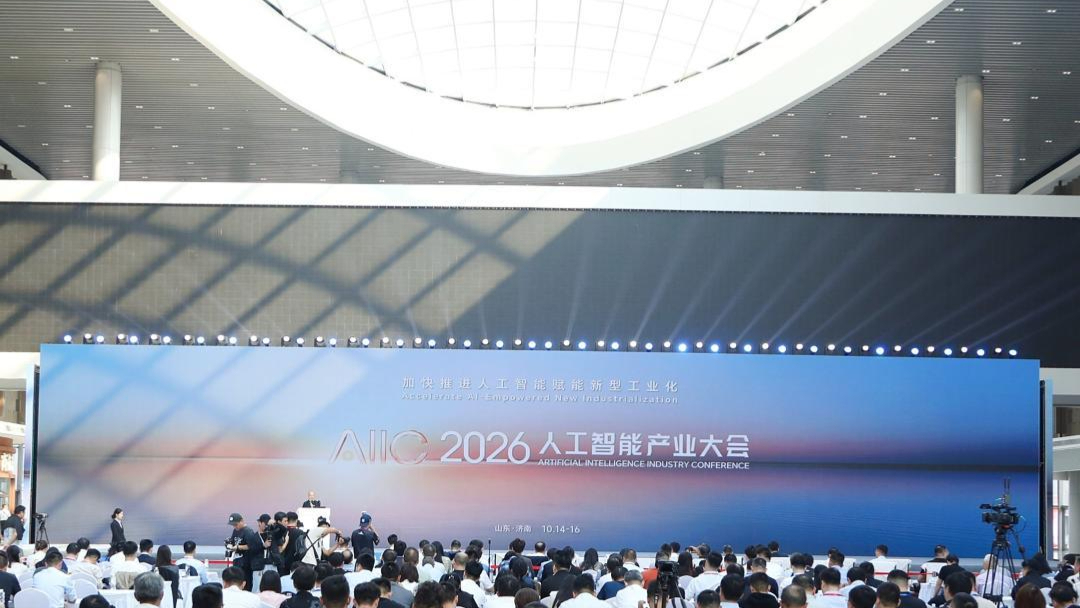
Focusing on "Artificial Intelligence Empowering New Industrialization", the 2026 Artificial Intelligence Industry Conference opens in Jinan

Can Traveler 7 take care of both commuting on weekdays and mountain trips on weekends? This time, the all-new Jetour Traveler 7 will focus on its "Keyo" # Smart Beauty Travel Champion Box # Kecheng Keyo Keyo Travel # 7 Series Square Box New Benchmark # New Traveler 7 Renewal Surprise Price Starting from 125900 yuan


