

Economic Observer Follow
2026-10-14 19:07

Economic Observer reporter Zhang Ying
In 2026, China's brain computer interface field will usher in multiple milestone events: brain computer interfaces will be included in the government work report for the first time and become a key future industry cultivated by the country; The world's first (semi) invasive brain computer interface has been approved for market launch; Three brain computer interface companies, Borui Kang, QiangBrain Technology, and Shuli Innovation, are rushing for IPOs; The first national brain computer interface doctoral program has been approved.
Under the catalysis of multiple events, brain computer interfaces have become "hot" in the capital market, and market-oriented funds and local government funds have entered the market one after another.
What changes are happening in brain computer interface technology behind the excitement? What are the similarities and differences in the development of brain computer interfaces between China and foreign countries? What is the valuation logic of investment institutions? What impact will the entry of local government funds bring? These issues have attracted attention from both inside and outside the industry. Recently, the Economic Observer interviewed Zhang Yutao, a partner at Heying Brain Computer Fund, regarding the aforementioned issues.
Heying Brain Computer Fund is the first specialized industry fund for brain computer interfaces in China. It relies on the Haihe Laboratory for Brain Computer Interaction and Human Computer Integration (hereinafter referred to as "Brain Computer Haihe Laboratory") and is jointly initiated and established by Heying Capital, China Electronics, Tianjin Haihe Industry Fund Angel Mother Fund, High tech Zone New Energy Fund and other entities.
Since its establishment in May 2024, the fund team has conducted research on hundreds of domestic brain computer interface companies, with investment targets including Super Vision, Aoyi Technology, Dome Technology, Dongnao Medical, etc. At the same time, the fund team has had multiple exchanges and negotiations with local governments in Jiangsu, Guangdong, Hunan, and other regions, gaining a comprehensive understanding of the domestic brain computer interface industry.
Three iconic financing events
Economic Observer: Brain computer interfaces are very popular this year. From the perspective of investors, what are the milestone financing events in China?
Zhang Yutao:It's really hot. In 2024, when our fund was first established, the industry was still in its early stages, but within two years, there has been significant development in hardware, algorithms, and ecosystem. Many capital enthusiasts of new quality productivity have also begun to incorporate brain computer interfaces into their vision, with frequent large-scale financing this year.
There are three iconic events:
The last round of financing before Borui Kang's IPO was exceptionally hot, representing the possibility of the brain computer interface capital path being connected and achieving linkage between the primary and secondary markets, which is a benchmark;
Gestalt has only been established for half a year and has already raised two rounds of financing, winning 570 million yuan in financing, setting a record for the fastest growth in early financing of brain computer interfaces in China;
Proactive Technology recently received a financing of 330 million yuan, and its team consists entirely of scientists, originating from the Lingang Laboratory (a national level new research institution), demonstrating the recognition of capital for scientists to transform their achievements. Previously, such teams were often questioned about their engineering and commercialization capabilities.
Economic Observer: These three technology paths are different. Borui Kang is semi invasive, Gestalt is an ultrasound brain machine, and the active technology benchmark is Musk's Neuralink (invasive).
Zhang Yutao:Yes. In fact, they all have the potential of chain owners to integrate upstream and downstream (electrodes, chips) and promote the development of segmented fields.
Economic Observer: How does the accumulation of technology reflect the fact that a large amount of financing can be obtained within six months of establishment? How to evaluate valuation?
Zhang Yutao:It's difficult to have a unified standard. Our logic has three principles: neuroscience mechanisms can explain clearly, otherwise it is difficult to prove and falsify; We need top domestic scientists and top clinical researchers (PIs) in the medical field, and the two should collaborate for innovation; To have sustainable and replicable business logic and payment attributes, downstream consumers ultimately need to pay for verification. After meeting the three requirements, combine market, product strength, and industry valuation.
There are not many horizontal comparisons overseas due to different national conditions. For example, Chinese people have a lower acceptance of invasive methods than overseas, with differences in ethical cycles of clinical trials and commercial insurance coverage for future payments.
Economic Observer: Setting aside the policy environment, what are the major technological milestones behind this round of financing frenzy?
Zhang Yutao:It may need to be divided into non-invasive and invasive approaches.
Non invasive brain computer interfaces have made significant progress in improving encoding and decoding accuracy, expanding indications, and other aspects.
In terms of encoding and decoding accuracy, the decoding of motor consciousness may have had an accuracy rate of 60% -70% two years ago, but now it has increased to 80% -90%. For example, when grasping with five fingers, if the accuracy is not high, the force may be too deep or too shallow. In rehabilitation training, if the decoding does not match and the movements on the training screen do not match the imagination, the neural repair process will be prolonged.
Indications are also flourishing, breaking away from the pure theoretical stage of the past few years and moving towards engineering and commercialization. For example, commercial scenarios such as closed-loop neural regulation and rehabilitation have already been developed; In the field of innovation, such as ultrasound direction, Gestalt is currently developing ultrasound brain machines with indications for pain; The depression that Kong Shanci is concerned about; Chaonao Technology has developed products such as Alzheimer's disease.
One point I particularly want to mention is why people are now obsessed with ultrasound brain machines and time interference stimulation (TI), because these technologies theoretically can reach deep neural nuclei in the brain, truly achieving non-invasive deep targeting. In fact, applying non-invasive technology to invasive application scenarios has opened up a lot of imagination space.
Traditional electromagnetic regulation, after passing through the skull, presents a diffuse weak energy, loses targeting, and has limited depth of reach. For example, performing a brain pacemaker surgery to treat Parkinson's disease requires traditional techniques such as craniotomy, which may not be particularly effective and comes at a cost. But if TI technology can run smoothly in this scenario, it can achieve better treatment results without craniotomy in the future.
In terms of intrusion/semi intrusion, the approval of the semi invasive Borui Kang product is indeed a landmark event, which has opened up the commercialization chain; Companies such as Ladder Medical and Brain Tiger Technology that specialize in invasive procedures are making equal progress in clinical practice, and Ladder Medical is still developing corresponding surgical robots; In addition, companies like Zhiran that make systems have made significant improvements in channel count, signal-to-noise ratio, low power consumption, biocompatibility, and other aspects.
Economic Observer:Many people are also concerned about whether there is a difference in the technological progress between Chinese brain computer interface companies and European and American companies.
Zhang YutaoIn terms of non-invasive technology, there is no technological gap between China and foreign countries. China has advantages in encoding and decoding, algorithms, engineering capabilities, and supply chains, with low costs and no significant gap. The differences mainly lie in consumer awareness and medical payment habits, so many companies are also concerned about going overseas.
In terms of invasive methods, for example, some foreign companies have reached 1024 channels, while domestic companies currently have 128-256 channels, and Borui Kang has 8 channels (based on indications). A higher number of channels can solve more problems and improve data quality. In addition, Neuralink's implant robot system is very comprehensive, and although it is being developed domestically, it has not yet formed a complete supporting system. Neuralink's disruptive surgical techniques have a high level of engineering and may iterate invasive technology paths. Overall, overseas is currently the leader.
Invasive methods still need to return to clinical acceptance, and require the joint efforts of scientists, clinical experts, patients, and industry to develop safe, effective, and beneficial products for patients. This is the ultimate goal of the current stage.
We believe that invasive and non-invasive methods will definitely go hand in hand in the future. Non invasive approach is actually about providing universal healthcare, such as rehabilitation and regulation, which may have lower costs. But invasive, we liken it to Car-T, which is a high-end medical service that includes acceptance and payment. At present, Borui Kang's products require patients to pay 300000 yuan at their own expense, which is also a relatively high level of self payment.
Traditional non-invasive methods are not as popular
Economic Observer: Financing fever seems to have differentiated within the industry, with more attention paid to invasive methods?
Zhang Yutao:Significant differentiation. Invasive and deep non-invasive targeting are very popular. Ladder, Brain Tiger, and Zhiran have high valuations, and people's valuations of these companies have surpassed their medical attributes. Not only are medical funds investing in them, but more are technology funds, because they believe that brain cognition, brain analysis, and intracranial data have infinite possibilities, can be related to thousands of industries, and may also become national treasures.
Neuroscience is a very cutting-edge and high-precision scientific field. If we can connect the mechanisms of brain cognition and analysis, it is indeed possible to guide various industries. In this field, we have invested in Super Vision, a company founded by Cheng Heping, an academician of the CAS Member, which is the world's leading two-photon and three photon miniaturized imaging system.
On the other hand, companies in the non-invasive field of digital therapy and rehabilitation have not had outstanding financing events, and companies in upstream chip and electrode fields have not experienced systematic overvaluation financing.
Economic Observer: Strong Brain Technology is a representative of non-invasive technology, and its valuation is the highest in the industry.
Zhang Yutao:Strictly speaking, QiangBrain Technology is mainly based on electromyography, such as its bionic hand, as well as EEG products (such as the Focus Head Ring). It is the earliest, largest scale effect, and strongest brand of brain computer interface company in China, and local governments are also empowering it.
In addition, QiangBrain Technology is also collaborating with the Disabled Persons' Federation. Many disabled people actually have relatively weak payment ability. Although domestic companies such as QiangBrain Technology and Aoyi Technology have already raised the price of bionic hands to the level of 100000 yuan (imported products generally exceed 300000 yuan), there are still not many disabled people who can afford it. After the Disabled Persons' Federation provided subsidies, it solved the payment problem for many people.
Economic Observer: As far as I know, the competition in non-invasive consumer scenarios such as sleep and concentration is actually fierce. Will this make some investors retreat?
Zhang Yutao:It does exist.
Consumer grade brain computer interfaces are now more focused on screening and evaluation rather than treatment, and the lack of closed-loop diagnosis and treatment limits the promotion of these products in home settings. People may buy it more to solve problems, for example, if I have poor sleep and hope to wear it to have better sleep, but in reality, it presents my sleep index in a data-driven way, and this index is only an evaluation.
Economic Observer: Just like a smartwatch, I can check my heart rate and sleep duration, but it may not be able to help me sleep better.
Zhang Yutao:Yes, we can only ask questions, but often we can't solve them. This is the point where brain computer interfaces need to break through in consumer scenarios.
Economic Observer: There is a gap between the field you are investing in and the currently hottest field. Do you have a fear of missing out?
Zhang Yutao:There will be, but the size of the fund determines that it is difficult for us to invest in companies with valuations approaching billions. We pay more attention to the cost performance ratio, go to the earlier stage (seed, angel, round A), and avoid valuation foam. At the same time, we are very concerned about the possible contraction of capital liquidity in the next 1-2 years after the release of Document 54, so we are cautious about local foam.
Which cities are not suitable for developing brain computer interfaces
Economic Observer: How has your investment pace and number of projects changed in the past year? Do you want to grab the project?
Zhang Yutao:The number of brain computer interface companies has increased from 100 to 350 this year, and new companies continue to emerge. There is a common situation of competing for quotas in popular tracks.
As the brain computer interface industry continues to develop, the Beijing Tianjin Hebei, Sichuan Chongqing, Yangtze River Delta, and Pearl River Delta will all form their own advantages. Everyone revolves around the integration of the industrial chain, complementing each other's strengths and weaknesses, and the future is bound to be a national industrial integration. Based on these considerations, we are collaborating with local governments to establish corresponding brain computer interface industry funds.
For example, in the Beijing Tianjin Hebei region, there are research institutions such as Tsinghua University, Peking University, and Tianjin University, as well as large hospitals such as Xuanwu Hospital and Temple of Heaven Hospital, which can form a small closed loop from scientific research to medical treatment, making it particularly suitable for companies incubated by scientists to enter clinical practice.
The Yangtze River Delta has already established a mature ecosystem of brain computer interfaces, both in terms of investment and industrial dimensions. Suzhou has the genes of medical equipment, while Shanghai has a complete medical industry ecosystem and strong capital strength.
As the end of the industry, the Pearl River Delta can foresee that as the industrial chain gradually moves backward, their manufacturing capabilities and cost advantages will gradually be released. At the same time, in the invasive field, the Pearl River Delta has great advantages in packaging and precision device manufacturing.
Economic Observer: What kind of cities are not suitable for developing the brain computer interface industry?
Zhang YutaoBrain computer interface is a typical interdisciplinary field that requires high-level accumulation of multiple disciplines and a complete industrial chain foundation, which is the first point. Secondly, a high-quality talent cultivation environment is needed, especially a research and development ecosystem formed by multiple renowned interdisciplinary universities and numerous scientists. Subsequent talent recruitment also relies on students from these universities. Thirdly, brain computer interfaces in the medical field must also have leading hospitals and innovative clinical institutions.
Overall, it will be more difficult for provinces without relevant technological accumulation. These places have their own pillar industries, such as agriculture, tourism, hydropower, minerals, etc. They can also build an industry map based on these advantages, and may not necessarily require the support of brain computer interfaces.
However, I also feel that some local governments are undergoing transformation, such as Hunan Province. Previously, there were no enterprises related to brain computer interfaces, but recent exchanges have revealed that they are paying more and more attention to brain computer interfaces and have proposed some good integration points, such as the integration between institutions such as National University of Defense Technology, Xiangya Hospital, and Zoomlion Heavy Industry Science and Technology. Government leaders are indeed trying to find ways to build an ecosystem.
Economic Observer:How do you assess the cooperation intention of local governments?
Zhang YutaoWe will evaluate from several dimensions. Firstly, we pay attention to whether local governments truly want to lay out this industry and whether they have the determination to build a complete system of talent, scientific research, investment, and so on.
The second dimension is the focus of local governments. If it is only for the purpose of attracting the company to land and exchanging money for projects, this one-dimensional approach cannot last long. More importantly, we need to build the ecosystem and form a virtuous cycle. Therefore, we should pay attention to the investment capacity and current status of local governments, as well as whether there is a clear strategy, and not just scratch the surface.
The third dimension, brain computer interface, involves interdisciplinary fields and requires collaboration between departments such as the Science and Technology Bureau and the Industry and Information Technology Bureau to form a policy ecosystem. If the provincial government attaches importance to it, but there is a shift of responsibility in the city or a certain department, we will be cautious because the Brain Computer Interface Fund usually takes 7-10 years, which is a long-term test of the local government's industrial policy determination.
Economic Observer: You mentioned earlier that there is a partial foam in the financing of brain computer interface. What kind of companies have a foam?
Zhang Yutao:It's not easy to name specific companies, I can say several types. Firstly, the founding team is centered around a single scientist and lacks interdisciplinary organization. Brain computer interface involves multiple dimensions such as hardware, software, algorithms, etc. No matter how skilled a scientist is, they can only solve a single problem in a single dimension, making it difficult to create a system; Secondly, it is purely riding on hot topics. The financing plan describes the company as omnipotent, but in reality, there are no products and little consideration has been given to the subsequent engineering and commercialization issues; The third issue is that there is no self-developed technology. We buy everything and build an assembly machine, and use open-source software to pretend to be self-developed. Of course, these types of companies account for about 20% in my opinion, and most companies are still down-to-earth.
Economic Observer: If many local funds participate, will it make the foam bigger?
Zhang YutaoRecently, this situation has indeed emerged. Local governments need to lay out new quality productive forces and also like to use investment links to enable enterprises to land, drive tax revenue and employment, and make the industry more vibrant. Funds go out first before subsequent operations and commercialization, which is a positive aspect. However, the local government is not sensitive to the valuation of a single enterprise, which is the general ledger, so it may lead to valuation foam and drumbeats.
In addition, enterprises also face difficulties: the prerequisite for local government investment is landing, but the research and production sector of start-up enterprises is limited and cannot meet the requirements of landing in multiple places. The financing pace of some companies is much faster than the industry progress, and the enterprises do not have enough sectors to continue landing, which is very distressing.
Economic Observer:The government requires the establishment of factories or subsidiaries, but the enterprise may only have a few dozen people, for example, it can only be located in Beijing and cannot go to other places.
Zhang YutaoYes, passively meeting demand by enterprises will increase management costs and radius, which is meaningless.


ST Qingyue fined 172 million yuan for suspected fraudulent issuance and illegal letter disclosure
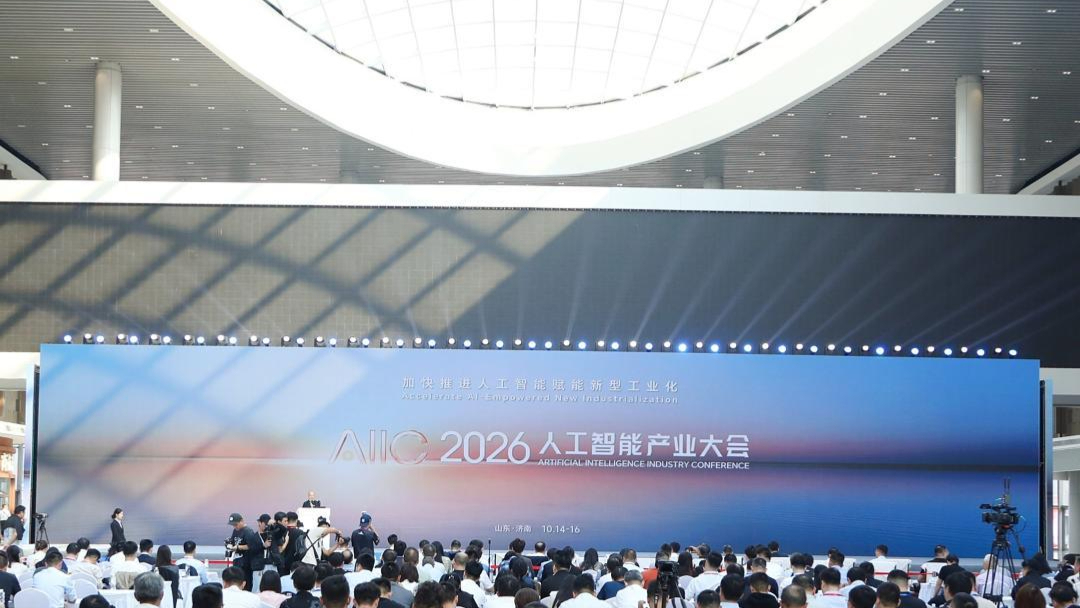
Focusing on "Artificial Intelligence Empowering New Industrialization", the 2026 Artificial Intelligence Industry Conference opens in Jinan

Can Traveler 7 take care of both commuting on weekdays and mountain trips on weekends? This time, the all-new Jetour Traveler 7 will focus on its "Keyo" # Smart Beauty Travel Champion Box # Kecheng Keyo Keyo Travel # 7 Series Square Box New Benchmark # New Traveler 7 Renewal Surprise Price Starting from 125900 yuan


 Subscribe
