

2026-10-14 12:07


Recently, the Central Committee of the Communist Party of China and the State Council issued the "Opinions on Developing New Quality Productivity" (hereinafter referred to as the "Opinions"). The Opinion proposes to deepen professional division of labor within industries and products, promote cross industry and cross regional integration, and avoid "internal competition"; Strengthen anti-monopoly and anti unfair competition measures.
This top-level policy signal resonates with the recent "anti internal competition" statements released by various departments, pointing directly at the vicious internal competition phenomenon of Chinese enterprises in some fields. Among them, the two major industries that have been repeatedly pushed to the forefront are China's "involution" - new energy vehicles and photovoltaics. The photovoltaic industry chain covers silicon materials, silicon wafers, solar cells, modules, and photovoltaic application systems, and China's photovoltaic industry has formed a complete industrial chain.
Zeng Yuqun, Chairman of CATL, a leading player in the lithium battery industry, has also publicly regarded the price war in the photovoltaic industry as a negative example. He bluntly stated in an interview, "Why hasn't the lithium-ion industry experienced the negative consequences of vicious competition like photovoltaics? It's because CATL is holding up this price. As long as we lower the price, it will be even worse than photovoltaics." This directly points out the root of vicious competition in photovoltaics.
According to data released by the National Energy Administration in September, as of the end of July 2026, the installed capacity of photovoltaic power generation in China reached 1.286 billion kilowatts, surpassing coal-fired power (1.285 billion kilowatts) for the first time and becoming the largest power source in China.
But the semi annual reports disclosed by photovoltaic companies have also laid out another side of the industry on the table. According to the 2026 interim reports of 13 mainstream photovoltaic companies, including Longi Green Energy, Tongwei Co., Ltd., JinkoSolar Energy, JA Solar Technology, and Trina Solar, their total net profit attributable to the parent company in the first half of 2026 was a loss of 18.473 billion yuan, an increase of 14.43% year-on-year. Among them, 11 companies suffered losses, with only Sunshine Power and Atenza achieving profits.
At the mid-term investor exchange meeting of TCL Zhonghuan in 2026, Li Dongsheng, Chairman of TCL Group, reviewed and stated that the company's net profit attributable to the parent company in 2024 was a loss of 9.8 billion yuan. "At that time, it is not an exaggeration to say that Zhonghuan was in crisis," and since 2024, it has not been profitable for two and a half consecutive years. "TCL Zhonghuan has undergone a life and death test in the past three years.
Faced with this situation, leading enterprises have begun to take joint actions. On October 11th, the original team of leading domestic photovoltaic companies such as Tongwei and Xiexin once again gathered in Hangzhou to deepen the progress of the previous meeting. The meeting agreed on a clear price bottom line: the average cost including tax and corresponding sales price of silicon materials shall not be less than 43000 yuan/ton; On the component side, the BC component shall not be less than 0.86 yuan/W, and the TOPCon component shall not be less than 0.79 yuan/W. At the same time, it is proposed to promote enterprises to independently coordinate and actively suppress production capacity based on total market demand through market-oriented regulation mechanisms, and establish mutual supervision mechanisms.
The peak of installed capacity and the cold winter of profits are happening simultaneously in the same industry. The growth logic of "scale for cost reduction" in the photovoltaic industry over the past decade has gradually become ineffective in the current situation of comprehensive overcapacity.
Futures rush, spot lag, can enterprise profits come back
As of mid October, the polysilicon market continued the pattern of "futures rushing and spot lagging". After a brief rebound driven by the expectation of reduced production, the futures market entered a period of volatility. On October 9th, the main contract (PS2611) closed at 36120 yuan/ton, a decrease of 465 yuan/ton from the end of September.
The signals of production reduction are indeed dense. Tongwei Yunnan and Sichuan, with a total production capacity of 200000 tons per year, gradually stopped production in early October. Leshan Xiexin stopped production at the end of September with a production capacity of 100000 tons per year, Xintezhundong reduced production by 50%, and Yasigan River stopped production of 40000 tons in October. The entire industry is expected to reduce production capacity by a total of 500000 tons in Q4, and the starting load in October is expected to drop to 35%, with a month on month decrease of about 25% in production scheduling.
However, the repair efforts for spot prices are limited. The average price of N-type recycled materials is 41.1 yuan/kg, and the average price of granular silicon is 39.5 yuan/kg, slightly higher than September. However, many companies are still in a state of slight losses.
More importantly, inventory pressure is increasing instead of decreasing. The latest inventory of polycrystalline silicon is 352000 tons, an increase of 4.14% month on month. Downstream silicon wafer factories prioritize destocking and only maintain essential procurement, with low acceptance of high priced sources.
According to the semi annual report, top companies are still deeply mired in losses. In the first half of 2026, Tongwei Corporation's net profit attributable to its parent company was a loss of 5.119 billion yuan, Longi Green Energy suffered a loss of 3.684 billion yuan, TCL Zhonghuan suffered a loss of 3.204 billion yuan, and JA Solar suffered a loss of 2.663 billion yuan. These four top companies alone incurred a total loss of 14.67 billion yuan.
The pressure is not only concentrated on top companies. In the first half of 2026, Aixu Co., Ltd. lost 754 million yuan in net profit attributable to its parent company, Hongyuan Green Energy lost 679 million yuan, Shuangliang Energy Conservation lost 766 million yuan, Junda Co., Ltd. lost 253 million yuan, and the total loss of the four companies was approximately 2.452 billion yuan. Batteries, silicon wafers, and equipment are also under pressure.
This round of profit decline is a common manifestation of the imbalance between supply and demand in the industrial chain on the profit statements of more enterprises.
It is worth noting that the extent of losses for some companies has narrowed. Tianhe Solar's net profit attributable to the parent company in the first half of 2026 was a loss of 270 million yuan, significantly narrowing from 2.918 billion yuan in the same period last year. The gross profit margin of photovoltaic products increased from -2.49% to 1.27%; TCL Zhonghuan's net profit attributable to its parent company in the first half of the year was a loss of 3.204 billion yuan, a decrease of approximately 24.5% compared to the same period in 2025 when it was 4.242 billion yuan. Among them, Tianhe Solar's loss reduction was also affected by non recurring gains and losses such as the disposal of T1 Energy stocks.
However, although some operational indicators have improved, the sustained profitability of the main industry chain has not yet recovered, and there is currently no widespread improvement in profitability on the corporate income statement.
Overproduction expansion, low prices, problems with industry access and management, and competition concepts
The current low price competition in the photovoltaic industry is the result of the combined effects of vicious competition concepts, homogeneous expansion of production, imperfect industry rules, and local investment incentives.
Looking back at the causes of this vicious internal competition, it is not difficult to find that our industry competition mode is still in the early stage.
On October 31, 2022, TCL Zhonghuan, under the leadership of Vice Chairman and General Manager Shen Haoping, took the lead in lowering its silicon wafer quotation. Subsequently, Longi and others quickly followed suit, and the silicon wafer price war officially began. In just over a month, the price of silicon wafers has dropped by over 20%. To make matters worse, the concentrated release of silicon material production capacity in 2023 will rapidly shift the industry from silicon material shortage to oversupply. The price war has further spread to the battery and component sectors. By 2024, there is no sign of the price war ending, and component prices have completely fallen below the cost line, plunging the entire industry into a vicious cycle of "exchanging losses for operating rates".
The China Photovoltaic Industry Association is attempting to prevent 'anti involution'. On October 14, 2024, the association held a closed door symposium in Shanghai with 16 backbone enterprises in the industrial chain, discussing topics such as "anti competitive competition" and "anti dumping below cost", resolving supply-demand imbalances, promoting the withdrawal of outdated production capacity, and reaching consensus on strengthening industry self-discipline. But later, some media questioned whether the meeting was a price alliance and violated unfair competition laws. Some media have also pointed out that the self-discipline mechanism of industry associations lacks mandatory binding force and is prone to the "prisoner's dilemma". Verbal consensus is difficult to reverse the supply-demand imbalance, and the 0.68/W cost red line is also difficult to implement in practice due to the large cost differences among different enterprises. The 'consensus' failed to end the price war, and prices continued to decline.
From the second half of 2025 to the beginning of 2026, although prices in the photovoltaic industry have recovered, they have not yet emerged from the adjustment period.
During the 2026 National People's Congress and Chinese People's Political Consultative Conference, TCL founder Li Dongsheng called for market-oriented mergers and acquisitions to reduce disorderly competition. He believes that the crux of the problem lies in blind expansion of production, and only when excess capacity is truly withdrawn can supply and demand be re balanced. Zhang Haimeng, Vice President and Chief Sustainable Development Officer of Longi Green Energy, has also pointed out that in the past few years, the industry has overly relied on homogeneous production capacity and subsidy environment, which not only suppresses innovation but also exacerbates the supply-demand imbalance.
However, the problems in the photovoltaic industry are not only overcapacity, but also serious issues related to competition and development concepts, as well as industry rules. Without solving these two problems, the photovoltaic industry still cannot escape from the quagmire of internal competition.
According to data from the China Photovoltaic Industry Association, the operating rate of homogeneous production capacity in various links is generally between 40% and 55%, with the operating rate of polycrystalline silicon in the first half of the year being only about 30%.
In terms of market structure, the mass production lines in the battery sector are mainly composed of N-type batteries, with TOPCon (Tunnel Oxide Passivation Contact) batteries accounting for 87.6% of the market share, XBC (Back Contact Battery Technology) accounting for 6.7%, and HJT (Heterojunction) accounting for 2.6%; The shipment proportion of N-type components exceeds 80%, and PERC production capacity has basically exited the mainstream market. In terms of size, the permeability of 182mm and 210mm large-sized silicon wafers has exceeded 90%, with large-sized components occupying an absolute dominant position.
After the concentration of technical routes and product specifications, the differences that can be compared between enterprises are reduced, and the bidding process is more likely to compress competition into the price dimension. Enterprises need to transform their advantages in efficiency, yield, reliability, service, and electricity cost into measurable, verifiable, and comparable product differences, and identify and price them in bidding evaluations and contract terms, rather than continuing to rely on low price bidding to maintain operating rates.
In order to prevent vicious competition and internal competition, the China Photovoltaic Industry Association, under the guidance of the State Administration for Market Regulation and the Ministry of Industry and Information Technology, has officially implemented the "General Principles for Cost Accounting Models in the Photovoltaic Industry" in July 2026. This general rule for the first time unifies the cost accounting caliber of the entire industry chain of silicon materials, silicon wafers, batteries, and components, dividing costs into three levels: cash cost, production cost, and total cost. It adapts accounting rules for different technical routes, transforming the concept of "selling below cost price" from a fuzzy concept to a quantifiable scale that can be retrospectively verified. However, this standard is still a recommended group standard and does not have mandatory binding force, and its implementation faces multiple transmission barriers: firstly, the practical details of the standard have not been clarified yet. The Association's Q&A Handbook acknowledges that there are still a large number of boundary conditions from standard texts to enterprise practices, covering 13 topics and 41 questions such as internal transfer price linkage, depreciation treatment of production bases, and R&D expense allocation. Secondly, the supply chain traceability and quality credit system is still in the drafting stage, and the "Photovoltaic Product Supply Chain Management" series of national standards will only be formulated in April 2026. Enterprise investment lacks a unified credit signal widely adopted by purchasers and financial institutions.Thirdly, the tension between local investment incentives and a unified market remains prominent, with local governments repeating their layout and associations having no authority to constrain local government behavior. Overall, the association has taken a crucial step from advocacy to institutional provision in terms of rule supply. However, the power to establish standards, procurement credibility, local governance, and law enforcement constraints is dispersed among different entities. The association can set rules but cannot enforce them, and the cost yardstick has been created. The procurement side does not use it, the local side does not recognize it, and the credit side is not connected. The implementation of rules is still "the last mile" away.
Although industry associations and enterprises want to prevent internal competition, there is still significant uncertainty in the areas of overinvestment, local government investment governance, and local incentives. Under the policy dividend of the "dual carbon" target, the high prosperity of the industry in the past few years has led to irrational expansion of production throughout the industry. Not only have existing companies in the industry continued to expand production, but a large amount of capital from outside the industry has also entered the photovoltaic track under the temptation of short-term high returns, continuously pushing up the industry's production capacity. At the same time, local governments consider the photovoltaic industry as a key support direction for boosting GDP and building industrial clusters. Through attractive policy combinations such as land incentives, tax reductions, and factory construction, the industry's expansion wave has been further amplified. In this process, both enterprises and local governments tend to choose mainstream technology routes with high technological maturity, low difficulty in mass production, and short investment return cycles to expand production, directly promoting the concentrated release of industry capacity in a short period of time. With the acceleration of technological iteration and the rapid adjustment of industry capacity structure, the previously added capacity has been transformed into outdated capacity in a short period of time.
Local investment incentives are conducive to the rapid formation of industrial clusters during the upward trend of the industry, but may also exacerbate redundant construction and inefficient capacity accumulation after slowing down demand growth and accelerating technological iteration. The focus of government investment promotion needs to shift from simply pursuing projects and increasing production capacity to technical barriers, energy efficiency, quality, and long-term operational efficiency.
On the exit side of the industry, although marketization is accelerating, the smoothness is still limited. According to statistics, more than 50 photovoltaic companies have applied for bankruptcy or liquidation since 2025, and more than 150 have accumulated since 2024. The battery module sector accounts for 40% of bankrupt companies. However, the judicial procedures for bankruptcy reorganization are complex and time-consuming, and the smoothness of the exit channel is still insufficient.
The key to overcoming internal competition lies in reshaping rules and shifting towards high-quality development in business operations
At present, the photovoltaic industry is in a critical stage of transformation and upgrading, where the imbalance of supply and demand structure and rapid technological iteration are intertwined, causing some enterprises to fall into the dilemma of vicious competition. The industry believes that the key to breaking this situation lies in shifting from a "price war" to a "value war" and driving industrial quality change through technological innovation. The rectification of "internal competition" requires the joint efforts of enterprises, associations, and governments.
To maintain a sustained leading position in the Chinese photovoltaic industry, companies must first adjust their competitive concepts and no longer use vicious price wars to seize market share. So at the enterprise level, the first step is to change the business logic of relying on expansion, price reduction, and share grabbing for large-scale operations, and refocus the competition on technology, products, and profitability. At the same time, enterprises should maintain stricter return constraints on new production capacity and capital expenditures, and stop trading long-term losses for orders and operating rates; Through technological upgrades, differentiated products, and market-oriented mergers and acquisitions, we aim to improve the efficiency of existing production capacity. We proactively suspend, sell, or restructure businesses that are continuously losing money, technologically outdated, and lack prospects for improvement.
In the case of obvious overcapacity, it is difficult to continue pursuing production capacity and shipment ranking to form sustainable value. Zhong Baoshen, Chairman and General Manager of Longi Green Energy, pointed out that in order to achieve the transformation of the photovoltaic industry from "big" to "strong", it is necessary to continue to make efforts in research and development investment, original technology, and independent innovation, and promote the industry from a "manufacturing highland" to an "innovation highland". At the same time, by improving the technical and quality standards of products, low-quality and inefficient production capacity should be eliminated, accelerating the transformation and upgrading of existing production capacity, thus forming a healthy competitive ecology and achieving high-quality development of the industry. He proposed that enterprises should adhere to two principles: first, to lead with technology and continuously provide more efficient and valuable products; The second is to maintain financial stability and ensure that research and development can still be invested and the cycle can be overcome during the low point of the cycle.
Industry associations should shift from price coordination and initiative based self-discipline to the construction of industry regulations, group standards, and evaluation norms, improve the disclosure of cost, price, production capacity, and other information, and form verifiable cost accounting and industry evaluation rules; At the same time, we will promote the reform of the bidding mechanism, reduce the weight of single low prices, and increase the proportion of indicators such as efficiency, reliability, performance ability, supply chain traceability, and long-term service. This can be referenced from the development experience of foreign photovoltaic markets and other domestic industries.
The approach of the European Photovoltaic Industry Association is to deeply link industry standards with policy lobbying. It takes the lead in establishing a carbon footprint accounting system for the entire lifecycle of photovoltaic products, forming an authoritative quantitative database covering the entire industry chain. Based on this, it carries out targeted policy advocacy to the European Commission and the European Parliament, directly promoting the special exemption of photovoltaic modules under the CBAM framework. At the same time, it promotes the EU to include mandatory installation requirements for distributed photovoltaics in building energy efficiency regulations, compress the average approval cycle of regional photovoltaic projects by 60%, and quickly overcome institutional barriers to industrial implementation through standardized means.
The American Solar Industry Association adopts a collaborative mechanism of a full industry chain interest community to enhance policy transformation efficiency. It covers more than 1200 member units in the entire process of upstream manufacturing, EPC general contracting, power station operation, and grid access. Through a hierarchical and classified special working group, it integrates scattered industry demands into a systematic policy plan, accurately promotes the extension of the US federal government's photovoltaic investment tax credit (ITC) policy cycle, synchronizes with the local manufacturing subsidy list, and drives the addition of more than 40GW of local photovoltaic manufacturing capacity from 2022 to 2024, to quickly solve the supply chain bottleneck of industrial development through full chain collaboration.
The core capability of local associations in Europe and America is to bring together the interests of all members in the manufacturing, power generation, and power grid sectors, forming a unified local market demand and avoiding internal competition and consumption within the industry chain.
So the association should standardize the requirements for quality, technology, procurement, certification, supply chain, and market access, and enterprises should compete on top of the rules. The dimension of competition is no longer limited to price, but also includes efficiency, reliability, product lifespan, supply chain management, engineering capabilities, and long-term service capabilities.
At the government level, the government should return to rule making and market supervision, and limit low-level redundant construction through standards such as energy consumption, environmental protection, quality, and safety. Government departments need to strengthen collaboration and work in the same direction, continuously deepen the governance of the photovoltaic industry, and make every effort to promote comprehensive governance related to "anti internal competition" such as capacity regulation, standard guidance, innovation driven, price enforcement, quality supervision, mergers and acquisitions, and intellectual property protection, in order to promote the high-quality development of the photovoltaic industry.
At the same time, we can learn from the governance ideas of strict control of new additions, standard elimination, mergers and acquisitions, and smooth exits in the supply side structural reform of the steel industry.
The steel industry has also experienced severe overcapacity and price competition. The method adopted by the country to address overcapacity is to strictly control the addition of new production capacity, eliminate outdated production capacity through environmental protection, energy consumption, safety, quality and other standards, promote the exit of "zombie enterprises" that have long lacked competitiveness, and at the same time, through mergers and acquisitions, hand over valuable equipment, personnel and market resources to more efficient enterprises.
The experience of the steel industry shows that to solve overcapacity, it is necessary to establish a normal entry and exit mechanism. Long term uncompetitive enterprises cannot rely solely on external funding to sustain themselves, and valuable assets can be reconfigured through mergers and acquisitions.
Conclusion
Over the past decade, China's photovoltaic industry has established a global industrial advantage through expansion and cost reduction. After entering the stage of overcapacity, the next step for the industry is no longer "who can build more", but "who can transform technological progress into effective supply and sustained profits". Only when the government, industry associations, and enterprises form a joint force to truly exit inefficient production capacity, retain effective supply, and transform technological and efficiency advantages back into profitability, can the photovoltaic industry truly emerge from this round of internal competition.
The first place in scale has been achieved, and the real test is to prioritize profit.
(The author of this article is a researcher at the Jingguan Research Institute)

ST Qingyue fined 172 million yuan for suspected fraudulent issuance and illegal letter disclosure
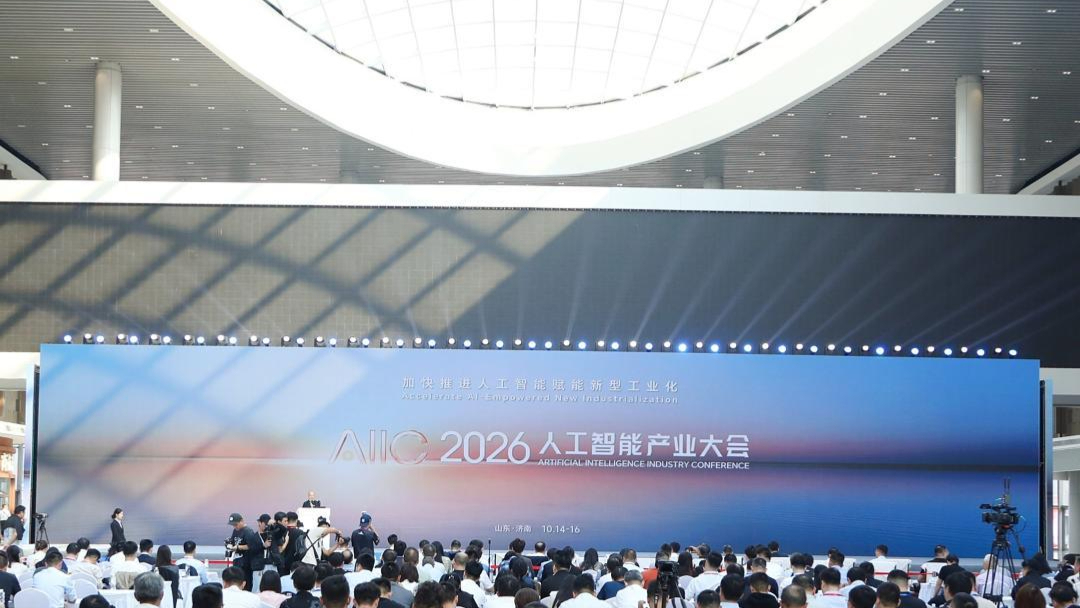
Focusing on "Artificial Intelligence Empowering New Industrialization", the 2026 Artificial Intelligence Industry Conference opens in Jinan

Can Traveler 7 take care of both commuting on weekdays and mountain trips on weekends? This time, the all-new Jetour Traveler 7 will focus on its "Keyo" # Smart Beauty Travel Champion Box # Kecheng Keyo Keyo Travel # 7 Series Square Box New Benchmark # New Traveler 7 Renewal Surprise Price Starting from 125900 yuan


