

2026-10-12 15:49

In 1985, David Swenson took over the management of the Yale Endowment Fund and boldly broke away from the traditional template of 60/40 share bonds that institutions regarded as the "norm" at the time, thus initiating a multi asset allocation practice that would have a significant impact on the asset management industry in later generations.
In Swenson's understanding, diversification is not simply about increasing the number of assets. Its core is to explore assets with different cycles and low correlations, and use the balance of various assets to hedge against extreme shocks in a single market, in exchange for long-term stable compound returns.
More than forty years have passed in a blink of an eye, and Swenson's idea of multi asset allocation has drifted across the ocean, constantly being practiced and reconstructed on the soil of A-shares. And this concept of pursuing a balance between risk and return, when applied to public offerings accessible to ordinary investors, is one of the most vivid forms of implementation, which is "fixed income+".
The market in 2026 is an intriguing profile. Even though there are structural opportunities in the stock market, computing power AI、 The storage and other sectors take turns to perform, and the profit effect is not lacking, but there is still a considerable amount of funds choosing "fixed income+". According to data from China International Capital Corporation, as of the end of the first half of the year, the scale of fixed income and fund has exceeded 3.2 trillion yuan *, and by the end of 2025, the scale will be 2.735 trillion yuan * *, an increase of 17%.
However, the rapid expansion of scale has also brought an industry wide issue to the forefront: as the "fixed income+" gradually grows into a track with a volume of nearly trillions, has the ability system supporting it kept up with the speed of expansion?
In fact, the connotation of "fixed income+" is no longer fully expressed by the eight words "bond backing and stock enhancement". What it needs is a complete system as the cornerstone, including the analysis of major assets, pricing of segmented assets, risk control constraints, team collaboration, etc., all of which are indispensable.
When the era of savage growth comes to an end and the curtain of refined competition opens, Boshi Fund's exploration of "fixed income+" may provide a sample worth reading.
Farewell to blind selection, refined competition of fixed income+
An investor approaching retirement has the idea of allocating "fixed income+". He flipped through the historical earnings page by page and selected the one with the highest annual ranking among a group of products.
Shortly after buying, the market adjustment came unexpectedly, and the net asset value drawdown far exceeded his expectations. So he tossed and turned, unable to sleep.
Where is the problem? Perhaps it's not that the product itself is not good enough, but rather that it overlooks a simple premise: how much fluctuation it can withstand.
Such cases have repeatedly occurred among many grassroots people. In the era of net worth, people enter the shelves of "fixed income+" and are often attracted by historical returns, but often forget to measure their own risk boundaries first. Products with different risk levels should correspond to different families and fund durations. Talking about returns outside of risk budgeting is inevitable due to expected mismatches or high probabilities.
The first step of Boshi Fund's "fixed income+" strategy is to start from this point. What they want to build is a clear risk coordinate system, with a layered layout of low wave, medium wave, and high wave, covering multiple product lines including primary bond base, secondary bond base, partial bond hybrid, and convertible bond enhancement. Enable holders with different risk preferences to find the one that matches their tolerance exactly and find their own place.
Low wave level, represented by Boshi Stable Return (LOF) and Boshi Anyi 6-month. The enhancement of its equity mainly relies on convertible bonds, prioritizing low volatility of net asset value, which is suitable for pursuing stable and difficult to accept large withdrawals of funds. In the volatile bond market and the repeated bottoming out of equity, these products rely on high-grade credit bonds as a foundation, striving to increase returns moderately through interest rate band trading and convertible bonds, and pursuing steady progress.
In the medium wave range, Boshi Hengtai Bond, Boshi Hengle Bond, Boshi Stable Yield 9-month holding period hybrid, Boshi Stable Yield 1-year holding period hybrid, etc. are all included here. This type of product, on top of a solid fixed income position, moderately opens up the flexibility space of stocks and convertible bonds, and captures industry dividends under the premise of controllable risks. Striving not to be overly conservative and miss the market trend, nor to aggressively bet on a single track, achieving a delicate balance between the elasticity of returns and the sense of holding.
High wave level, reserved for those willing to dance with relatively higher volatility and long-term returns. Taking Boshi Hengyao Bond, Boshi Tianyi Bond, and Boshi Credit Bond as examples, they actively layout relatively high prosperity directions such as technology, manufacturing, consumption, and medicine with higher equity positions.
Behind the complete matrix, there is a standardized investment research process to support it. Boshi Fund has established various forms of communication and analysis, including dynamic communication, weekly, monthly, quarterly, etc., to fully share internal and external research results and guide investment direction. Transforming asset allocation from a single person's sudden inspiration to a group of people's repeated deduction. Can be reviewed, iterated, and inherited.
On top of this, each type of segmented asset has grown an independent pricing system:
On the interest rate bond side, tracking macro, meso, and micro institutional behavior from top to bottom, capturing the context of interest rate fluctuations;
On the credit bond side, relying on a complete internal rating system and strict concentration control, we will do a good job in pool entry and post investment tracking, striving to control risks at the source;
Convertible bond sector, building a complete framework for asset comparison, industry style, individual bond selection, and investment research simulation combination;
In terms of equity, we will adhere to the path of macro level analysis, meso level industry strategy, and micro level stock selection to mutually confirm and cooperate, and build a "fixed income+" exclusive stock pool.
Each asset added has independent and complete research support, carefully measured and examined. Only by adding clarity, restraint, and evidence can we maintain the confidence of the "+".
The dual journey between individuals and platforms
No matter how good the system is, it will ultimately fall on people.
The diversity of the "fixed income+" team at Boshi Fund is fully reflected in the unique qualities of fund managers such as Zhang Liling, Jiang Haifeng, Gao Hui, Li Shi, Xie Zelin, and Jing Peng.
Among them, there are both veteran equity experts who graduated from the Mathematics Department of Tsinghua University and credit experts who have honed their skills in the bond market for many years; There are composite players who span the bond primary and secondary markets, reverse hunters who come from engineers, and experts who specialize in the subdivision of convertible bonds.
These people have gone through multiple rounds of bull and bear, with different ability circles. But they are all under the same investment research platform, showcasing their strengths and filling each other's positions.
Zhang Liling is the core leader of the team. He advocates finding cost-effective assets in stocks and bonds for layout. In terms of equity, he will actively participate in investment opportunities in the equity market, select relatively low-risk varieties, participate at the appropriate time, and strive to obtain returns. At the same time, flexibly allocate bonds to hedge the tail risk of the portfolio and strive to increase the Sharpe ratio of the portfolio. When managing, he analyzes the cost-effectiveness of assets based on macro conditions, balances risks between equity and bonds, and strives to reduce portfolio volatility.
In Zhang Liling's view, "fixed income+" is not about pursuing a stunning explosion at a certain moment, but about trying to smooth the net asset value curve in various market environments. This is a long road, never about explosive power, but about endurance and determination.
In stock selection, Jingpeng places particular emphasis on the company's business model, free cash flow, shareholder returns, and growth potential. It tends to operate on the left side and is willing to strategically position itself at a reasonable valuation. It remains vigilant about chasing high prices and places great importance on the risk return ratio. Not betting on race tracks, downplaying short-term rankings, pursuing consistency in investment methods, and avoiding style drift; Striving for a balance between returns and drawdowns, emphasizing the experience of holders.
Li Shi is accustomed to using probabilistic thinking to view investment. He doesn't pursue every investment to be precise and correct, and believes in accumulating small victories for big victories. He will continuously update his prior judgments on the market and respect the long-term patterns that the market exhibits. When managing products, pay attention to controlling risks and strive to maintain product style stability; Pay attention to controlling volatility.
Based on the judgment of the macro environment and asset valuation, Jiang Haifeng focuses on allocating segmented assets that are in line with mid-term changes and have reasonably low valuations. He will not heavily invest in crowded tracks with overvalued or overly concentrated trading expectations, but will maintain a high sensitivity to the actual direction of fundamentals and funding, and make corrections at any time.
Gao Hui is deeply involved in the field of convertible bonds. He has rich experience in fundamental research, pricing models, and strategic investment of convertible bonds. With the core investment philosophy of "risk control and value investment", he emphasizes the long-term stability, robustness, and in-depth research of investments. At the same time, pay attention to risk control and portfolio volatility, and pursue risk adjusted excess returns. Gao Hui doesn't like to join in the fun or follow the trend, and prefers to search for opportunities in places that are not covered by mainstream research.
Xie Zelin, based on macro positioning and industry prosperity. We will determine the overall equity position based on the economic cycle and liquidity environment, and tend to focus on industries in the first half of the upward cycle. Our stock selection will focus on business models, competitive barriers, and industry trends, striving to earn money for the company's sustained performance growth.
Their personalities and ability circles are different, but this team has a fundamental consensus: the goal of fixed income+should not be to aim for annual rankings, but to prioritize risk control.
Moreover, through the dual fund manager model of fixed income and equity, professional division of labor, collaborative decision-making, information sharing, and shared responsibility between fixed income foundation and equity enhancement can be achieved. Individual wisdom, combined with organizational process norms, provides a dual guarantee for the smooth operation of the combination.
The truth of crossing cycles: managing 'uncertainty'
In the past few years, the bond market has undergone several rounds of adjustments, and A-shares have also staged an extreme style rotation.
The true 'fixed income+' is essentially managing uncertainty. The bond sector faces variables such as interest rate fluctuations and credit disturbances; In terms of equity, it is necessary to face multiple intertwined variables such as macro, policy, industry, and emotion.
There is no asset that always dominates, only a constantly dynamic balance of cost-effectiveness.
This means that "fixed income+" investment cannot be simply statically configured. Moderately converge when assets are overheated and crowded. When assets are fully adjusted and the risk return ratio rises, exposure gradually increases. Between advance and retreat, it relies not on prediction, but on continuous research on cost-effectiveness.
The systematic ability of Boshi Fund's "fixed income+" is reflected in the layer by layer dismantling of these uncertainties.
Analyze and determine the overall direction of asset allocation based on the analysis of major asset classes; Segmented asset pricing solves the problem of "what to choose" and forms clearer judgments for various types of assets such as growth, quality, value, dividends, convertible bonds, credit, and interest rates.
Of course, a system is not a universal safe. 'Fixed income+' still belongs to the category of volatile products. Low volatility does not mean no volatility, and mid to high volatility products will still follow the market and experience a pullback.
The systematic investment research of Boshi Fund aims to enhance the replicability of strategies and the ability to control risks, rather than ensuring that the products are profitable. The risks and opportunities in the market have always been two sides of the same coin. They will not disappear, but with the support of systematic investment research, they are seen more clearly and treated more restrained.
It is precisely this clarity and restraint that have given this company the possibility to continue its fixed income and track in the long run.
Embark on a new journey and write a new chapter
Looking further away, the fixed income+space is still vast, but under the intense business competition, the future competition of the industry is not about who has greater flexibility in "+" or the complete ability chain: whether the assessment of major assets is in place, whether the research on segmented assets is solid, whether team collaboration is smooth, whether risk budgeting can be strictly implemented, and whether product positioning and customer risk are truly matched.
David Swenson's multi asset allocation concept has been born for over 70 years, and it still has practical implications in today's Chinese market.
The advanced path of "fixed income+" is not to search for a certain magical enhanced asset, but to build a complete multi asset combat system. Leave complexity to the investment research team, and return clear and predictable risk returns to ordinary holders.
There are no shortcuts on this road, but it is worth walking on.
Note: * The data is sourced from the research report "Structural Expansion of Fixed Income+Public Fund Fixed Income+26Q2 Quarterly Report Review" released by CICC on July 22, 2026, and * * The data is sourced from the research report "How to Understand the Shrinkage of Convertible Bond Funds under the Continued Expansion of Fixed Income+Public Fund 25Q4 Quarterly Report Review" released by CICC on January 22, 2026
Note: The risk levels of Boshi Stable Return Bond (LOF), Boshi Anyi 6-month, Boshi Hengtai Bond, Boshi Hengle Bond, Boshi Hengyao Bond, and Boshi Tianyi Bond are all rated as medium low (this is the manager's rating, specific sales are subject to the rating of each sales agency)
Boshi Stable Yield 9-month mixed holding period, Hengyi Stable 1-year mixed holding period, Boshi Credit Bond risk rating are all: medium (this is the manager's rating, specific sales are subject to the rating of each sales agency)
The subscription rate for Class A shares of Boshi Stable Return Bond (LOF) is 0.80% for subscription amounts<1 million yuan, 0.50% for subscription amounts ≤ 1 million yuan<3 million yuan, 0.30% for subscription amounts ≤ 3 million yuan<5 million yuan, and 1000 yuan/transaction for subscription amounts ≥ 5 million yuan; Shenzhen Stock Exchange member units should set the on-site subscription rate for investors based on the off exchange subscription rate. Redemption fee: When the holding period of fund shares is less than 7 days, it is 1When the holding period of fund shares is less than 1 year, the fee rate is 0.10%. When the holding period of fund shares is less than 2 years, the fee rate is 0.05%. When the holding period of fund shares is greater than or equal to 2 years, the fee rate is 0.00%. The redemption rate for on exchange transactions with a continuous holding period of less than 7 days is 1.50%, and for transactions with a continuous holding period of 7 days or more, the redemption rate is 0.10%. Class C shares do not charge subscription fees; Redemption rate: The rate is 1.50% for holding fund shares for less than 7 days, 0.75% for holding fund shares for less than 30 days, and 0.00% for holding fund shares for more than or equal to 30 days; The sales service fee is 0.35% per year. E-class shares do not charge subscription fees; Redemption rate: The rate is 1.50% for holding fund shares for less than 7 days, and 0.00% for holding fund shares for more than 7 days; The sales service fee is 0.01% per year.
Boshi Anyi 6-month A-class share subscription rate: 0.60% for subscription amount<500000 yuan, 0.30% for subscription amount ≤ 500000 yuan<3 million yuan, 0.08% for subscription amount ≤ 3 million yuan<5 million yuan, and 1000 yuan/transaction for subscription amount ≥ 5 million yuan; Redemption rate: The rate is 1.50% for holding fund shares for less than 7 days, and 0.00% for holding fund shares for more than or equal to 7 days. Class C shares do not charge subscription fees; Redemption rate: The rate is 1.50% for holding fund shares for less than 7 days, 0.75% for holding fund shares for less than 30 days, and 0.00% for holding fund shares for more than or equal to 30 days; The sales service fee is 0.20% per year (according to relevant announcements, the sales service fee for this product is discounted, with an original annual sales service rate of 0.20% and a discounted rate of 0.01%).
The subscription rate for Class A shares of Boshi Hengtai bonds is 0.80% for subscription amounts<1 million yuan, 0.60% for subscription amounts ≤ 1 million yuan<2 million yuan, 0.40% for subscription amounts ≤ 2 million yuan<5 million yuan, and 1000 yuan/transaction for subscription amounts ≥ 5 million yuan; Redemption rate: When the holding period of fund shares is less than 7 days, the rate is 1.50%. When the holding period of fund shares is between 7 days and 30 days, the rate is 0.75%. When the holding period of fund shares is between 30 days and 6 months, the rate is 0.50%. When the holding period of fund shares is ≥ 6 months, the rate is 0.00%.Class C shares do not charge subscription fees; Redemption rate: The rate is 1.50% for holding fund shares for less than 7 days, 0.50% for holding fund shares for less than 30 days, and 0.00% for holding fund shares for more than or equal to 30 days; The sales service fee is 0.35% per year. E-class shares do not charge subscription fees; Redemption rate: The rate is 1.50% for holding fund shares for less than 7 days, and 0.00% for holding fund shares for more than 7 days; The sales service fee is 0.01% per year.
The subscription rate for Class A shares of Boshi Hengle bonds is 0.60% for subscription amounts<1 million yuan, 0.40% for subscription amounts ≤ 1 million yuan<2 million yuan, 0.20% for subscription amounts ≤ 2 million yuan<5 million yuan, and 500 yuan/transaction for subscription amounts ≥ 5 million yuan; Redemption fee: 1.50% for holding fund shares for less than 7 days, 0.20% for holding fund shares for 7 days ≤ 30 days, and 0.00% for holding fund shares for ≥ 30 days. B-class shares do not charge subscription fees; Redemption rate: The rate is 1.50% for holding fund shares for less than 7 days, 0.20% for holding fund shares for less than 30 days for 7 days, and 0.00% for holding fund shares for more than or equal to 30 days; The sales service fee is 0.20% per year. Class C shares do not charge subscription fees; Redemption rate: The rate is 1.50% for holding fund shares for less than 7 days, and 0.00% for holding fund shares for more than 7 days; The sales service fee is 0.35% per year.
The subscription rate for A-shares with a 9-month holding period of Boshi Stable Benefit is 0.80% for subscription amounts<1 million yuan, 0.60% for subscription amounts ≤ 1 million yuan<3 million yuan, 0.40% for subscription amounts ≤ 3 million yuan<5 million yuan, and 1000 yuan/transaction for subscription amounts ≥ 5 million yuan. Redemption fee: This fund does not charge redemption fees, but fund unit holders can only apply for redemption of their fund units after 9 months of holding period. Class C shares do not charge subscription fees; Redemption fee: This fund does not charge redemption fees, but fund unit holders can only apply for redemption of fund units after the holding period of each fund unit has expired for 9 months; The sales service fee is 0.30% per year.
The subscription rate for Class A shares of Boshi Hengyi Steady One Year Holding Period is 0.80% for subscription amounts<1 million yuan, 0.60% for subscription amounts ≤ 1 million yuan<3 million yuan, 0.40% for subscription amounts ≤ 3 million yuan<5 million yuan, and 1000 yuan/transaction for subscription amounts ≥ 5 million yuan. Redemption fee: This fund does not charge redemption fees, but fund unit holders can only apply for redemption of fund units after one year of holding period. Class C shares do not charge subscription fees; Redemption fee: This fund does not charge redemption fees, but fund unit holders can only apply for redemption of fund units after one year of holding period for each unit; The sales service fee is 0.30% per year.
The subscription rate for Class A shares of Boshi Hengyao bonds is 0.80% for subscription amounts<1 million yuan, 0.50% for subscription amounts ≤ 1 million yuan<5 million yuan, and 1000 yuan/transaction for subscription amounts ≥ 5 million yuan; Redemption rate: When the holding period of fund shares is less than 7 days, the rate is 1.50%. When the holding period of fund shares is less than 30 days, the rate is 0.50%. When the holding period of fund shares is greater than or equal to 30 days, the rate is 0.00%. Class C shares do not charge subscription fees; Redemption rate: 1.50% for holding fund shares for less than 7 days, 0.00% for holding fund shares for ≥ 7 days; The sales service fee is 0.35% per year.
The subscription rate for Class A shares of Boshi Tianyi bonds is 0.80% for subscription amounts<1 million yuan, 0.40% for subscription amounts ≤ 1 million yuan<5 million yuan, 0.10% for subscription amounts ≤ 5 million yuan<10 million yuan, and 1000 yuan/transaction for subscription amounts ≥ 10 million yuan; Redemption rate: When the holding period of fund shares is less than 7 days, the rate is 1.50%. When the holding period of fund shares is less than 30 days, the rate is 0.75%. When the holding period of fund shares is less than 1 year, the rate is 0.10%. When the holding period of fund shares is less than 2 years, the rate is 0.05%. When the holding period of fund shares is greater than or equal to 2 years, the rate is 0.00%. Class C shares do not charge subscription fees; Redemption rate: When the holding period of fund shares is less than 7 days, the rate is 1.50%; when the holding period of fund shares is less than 30 days, the rate is 0.75%; when the holding period of fund shares is greater than or equal to 30 days, the rate is 0.00%; The sales service fee is 0.35% per year. E-class shares do not charge subscription fees; Redemption rate: 1.50% for holding fund shares for less than 7 days, 0.00% for holding fund shares for ≥ 7 days; The sales service fee is 0.01% per year.
The subscription rate for Class A shares of Boshi Credit Bond Fund is 0.80% for subscription amounts<1 million yuan, 0.50% for subscription amounts ≤ 1 million yuan<3 million yuan, 0.30% for subscription amounts ≤ 3 million yuan<5 million yuan, and 1000 yuan/transaction for subscription amounts ≥ 5 million yuan; Redemption rate: 1.50% for holding fund shares for less than 7 days, 0.10% for holding fund shares for 7 days ≤ 1 year, 0.05% for holding fund shares for 1 year ≤ 2 years, and 0.00% for holding fund shares for ≥ 2 years. The subscription fee for Class B shares of Boshi Credit Bond Fund is 1.00% for holding period<1 year, 0.70% for holding period<2 years for holding period ≤ 1 year, 0.50% for holding period<3 years for holding period ≤ 2 years, 0.30% for holding period<5 years for holding period ≤ 3 years, and 0.00% for holding period ≥ 5 years; Redemption rate: 1.50% for holding fund shares for less than 7 days, 0.10% for holding fund shares for 7 days ≤ 1 year, 0.05% for holding fund shares for 1 year ≤ 2 years, and 0.00% for holding fund shares for ≥ 2 years. Class C shares do not charge subscription fees; Redemption rate: When the holding period of fund shares is less than 7 days, the rate is 1.50%; when the holding period of fund shares is less than 30 days, the rate is 0.10%; when the holding period of fund shares is greater than or equal to 30 days, the rate is 0.00%; The sales service fee is 0.35% per year.
Risk Disclosure Statement
Dear Investor:
Investment carries risks and requires caution. Publicly offered securities investment funds (hereinafter referred to as "funds") are long-term investment tools whose main function is to diversify investments and reduce individual risks associated with investing in a single security. Funds are different from financial instruments such as bank savings that can provide fixed income expectations. When you purchase fund products, you may either share the income generated by fund investments based on your holdings, or bear the losses caused by fund investments.
Before making investment decisions, please carefully read the fund contract, fund prospectus, fund product information summary and other product legal documents, as well as this risk disclosure statement, fully understand the risk return characteristics and product features of this fund, carefully consider the various risk factors that exist in this fund, and fully consider your own risk tolerance based on your investment purpose, investment period, investment experience, asset status and other factors. Based on understanding the product situation and sales suitability opinions, make rational judgments and cautious investment decisions.
According to relevant laws and regulations, Boshi Fund has made the following risk disclosure:
1、 According to different investment targets, funds are divided into various types such as stock funds, hybrid funds, bond funds, money market funds, funds within funds, commodity funds, etc. Investing in different types of funds will result in different expected returns and varying degrees of risk. Generally speaking, the higher the expected return of a fund, the greater the risk you bear.
2、 Funds may face various risks during investment operations, including market risks, as well as management risks, technical risks, and compliance risks of the fund itself. The risk of huge redemption is a unique risk of open-end funds, that is, when the net redemption application of a single open-end fund exceeds a certain proportion of the total fund shares (10% for open-end funds, 20% for regular open-end funds, except for special products stipulated by the China Securities Regulatory Commission), you may not be able to redeem all the fund shares applied for in a timely manner, or the redemption amount may be delayed in payment.
3、 You should fully understand the differences between regular fixed investment of funds and savings methods such as zero sum deposits and withdrawals. Regular fixed investment is a simple and feasible investment method that guides investors to make long-term investments and average investment costs. However, it cannot avoid the inherent risks of fund investment, cannot guarantee investors' returns, and is not an equivalent financial management method to replace savings.
4、 Special type product risk disclosure: If the product you purchase is invested in overseas securities, in addition to bearing general investment risks such as market volatility risks similar to domestic securities investment funds, the fund also faces special investment risks such as exchange rate risks faced by overseas securities market investments. If the product you purchase operates on a regular open basis or if the fund contract specifies a minimum holding period for fund shares, you will face liquidity constraints due to the inability to redeem or sell fund shares during the closed period or minimum holding period.
5、 The fund manager promises to manage and utilize the fund assets in accordance with the principles of honesty, trustworthiness, diligence, and responsibility, but does not guarantee that the fund will always make a profit, nor does it guarantee a minimum return. The past performance and net asset value of this fund do not predict its future performance, and the performance of other funds managed by the fund manager does not constitute a guarantee of the performance of this fund. Boshi Fund reminds you of the principle of "buyer's responsibility" in fund investment. After making investment decisions, any investment risks caused by changes in fund operation and net asset value will be borne by you. The fund manager, fund custodian, fund sales agency, and related institutions do not make any commitments or guarantees regarding the investment returns of the fund.
6、 The fund contract, prospectus, and product information summary of the fund have been released through the electronic disclosure website of the China Securities Regulatory Commission for funds http://eid. HTML and Fund Manager Website http://www. HTML has been publicly disclosed. The registration of this fund by the China Securities Regulatory Commission does not imply a substantial judgment or guarantee of its investment value, market prospects, and returns, nor does it indicate that investing in this fund is risk-free.

ST Qingyue fined 172 million yuan for suspected fraudulent issuance and illegal letter disclosure
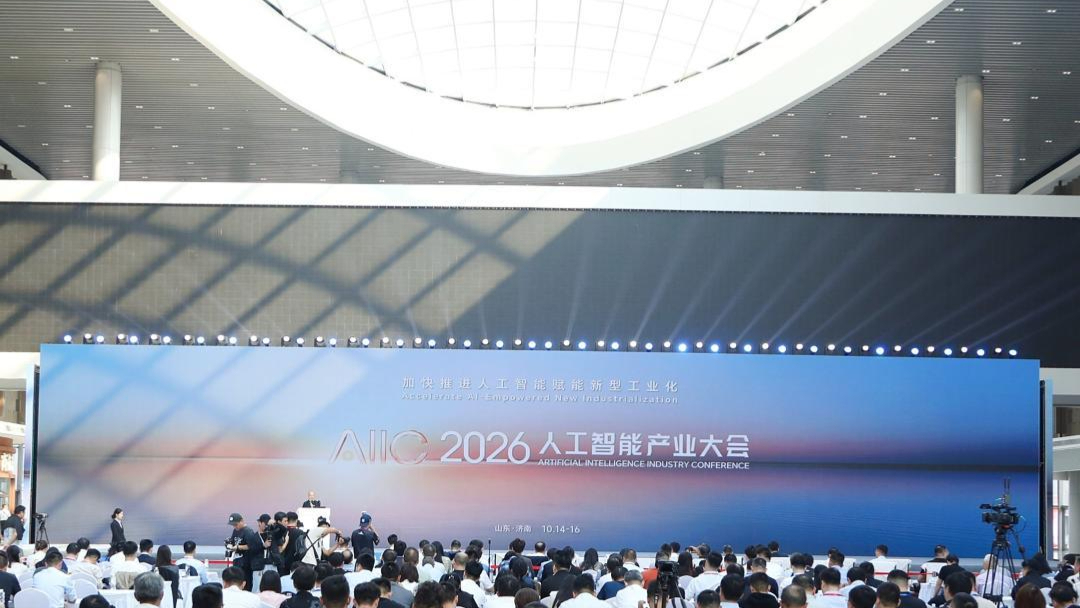
Focusing on "Artificial Intelligence Empowering New Industrialization", the 2026 Artificial Intelligence Industry Conference opens in Jinan

Can Traveler 7 take care of both commuting on weekdays and mountain trips on weekends? This time, the all-new Jetour Traveler 7 will focus on its "Keyo" # Smart Beauty Travel Champion Box # Kecheng Keyo Keyo Travel # 7 Series Square Box New Benchmark # New Traveler 7 Renewal Surprise Price Starting from 125900 yuan


