

Economic Observer Follow
2026-10-11 15:41


Fu Weigang/Wen
In the history of modern industry, Ford's introduction of the Model T is an almost perfect story: assembly lines improved production efficiency, car production increased, and unit costs continued to decrease; The cost reduction has enabled Ford to continuously lower car prices, turning cars that were originally only affordable for the wealthy into goods that ordinary families can also purchase. At the same time, Ford also increased workers' wages with the famous "five dollar workday". The increase in productivity, the growth of corporate profits, the rise in worker wages, and the expansion of mass consumption have formed a mutually reinforcing cycle.
This is the 'FordMoment' in business history: a groundbreaking turning point in which expensive high-end luxury goods are transformed into affordable and widely accessible products for the general public through technological and model innovation.
The latest data from the China Association of Automobile Manufacturers shows that by 2025, China's automobile sales will reach 34.4 million units, of which 16.49 million units will be new energy vehicles, accounting for 47.9% of all new vehicle sales. Ten years ago, new energy vehicles were only marginal products in the market, but now their market share has approached half of the country.
China is producing more and more cars, with a growing industry scale and advanced technology, but the automotive manufacturing industry has not become more profitable: why hasn't the 'Ford Moment' happened in China?
Revenue is getting higher and profits are getting lower and lower
In 2017, the operating revenue of Chinese automobile manufacturers above designated size was approximately 8.53 trillion yuan, with a total profit of 683.3 billion yuan. By 2025, the operating revenue of the automobile manufacturing industry has reached 11.18 trillion yuan, with a total profit of only 461 billion yuan.
Although during this period, the statistical department underwent a transition from "main business revenue" to "operating revenue", and cannot mechanically classify the two years as strictly year-on-year, the long-term trend is already very clear: the industrial scale has expanded, but the total profit has not expanded synchronously.
If we use the ratio of profit to revenue as an approximate observation, this change is more intuitive. In 2017, the profit of the automobile manufacturing industry was about 8% relative to the main business income; By 2025, profits will be only about 4.1% relative to operating revenue. That is to say, the profit corresponding to every 100 yuan of automobile manufacturing revenue has decreased from approximately 8 yuan to 4 yuan.
The automotive industry has shown a phenomenon of "increasing income without increasing profits", which is in contrast to the Ford era. Ford style economies of scale mean that as production increases, fixed costs are shared among more products, unit costs decrease, markets expand, and businesses gain more profits as a result.
According to this logic, the sales of new energy vehicles in China are rapidly increasing, with vehicle platformization, supply chain localization, reduced battery costs, and increased automation. The automotive industry should enjoy significant economies of scale.
But we see that there are more and more cars, and the income of the automotive industry is getting higher and higher, but the profit that can be left behind per yuan of income is getting smaller and smaller. The problem may not simply be attributed to the low efficiency of the automotive industry. We cannot help but wonder: where has the efficiency dividend created by the new energy vehicle revolution gone?
Profit from switching positions
To understand this issue, we need to change the way we observe the automotive industry.
In the era of fuel vehicles, it is easy to link "automotive industry profits" with "vehicle enterprise profits". One important reason is that the engine and gearbox, the two most core and valuable parts of a car, are often controlled by large vehicle manufacturers, or at least within the highly controlled system of vehicle manufacturers.
Volkswagen, Toyota, General Motors, Ford, and even large domestic brands in China have long regarded engines, transmissions, and vehicle platforms as their core competitive capabilities. The most important part of the technology rent in the automotive industry has therefore remained within the organization of the entire vehicle enterprise.
But electric vehicles have changed this structure. The most important power system for a pure electric vehicle is no longer the engine and gearbox, but the power battery, motor, electronic control, and a new supply system formed around them. Among them, the power battery with the highest value and technological barrier is not produced by a large number of vehicle manufacturers themselves, but purchased from independent battery companies.
An important change occurred as a result: some of the value of the powertrain system that was originally kept within the organization of the vehicle manufacturer was externalized as an independent industry.
The Ningde era is a typical case. In 2025, the operating revenue of CATL will be approximately 423.7 billion yuan, of which the revenue from power battery systems will be approximately 316.5 billion yuan. In the representative sample of listed companies we have selected, in 2025, the profits attributable to the power battery business of three power battery companies, CATL, Guoxuan High Tech, and EVE Energy, will be approximately RMB 52.2 billion. The total net profit attributable to the parent company of SAIC, BYD, Changan, and Great Wall Motors during the same period is about 56.7 billion yuan, which is very close to the two.
Of course, this cannot be understood as' three battery companies have already earned half of the profits in the entire automotive industry '. The sample is limited, and BYD itself has a huge battery business, with some battery profits remaining within the entire vehicle company. But this at least reveals a structural change: the profit center of the automotive industry is undergoing vertical migration.
In order to observe where profits flow, we selected 14 representative listed companies in the four industry sectors of vehicles, power batteries, lithium resources, and core components to reconstruct the profit pool from 2015 to 2025. In 2015, the profits of three power battery companies accounted for only about 2.7% of this representative sample profit pool. By 2025, after excluding non automotive businesses such as energy storage and consumer batteries, the proportion of power battery business in the revised profit pool has exceeded 40%. Of course, this proportion describes the changes in profit structure within a representative sample of listed companies, and is not equivalent to the fact that power batteries account for 40% of the profits in the entire Chinese automotive industry.
Therefore, when we see the decline in profit margins in the automotive manufacturing industry today, we cannot simply understand it as a decrease in the ability of the entire automotive industry to create value: the industry still creates a large amount of value, but profits are no longer mainly deposited in vehicle manufacturers like in the era of fuel vehicles.
The changed boundaries of the enterprise
If we only understand new energy vehicles as "replacing fuel tanks with batteries and engines with motors", we may underestimate this change. The real issue we need to care about is: whose corporate boundaries are the new core technologies located within?
The Ford era emphasized vertical integration, and Ford even attempted to control everything from iron ore, steel, glass, rubber, transportation to final assembly. This highly integrated approach was later proven to be not necessarily the most efficient way of organizing a business, but its direct result was that a large amount of surplus generated by the improvement of automobile production efficiency still remained within Ford.
Although large vehicle companies in the era of fuel vehicles are far less vertically integrated than Ford in the past, core capabilities such as engines, transmissions, and vehicle architecture are still heavily embedded in automobile manufacturers or their affiliated enterprises.
In the era of new energy vehicles, a completely different division of labor has emerged. Power batteries have become one of the most expensive core components in automobiles, forming independent enterprises such as CATL, Guoxuan High Tech, and EVE Energy.
At the same time, intelligent cockpit, assisted driving, thermal management, new chassis, battery structural components, etc. have also given birth to new supply chain enterprises such as Desay SV, Top, and Kodali. A supporting data is that from 2020 to 2025, Serys paid over 111 billion yuan in procurement fees to the Huawei system, accounting for approximately 29.3% of the same period's revenue.
The added value generated by the advancement of automotive technology will not automatically enter the profit and loss statement of the vehicle manufacturer. Consumers spend 200000 yuan to purchase a new energy vehicle, and a considerable portion of the value has already been paid to suppliers through procurement of power batteries, intelligent cabins, chips, thermal management systems, etc. before the vehicle is delivered to consumers.
This means that while the entire new energy vehicle industry is creating huge productivity dividends, there may still be two phenomena: the new energy vehicle industry is becoming stronger, while the profit margins of vehicle companies are decreasing. The two are not contradictory, because "how much value can the industry create" and "how much value can the car factory leave behind" are already two separate questions.
The whole vehicle segment did not outperform the social average
If we only observe corporate profits, the era of new energy vehicles seems to lack an important link compared to the Ford era: Ford lowered car prices through mass production and shared productivity dividends with workers by increasing wages.
But after comparing the employee data in the annual reports of Chinese automobile companies, the situation became even more complicated.
We selected representative enterprises such as BYD, SAIC, Changan, Great Wall, CATL, Guoxuan High tech, Fuyao Glass, Kedali, and Top Group to measure the cash expenditures of enterprises on employees using the "cash paid to and for employees" in the cash flow statement. Due to the fact that this project includes bonuses, social insurance, housing provident fund, and some welfare expenses in addition to wages, it cannot be simply understood as narrow wages, but is closer to the comprehensive cash cost paid by enterprises for employees.
There is a technical issue that is easily overlooked when calculating per capita data. The cash paid by a company to its employees is a continuous flow that occurs throughout the entire accounting year. The number of employees disclosed in the annual report is usually only the stock of employees on a certain day at the end of the year. If a company expands rapidly throughout the year, simply subtracting the annual employee cash expenditure from the year-end employee count may underestimate the per capita expenditure. Conversely, if a company lays off a large number of employees throughout the year, it may also result in the opposite deviation. Therefore, we did not directly use the number of employees at the end of the year as the denominator, but instead used the average number of employees at the end of the previous year and the end of the current year to approximate the average employment scale for this year. Although this is still a simplified estimate, it can better match the flow indicator of "annual employee cash expenditure".
The results show that the cash income of employees in the automotive industry is indeed increasing. From 2020 to 2025, the per capita cash expenditure of representative vehicle enterprises increased from about 136300 yuan to 161000 yuan, with a cumulative growth of about 18.1%; Power battery companies increased from approximately 115800 yuan to 198800 yuan, with a cumulative growth of approximately 71.6%; New component enterprises increased from approximately 101400 yuan to 148000 yuan; The traditional component samples have increased from approximately 155000 yuan to 204000 yuan.
Looking at these numbers alone, it is easy to conclude that "workers in the automotive industry are also sharing the productivity dividend," but this judgment is actually incomplete if it is not compared to China's overall income growth during the same period. Because during this period, the overall income of Chinese residents has also been increasing, and manufacturing wages have generally risen.
A reference data is that the per capita disposable income of residents in China was 32189 yuan in 2020, which will increase to 43377 yuan by 2025, with a cumulative growth of about 34.8%. The per capita wage income of residents in China has increased from 17917 yuan to 24555 yuan, with a cumulative growth of about 37%.
If we use manufacturing wages that are closer to those of enterprise employees as a benchmark, the difference is equally significant. From 2020 to 2025, the average wage of non private manufacturing units in urban areas will increase from 82783 yuan to 113594 yuan, with a cumulative growth of about 37.2%. The average wage of manufacturing industry in urban private units has increased from 57910 yuan to 76055 yuan, with a cumulative growth of about 31.3%.
After comparison, we found that although the income of employees in the automotive industry has increased, the growth rate is significantly lower than the general increase in residents' income and manufacturing wages during the same period.
From 2020 to 2025, the per capita cash expenditure of employees in the vehicle sample will increase by about 18.1%, which is only about half of the average wage increase of 37.2% in non private manufacturing industries during the same period. If 2020 is set to 100, by 2025, the income index of vehicle employees will be about 118.1, and the wage index of non private manufacturing industries will have reached 137.2. The ratio of the two is approximately 0.86. That is to say, compared to 2020, the growth rate of cash income for employees in the automotive industry is only about 86% of the average wage growth rate in non private manufacturing industries during the same period.
At least this sample cannot be said to have received a particularly strong 'Ford style wage dividend' for employees in the automotive industry: their income seems to be rising against the backdrop of overall social wage levels, and the increase is relatively slow.
It is worth noting that it is the power battery company. From 2020 to 2025, the per capita cash expenditure of power battery samples will increase by about 71.6%, significantly exceeding the increase of 34.8% in per capita disposable income of residents nationwide and the increase of 37.2% in average wages of non private manufacturing industries. Similarly, using 2020 as 100, by 2025, the income index of power battery employees will be approximately 171.6, and the wage index of non private manufacturing industries will be 137.2, with a ratio of about 1.25. The growth rate of power battery employee income is about 1.25 times the average wage growth rate of non private manufacturing industries during the same period.
This means that the value transfer in the new energy vehicle revolution may occur not only on the capital profit side, but also on the labor income side.
The profit margin of the entire vehicle segment is declining, and although employee income is increasing, it has not outperformed the overall manufacturing industry. The power battery sector has not only gained an increasing share of industry profits, but employee income growth has also been significantly faster than the entire manufacturing industry.
This is more like a story of 'value center migration' than just a story of 'profit migration'.
The 'Ford Moment' that has been decomposed again
In the past few years, the most significant phenomenon in the new energy vehicle industry has been the simultaneous decline in prices and upgrading of configurations.
A new energy vehicle priced at 200000 yuan today is no longer the same product as a car priced at 200000 yuan five years ago. Larger batteries, higher computing power, more advanced assisted driving systems, better seats, screens, audio, thermal management, and fast charging capabilities are constantly entering the same price range. Even if the nominal selling price does not change significantly, the quality adjusted car price may actually decrease significantly.
This means that the 10000 yuan cost savings achieved by a car company through platformization, large-scale procurement, and technological improvements will not become corporate profits. Because competitors may immediately lower their prices by 5000 yuan, another company may turn this 5000 yuan into larger batteries, a third company may increase its smart driving hardware, a fourth company may invest more in research and development and talent, and a portion may be obtained by core suppliers such as CATL through their technology and market location.
Why is the dividend generated by the improvement of production efficiency in the era of new energy vehicles not mainly reflected in the profits of vehicle manufacturers?
The answer is becoming increasingly clear: a portion of the dividends have been handed over to consumers through price competition and configuration upgrades; Part of the dividends have entered new core suppliers such as power batteries and intelligent components; Part of the dividends have entered the income of workers in the new value center; Compared to other sectors of the industry and society as a whole, whole vehicle companies and employees have not achieved the same proportion of revenue growth.
The real difference between the era of new energy vehicles in China and the Ford era is that many of the value creation and surplus distribution in the Ford era were concentrated within a highly vertically integrated large enterprise. Today's new energy vehicle industry has formed a highly specialized and modular industrial network.
The productivity dividend is no longer concentrated as Ford cars are cheaper, Ford profits are higher, Ford workers' wages are higher, and at the same time, the cost-effectiveness of cars is getting higher and higher. New core suppliers such as power batteries are gaining a larger share of profits, and the income growth of employees in new value centers such as power batteries is significantly higher than the average level of the manufacturing industry. The profit margin of vehicle companies continues to decline, and although the income of employees in vehicle companies has increased, it has not significantly outperformed the wage growth of the entire society.
Today's Chinese automotive industry needs to face a deeper question: how will the productivity dividend be redistributed among consumers, workers, vehicle manufacturers, and core suppliers when modern industries transform from vertically integrated large enterprises to highly segmented industrial networks?
From this perspective, the Chinese automotive industry is experiencing a story of the "Ford moment" being re decomposed.
(The author is a researcher at Shanghai Institute of Finance and Law)

ST Qingyue fined 172 million yuan for suspected fraudulent issuance and illegal letter disclosure
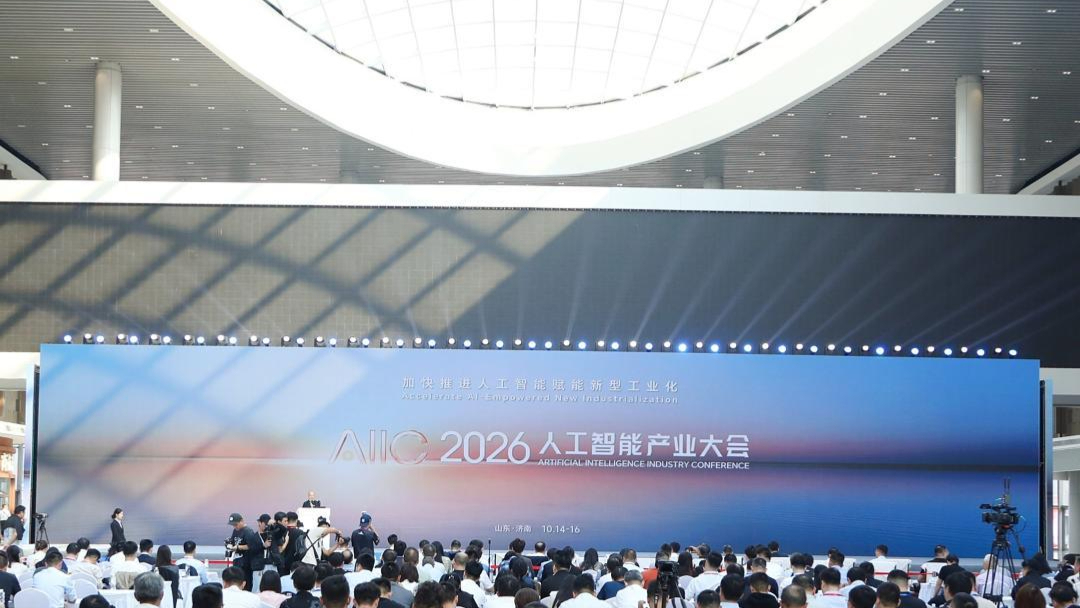
Focusing on "Artificial Intelligence Empowering New Industrialization", the 2026 Artificial Intelligence Industry Conference opens in Jinan

Can Traveler 7 take care of both commuting on weekdays and mountain trips on weekends? This time, the all-new Jetour Traveler 7 will focus on its "Keyo" # Smart Beauty Travel Champion Box # Kecheng Keyo Keyo Travel # 7 Series Square Box New Benchmark # New Traveler 7 Renewal Surprise Price Starting from 125900 yuan



 Subscribe
