

Economic Observer Follow
2026-10-06 13:34

Economic Observer reporter Wang Yajie
The first challenge I encountered when ordering beef patties in Baoding.
How many masks do you need
During the National Day holiday, my family and I drove from Beijing to Baoding, hoping to try another daily food in this city besides donkey meat fire.
I didn't expect that before I could finish my meal, I had to understand a local dialect first.
The first number is two numbers for beef, and the second number is two numbers for cake. Two masks and two cakes are two liang of meat paired with two liang of meat. If you want to eat more meat, you can cover it three times and two times. If there are not enough cakes, add the numbers at the end.
I chose two masks.
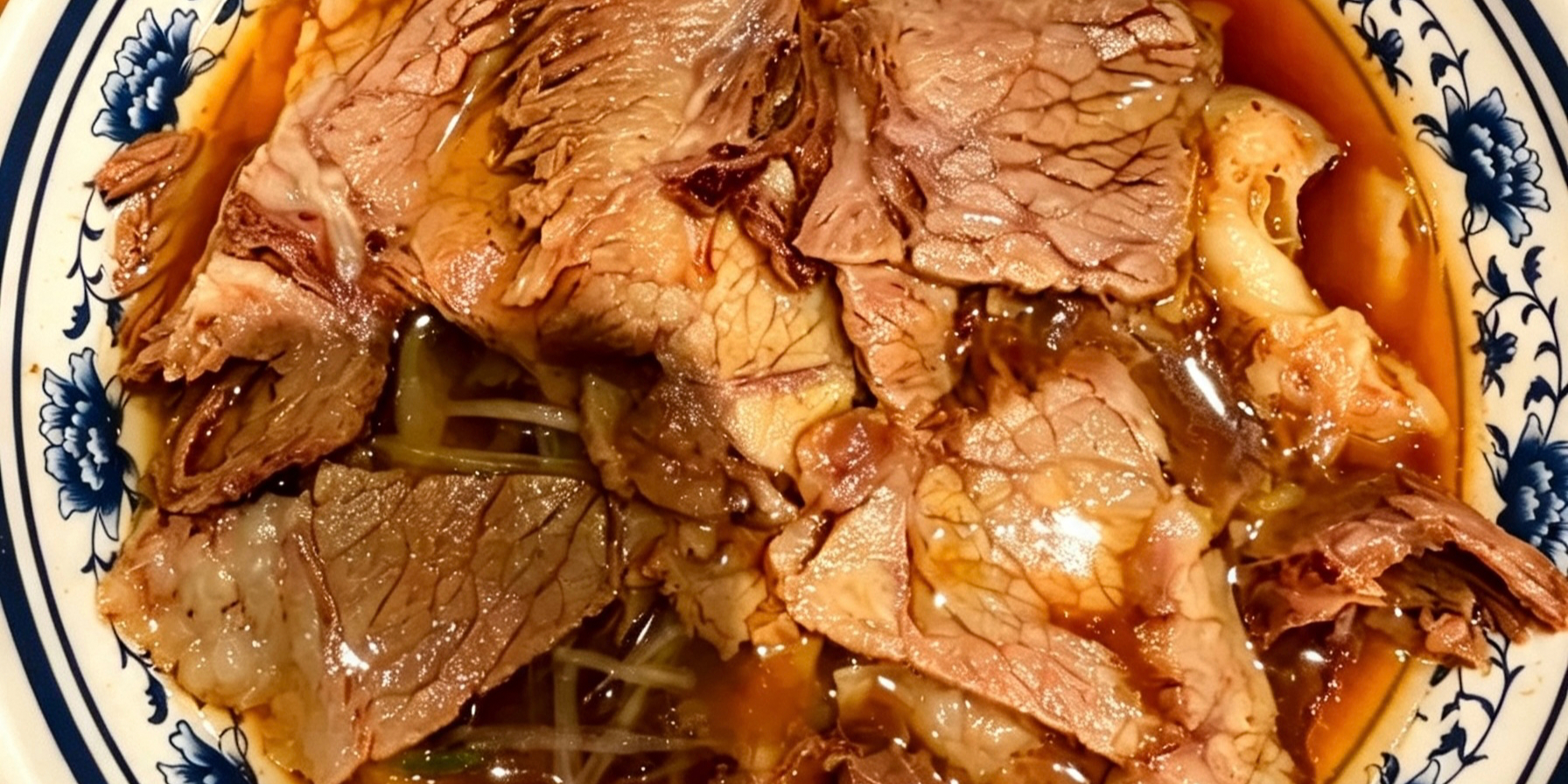
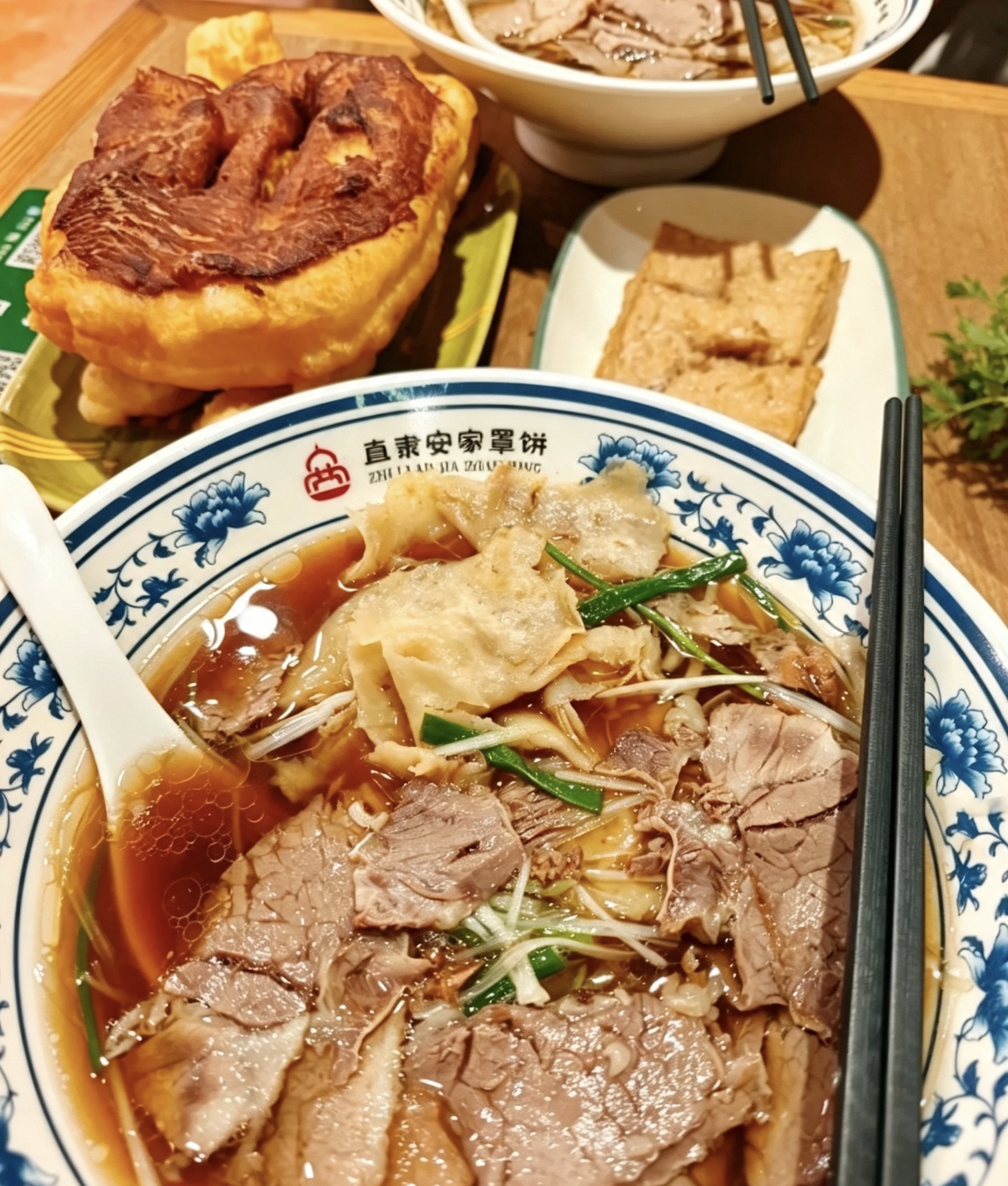
In the large blue and white bowl served, the beef slices were spread out, revealing the texture of the muscles and the light colored tendons in between. The shredded scallions peeked out from under the sliced meat, and the pancake was hidden deeper. It took chopsticks to flip it down to pick up a thin pancake that had been soaked in soup.
Drink soup first. The soup is reddish brown in color, with oil droplets floating on the surface, but the entrance is not as thick as it looks. The meaty aroma fell, and the scallions that had been scalded by the hot soup still had a hint of sweetness.
The first bite of cake made me pause for a moment. The cake looks softened by soaking, but it still has resilience when bitten. The thin layers of cake stick together and can be separated in the mouth, and the soup comes out. Noodles absorb the meat flavor, but do not completely lose their own taste.
In this breakfast, what I missed the most gradually changed from beef to pancakes.
One
What exactly does' hood 'mean? You can understand it at a glance at the stove.
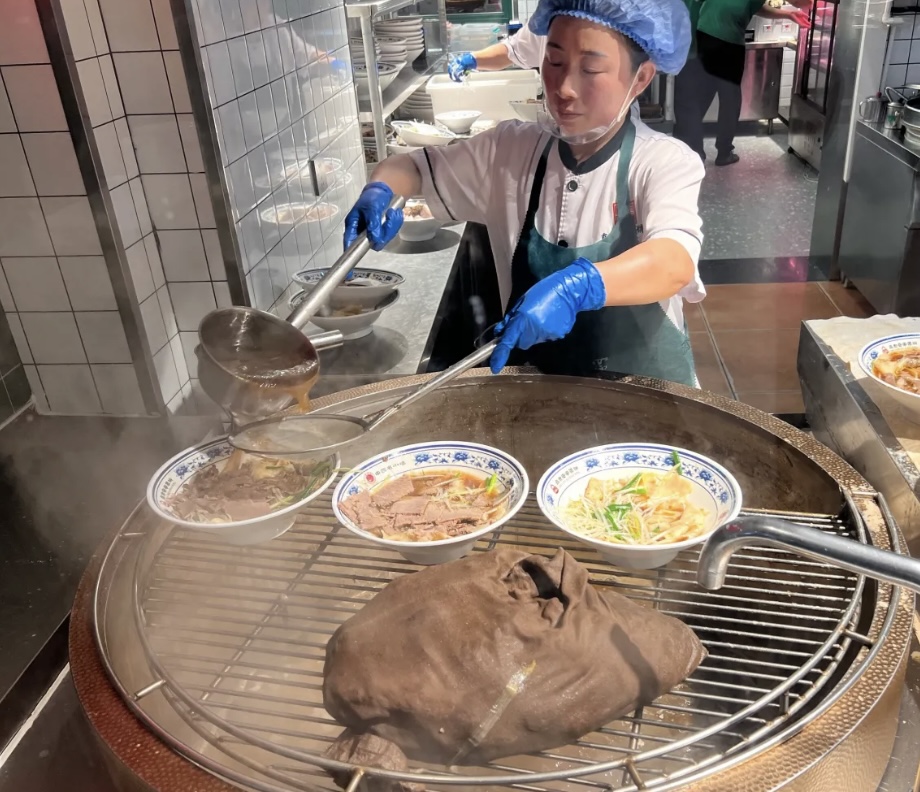
There is a metal rack horizontally on the big pot, and several bowls are arranged next to each other. The master is wearing blue gloves, holding a long handled spoon in one hand and a strainer in the other. The hot soup fell from the edge of the spoon, and the white gas rising from the edge of the pot covered half of the nearby bowl.
The key to beef patties lies in pouring the soup over and over again.
Put the pancake and beef into a bowl, pour hot soup in, and cover repeatedly. The cake layer gradually loosened, the scallions were heated, and the meat slices also warmed up again. If only meat, cake, and soup are mixed together, without these few times, the taste will not be easy to eat.
In the official introduction released by Baoding Culture and Tourism, the inheritor of beef patties mentioned this process. How many times to cover it depends on the master's judgment of the condition of the dough. When encountering elderly customers who like soft mouthed products, they will cover them a few more times.
The same pot of soup and the same cake, when served in different people's bowls, can have some differences. This is also where craftsmanship is incorporated into daily service.
The cake itself also has its own characteristics. Lotus leaf cakes are thin and layered, and after tearing them by hand, they need to be kneaded to make it easier for soup to enter. It has to suck in the soup and withstand watering. When it's in the mouth, it's soft and smooth, and you can still find the gluten when chewing, so you don't end up with only a bowl of batter.
Beef has a different taste. Pinch the large pieces together, the lean meat is soft and tender, and the areas with tendons need to be chewed a few more times. It is eaten alternately with cakes, and the intensity changes accordingly.
In Baoding, the crispy texture of roasted donkey meat is remembered as freshly baked. Beef patties leave people at the table, relying on hot soup. As you eat, people will naturally slow down, flip over the meat slices with chopsticks, and then look for a piece of cake at the bottom of the bowl.
Two
I don't understand the phrase 'how many masks are there' when ordering, but I think it makes sense to eat halfway through.
The amount and cost of a bowl of rice have been divided into two things that can be decided by oneself. Small appetite, order less cake. If you want to eat abundantly, just add meat. Beef bears the main price difference, while pancakes provide a satisfying basis for a meal.
For first-time visitors, this is a jargon that needs to be explained. For frequent diners, it is a convenient way to place an order without having to study the menu again and arrange the meal.
Local food can be operated for a long time, often requiring adaptation to these small and specific needs.
Tourists may order a few more things to try, while local customers will repeatedly weigh whether a meal fits well and whether the portion is enough. Holidays bring additional business, and the number of diners who are willing to come back on weekdays determines how long a store can stay open.
A bowl of pancake also comes with inconspicuous costs.
Before serving, pouring soup only takes a short while. Previously, cooking meat, soup, and pancakes all had to be completed in advance. What diners see is a spoonful of soup falling down, but what the restaurant needs to arrange is the entire preparation and serving process. Meat should not be cooked until it's too dry, cakes should retain their taste, and at mealtime, they must also be able to accept consecutive orders.
In previous public reports, local pastry shops have adopted methods such as unified distribution of core ingredient packages, training of chefs, and inspection of production processes when developing chain operations. The experience of making a pot of soup needs to be transformed into a practice that can be implemented in different stores.
This also highlights a business challenge for traditional catering. After opening multiple stores, procurement and seasoning can be unified, but how to cover the last few soups still needs to be judged by the person in front of the stove.
Three
When traveling on National Day, it is often necessary to answer a question. It is rare to have free time, where is it worth going?
The answer given by popular attractions is very clear. But a short trip from Beijing to Baoding can also be arranged from a meal. First, determine what you want to eat, and then take a look at what's nearby to explore. The itinerary doesn't need to be filled up, eating itself is worth leaving some time.
In such a trip, the daily life of locals has become an experience that outsiders are willing to purchase.
Someone came to solve lunch, and someone wanted to get to know Baoding through a certain meal. The same dining table serves different consumption purposes.
Familiar local food also provides an additional business opportunity. In the past, restaurants were waiting for passersby to enter. Nowadays, a meal may make people choose a city first.
But there are still many things to do between 'someone wants to come' and 'come back next time'.
The phrase 'a few covers a few' is very interesting, and first-time customers also need to know the corresponding quantity and price. The shop owner explained clearly, so tourists don't have to hesitate for fear of making mistakes. Being busy during holidays, how long can we wait to eat and whether the products can remain stable also affect the feeling of a meal.
For cities, whether heat can be converted into actual consumption is also related to conditions outside of small shops. Whether parking is convenient and walking to nearby neighborhoods is smooth will affect whether tourists will continue to stroll for a while or return directly after finishing their meal.
A bowl of rice may not be enough to sustain a trip alone, but it can be the starting point of a stay. Tourists are willing to sit down in order to have future consumption. As for how long it can stay, it depends on what the city offers next.
For me, this meal first changed a small understanding. When it comes to Baoding before, the first thing that comes to mind is always donkey meat fire. Now, there is an extra bowl of cake that needs to be repeatedly soaked with hot soup.
Next time I come into the store, I will have two masks and two snacks. I will finish them first and add more if there is not enough.

ST Qingyue fined 172 million yuan for suspected fraudulent issuance and illegal letter disclosure

Focusing on "Artificial Intelligence Empowering New Industrialization", the 2026 Artificial Intelligence Industry Conference opens in Jinan

Can Traveler 7 take care of both commuting on weekdays and mountain trips on weekends? This time, the all-new Jetour Traveler 7 will focus on its "Keyo" # Smart Beauty Travel Champion Box # Kecheng Keyo Keyo Travel # 7 Series Square Box New Benchmark # New Traveler 7 Renewal Surprise Price Starting from 125900 yuan


 Subscribe
