Economic Observer Follow
2026-10-05 14:46

Many people go to Xinjiang and use Urumqi as a transit station. The plane lands, take a nap, and go to northern or southern Xinjiang the next day. This city has been compressed into one boarding pass, one night in a hotel, and one meal.
Urumqi is a city of immigrants. For over 200 years, people from Tianjin, Gansu, Sichuan, Henan and other places have come here in batches, bringing together diverse cultures.
The flight time from Beijing to Urumqi is over 4 hours. If you stay for two more days, you will find that Urumqi itself is a place worth writing about.
Starbucks enters Urumqi, 'Little Sheep Brother' leaves Urumqi
A few steps from the entrance of the Dazha Pedestrian Street, a small shop that used to sell naan and dried fruits has now become the flagship store of Starbucks Xinjiang International Dazha Intangible Cultural Heritage. Netizens gave it a more catchy name - Starbaza. Bazaar is in Uyghur language, meaning "marketplace".
This store opened on September 29, 2026, marking Starbucks' first entry into the Xinjiang market, with another store located at Tianshan Airport. On the evening of the opening, at 10 o'clock, the reporter saw a long queue outside Starbucks, with young people holding their phones to take videos and older local residents standing at the entrance looking around.
The understanding of coffee among Xinjiang people originated in the 19th century when Russians and Tatars migrated from the Volga River basin to the Ili River valley, cultivating the tradition of drinking coffee among the local people.
The most prominent location in the store is a small stage. The inheritors of Uyghur Muqam art intangible cultural heritage perform here, several times a day, called 'Dancing Bazaar'. On the stage, a man and a woman were dancing in Adelais silk clothing. The man's shirt was embroidered with colorful patterns on a dark background, while the woman's skirt was made of blue-green silk, spinning like water waves flowing. The sound of plucked strings and hand drums emerged from the hissing of steam in the coffee machine, and several Uyghur shop assistants swayed their shoulders gently behind the counter to the rhythm.
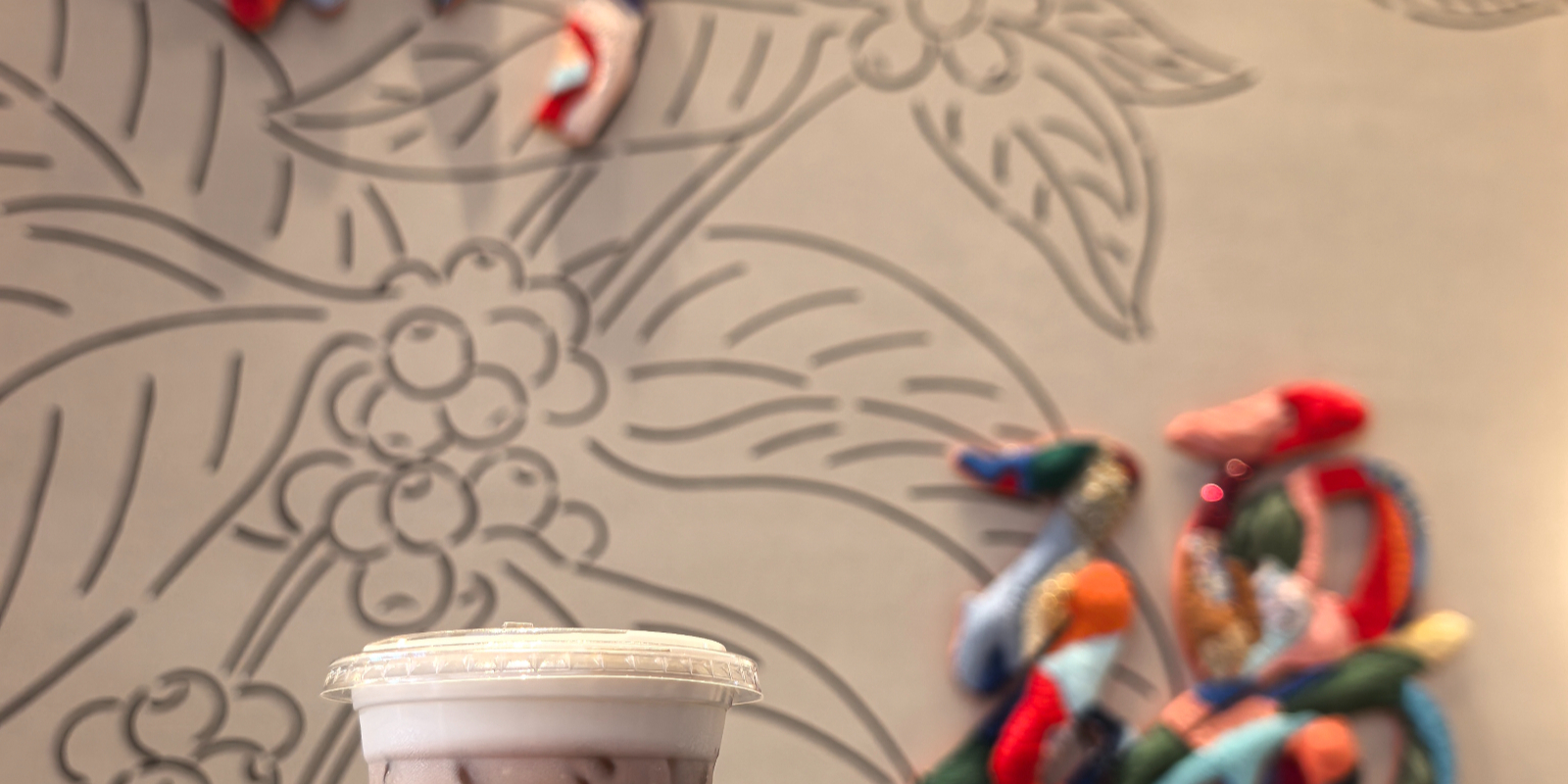
There is a limited edition drink of savory milk tea with a milk skin flavor on the menu, which is made from traditional Xinjiang folk milk tea and paired with local ingredients. The milk skin floats on the surface and tastes salty with a hint of milk flavor.
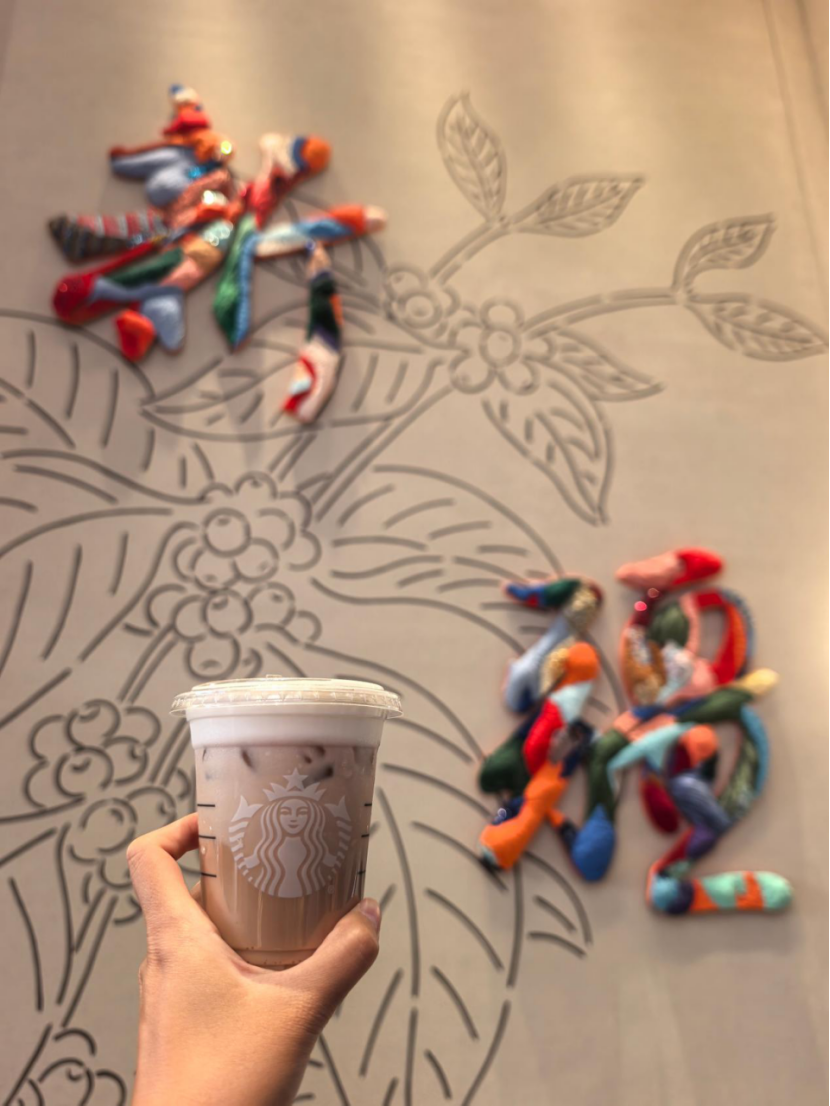
Image caption: Starbucks drinks source: Zheng Yuxin/photo
Store manager Ma Ying introduced that during this year's National Day holiday, one Xinjiang specialty drink and three Xinjiang specialty foods were introduced to more than 2700 Starbucks stores in 41 cities across the country for a limited time.
After finishing my coffee, I walked around the Grand Bazaar. There are dried figs, almonds, and raisins piled up on the dried fruit stand, handmade carpets from Hotan hung in the carpet store, and someone in the instrument store tried playing Dutal, a local musical instrument.
In the bazaar, I also experienced the handmade DIY lamb of the internet celebrity "Little Sheep Brother". The name of "Little Sheep Brother" is Abdulla Amirila, and his online name is "Xinjiang Little Sheep Brother". His stall was filled with round and fluffy wool felt lambs, curly haired, wearing small flower hats and Adelais silk dresses. The lamb has a silly expression, with two black beads in its eyes. After looking at it for a long time, it will feel like it is smiling at you.
The shape of the lamb was designed by Abdullah himself, inspired by sheep from Xinjiang. There are many sheep in Xinjiang, but the lamb made by Abdulla is not realistic, it is "imagined": the body is round like a ball, the legs are almost invisible, the flower hat is worn crookedly on the head, and the skirt made of Adelis silk is dragged to the ground. Some people say it's the 'Xinjiang version of LABUBU'.
The handmade process is very mature: choose a pre made lamb body, match it with clothes, hats, and a box of small beads and sequins for decoration.
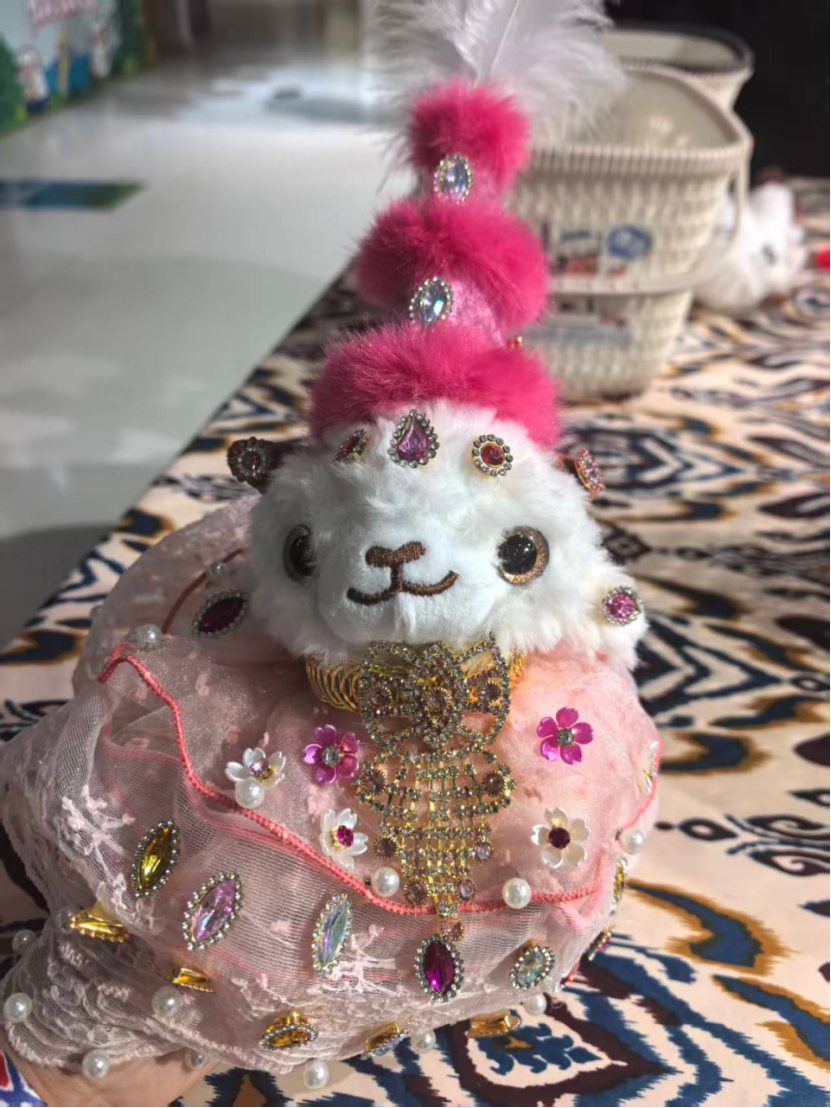
Image caption: Reporter's self-made lamb source: Zheng Yuxin/shot
After finishing, when I saw the finished product, I was surprised to realize that the small diamonds in the jewelry could form patterns instead of being rigidly attached to the edge of the skirt. However, the significance of handmade is probably here. It's not about buying a standardized souvenir, but about spending 20 minutes clumsily dressing a lamb. After completion, this little lamb is unique and a mark of arrival in the local area.
Abdulla was appointed as the Urumqi Cultural and Tourism Promotion Ambassador in July this year. His lamb set off from a small stall in the bazaar and was taken by tourists to Beijing, Shanghai, Guangzhou, and even abroad.
Eating In Urumqi
In Urumqi, I enjoyed authentic large plate chicken and hand pulled rice.
Da Pan Chicken originated in Shawan and was born in restaurants along the highway in the 1980s. The long-distance drivers passed it on word of mouth and turned it from a roadside stall into Xinjiang's "Jianghu cuisine". The writer Liu Liangcheng once wrote, "A large plate of chicken is placed in front of you, with red spicy skin, green chili peppers, white onions, green celery, yellow potatoes, piled up to the brim, which can stimulate one's appetite and add to the boldness of eating and drinking
Chop the whole chicken into pieces, stir fry it first and then stew it. The potatoes will break when stewed to one clip, and the red spicy skin and green chili peppers will be spread on top. The soup is thick and the color is deep red with brown. Next to it was a plate of two finger wide "belt noodles". When the chicken was almost eaten, the noodles were poured into the soup and mixed.
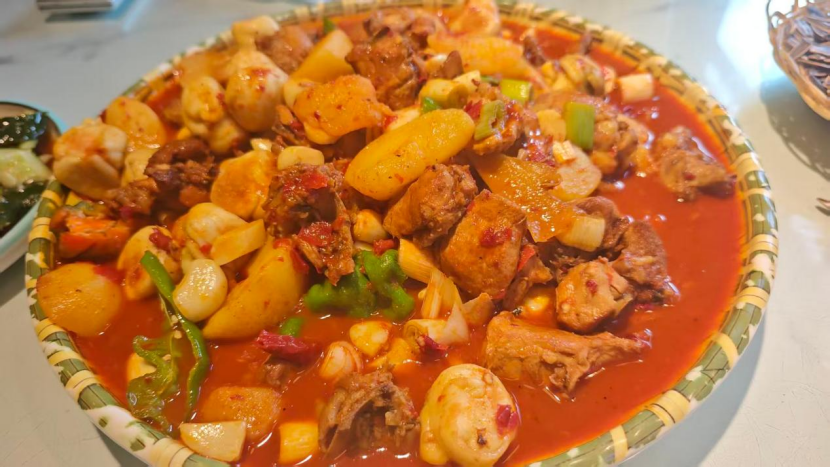
Image caption: Big Plate Chicken Source: Zheng Yuxin/Photo taken
The first bite of chicken comes first, followed by the spiciness, then the numbness of Sichuan peppercorns, and finally the smoothness of potatoes. The belt is wrapped in soup and enters the mouth, with a chewy texture and soup hanging on the surface. Every bite has a strong flavor.
Hand pulled rice is called "Bolao" in Uyghur language, and is made by simmering lamb, carrots, onions, and rice as the main ingredients. Yellow radish is the soul of rice grabbing, and Xinjiang people call it "ground ginseng". It is said to have the effect of nourishing qi and generating blood. Onion, also known as "Piyazi" by Xinjiang people, is an essential seasoning.
A plate of rice noodles was served, shiny and shiny. The rice grains were dyed golden yellow by carrots, and the lamb was buried in the rice with a few raisins sprinkled on top. When eating, the rice grains pop open in the mouth, the lamb is soft and tender but not scattered, and the sweetness of carrots and the fragrance of onions mix together.
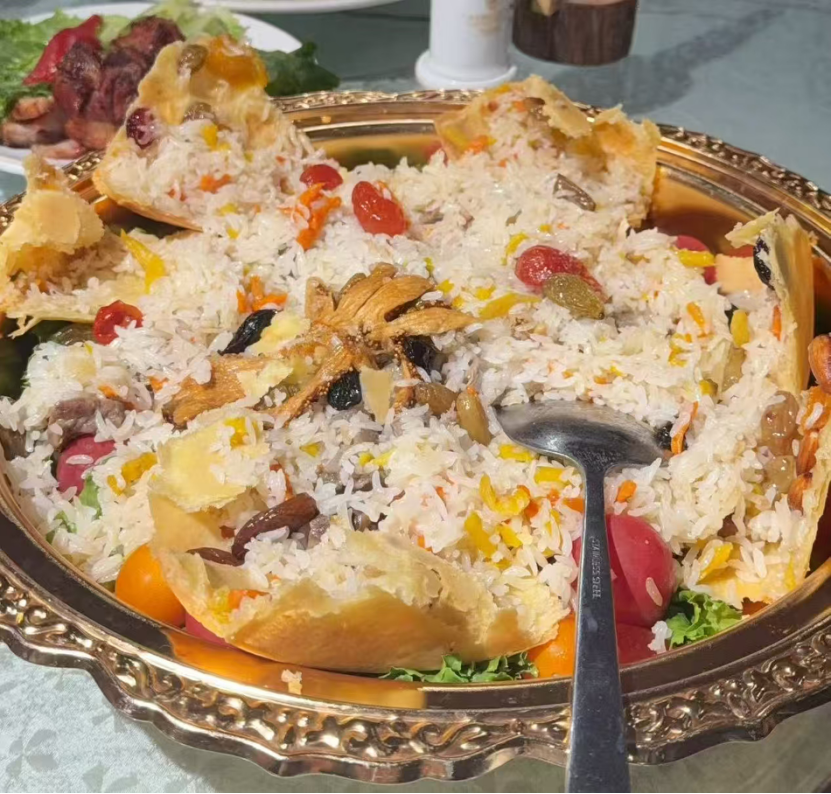
Image caption: Hand pulled rice Source: Zheng Yuxin/Photo
Zha Fan is the main food for entertaining guests during Uyghur festivals, weddings, and funerals. During the Eid al Adha and Rouzi festivals, almost every household prepares it. The traditional way of eating is to sit around with clean hands and scoop food from a large plate. Nowadays, chopsticks or spoons are more commonly used. There is a Uyghur family sitting at the table next to me. The elderly person pinched the rice into a ball with their hands and put it in their mouth, while the child picked and pulled it with a spoon to eat. The plate of rice in the middle was eaten clean.
Experience the depth of time and the twilight of the city in the museum and Hongshan
The Xinjiang Uyghur Autonomous Region Museum is located on the northwest road of Shayibak District. It was established in 1959 and entered the "dual museum era" after the second phase was put into use in 2022. The core highlights are "Xinjiang historical relics" and "Xinjiang ethnic customs", as well as the famous ancient corpse exhibition hall.
Photography is prohibited in the ancient corpse exhibition hall. After entering, the lights were dim and several thousand year old corpses were lying in the glass cabinet. Their skin was dry and shrunken, their facial features were still intact, and their hair and nails were well preserved. One of them is the Loulan beauty, unearthed in Lop Nur, about 3800 years ago.
These mummies are not artificially preserved mummies like those in Egypt, but masterpieces of nature. The climate in Turpan, Hami, and Lop Nur areas of Xinjiang is hot and dry, with very little annual precipitation, and evaporation is hundreds of times higher than precipitation. After the body is buried, the water in the body is quickly evaporated before the decay bacteria multiply in large numbers. The decay process is interrupted before it even begins, causing the skin to dry and shrink, but retaining its intact form. The underground water level of the Astana ancient tomb complex in Turpan is below 20 meters, and the tombs are located a few meters above the ground. The water in the strata has long been strongly evaporated and taken away, and the bodies are essentially placed in a natural drying oven. The hotter the season, the faster the dehydration and the more complete the preservation of the dried corpse; On the contrary, corpses buried in winter are more prone to decay because the temperature in the tomb is relatively warm and the humidity is sufficient for the activity of decay bacteria.
Loulan Beauty was unearthed from the Iron Plate River Cemetery on the north bank of the Lop Nur, where the wind was strong and the sand was abundant. The tomb was buried very shallow, only a few tens of centimeters above the ground. Archaeological speculation suggests that she was buried in winter, and the severe cold suppressed bacterial activity. The body was drained of moisture by sandstorms and dry air before it could decompose. Standing in front of the glass cabinet, you will suddenly realize that the people on this land have been coming and going for thousands of years. Loulan, Kuchi, Gaochang, Uyghurs, Mongolians, and Qing Dynasty settlers piled up layer by layer to create today's Urumqi.
Leaving the museum, the sky began to darken, so I took a taxi to Hongshan Park.
Hongshan is located in the city center and is named after the reddish brown sandstone. It has an elevation of 910.8 meters and is open for free. At the top of the mountain, there is a Qing Dynasty Red Mountain Pagoda with six sides and nine levels. "The pagoda reflects the sunset" is one of the eight old scenic spots in Urumqi. When I climbed to the observation deck, the sun was setting towards the west. The sky is orange red, the clouds are dyed golden, the Bogda Peak in the distance is still bright, and the snow is turning white in the last ray of light.
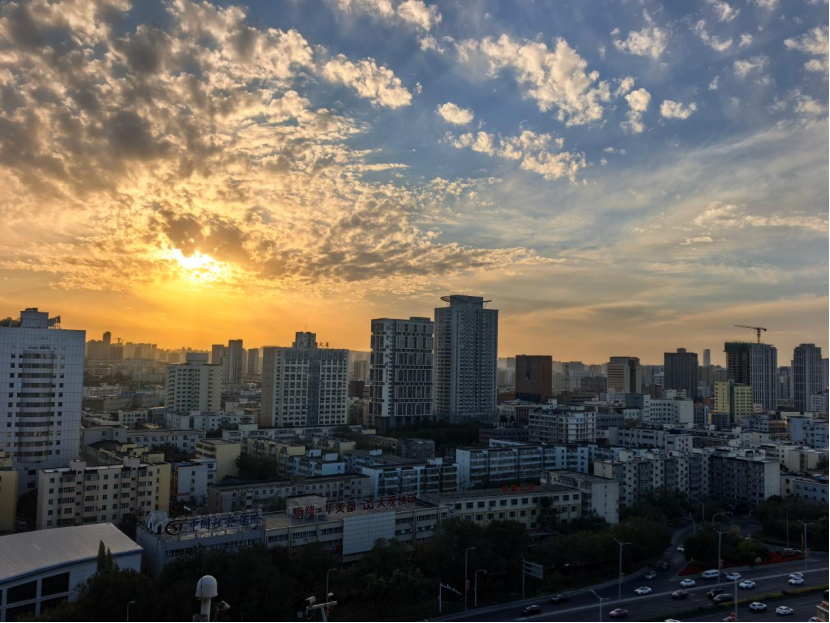
Image caption: Sunset at Hongshan Park Source: Zheng Yuxin/Photo taken
I stood there, watching the sun slowly set and the city gradually light up. If you're willing to stop, this city will tell you: it's not a boarding pass, it's a book that needs to be slowly flipped through. The slower you flip, the more you read.

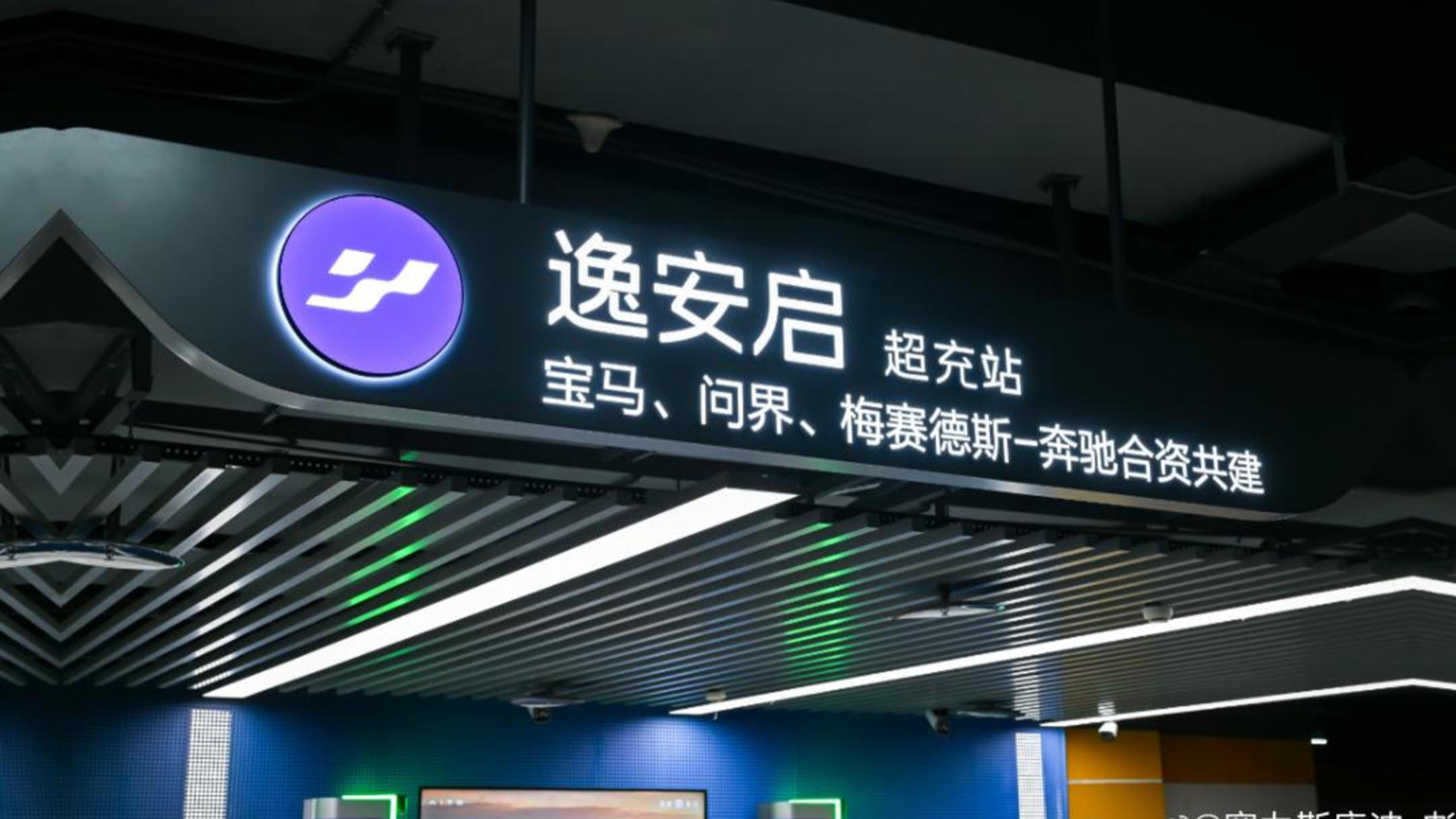
Xilinx officially announced that Wanjie has joined the Mercedes Benz and BMW supercharging camp, with over 600 stations directly connected
OPPO Find X10 tops sales on the standard version track

Technology Show | iQOO16 is now available for sale, under the name of Standard Edition, to meet the requirements of Pro Max product strength


 Subscribe