Economic Observer Follow
2026-10-03 09:30

Zhang Xiaohui/Wen
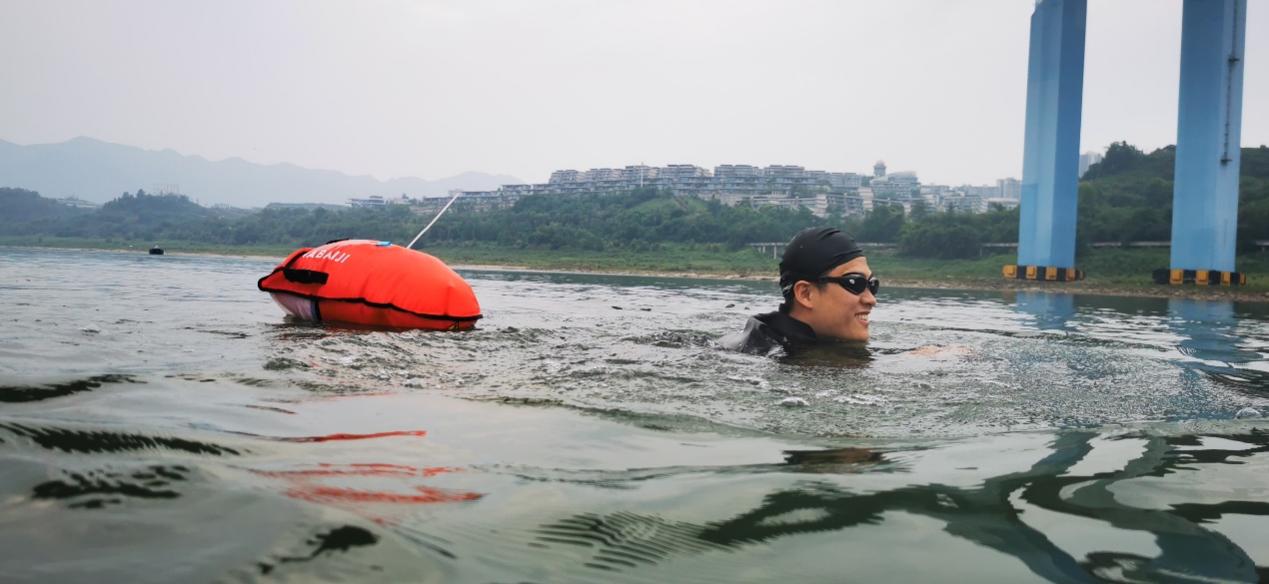
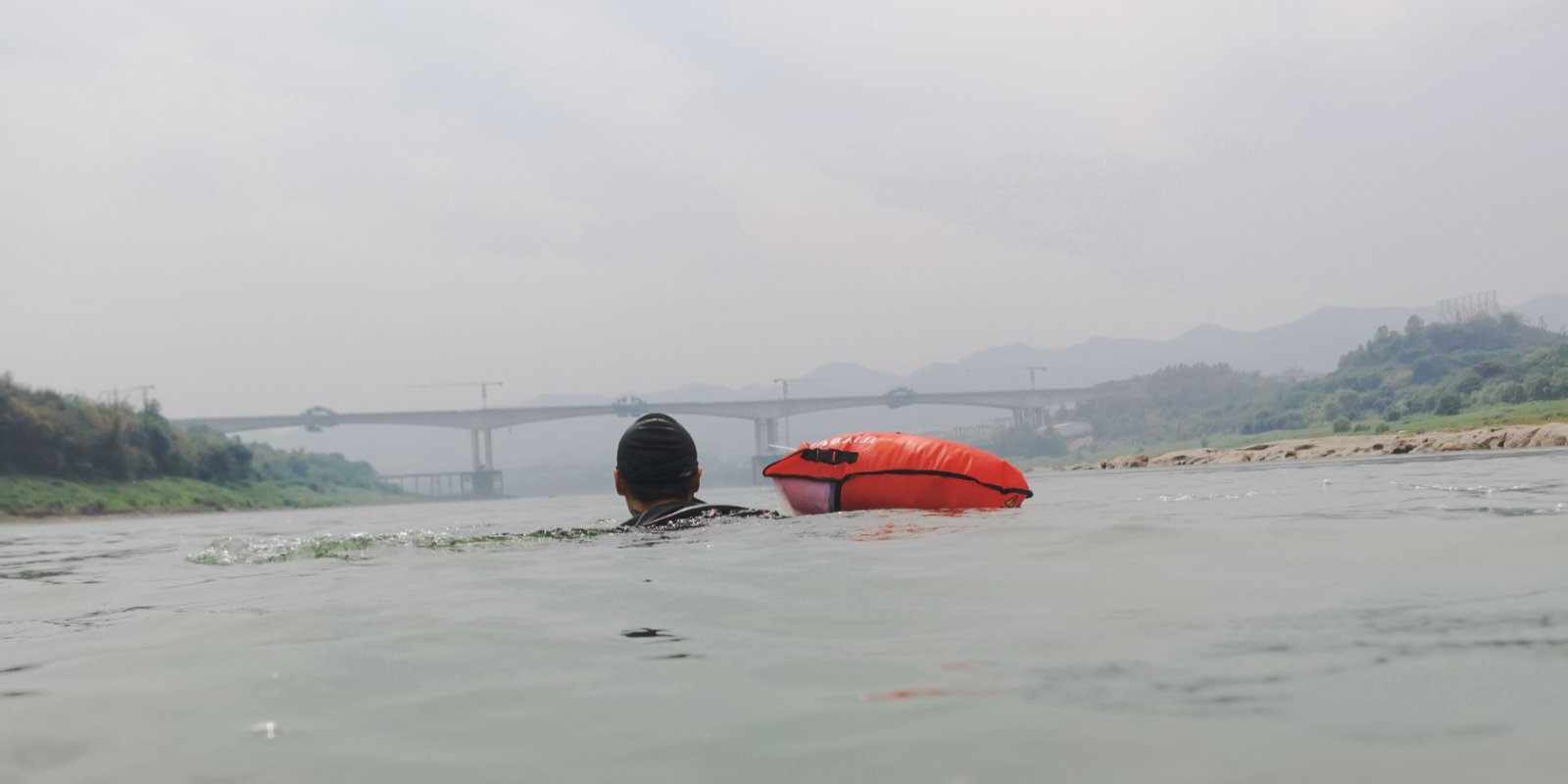
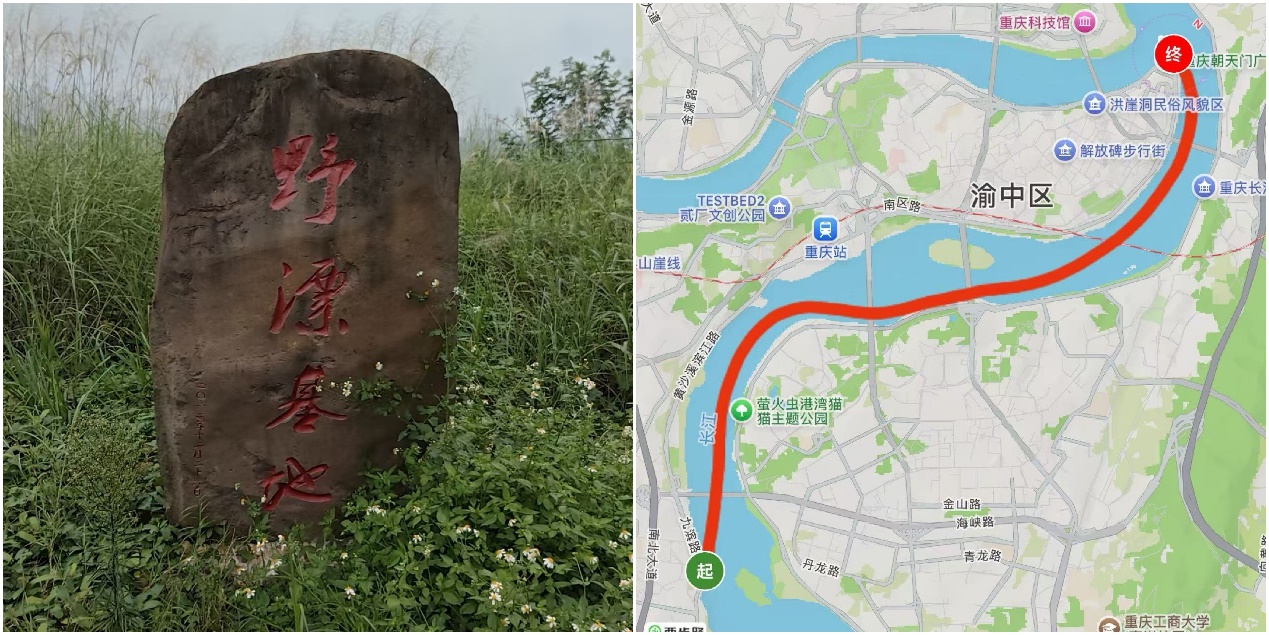
On October 1, 2026, the National Day holiday, three Chongqing river swimming enthusiasts descended from Jiulong Beach and floated ashore at Chaotianmen Pier, known locally as "Fangtan" to celebrate the birthday of their motherland.
'Beach release' is an ancient sport in the Chongqing area, which refers to swimmers entering the water in a certain section of the Yangtze River or Jialing River, and then drifting downstream to a shallow beach to come ashore. The whole process is thrilling and exciting, and swimmers will pass through rapids, backwaters, dangerous rapids, sharp turns, and may also encounter ships, navigation markers, and various unexpected floating objects.
Chen Keqiang, a resident of Chongqing who only enjoys swimming in the river, is in his fifties and has excellent physical fitness. He said, "I don't know why people in Chongqing call drifting in the river 'beach release'. The older generation says the same thing. I asked the older generation, and they said they don't know the origin of 'beach release' either. When I was a child playing in the water by the river, people who knew how to swim called it that
Historical research
'Fangtan' is a modern colloquial term among the people of Chuanjiang, which has not been formally recorded in ancient Tang and Song literature. It may be as ancient as fishing.
The term "releasing the beach" appeared in Qing Dynasty poetry and literature. Zhang Wentao wrote in "Xia Xintan": "Guizhou has been lacking in divine skills for many years, and releasing the beach every day is like playing with the tide." Here, releasing the beach refers to wooden boats and rafts rushing downstream to the dangerous beach. That is to say, the discharge and downgrading of timber by water transportation.
Qianlong once wrote an article called "Shenmu Xing", praising a huge ancient tree located in Shenmu Factory in Beijing. Shenmu Factory was first built during the Yongle period of the early Ming Dynasty to construct the Forbidden City (now known as the Palace Museum), which was used to store precious timber transported from Sichuan via the Yangtze River to the Grand Canal between Beijing and Hangzhou. According to legend, during the Yongle period, the Minister of Works, Song Li, went to Sichuan to collect wood. A giant tree drifted from a valley to the Yangtze River. The emperor believed it was divine and named the mountain where the wood was collected as Shenmu Mountain, while the storage area in Beijing was called Shenmu Factory. Therefore, there is still Huangmu Factory Road in Beijing today. In the Ming Dynasty, it was called Shenmu Factory, in the Qing Dynasty, it was called Huangmu Factory, and in the Republic of China, it was renamed Huangmu Factory
There is a detail here, the transportation of wood is done by water transportation. Because wood floats on water, ancient people cut down giant trees, drifted them along the Sichuan River, drifted from a valley to a shallow plain, and then collected them by a dedicated person. The process of drifting wood is called "beach release".
The author has repeatedly verified that the reason why drifting is called "Fangtan" in Sichuan and Chongqing folk culture is most likely derived from the ancient transportation method of wood. That is to say, "beach release" - a swimming game like wooden drifting, has a history of at least a thousand years, and may be even more ancient, just like a boatman.
Chongqing is famous for its hot springs. During the scorching summer, the "beach release" army, who are enthusiastic about drifting, set off from various directions: from Chaoyang Pier in Beibei to Shuitu, from Jiulongtan on Jiulongpo to Chaotianmen, from Yuelai Old Pier to Dazhulin, from Dazhulin Pier to Jiangbeizui
The Beacher Said
A swimmer named Aman told the story of his "beach release" in the 1970s: escaping the heat was one of the themes of Chongqing's hot life. Boys have more ways to deal with the scorching heat, they use the two rivers as natural swimming pools. For example, taking the rapids from the Shanshanba River to Dongshimen or Chaotianmen to get ashore is faster than taking a bus, commonly known as "beach release".
In the relatively gentle Jialing River, ships sail down from upstream to form waves, and swimmers swim with the flow and ups and downs of the water, enjoying themselves immensely. They call this riding the waves.
There is also Suo Lane, where you swim between the boats docked by the river. At that time, rural wooden boats transported rice and vegetables to the city, and returned with manure and daily necessities. When there are many boats, the left and right sides of the boat lean against each other, and the upper and lower ends are connected. People swim in the gaps between the boats, as if passing through small alleys where even the strongest sun cannot shine, it is both cool and comfortable. Sometimes children from two streets meet in the same water area and don't give in, so they squeeze together in the boat lane. Surprisingly, they can push four or five rows of wooden boats apart and turn the "lane" into a "street". The two groups engaged in a water fight on that street and alley until one side was defeated and fled.
The most wonderful 'invention' is the rudder. The swimmer first swims up close to the wooden boat, follows the boat's body downstream and approaches the stern, swims desperately a few times, rushes into the stern at a very fast speed, and grabs the rudder. The ship is sailing, and opportunities are fleeting, so being quick witted and agile is a necessary skill. Once the swimmer suspends the rudder of the moving boat, the feeling of the boat rushing into the water and braving the wind and waves is particularly wonderful. It only made the boatmen on the shore suffer. At that time, wooden boats did not have motors and had to sail along the river, relying on sails and pulling fibers. The tail rudder is suspended by someone, increasing the load. The boatman doesn't know, but the boatman knows and will find a way to deal with it.
Recalling his thrilling experience of "beach release" in the past, it is still hard to forget. One day, Aman was swimming in the Yangtze River when he saw a large wooden boat sailing upstream with its sails wide open, with more than ten people pulling fibers. He leaned upstream, leaned close to the hull, and hung up the rudder. The rudder of a large wooden boat is also very special. The wooden rudder blade standing vertically in the water is nearly one meter wide, and there are horizontal beams embedded below the water surface. The rudder is firmly shaped like a cross. Aman and his brother grabbed the rudder and flipped over the crossbar to rest, as if they were boarding a free passenger ship, very refreshing.
Just as he was feeling proud, he suddenly saw the ship's deck lifted above the rudder, and the boatman stood on top, pointing at them and cursing. I wanted to escape but didn't dare to jump into the water - the boat was passing through a rocky area, and the river stirred up a vortex. Jumping down was too dangerous, so I had to grit my teeth and listen to the boatman scolding me.
The boatman cursed for a while, took a breath, turned around and walked away, continuing to command the ship to sail through the rocky area. When he reappeared, there was another young sailor. As the ship reached a calm surface, one grabbed his hands and the other grabbed his feet to lift him up and threw him out without hesitation.
Aman said, "I will never forget that moment. It was the first time in my life that I ascended into that sky, facing up, with my limbs spread out, completely naked and carefree. I fully enjoyed the baptism of the blue sky, white clouds, sunshine, and river water
Drifting Three Character Classic
Niu Gundang, born in 1961, told me that if the drifters cannot keep up with the large army, swimmers in front often call out "roll up, roll up, keep up with the team", and thus the drifters are called "rolling brothers". The classic "beach release" route of Niu Gundang is from Kowloon Beach to Chaotianmen, which takes one hour.
Niu Gundang has formed a beach release social group in the Chongqing area called "Chongqing Ouyo Drifting". This group of people is very interesting. They call it "shooting" when they go into the water and "chance encounter" when they drift together, because the safety of the beach release personnel must be self assured. There are nearly 200 Jiang Piao enthusiasts in the group, who call each other by their online names, carry various equipment, and use the most trendy devices to capture, record, and upload the ancient sport of beach release.
Niu Gundang said that the most dangerous thing for a brave person to set sail on a beach is to avoid boats sailing on the river, because water, people, and boats are all dynamic. In canyons, at the confluence of two rivers, islands in the river, and other locations where the water flow changes greatly, it is difficult for boats and people to control the direction, and the risk of setting sail increases.
Niu Gundang has been swimming in the river for six years now. As a wild swimmer, he wrote a "Drifting Three Character Classic" for beach enthusiasts, which was engraved at the Jiulong Beach Winter Swimming Base in Chongqing. The Three Character Classic of Drifting mentions that "before entering the water, look at the dock, there is no boat moving, only then can you float", "two directions, don't be nervous, avoid boats, avoid dead boats, avoid in advance, don't approach", "enter the vortex, let it rush, wait for the vortex to slow down, swim out, enter and return water, follow the water" and other contents, which have been regarded as the "Bible of beach release" by river swimming enthusiasts.
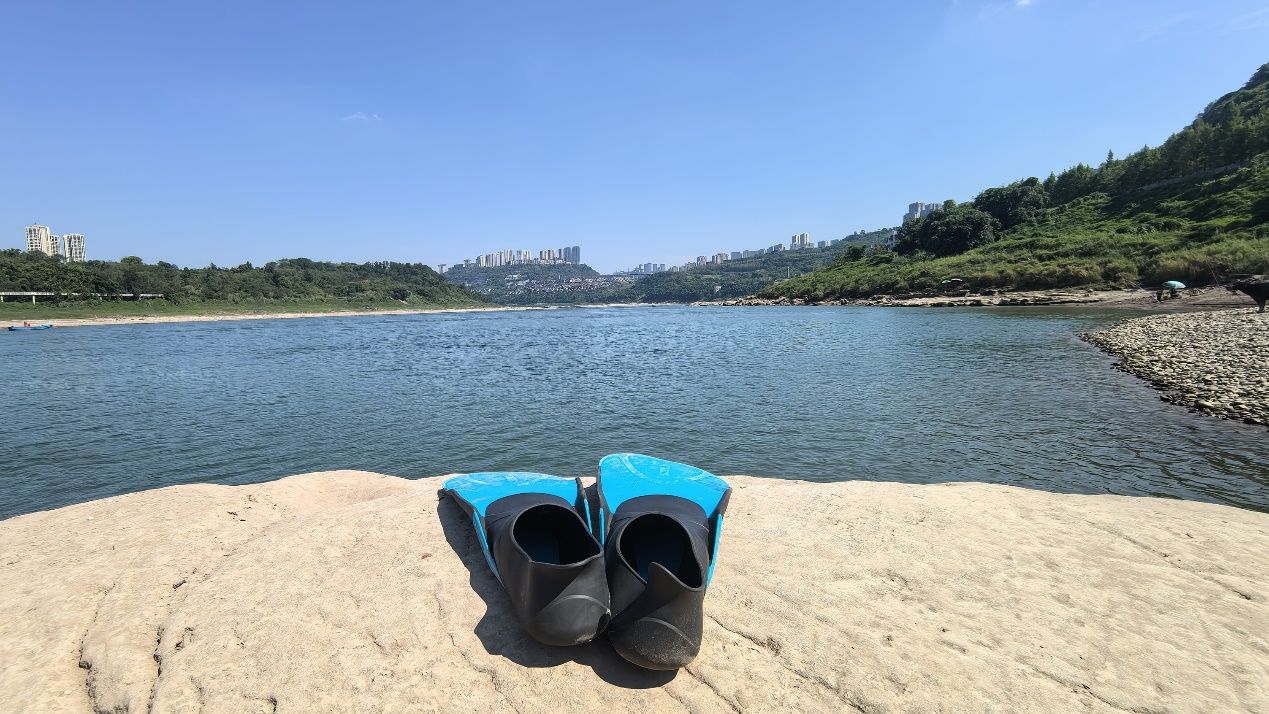
The author follows Niu Gundang's "Drifting Three Character Classic" and carries a life-saving buoy and a footboard (the buoy is used for emergency shelter, and the footboard can increase swimming power) to enter the water from the Lijia section of the Jialing River and experience the process of "releasing the beach". Drifting across three bridges along the way, namely Lijia Light Rail Bridge, Caijia Bridge, and Ma'anshi Bridge, with blue skies, white clouds, and clear waters and green mountains along the coast.
The taste of freedom, the thrilling and exciting experience, has been passed down for thousands of years, making swimmers fall in love and unable to refuse.


Xilinx officially announced that Wanjie has joined the Mercedes Benz and BMW supercharging camp, with over 600 stations directly connected

OPPO Find X10 tops sales on the standard version track

Technology Show | iQOO16 is now available for sale, under the name of Standard Edition, to meet the requirements of Pro Max product strength


 Subscribe