2026-10-05 09:00


Introduction: The New World Needs New Tools
Any new theory requires its own conceptual tools. Classical economics has "utility" and "margin", while information economics has "principal-agent" and "signaling". When two intelligent agents coexist, exchange, collaborate, and even conflict for the first time in the same economic system, we also need a new conceptual framework.
This skeleton consists of three core concepts:Carbon silicon interface, time friction, incompressibilityThe three are not three independent lists, but an analytical triangle interlocked together - the interface answers' where value is exchanged ', the time friction answers' why two types of intelligence are bound to collide', and the incompressibility answers' what cannot be optimized '. Each subsequent article involves turning these three keys into specific scenarios. Only by understanding them can we enter every door behind them.
1、 Carbon silicon interface: the place where exchange occurs
1.1 Definition of Interface
The carbon silicon interface is a systematic set of protocols for value exchange, information translation, and conflict arbitration between carbon based and silicon-based materials. It is not a data cable, but a set of systems, standards, and conventions - because every handshake between carbon and silicon involves three things at the same time: exchanging value, translating language, and resolving conflicts. If anything is missing, shaking hands will turn into pulling.
1.2 Triple functions of the interface
The first function of the interface isExplainTranslate the parameter language of silicon-based into an economic language that carbon based can understand, and also translate the vague intentions of carbon based into executable optimization objectives of silicon-based. But the explanation is not enough, because what is translated may not necessarily meet people's bottom line - so the second function isConstraintIncorporate the ethical bottom line, safety preferences, and value ranking of carbon based materials into the optimization process of silicon-based materials, allowing them to run within boundaries. However, the constraint will bring about the third thing: when the implementation result of the silicon base conflicts with the intention of the carbon base, who the final say? This isArbitration——The interface must provide arbitration rules and procedures, otherwise every conflict will degenerate into a power game.
Interpretation, constraint, and arbitration, the three go hand in hand: without explanation, exchange cannot occur; Without constraints, exchange will lose control; There is no arbitration, and an out of control exchange has no brakes.
1.3 Interface as Market
These three functions are not free public welfare services, they themselves are markets. The transactions on the interface are not commodities, butDecision making power and cognitive burdenThe purpose, significance, and aesthetic judgment of carbon based "selling", and the computing power, speed, and exhaustive ability of silicon-based "selling". So whoever controls the interface holds the pricing power of carbon silicon collaboration - because all transactions have to go through this hurdle. This is precisely why interfaces cannot be viewed solely as technical agreements: they are the new axis of economic power.
1.4 Four principles of institutional design
As a market, interface design must adhere to four principles, and none of them are indispensable. The first one isBidirectional RecognizabilityBoth directions can understand each other, refusing one-way translation - only allowing silicon-based to understand carbon based, not allowing carbon based to understand silicon-based, is equivalent to giving veto power to the black box. Second isDynamically UpgradableAs the silicon-based capability transitions and carbon based demand changes iteratively, the interface between non curing and curing will leak like old property rights. The third isFull AuditabilityEvery carbon silicon exchange can be traced back, which is the foundation of trust. Trust without a foundation is just a stroke of luck. Fourthly, and most importantly:The ultimate veto power of humanity——The last line of defense against incompressibility is to preserve the carbon based channel for saying 'no'. The first three ensure that the interface is user-friendly, and the fourth ensure that the interface does not backfire.
2、 Time Friction: The Collision of Two Rhythms
2.1 The essential difference between two types of time
Carbon based time is biological: circadian rhythm, upper limit of lifespan, decision fatigue, intergenerational succession. In the long run, we are all dead "- this joke contains all the honesty of the carbon based view of time. Silicon based time is electronic: without rest, without death anxiety, and without generational breaks, measured in milliseconds. For it, 'long-term' is just a scalable technical parameter, not a philosophical problem. The difference between the two is not in speed, but in the quality of the two time systems - you cannot give infinite patience to something that will die, nor can you make something that will not die understand 'it's too late'.
2.2 Triple Dimensions of Friction
The differences in this germplasm will create friction on three levels, and each layer is deeper than the last.
The outermost layer isDecision Speed FrictionSilicon based millisecond level bidding, waiting for human hour level confirmation, the window is often already closed. This can be alleviated technically, but it's just the tip of the iceberg.
On a deeper level, it isStrategic Perspective FrictionThe optimal path for silicon-based energy can be arranged for decades, with rigorous logic and smooth return curves, but the tenure of human decision-makers is measured in years and patience in quarters. There is no natural translator between long-term optimization and short-term assessment - system development sees thirty years, and sometimes people may not be able to perform their duties until the next year or even the next quarter.
The deepest one isLiability Cycle FrictionThe long-term consequences of AI recommendations may become apparent decades later, and the signatories have already left their positions. Speed friction loses money, strategic friction loses direction, and responsibility friction loses the legitimacy of the entire accountability system - no one can take responsibility for the decisions made by machines for themselves.
The three-layer friction gradually sinks: from 'too late to react', to 'unable to understand the long term', and then to 'no one takes responsibility'. Without addressing the issue of time, symbiosis will forever remain at the level of slogans.
2.3 Time Translation Mechanism
The solution is not to accelerate people (which would result in sudden death), nor is it to make the system accommodate people's slowness (which would waste its core advantage). The correct approach is to build oneTranslation LayerConnect the two rhythms together.
Translation is divided into three steps: The first step is to break down the long-term optimization of silicon-based materials into perceivable milestones for carbon based materials - turning its 100 year plan into a five-year milestone that people can keep an eye on. The second step is to transform the short-term fluctuations of carbon based materials into dynamic constraints that can be understood and written into the objective function of silicon-based materials - human panic is no longer a noise that needs to be "overcome", but a boundary condition that the system must respect. The third step is to set up a time buffer layer in the stage of "requiring human approval and being executed by silicon-based" - allowing people enough time to make quality judgments, rather than forcing signatures under the system countdown.
These three steps constitute a complete translation: the distant horizon of silicon-based materials is brought back into human vision, and the present moment is translated into the constraints of silicon-based materials. Friction does not disappear, but there is cushioning.
3、 Incompatibility: What cannot be optimized out
3.1 Definition
Incompressibility refers to something in the carbon based world that cannot be quantified or algorithmic in principle. Note that it is not 'not yet quantified' - it is not a technical debt, but rather incompatible with quantification itself.
Trust is relational and context dependent, and cannot be compressed into a confidence score. Aesthetic intuition has no unique mathematical expression and relies on individual experience and cultural context. The sense of fairness, flowing with the situation, cannot be written as a universal function. The need for meaning and the questioning of 'why' cannot be optimized - you can measure a person's choices, but you cannot determine why they feel it is worth it.
These things are mathematically 'unclean', but they are the true source of human happiness. It is not the residue of technological backwardness, but the essential characteristic of carbon based life.
3.2 Economic consequences
Incompressible things are not mysticism, they have tangible economic weight, and this weight is reflected in three observable channels.
The first channel is trust. The collaboration cost in a high trust environment is significantly lower - because trust replaces expensive contracts, supervision, and litigation. This is not moral preaching, it is a calculated account.
The second channel is aesthetics. The price consumers pay more for "touching aesthetics" is not irrational - it is a true expression of carbon based value. Aesthetics cannot be compressed, so brand premium cannot be compressed.
The third channel is fairness. The sense of unfairness can trigger non cooperative behavior, and its efficiency loss far exceeds the resources saved by the algorithm. You can use algorithms to squeeze out every bit of efficiency, but if you squeeze out a sense of fairness, the resources saved will be doubly lost in the collapse of collaboration.
The three are linked in a causal chain: trust reduces transaction costs, aesthetics generate premiums, and fairness maintains cooperation - ignoring incompressibility saves computing power, overdraws the legitimacy of the entire system.
3.3 As a hard constraint
Because it is incompressible, the correct approach is not to "quantify and then optimize" - that is to seek fish by fate, forcing incompressible things into mathematics, only to get answers that look clean but are actually distorted. The correct approach isSet as hard constraintOptimization occurs outside of constraints and never optimizes the constraints themselves.
In practice, "incompressibility checkpoints" should be set at key nodes: the plan can be changed, but it must not erode trust, fairness, and meaning. When exercising veto power based on carbon, there is no need to provide "scientific basis" - because this is a value judgment, not a technical judgment. Silicon based materials can ask 'how to speed up', while carbon based materials have the right to say 'this path is wrong'. This is symbiosis: silicon-based is responsible for reaching, carbon based is responsible for saying 'that's where we're going'.
4、 The relationship between three concepts
Interface, friction, and incompressibility are not the titles of three independent articles, but rather an interlocking analytical triangle.
Interface is a place——Where is the value exchanged. But the exchange will not be automatically smooth because both parties in the transaction live in two different times, soTime friction is the root of conflict——It explains why collisions are inevitable. And collisions cannot have no bottom line, soIncompatibility is the anchor point of value——What it holds cannot be crushed.
The three support and constrain each other: the interface is the buffer layer for handling time friction and the final gate for defending incompressibility; Time friction is the core tension that interfaces must digest, interfaces without friction are just decorations; Incompatibility is the red line that interface translation cannot cross, and it is also the ultimate judge of time friction - when efficiency and fairness conflict, who gives in? The answer is: efficiency gives way, because fairness cannot be compressed.
After understanding this triangle, the analysis framework of the following article becomes clear: micro exchange looks at the interface, macro structure looks at time friction, and value attribution looks at incompressibility. Three keys open different locks on the same door.
Conclusion
Three keys have been handed over to me. But the key is not a conclusion, it's just a tool to open the door.
The three core concepts have established the triangle: place, tension, and anchor point, each in its own position. We won't look back here to measure again. What needs to be done next is to open the first door and lean down to look at the real trading table: what carbon based delivers is not data, what silicon-based delivers is not the answer, and the interface layer only sells "translation". The trading between carbon and silicon has never been about computing power, but about decision-making power and cognitive burden.
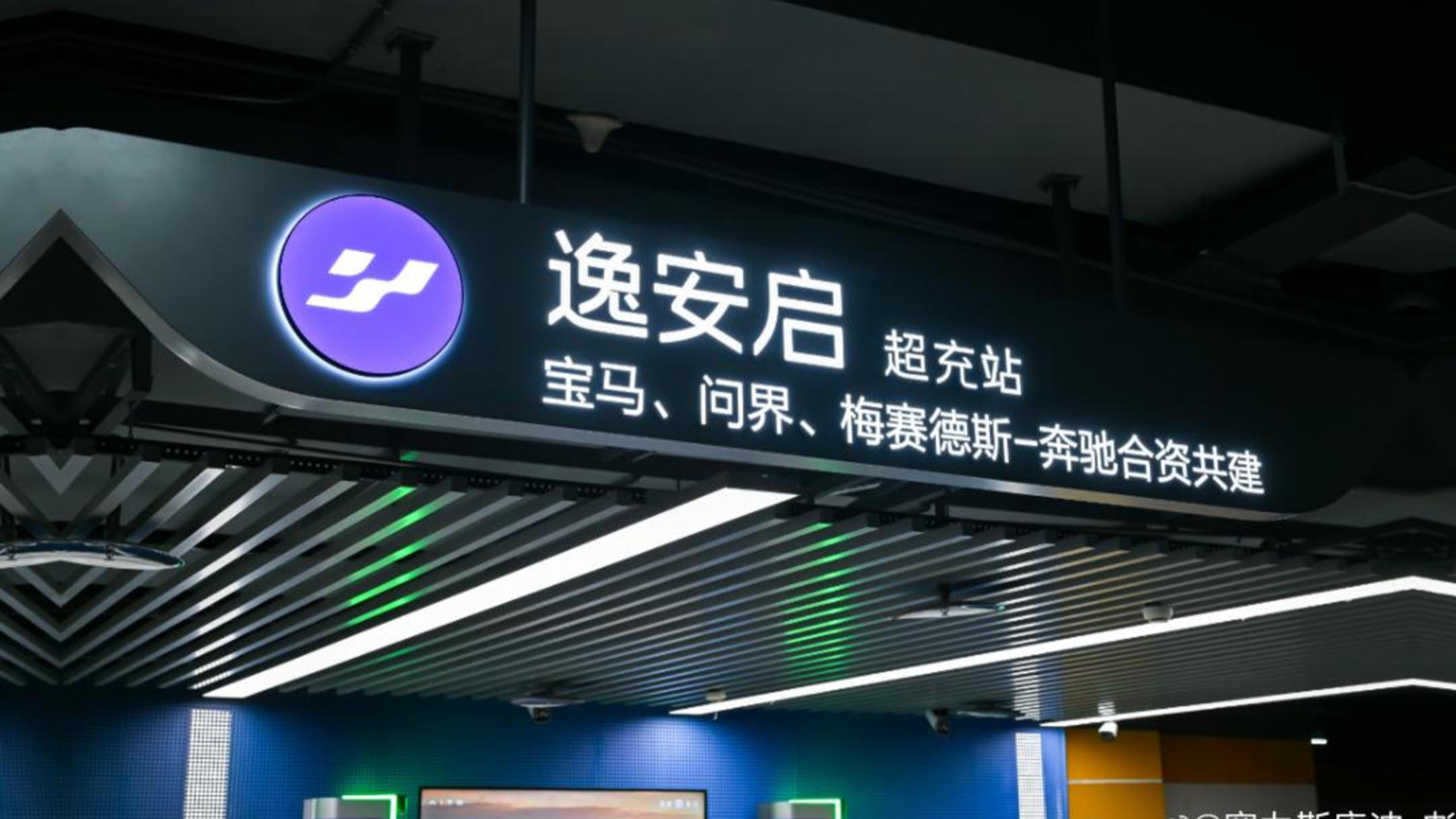
Xilinx officially announced that Wanjie has joined the Mercedes Benz and BMW supercharging camp, with over 600 stations directly connected

OPPO Find X10 tops sales on the standard version track

Technology Show | iQOO16 is now available for sale, under the name of Standard Edition, to meet the requirements of Pro Max product strength