Economic Observer Follow
2026-10-01 11:03


Ouyang Xiaohong/Text
On September 30, 2026, six major state-owned banks issued announcements regarding the implementation of individual housing loan interest subsidies.
The day before, fiscal and financial policies were implemented simultaneously on both the demand for residential housing and financing in key areas.
The Ministry of Finance, the People's Bank of China, and the State Administration for Financial Regulation announced that starting from October 1, 2026, they will provide an annualized 1 percentage point and a maximum of five years of financial interest subsidy for newly issued commercial personal housing loans that meet the conditions.
On the same day, the People's Bank of China lowered the mortgage supplementary loan (PSL) interest rate, included the construction of the "Six Networks" in its support scope, and increased the amount of re loans for scientific and technological innovation and transformation, as well as for supporting agriculture and small businesses.
From the perspective of policy content, the "9.29" policy package includes both fiscal measures that directly reduce the interest burden of household home purchases, as well as structural monetary policy tools aimed at key construction projects, technology enterprises, private enterprises, and small and micro business entities.
Home loans are included in the scope of interest subsidies for the first time
The central government's implementation of the policy of subsidized housing loans for residents is an exploration of ways to ensure and improve people's livelihoods in the housing sector. By defining the total price, area, and loan types of houses, it aims to accurately benefit the target group and help families with relatively low incomes who are preparing to buy the most ordinary houses to 'reduce their monthly payments'. Relevant officials from the Ministry of Finance, the People's Bank of China, and the State Administration for Financial Regulation stated that firstly, it focuses on meeting the needs of first-time homebuyers and supports ordinary families in purchasing small and medium-sized, lower priced housing; Secondly, offering a 1 percentage point discount to reduce the interest cost of residents' loans for home purchases; Thirdly, all subsidies should be fully covered, and the financial subsidy funds should be fully guaranteed.
The central government has previously implemented interest subsidies for personal consumption loans and service industry business loans, and has expanded the loan amount through technological transformation to support equipment updates; This is the first time that the central government has implemented interest subsidies for eligible commercial individuals' first home loans at the national level.
On September 29th, the three departments issued a notice on implementing the policy of subsidized housing loans for residents. According to official statements, this policy strengthens fiscal and financial coordination, supports the rigid housing needs of urban and rural residents, and helps young people such as new citizens, newly employed college students, and urban working-class families reduce their housing costs.
To enjoy interest subsidies, three conditions must be met simultaneously: using newly issued commercial personal housing loans to purchase the first home, excluding loan swaps; The building area of the purchased housing shall not exceed 120 square meters; The price of the purchased housing shall not exceed 1.5 million yuan.
Both new and second-hand houses can be included, and the first home will be recognized according to current policies. There is already corresponding support for affordable housing and housing provident fund loans, and they will no longer be eligible for this additional interest subsidy.
The interest subsidy is calculated based on the loan principal, with an annualized rate of 1 percentage point. The maximum loan size included in the interest subsidy for a single household is 1 million yuan, with a maximum term of five years. According to the current interest rate level of the first commercial mortgage, a 1 percentage point discount is roughly equivalent to a one-third discount. A long-term housing loan of 1 million yuan can help the borrower reduce interest expenses by up to 50000 yuan cumulatively.
Interest subsidy funds are borne by the central and local governments at 90% and 10% respectively. There is no upper limit on the total scale of funds during implementation, and settlement is based on the actual amount incurred.
Based on an equal principal and interest loan of 1 million yuan, a 30-year term, and a contract interest rate of 3.1%, the original monthly payment is approximately 4270 yuan, the first month interest subsidy is approximately 833 yuan, and the actual burden is approximately 3437 yuan; As the loan principal decreases, the monthly interest subsidy at the end of the fifth year is about 744 yuan, and the cumulative interest subsidy over the five years is about 47400 yuan. After the five-year interest subsidy period ends, the borrower still needs to fulfill the original contract.
The Zhong Linnan team of Guangfa Securities converted the five-year interest subsidy into a 30-year interest burden, which is roughly equivalent to a targeted interest rate cut of 20-30 basis points from 3.1% to 2.8-2.9% for commercial loans.
The main ones that policies can truly leverage are families who have already planned to buy a house and are temporarily observing due to monthly payments and housing price expectations. According to Wu Chaoming from Caixin Research Institute, the effect of subsidized housing on boosting basic needs, reducing inventory, and ensuring people's livelihoods is relatively mild, which can be summarized as "bottom-up easing rather than strong stimulus" - subsidized housing helps stabilize transactions and reduce inventory, and its significance to people's livelihoods may be greater than the cyclical stimulus effect.
PSL cuts interest rates, 'six networks' included in support scope for the first time
On the same day as the release of the housing loan interest subsidy policy, the People's Bank of China adjusted multiple structural monetary policy tools.
Among them, the one-year PSL interest rate has been lowered from 1.75% to 1.5%, a decrease of 25 basis points; PSL supports the construction of six networks, including water networks, new power grids, computing power grids, next-generation communication networks, urban underground pipelines, and logistics networks.
PSL is a mortgage loan provided by the People's Bank of China to China Development Bank, Export Import Bank of China, and Agricultural Development Bank of China, mainly used to provide long-term funds for specific fields. The transmission mode of PSL and residential housing loan interest subsidy is different: mortgage interest subsidy is directly reflected in the monthly repayment amount of eligible families; PSL plays a role through policy banks and related projects.
In the view of Zhou Yuanfan, Chief Economist of Anrong Rating, the 25 basis point reduction in PSL interest rates and the inclusion of the "Six Net" as a whole in the support scope mainly reflect the policy efforts of reducing the long-term funding costs of policy banks and expanding the financing space for long-term infrastructure projects.
But what is being lowered is the cost of policy banks obtaining funds from the central bank, not the loan market quoted rate (LPR). "Zhou Yuanfan said that this is targeted structural easing, not a comprehensive interest rate cut, and the interest rates for residential mortgages, consumer loans, and ordinary corporate loans will not automatically decrease as a result. Of course, in the medium to long term, the reduction of PSL interest rates should have a certain policy guiding effect.
Wu Chaoming believes that PSL, which previously focused on areas such as shantytown renovation, underground pipe galleries, and major water conservancy projects, has expanded to the "six networks" and formed a relay with the support of new policy financial instruments, opening up space for the physical workload of infrastructure investment in the fourth quarter.
According to Zhou Hao, an analyst at Guotai Haitong Securities, this set of policies indicates that stable growth is shifting towards both the investment and resident demand sides, but the ultimate effect still depends on policy implementation and whether the private sector is willing to respond.
In addition to PSL, the People's Bank of China has also increased two refinancing quotas. Among them, the amount of re loans for technological innovation and technological transformation has increased by 200 billion yuan, and the total amount has risen to 1.4 trillion yuan. At the same time, the support ratio for loans that meet the requirements has been increased from 60% of the loan principal to 100%; The amount of re loans for supporting agriculture and small businesses has increased by 500 billion yuan, with the total amount reaching 4.85 trillion yuan. Among them, the amount of re loans for private enterprises has increased by 300 billion yuan, reaching 1.3 trillion yuan.
The total newly added amount of two refinancing loans is 700 billion yuan. According to policy arrangements, the support scope covers areas such as technological innovation, equipment updates, private enterprises, agricultural entities, and small and micro enterprises.
How to apply and implement
Residents can enjoy the discounted housing loans without applying for them.
According to the notice from the three departments, homebuyers should apply for housing loans according to the normal process and authorize the bank to handle interest subsidies when signing the loan contract. Banks will automatically deduct interest subsidies from monthly interest payments based on online registration, property purchase and sale contracts, and loan information review qualifications, and inform borrowers through SMS or mobile banking messages.
Banks engaged in commercial personal housing loan business can handle it in accordance with regulations. The interest subsidy funds are managed through a "pre allocation+settlement" method, and the handling bank reports the loan disbursement and fund utilization on a monthly basis.
The Ministry of Finance and the State Administration for Financial Regulation will conduct joint spot checks in a timely manner. Those who illegally obtain interest subsidies will have their relevant funds recovered; Banks and customers who collude to violate regulations will be held accountable, and those with serious circumstances will not be allowed to continue handling interest subsidy business.
Starting from October 1, 2026, eligible residents' housing loans will be the first to enter the execution stage. The adjustment of PSL and two refinancing limits will be implemented by policy banks and commercial banks respectively in accordance with relevant requirements. The "9.29" package of policies covers different fields such as residential housing loans, key project financing, technological transformation, and small and micro enterprises. The focus of subsequent information will be on specific handling rules and policy implementation progress.
The macro team of Caixin Research Institute believes that this combination of punches is a rapid implementation of the incremental policy of the State Council executive meeting, which means the beginning of a new round of stable growth. If the subsequent economic data still falls short of expectations and market pessimism cannot be reversed, it is not ruled out that aggregate tools such as reserve requirement ratio cuts and interest rate cuts may follow suit.

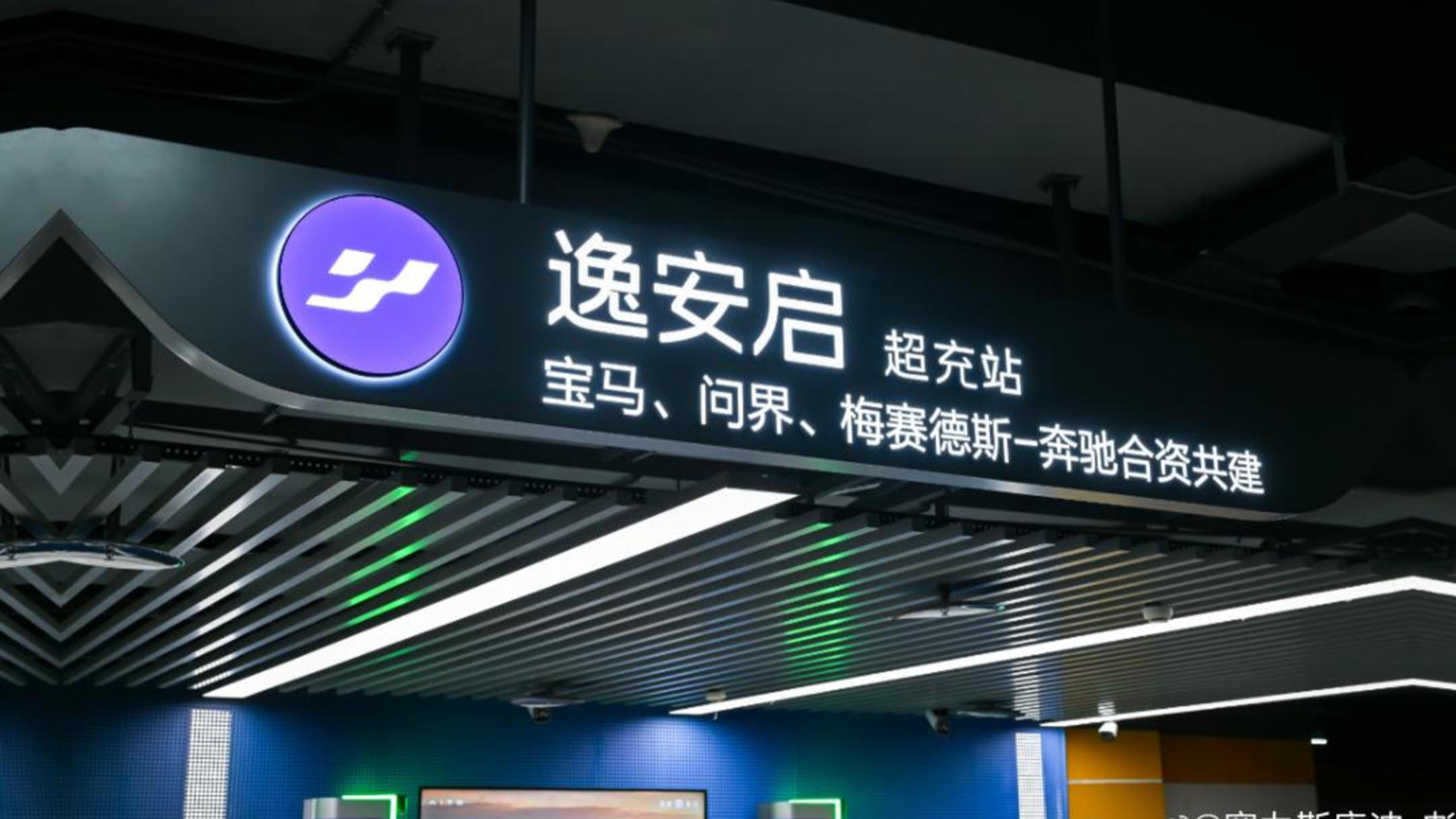
Xilinx officially announced that Wanjie has joined the Mercedes Benz and BMW supercharging camp, with over 600 stations directly connected

OPPO Find X10 tops sales on the standard version track

Technology Show | iQOO16 is now available for sale, under the name of Standard Edition, to meet the requirements of Pro Max product strength


 Subscribe