2026-10-01 00:00

Zhang Lili/Wen
Leading the high-end industry in Shanghai, it is entering a new stage.
In the past, when it came to high-end industries, it was easy to first look at a few indicators: whether there were major projects, leading enterprises, strategic tracks, and output scale. These are certainly important. Without projects, industries cannot land; Without enterprises, the track cannot grow; Without scale, it cannot be called a cluster. But if Shanghai only continues to answer questions such as "what high-end industries do we have", "how many projects have we introduced", and "how much output value have we formed", it is not enough to reflect the true function of Shanghai as an international metropolis.
The leading high-end industries in Shanghai's next journey cannot only stay at the "industrial highland", but also further move towards the "manufacturing paradigm". The so-called manufacturing paradigm, to put it bluntly, refers to how a city organizes technology, industry, capital, scenarios, standards, services, and global resources. In the past, competition in the manufacturing industry was more about comparing companies to each other, products to products, and production capacity to production capacity; The competition in the next generation of manufacturing will become more of a system to system ratio, ecology to ecology ratio, and rules to rules ratio. Whoever can bring technology into the industry faster, turn real-world scenarios into market entry points, turn standards into industry discourse power, and turn financial capital into patient industrial capital, is more likely to take the initiative in high-end industries.
In this sense, Shanghai's high-end industry leading the next step requires a re understanding of the "four major functions". Global resource allocation, technological innovation sources, high-end industry leadership, and open hub portals should not be seen as four parallel brands, but as a complete urban functional system. Global resource allocation solves where resources come from, technological innovation sources solve where new technologies come from, high-end industries lead and solve how technology becomes industrial capabilities, and open hub portals solve how industries connect global markets and international rules. If the four are separated from each other, it is only urban positioning; If it can be connected, it will become the core mechanism for Shanghai to participate in global industrial competition. Here, leading the high-end industry is the key transformation link. If technological innovation cannot enter the industry, it is easy to stay in papers, laboratories, and prototypes; If global resources cannot be organized into an industrial chain, they will only be a simple aggregation of funds, talents, and institutions; If an open portal cannot be transformed into rules, standards, and market connectivity capabilities, it is only a channel. What Shanghai really needs to do is to transform technology sourcing, resource allocation, and open up hubs into industrial organizational capabilities.
Shanghai has this foundation. In 2025, the added value of Shanghai's industry will increase by 5.0% year-on-year, and the output value of the three leading industries in manufacturing will increase by 9.6% year-on-year. Among them, the output value of integrated circuit manufacturing will increase by 15.1%, and the output value of artificial intelligence manufacturing will increase by 13.6%. In the same year, the total output value of Shanghai's strategic emerging industries reached 1829.731 billion yuan, accounting for 45.0% of the city's total industrial output value above designated size. These numbers indicate that high-end manufacturing in Shanghai is not a concept or slogan, but an important force supporting the upgrading of the city's economic structure. The "15th Five Year Plan" for new industrialization in Shanghai further proposes that by 2030, the proportion of industrial added value to GDP should strive to remain above 20%, the output value of strategic emerging industries in industry should account for more than 50% of the city's industrial output value, and the density of industrial robots in key manufacturing industries should reach 600 units per 10000 people. The meaning behind these goals is clear: Shanghai is not aiming to maintain a general proportion of manufacturing, but rather to strengthen the high-end, intelligent, green, and service sectors of the manufacturing industry. The direction of advanced manufacturing has also been clarified: intelligence, greenness, and integration. How intelligent manufacturing systems evolve, how green industries can overcome future barriers, and how integrated manufacturing can move from product competition to value chain competition. These three directions combined do not point to individual technological transformations, but to changes in the overall organizational structure of the manufacturing industry.
I believe that Shanghai's high-end industry will lead the next step by focusing on six things.
1、 Intelligent reconstruction of manufacturing systems
Artificial intelligence is changing the manufacturing industry, but it's not just about putting AI into the workshop or installing a few more robots. True intelligent manufacturing involves integrating design, research and development, simulation, production, testing, operation and maintenance, supply chain, and customer service into a perceptible, learnable, and optimizable system. In the past, manufacturing was strong in equipment, processes, and experience. In the future, manufacturing will also be strong in industrial data, industrial software, algorithm models, digital twins, intelligent agents, and system integration.
The development of intelligent manufacturing in Shanghai cannot only rely on the number of "smart factories", but also on whether it can form replicable, promotable, and service-oriented intelligent manufacturing solutions for small and medium-sized enterprises. A smart factory is a model, and a set of intelligent manufacturing solutions that can serve an industry is the industrial capability. The three-year action plan for supporting the transformation and upgrading of advanced manufacturing industry in Shanghai proposes to promote the full coverage of intelligent factories in large enterprises by 2028, increase the robot density to 600 units/10000 people, achieve a digitalization level of over 70% for intelligent manufacturing equipment, and support enterprises to apply cutting-edge technologies such as artificial intelligence big models to create industry models and industrial intelligent agents. This indicates that Shanghai's intelligent manufacturing is no longer just about equipment updates, but is entering the stage of "AI+manufacturing" system transformation.
Shanghai's advantages lie not in low-cost manufacturing, but in its scientific research capabilities, software capabilities, professional service capabilities, openness, and industrial organization capabilities. In the next stage of intelligent manufacturing, Shanghai's goal is not just to manufacture products, but to form an intelligent manufacturing ecosystem supported by industrial software, industry models, industrial intelligent agents, system integration, and productive services.
2、 Connecting technology transformation through real-life scenarios
Many cities talk about technological innovation, but end up stuck in conversion. Many companies talk about intelligent manufacturing, but end up stuck in the scene. The most difficult part of transitioning technology from the laboratory to the market is not to release concepts, but to validate them in real-world scenarios. The complex working conditions of real factories, energy management of real parks, collaborative pressure of real supply chains, and feedback from real customers will force the production of truly useful products, but also eliminate immature solutions.
To strengthen the leadership of high-end industries in Shanghai, scenes must be regarded as a key infrastructure for the transformation of scientific and technological achievements. The scenario is not simply opening up a few demonstration points, but organizing technical validation, product iteration, standard formation, and market orders with real needs. Baoshan's construction of a city wide intelligent manufacturing leading zone precisely meets such conditions. The plenary session of the Baoshan District Committee has approved the "Action Plan for Building Baoshan District into a Leading Zone for Intelligent Manufacturing in Shanghai (2026-2028)", which clearly states that the construction of an intelligent manufacturing leading zone should comprehensively compete in terms of scientific and technological innovation vitality, standard rules, industrial scale, spatial layout, etc; The focus is on the sub sectors of leading industries such as robotics and high-end equipment, high-end new materials, and productive services, and proposes to solidify the foundation with intelligent factories, empower transformation with application scenarios, and solve bottlenecks and difficulties through supply and demand docking. This indicates that Baoshan should not only be a project carrying area, but can also become a scene testing ground for Shanghai's intelligent manufacturing. Whether intelligent equipment can reduce energy consumption, whether industrial software can improve efficiency, whether robots can adapt to complex tasks, whether green materials can enter urban renewal, and whether digital operations can reduce long-term costs all need to be answered in real scenarios. If a region can continuously provide high-quality application scenarios, it is not just an industrial space, but an amplifier of industrial innovation.
3、 Forming industrial discourse power through standard rules
The deeper intelligent manufacturing goes, the more it cannot do without standards. Because intelligent manufacturing is not an internal upgrade of a single enterprise, but a collaboration between multiple entities such as research and development, design, manufacturing, testing, supply chain, data interface, green evaluation, operation and maintenance. Without standards, technology is difficult to replicate; Without standards, it is difficult to promote the scene; Without standards, the market is difficult to trust; Without standards, the industrial ecosystem is easily stuck in scattered projects and individual models.
Standards are not paper documents, but a common language for industrial collaboration. Whoever can organize the technical path, data caliber, application verification, quality evaluation, green requirements, and service processes into standards is more likely to hold the industry discourse power. Baoshan's proposal to comprehensively compete in "standard rules" is crucial. Because if the leading area of intelligent manufacturing only focuses on project scale, it is easy to fall into homogeneous competition; If the ability can be formed on standard rules, it may turn local practices into replicable, promotable, and exportable industrial methods. This is also why I particularly value 'scene standardization'. A technology only knows its value through scenario validation; A scene can only be replicated if it forms a standard; Only by embedding services can a standard become an industrial capability. To lead high-end industries, Shanghai should not only allow enterprises to explore independently, but also form a public capability that connects standard research and development, application verification, testing and evaluation, data services, and talent training.
The next journey in Shanghai requires not only good products, but also good rules; Not only do we need sample factories, but we also need replicable methods; It's not just about bringing in enterprises, but also about enabling them to grow within standards, scenarios, and service systems.
4、 Amplify manufacturing value through productive service industry
The "high-end" of high-end manufacturing is increasingly not only in the manufacturing process, but also in the full chain service capabilities formed around manufacturing. Modern manufacturing is no longer as simple as "making and selling". Research and development design, industrial software, testing and certification, supply chain management, financial services, data services, operation and maintenance services, and customer solutions are becoming important sources of added value for high-end manufacturing. Why is it difficult for small and medium-sized enterprises to undergo intelligent transformation? The difficulty lies in not knowing how to choose technology, develop solutions, find funding, evaluate effectiveness, and lacking service providers who understand the industry, software, technology, standards, and scenarios. A truly good intelligent manufacturing ecosystem is not just about providing enterprises with a device, but also a set of composable, affordable, verifiable, and iterative solutions.
This is exactly what sets Shanghai apart from typical manufacturing cities. Shanghai not only has a manufacturing foundation, but also has capabilities in finance, trade, research and development, design, testing, law, consulting, data, software, and international services. The next high-end industry leadership should shift from "manufacturing products" to "manufacturing service capability output". When Shanghai can output smart factory solutions, industrial software platforms, green evaluation systems, supply chain collaboration capabilities, standardized services, and scenario verification services, it will not only be a manufacturing highland, but also form an industrial operating system for future manufacturing.
If the productive service industry becomes stronger, the manufacturing industry will not only compete for equipment, production capacity, and prices. The most feared thing for the manufacturing industry is that only processing profits remain, and the highest level of manufacturing must be a comprehensive combination of "manufacturing+services+data+finance+standards". What Shanghai needs to do is to enable the manufacturing industry to generate value not only in the workshop, but also in research and development, testing, operation and maintenance, supply chain, financial services, and global market connectivity.
5、 Supporting Long Term Policy with Industrial Finance
Advanced manufacturing is not a short-term business. Industrial software, core components, intelligent equipment, green materials, industrial large-scale models, and future factory solutions all require long-term research and development, repeated verification, scenario iteration, and customer trust. If a city only has investment funds and no industrial finance; Only short-term subsidies, no risk sharing; It is difficult to cultivate a truly rooted high-end industry without long-term support until the project is implemented.
The unique advantage of Shanghai lies in its abundant financial resources, and more importantly, its ability to transform financial resources into industrial finance capabilities. The so-called industrial finance is not simply about providing loans to enterprises, nor is it just about fund investment. It is about designing capital tools at different stages around the industrial chain, innovation chain, supply chain, and scenario chain. Early technology requires patient capital, pilot testing requires venture capital, equipment updates require financial leasing, order expansion requires supply chain finance, green transformation requires green finance, and enterprises going global require cross-border finance and risk management. If the intelligent manufacturing leading zone is only an investment platform, finance can only provide supporting services; If the intelligent manufacturing leading area becomes a scene verification platform, standard service platform, and industry collaboration platform, finance can more accurately identify project value, technological maturity, and market conversion potential. The more realistic the scene, the clearer the standards, the more reliable the data, and the more willing finance is to invest, lend, and accompany in the long term.
This is also a key link that Shanghai must fill in to lead the high-end industry. The transformation of technological achievements cannot rely solely on enthusiasm, and the upgrading of the manufacturing industry cannot rely solely on enterprises themselves. A truly mature industrial ecosystem requires the division of labor and coordination among fiscal funds, industrial funds, bank credit, insurance tools, financial leasing, and capital markets, allowing capital to move from "looking at reports" to "looking at scenarios", from "looking at mortgages" to "looking at capabilities", and from "short-term profits" to "long-term industrial value".
6、 Open up future space with green and low-carbon initiatives
Greening is not an additional issue for advanced manufacturing, but a ticket to future industrial competition. The international market is increasingly emphasizing product carbon footprint, low-carbon supply chain, resource recycling, ESG governance, and full lifecycle assessment. For manufacturing enterprises, green capabilities are shifting from moral responsibility to market capability, and from cost constraints to competitive barriers.
Shanghai is a mega city with strong resource and energy constraints. Therefore, Shanghai should explore a green manufacturing path that is different from resource-based regions. Not relying on resource endowment, but on technological breakthroughs, digital management, standard supply, scenario integration, and service innovation. Green and low-carbon should not only focus on energy-saving transformation and emission management, but also become the application scenarios, order sources, and regulatory capabilities of advanced manufacturing. Baoshan has a good incision on this issue. Green factory management, park energy efficiency management, intelligent operation and maintenance, low-carbon supply chain, collaboration between green buildings and smart homes, and sustainable consumption scenarios can all become real application scenarios for advanced manufacturing. If urban demand can be transformed into manufacturing application scenarios, the city itself will become a market for industrial upgrading.
Greening is not about adding constraints to the manufacturing industry, but about opening up future orders for it. Whoever can translate green requirements into product capability, standard capability, and service capability may be the first to enter the market in the next round of industrial competition.
Conclusion: From Industrial Heights to Manufacturing Paradigms
Putting these together, the next phase of Shanghai's high-end industry leadership is essentially moving from "industrial capability" to "paradigm capability".
In the past, the development of industries in a place often relied on land, policies, investment attraction, projects, and cost advantages. The true industry leadership in the future depends on whether technological resources can enter the industry, whether global resources can be effectively organized, whether open portals can connect rules and markets, whether urban applications can form high-quality scenarios, whether standard systems can hold the discourse power, whether productive services can elevate the position of the value chain, whether industrial finance can support long termism, and whether green capabilities can open up future space.
This is the opportunity in Shanghai, and it is also the mission of Baoshan.
The construction of Baoshan as a leading area for intelligent manufacturing in the city should not be understood as a district level industrial project, nor should it only be understood as a phased task for the transformation and upgrading of old industrial bases. It should be understood in the overall pattern of strengthening the "four major functions" in Shanghai: whether Baoshan can make intelligent manufacturing a new industrial system supported by technology, scenarios, standards, services, finance, and green is related to whether Shanghai's high-end industry leading functions can form visible, perceptible, and replicable practical models at the urban level. True leadership is not about making the industry bigger, but about advancing the way the industry is organized; Not just a few more projects, but the formation of a new mechanism; Not copying someone else's path, but defining new rules for the future manufacturing industry.
Shanghai's high-end industries are leading the next stage, not just a single industry directory, but the next generation of organizational methods for manufacturing. It should open up new manufacturing spaces with intelligence, shape new thresholds for the future with greenness, enhance the position of the value chain with integration, drive technological transformation with scenarios, form industrial order with standards, amplify manufacturing value with services, accompany long-term growth with finance, and avoid low-level internal competition with ecological governance.
From the industrial highland to the manufacturing paradigm, this is the real proposition for Shanghai's next journey.
Baoshan Intelligent Manufacturing Leading Zone is a key touchstone for this proposition.
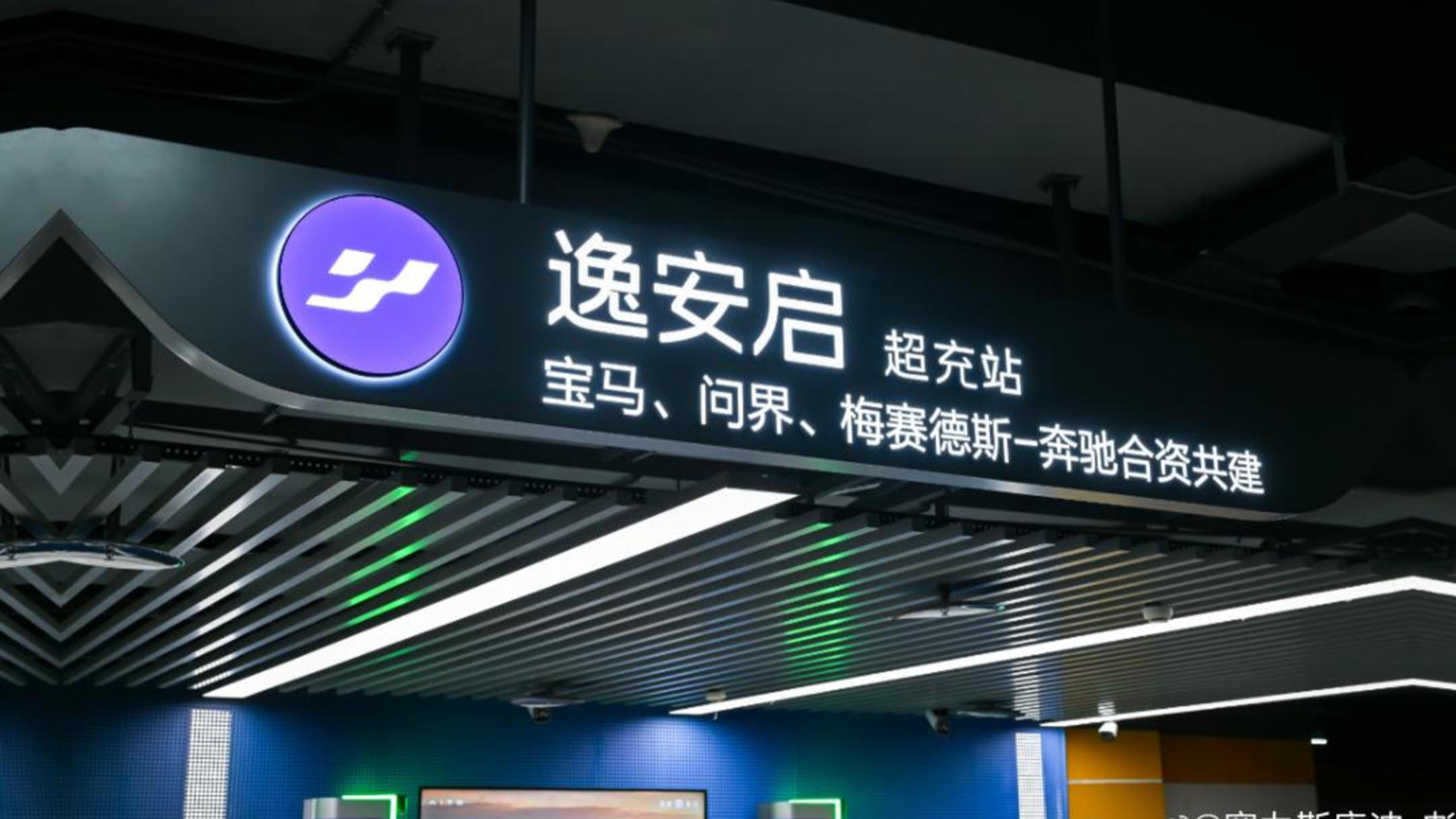
Xilinx officially announced that Wanjie has joined the Mercedes Benz and BMW supercharging camp, with over 600 stations directly connected
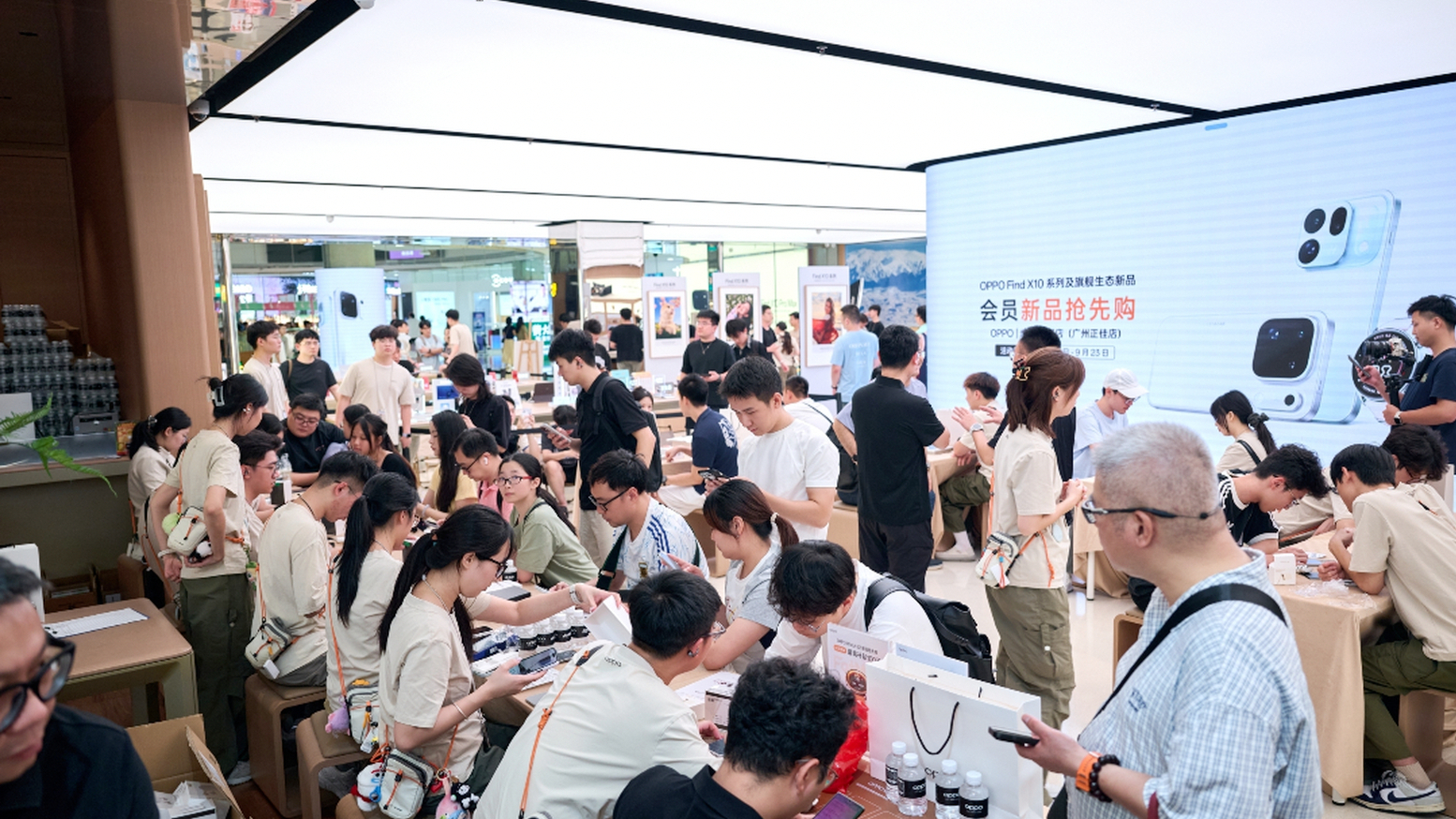
OPPO Find X10 tops sales on the standard version track

Technology Show | iQOO16 is now available for sale, under the name of Standard Edition, to meet the requirements of Pro Max product strength