Economic Observer Follow
2026-09-29 14:40

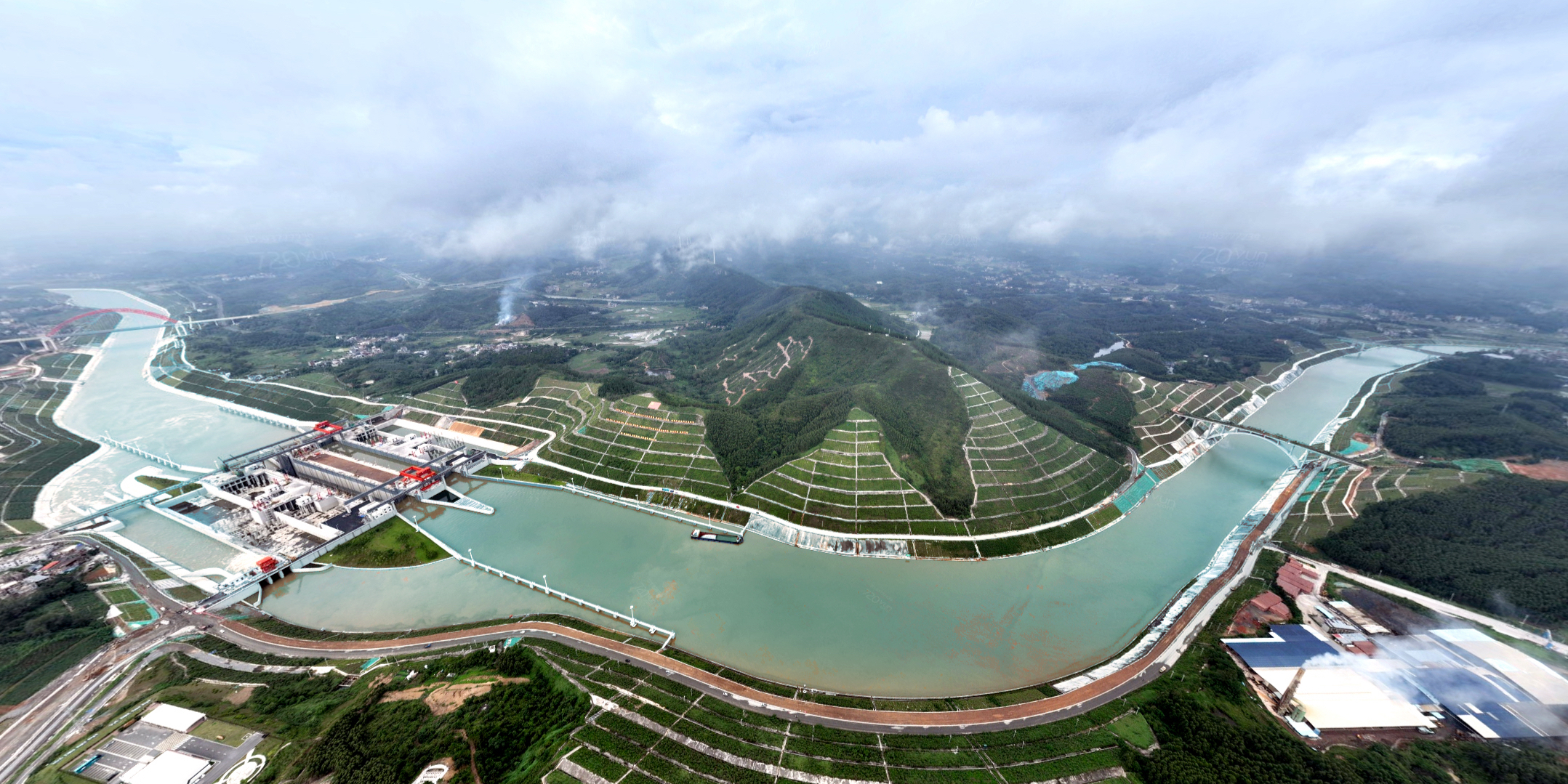
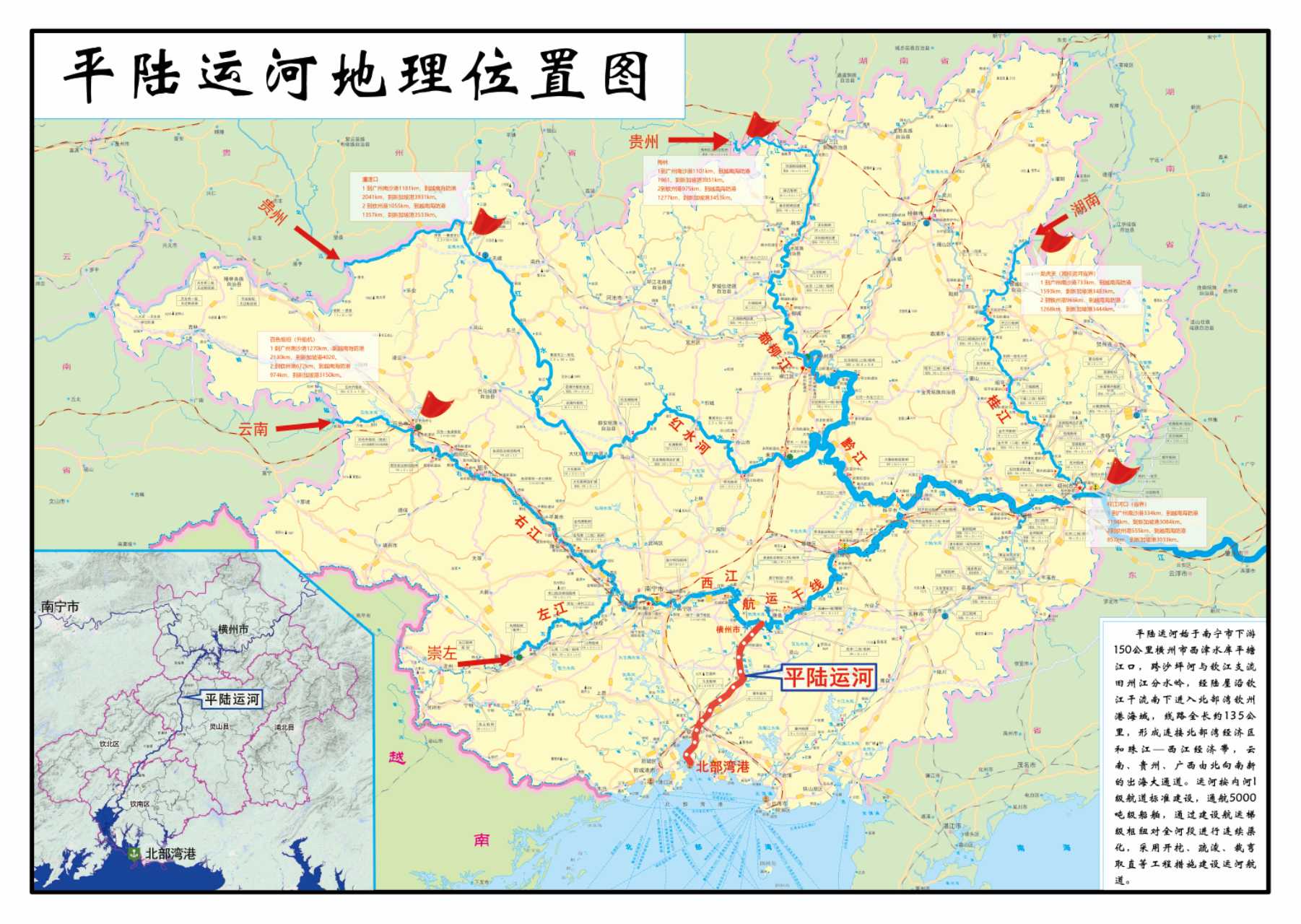
On September 16, 2026, the Pinglu Canal was completed and opened for navigation. This canal, with a total length of 134 kilometers and a total investment of 72.7 billion yuan, can accommodate 5000 ton ships and is currently the highest level of river sea connectivity canal in China.
Wu Peng is the overall design and technical leader of the Pinglu Canal, and has previously worked at China Communications Construction Corporation's subsidiary, China Communications Water Transport Planning and Design Institute Co., Ltd. He has experienced key milestones in China's canal construction multiple times, participated in the continuation and resumption of the Beijing Hangzhou Grand Canal, third-party evaluations of the Three Gorges Project's shipping, and provided technical guidance for major cross water canals such as the Zhejiang Jiangxi Canal, Gan Guangdong Canal, and Xiang Gui Canal.
These experiences have made Wu Peng more aware that whether a canal can be built and according to what standards, it ultimately has to return to the economic account.
Wu Peng told an Economic Observer reporter, "In 2019, I took over the planning and research task of the Pinglu Canal. I was excited to participate in this project, but I never expected that the subsequent plan demonstration would be so complicated. For example, whether to choose a 3000 ton or 5000 ton waterway level, how to solve the water supply problem for Fenshuiling navigation, how to relocate the hub lock due to geological constraints, and how to balance the relationship between initial investment and long-term comprehensive benefits, each of which needs to be repeatedly discussed
In August 2022, the Pinglu Canal officially started construction, with a construction period of about 4 years. This project requires crossing the watershed and chiseling through 22 mountains, with an excavation volume equivalent to three Three Gorges hubs. Its construction standards, project scale, construction speed, and intensity are unprecedented in China.
After the opening of the Pinglu Canal, the related driving effects gradually emerged. According to data from Beibu Gulf Port Group, from September 16 to 24, 2026, Nanning Port completed integrated operation of river sea intermodal transportation with a business volume of over 100000 tons, and the weekly throughput of the Six Scenic Area increased by about 2.7 times.
The value of the Pinglu Canal goes beyond the construction itself, with a designed service life of no less than 130 years. In the long run, the canal is expected to solve the historical problem of Guangxi's "coastal but not connected to the sea", open up a channel for western China to go abroad, and help build a cross-border industrial and supply chain facing ASEAN, with enormous development potential.

|Dialogue|
How to determine the level of waterway
Economic Observer: The size of ships that can pass through the waterway is calculated by tonnage. Why was the Pinglu Canal originally planned as a 3000 ton waterway, but ultimately adjusted to a 5000 ton waterway?
Wu Peng:According to the current national standard "Inland Navigation Standards" in China, Class I is the highest level of inland waterway in China, and its benchmark representative ship type is 3000 tons or above. In the early stage of the Pinglu Canal project, a reference plan of the same level was proposed based on the planned 3000 ton level of the Xijiang shipping mainline connected to it. However, the hydrological conditions of the Pinglu Canal are different from those of natural waterways, and this standard cannot be directly applied.
This can be confirmed from the operational experience of the Xijiang shipping mainline, where the level of the waterway does not necessarily equate to the actual maximum navigation capacity. In the early stage, the Xijiang shipping mainline was planned as a Class III waterway with a 1000 ton standard, and the downstream Guangdong section is planned to be upgraded to Class II with a 2000 ton standard. The early planning standards were not high. But after the channel is built, there are actually 2000 ton ships passing through, and a small number of 3000 ton ships can also navigate. That is to say, the waterway level of the Xijiang Shipping Main Line is the basic standard, and the actual navigation capacity can be higher than this standard.
The Pinglu Canal is different. The watershed section is manually controlled for water level, and the water depth is maintained by the dam system. The water level is relatively fixed, and there is no water depth gain caused by the flood season. This means that the waterway level of the Pinglu Canal is the rigid upper limit of the actual navigation capacity, with no room for breakthrough.
It is precisely based on this difference that I have re examined the waterway classification standards. The report of the WG41 Working Group of the International Chamber of Shipping, entitled "Guidelines for the Design of Inland Waterway Scales," gave me important inspiration: the navigational value of a waterway cannot be solely based on the minimum water depth during the dry season, and the average water depth also needs to be included in the evaluation.
From the perspective of the development trend of domestic ship types, in the 2021 scheme demonstration, the proportion of 5000 ton ships on the Xijiang shipping mainline was still low, but has since grown rapidly. If the Pinglu Canal is constructed according to the 3000 ton waterway standard, due to the fixed water level and no depth gain, the 3000 ton level is the upper limit of navigation capacity and there is no room for breakthrough. Large ships on the Xijiang shipping mainline can only reduce their load or transfer at this location, and the navigation capacity of existing large ships cannot be fully released.
Based on hydrological conditions and the development trend of ship types, after rigorous demonstration, the Pinglu Canal has finally been determined to be constructed as a 5000 ton waterway.
Economic Observer: What is the economic difference between the 3000 ton and 5000 ton plans?
Wu Peng:The difference in water depth between the two schemes is about 1.5 meters, and the corresponding investment difference is about 2 billion yuan, accounting for about 3% of the total investment of over 70 billion yuan in the project. The difference is not significant, the key is to see what this incremental investment can bring in return.
From the perspective of transportation efficiency, due to hydrological conditions, 5000 ton ships cannot achieve full load throughout the year. Even in the most conservative scenario, if the ship is fully loaded for half a year and reduced for the other half of the year, it can carry more than 4000 tons of cargo in three months and more than 3000 tons of cargo in three months, which is still better than the operational efficiency of a 3000 ton ship with full load throughout the year.
Based on saving 3 to 4 yuan in logistics costs per ton of goods, with an annual freight scale of 100 million tons, logistics costs can be saved by 300 to 400 million yuan per year. An incremental investment of over 2 billion yuan can be recouped in a few years.
In addition, it is necessary to consider the implicit costs of later renovation and expansion. If it is built at a capacity of 3000 tons in the early stage, subsequent upgrades can only adopt half width construction and half width navigation methods, similar to highway maintenance occupying the road, which will cause significant interference to the normal operation of the canal and result in high overall renovation costs. From the perspective of overall life cycle cost, taking into account direct investment, operating income, and post renovation costs, constructing a 5000 ton waterway is more economical.
Economic Observation Report: The Pinglu Canal waterway is constructed according to the 5000 ton standard, but the ship lock has reserved conditions for the passage of 10000 ton ships. Why is it designed like this?
Wu Peng:From the perspective of industry trends, the iteration speed of domestic inland new energy ships is relatively fast, and the trend towards large-scale ships is clear. In the future, ship types of 6000 ton, 7000 ton, or even larger tonnage will gradually become popular. If the ship lock is only built according to the current 5000 ton standard, future ship upgrades will severely restrict the canal's traffic capacity.
From the perspective of engineering characteristics, the difficulty of upgrading the waterway is low and the plasticity is strong. If the navigation capacity is insufficient, it can be improved by deepening dredging; But the ship lock is a permanent hydraulic structure that is almost impossible to transform after completion. Once the standards are limited, it will become a rigid bottleneck for the entire canal. Therefore, the focus of reserving space should be on the ship lock.
However, reserving passage conditions does not encourage the large-scale use of 10000 ton ships in the Pinglu Canal. The net width of the canal lock chamber is 34 meters, which can accommodate two 8000 ton ships passing through the lock side by side; However, the hull width of a 10000 ton vessel has exceeded half of the net width of the lock chamber, making it impossible for two ships to pass side by side, resulting in low efficiency in the utilization of lock chamber space.
Therefore, in terms of design, it is recommended that 8000 ton ships pass through and guide the selection of length and width for market ships through the scale of the lock chamber.
Where is the difficulty of 'splitting mountains'
Economic Observer: The watershed is a highland between two water systems, and the "mountain splitting" project that crosses here is the most core and difficult control project of the Pinglu Canal. The total excavation volume of earthwork and rock in the watershed section reached 315 million cubic meters, setting a record for the largest single earthwork volume in domestic transportation engineering. What challenges did geological exploration encounter during this process?
Wu Peng:The core challenge of the Bishan Project lies in the geological conditions. The underground strata cannot be visually displayed like CT scans, and can only be gradually restored through drilling sampling. Among them, the Ma Dao Hub is the core control project of the Pinglu Canal crossing the watershed, and it is also the most difficult section for geological exploration.
The core structure of the Ma Dao Hub is the ship lock, which has strict requirements for the bearing capacity of the foundation. If there is a thick layer of weak rock mass or fractured zone below the foundation, the treatment cost is relatively high. Therefore, the design team must find a site with reliable geological conditions.
During the planning phase, the design team was constrained by funding and only set up three exploration holes, resulting in a very rough judgment of the geological formation. The team initially selected a site based on this, but after additional drilling, it was found that the site was distributed with thick and poor rock mass, and had to relocate upwards.
After entering the design phase, the team conducted encrypted surveys on the adjusted site. Within a range of nearly 1 kilometer upstream and downstream of the ship lock, hundreds of exploration holes have been set up, greatly improving accuracy. During the survey, it was found that although the lithology of the rock mass near the lower gate area has not changed, the degree of fragmentation has significantly increased.
The lower gate head is the highest and most critical structure in the entire section, and it is difficult to determine whether the bearing capacity of the rock mass has decreased after fragmentation solely by drilling. For safety reasons, the site has been adjusted up another 50 meters and a location with better geological conditions has been selected.
Economic Observer: The canal will excavate mountains, forming high slopes on both sides, that is, slopes with high height and steep slope。Once this kind of high slope landslides, it will bring higher risks. The Panama Canal was opened for navigation in 1914, but frequent slope collapses occurred after its completion. What are the preventive measures for the Pinglu Canal?
Wu Peng:Cutting mountains and ridges is equivalent to removing the original support of the mountain, and there may be weak structural planes formed in ancient times inside the mountain. This type of hidden geological structure is easily overlooked in the early survey and can only be discovered during the construction drawing stage. This situation exists on the second slope of the Ma Dao Hub.
The slope has a height of 188 meters and is currently the highest constructed waterway slope in China. The slope is mainly composed of mudstone and sandstone, which are prone to softening when exposed to water; Even more tricky is that there is a fault fracture zone that runs through the entire slope along the foot of the slope, posing a greater risk to the stability of the slope. After large-scale excavation and disturbance, the mountain will encounter rainstorm to infiltrate and soften the rock mass, and the risk of landslide will rise accordingly.
In response to these risks, the design team has taken engineering measures such as reinforcement and drainage, and established a relatively advanced geotechnical monitoring system to control the risks. Among them, 73 sets of monitoring equipment have been installed on the 2nd slope of the Madao Hub, relying on the coordinated operation of Beidou positioning and AI algorithms to transmit real-time data such as slope displacement, seepage pressure, and rainfall back to the digital twin platform, which can capture millimeter level displacement changes of the mountain.
Where does water come from
Economic Observer: There is no natural runoff in the watershed section of the Pinglu Canal. How can the water supply of the canal be guaranteed? Why is it necessary to use a provincial water lock?
Wu Peng: There is no natural runoff in the watershed section of the Pinglu Canal, and the main water replenishment comes from the Xijiang and Yujiang rivers, but there is a limit to the amount of water that can be called upon. The design team has decided to adopt technologies such as provincial water locks to control navigation water consumption.
The three coastal cities along the Beibu Gulf themselves lack water, and the water network originally had water diversion plans. If the water diversion project is implemented simultaneously with the Pinglu Canal, there is even no need to build a provincial water lock. However, the project was ultimately not implemented, and the water supply for the canal mainly relied on the scheduling of the Baise Reservoir.
We have repeatedly demonstrated with the the Pearl River Water Conservancy Commission that it is determined to rely on the upstream Baise Reservoir to carry out the regulation. After the flood season ends, the reservoir will moderately increase the water storage, and release water to the downstream in the dry season to supply the Pinglu Canal. The approved design flow is 24 m3/s.
It should be noted that the canal channel itself does not consume water, and operational losses mainly come from surface evaporation and a small amount of leakage. However, the ship lock needs to release water downstream during operation.
The total drop of the Pinglu Canal is nearly 65 meters, and the greater the drop, the more water the ship lock consumes during each operation. If the ordinary ship lock's direct discharge and discharge mode is used, the limited replenishment flow cannot cover the navigation water consumption at all, which is also the core reason why the design team adopts the three-level stacked water-saving ship lock.
Specifically, the Pinglu Canal has three major cascade provincial ship locks, namely the Madao Hub Ship Lock, the Qishi Hub Ship Lock, and the Youth Hub Ship Lock. Among them, both Madao and Qishi hubs adopt a three-level provincial water tank stacking layout, with a water saving rate of over 60%. The three major hubs save over 1 billion cubic meters of water annually, equivalent to the storage capacity of about 70 West Lakes.
Taking a three-level provincial water lock in Germany as a reference, its water level difference is about 23 meters, and it takes about 12 minutes to pass the lock; The water level difference of Pinglu Canal is nearly 30 meters, and the time for passing through the gate is 15 minutes.
Economic Observation Report: The larger the water level difference between the upstream and downstream of the ship lock, the stronger the water flow impact generated when the valve is opened and closed. The single valve of Pinglu Canal weighs 70 tons and needs to be opened in 1 minute and closed in 30 seconds, with a opening and closing speed 2 to 4 times that of conventional ship locks. How to achieve this opening and closing speed?
Wu Peng:The core technological breakthroughs include the addition of hydraulic buffer structures, matching gallery dimensions, and optimizing the water delivery system inside the gate chamber, relying on structural innovation to resolve the impact risks caused by high-speed opening and closing.
A 70 ton valve body needs to be quickly closed within 30 seconds. Without a buffering device, the valve body will generate a huge impact force, directly threatening structural safety. For this purpose, the design and research team has added a specialized buffer device to the hydraulic system, with the core component being a labyrinth structure buffer sleeve. This component adopts a special molding process and is made by 3D printing. It relies on hydraulic fuel consumption to dissipate energy and quickly reduce the falling speed when the valve approaches the bottom, avoiding hard impact on the valve body.
Under high-speed operation, hydraulic oil will generate severe pressure fluctuations. The design and research team combined theoretical calculations and model experiments to repeatedly calibrate the entire hydraulic opening and closing system, controlling the oil pressure impact within the allowable range of the equipment.
At the same time, the scale of the water conveyance corridor and the valve body has also been matched and enlarged. If the cross-section of the corridor is too small, high-speed water transportation will induce strong water flow turbulence, disrupt the water body of the lock chamber, and endanger the safety of docked ships; However, expanding the corridor and valve size will increase the project cost and increase the weight of the valve body. After multiple rounds of weighing, the height of the water conveyance corridor was finally increased to about 5.5 meters, and the valve height was about 6 meters, taking into account the water conveyance efficiency, water flow regime, and engineering investment.
How to Calculate Economic Accounts
Economic Observer: According to the Feasibility Study Report of the Pinglu Canal Project, the Pinglu Canal can save approximately 5.2 billion yuan in transportation costs annually. How was this value calculated?
Wu Peng: The corresponding scenario for this indicator is that by 2050, the Pinglu Canal will have a freight volume of 120 million tons. This part of the transportation volume is partly due to the transfer of goods between highways and railways, and partly due to the change of direction of goods going abroad. The calculation adopts the method of comparing with and without the Pinglu Canal to compare the difference in transportation costs under two scenarios, and classify and summarize the benefits of saving freight.
In my opinion, 120 million tons is a conservative prediction. With the gradual implementation of industrial layout, there is a possibility of breakthrough in the actual freight scale in the future.
It should be noted that even if the future cargo volume exceeds 120 million tons, the 5.2 billion yuan corresponds only to transportation cost savings, not the full value of the canal. The more important value lies in driving industrial restructuring in the areas along the route. The lower logistics costs of water transportation will attract related industries to layout in Baise, Chongzuo, Nanning, Guigang, Qinzhou, and the coastal areas of Beibu Gulf, driving employment growth and local economic development.
However, this driving effect is difficult to quantify accurately, and its long-term value needs to be understood by drawing on the development history of existing canals. The northern section of the Yangtze River along the Beijing Hangzhou Grand Canal is a reference. At the beginning of its construction, the project was also controversial, and some even questioned whether the project had any freight demand. But after several years of operation, the ship locks along the line quickly became saturated, and the annual freight volume near the Yangtze River approached 300 million tons.
Jining's transformation is more representative. This city has transformed from a "coal city" to a "northern inland waterway transportation center" by relying on the Beijing Hangzhou Grand Canal. According to data from the Planning and Research Institute of the Ministry of Transport, the throughput of Jining Port has increased from 41.8 million tons in 2020 to 116 million tons in 2025, becoming the first 100 million ton inland port in northern China. The average annual growth rate of 22.6% is much higher than the average growth rate of domestic port throughput in China.
The comprehensive benefits of large-scale inland river infrastructure will not be fully released at the moment of navigation. The key to opening up logistics channels and creating basic conditions for industrial landing through the canal ultimately depends on whether Guangxi can seize the opportunity to transform transit goods into local processing capacity and transform logistics advantages into industrial chain advantages.
Economic Observer: How to estimate the maintenance cost of the Pinglu Canal in the later stage?
Wu Peng: Large scale hydraulic engineering projects have a mature system for calculating operation and maintenance costs. Based on the experience of navigation hubs that have been in operation for a long time, the annual basic operation and maintenance cost of a single ship lock reaches tens of millions of yuan. If combined with intelligent upgrades and equipment updates, the annual related cost is about 20 million yuan.
The Pinglu Canal is a large artificial canal and cannot be built once and for all. Continuous investment is required for equipment aging, component replacement, and channel dredging in the later stage. Some early locks on the Beijing Hangzhou Grand Canal also provided reference. After decades of operation, the main structure can still be used, but most of the mechanical and electrical equipment needs to be updated. Some old locks have been in operation for about 40 years and need to be completely demolished and rebuilt. This means that operational costs not only persist, but also accumulate over time.
From the perspective of income, it is not realistic to solely rely on gate fees to recover all construction investment. Therefore, I suggest that the state bear the majority of operation and maintenance expenses. If so, the decrease in logistics costs will be transmitted along the industrial chain, lowering the costs of raw materials and intermediate goods, ultimately reducing terminal consumption costs, while enhancing the international competitiveness of domestic products.

Xilinx officially announced that Wanjie has joined the Mercedes Benz and BMW supercharging camp, with over 600 stations directly connected
OPPO Find X10 tops sales on the standard version track

Technology Show | iQOO16 is now available for sale, under the name of Standard Edition, to meet the requirements of Pro Max product strength


 Subscribe