Economic Observer Follow
2026-09-17 09:39

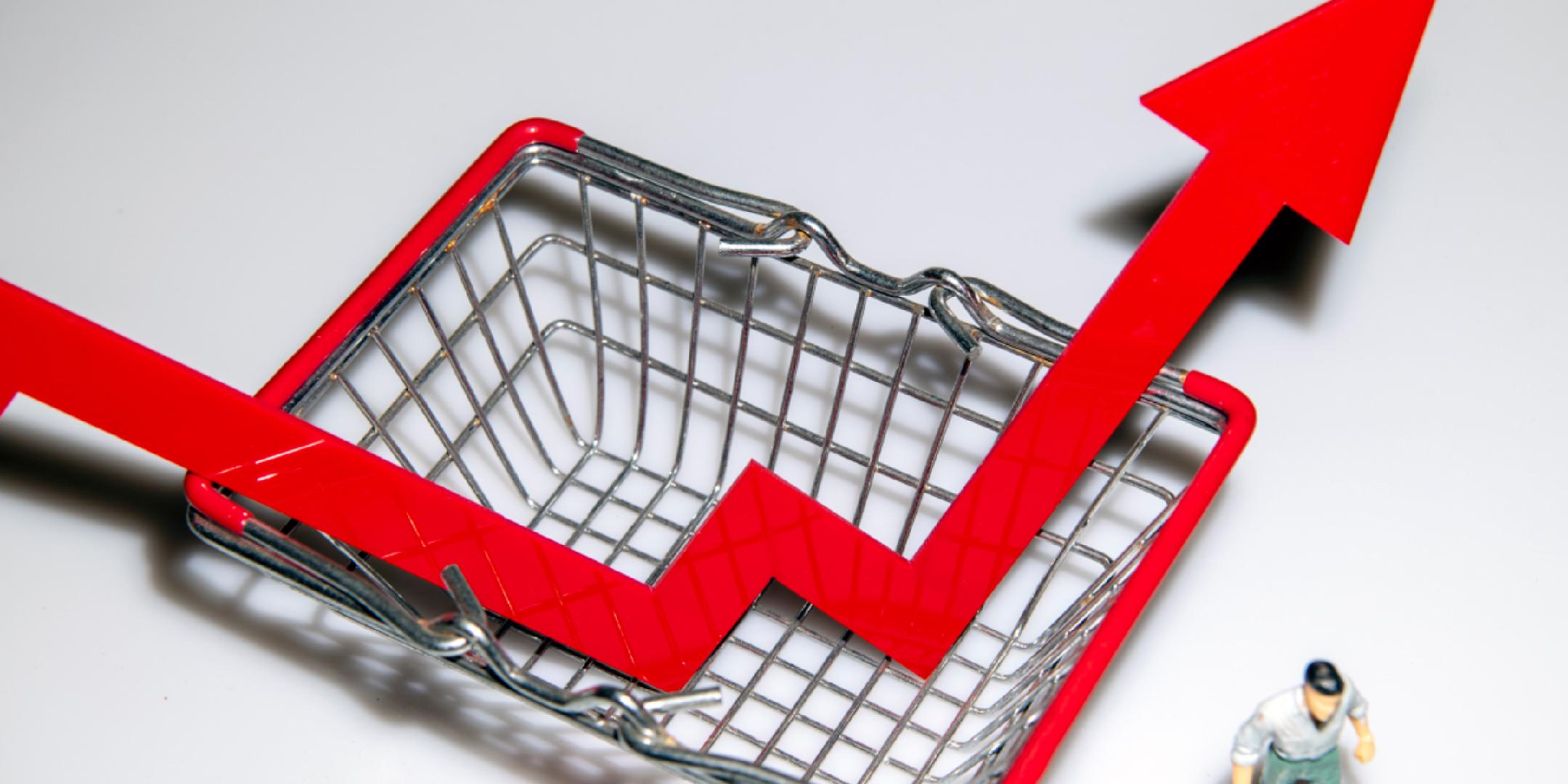
On September 15th, the National Bureau of Statistics released data showing that the total retail sales of consumer goods (referred to as "social retail") from January to August increased by 1.1% year-on-year. Among them, the year-on-year growth rate in August dropped to 0.4%, a decrease of 0.2 percentage points from July, which is lower than the growth rate of the same period in 2020.
While the zero growth rate of the society is declining, the performance of service consumption and quality consumption is impressive. From January to August, the service retail sales increased by 4.9% year-on-year, faster than the overall market sales growth, and the proportion of service consumption in the overall market sales increased. Secondly, the proportion of sales of upgraded products in commodity consumption has increased. From January to August, the proportion of retail sales of upgraded products such as communication equipment, cultural office supplies, cosmetics, etc. to the retail sales of units above the quota has increased by 1.7 percentage points year-on-year.
Against the backdrop of weakened fluctuations in consumption and other data, the market predicts that more growth promoting policies may be introduced in the future.
At the press conference on the day of the data release, Fu Linghui, spokesperson for the National Bureau of Statistics, stated that relevant departments have been conscientiously implementing the decisions and arrangements of the Party Central Committee, actively promoting the effectiveness of macro policies, accelerating the use of fiscal expenditure and bond funds, promoting the construction of the "two heavy" and "two new" work, deepening the construction of a unified national market, comprehensively rectifying "internal competition", and expanding the space for mutually beneficial international economic and trade cooperation. These measures will gradually be implemented, which will help to form a policy synergy and enhance economic action.
Nomura China Chief Economist Lu Ting said that the economic activity data for August was mixed, and the government seems to be increasingly concerned about the macroeconomic growth prospects. Recently, the National Development and Reform Commission held a series of meetings urging the acceleration of investment expenditures, the Ministry of Finance has increased the intensity of interest subsidy programs, some cities have introduced further easing measures for real estate, and housing and financial regulatory agencies have introduced several moderate credit easing measures for homebuyers and developers. It is expected that the government will introduce more supportive measures later this year to achieve the economic growth target.
Zhang Lin, Vice President of Far East Credit Research Institute, said that the current investment and consumption growth rates are weakening, and the market's expectations for policy intensification are indeed increasing. The pressure to maintain stable growth in the third quarter has increased significantly compared to the second quarter. The more prioritized path for subsequent policies may be "stock acceleration and structural reinforcement", with the policy focus shifting from short-term bottom support to increasing residents' income, stabilizing expectations, and optimizing service supply.
Why does the growth rate of consumption fluctuate and decline
On the basis of a year-on-year growth rate of 1.1% in the first 8 months, there have been significant fluctuations in the zero growth rate of society in each month.
In the first five months, the year-on-year growth rate of social zero continued to decline from 2.8% in January and February to -0.6% in May. The last time there was a negative year-on-year growth rate of social zero was in December 2022. In June 2026, the year-on-year growth rate of social zero changed from negative to positive, rising to 1%, but it fell back again in the following two months.
From the specific consumption structure, the significant negative growth of automobile consumption has become the core drag on the consumption growth in August. In August, the retail sales of automobiles decreased by 18.5% year-on-year, and the decline further widened. After excluding car consumption, the company's retail sales in August increased by 2.5% year-on-year, unchanged from July. Secondly, the real estate chain has also dragged down the growth of consumption: the total retail sales of furniture in August decreased by 7.9% year-on-year, and the retail sales of construction and decoration materials decreased by 11.8% year-on-year.
Zhang Lin stated that the overall consumer market is still in a state of "low-level bottoming out and structural differentiation". The fluctuation of consumption data reflects that the weak recovery pattern of domestic demand has not changed, and residents' consumption ability and willingness are still constrained by income expectations, employment pressure, and the contraction of real estate wealth effects. But consumption has not weakened across the board, it is more affected by the drag of commodity categories and real estate chains.
Zhang Liqun, a researcher at the Macroeconomic Research Department of the Development Research Center of the State Council, stated that the further decline in consumption growth rate in August indicates that the employment and household income problems caused by economic growth pressure are still ongoing. The most important thing at present is to ensure full employment and continuously increase the growth rate of residents' income. Only when these two issues are improved can consumption experience a comprehensive recovery.
On the other hand, multiple data indicate that the trend of domestic demand expansion has not changed. In the first half of the year, the contribution rate of domestic demand to economic growth exceeded 80%.
Specifically, in the first 8 months, the total retail sales of consumer goods and services increased by 2.5% year-on-year, with service retail sales growing by 4.9%. The expansion of demand continues to drive production, industrial production continues to maintain rapid growth, and the growth of the service industry remains stable. In the first 8 months, the added value of industrial enterprises above designated size increased by 5.3% year-on-year, and the production index of the service industry increased by 4.7% year-on-year.
Fu Linghui stated at the press conference that despite the impact of the external environment, the overall operation of the Chinese economy remains stable, the scale of the consumer market continues to expand, and the growth of service consumption is good, supporting the expansion of domestic demand.
Looking ahead to the consumption trend, Liao Bo, Chief Economist at Northeast Securities Research Institute, stated that the consumer market showed a recovery growth in August. Consumption is a typical post cyclical and slow variable at the macro level, and it is expected that the overall elasticity of zero growth rate in the fourth quarter of this year will be limited. Taking into account factors such as the leverage ratio of the resident sector, the speed of balance sheet repair, and income and employment expectations, consumer demand has shown a steady recovery since the beginning of 2026, but there is still a gap from the potential growth rate; The policy of exchanging old for new funds provides a bottom line for consumption, and the impact of real estate market adjustments on total demand still needs further observation.
Zhang Lin stated that the short-term pressure in the field of social zero cannot be ignored. If the decline in automobile prices continues to expand and the marginal slowdown in service consumption slows down, the monthly growth rate of social zero may be as low as zero, but the probability of turning negative is not high. As the base decreases month by month, the Mid Autumn Festival and National Day "double festivals" drive travel, culture and tourism, online penetration rate increases, and fiscal tools accelerate investment, some pressure will be offset.
In addition, Zhang Lin stated that September to October is the preferred window period for the intensive implementation of incremental policies. At the data level, three key indicators can be tracked: the turning point of the automotive chain drag, high-frequency data on service consumption, and the conversion rate of fiscal and policy tools. If there is a marginal improvement in employment and income expectations, consumption is expected to gradually move from a low level to a moderate recovery.
More new policies will be introduced
In the first three quarters of 2024, the GDP growth rate showed a quarterly downward trend, but with the introduction of the "924 New Policy" that year, the GDP growth rate in the fourth quarter of 2024 rose to 5.4%, an increase of 0.8 percentage points compared to the GDP growth rate in the third quarter; In 2025, the GDP growth rate will show a quarterly downward trend.
At the beginning of this year, the Government Work Report proposed that the expected target for China's GDP growth rate in 2026 is 4.5% -5%, while emphasizing efforts to achieve better results in actual work. In the first half of this year, the GDP growth rate continued its quarterly downward trend, with year-on-year GDP growth rates of 5.0% and 4.3% in the first and second quarters, respectively, and ultimately a year-on-year GDP growth of 4.7% in the first half of the year.
In this context, the market predicts that more incremental policies may be introduced in the future.
In Zhang Lin's opinion, the current economy is not suitable for simply replicating the 2024 "924 New Deal" style total stimulus. On the one hand, the policy at that time had greater policy space in reducing stock interest rates, easing local debt, and utilizing fiscal and quasi fiscal tools; On the other hand, the current new economic momentum plays a more prominent role in driving industrial production, high-tech exports, and high-end services. Considering that the lower limit of this year's economic growth target is 4.5%, the corresponding economic growth rate in August may be 4.2%, which has not stalled. With the use of fiscal and quasi fiscal tools to stabilize investment in the third quarter, the overall economic performance is expected to remain within the expected range.
From the actual policy signals, Zhang Lin stated that under the balance of new and old driving forces and multiple goals, the current policy signals emphasize more on "fully leveraging the effectiveness of existing policies and timely planning practical and effective incremental policies". The tone of the July Politburo meeting and the central bank's second quarter monetary policy implementation report is moderate easing, structural priority, coordination with finance, and a greater emphasis on balancing the "six networks", service consumption, efficiency improvement, and risk prevention.
In terms of incremental policies, Zhang Lin suggests focusing on "consumption capacity" and "service supply". Experience has shown that the marginal effect of subsidies in promoting transactions decreases, and shifting towards increasing residents' income and stabilizing expectations can better solidify endogenous momentum. The measures of increasing income for urban and rural residents, stabilizing employment, expanding capacity and improving quality, and optimizing social security are more conducive to stabilizing long-term consumption expectations.
Zhang Liqun stated that some companies have already found new growth points driven by innovation. However, overall, a large number of private small and medium-sized enterprises have not yet formed new growth drivers. Therefore, while relying on innovation to drive economic growth, it is necessary to accelerate the expansion of domestic demand, drive a significant increase in enterprise orders through large-scale government investment in public goods, and thereby promote a significant improvement in employment.
Fu Linghui said at the press conference: "China's economy is facing certain aggregate and structural pressures, but these difficulties can be overcome through hard work. Since this year, the international environment has undergone complex changes, the world economy is facing downward pressure, and many countries have made difficult choices in promoting growth, controlling inflation, and stabilizing the market. From the perspective of China's situation, fixed assets investment has declined due to multiple factors, which will increase the pressure on total demand to some extent. Since March, the fluctuations in the international energy market have impacted the production of enterprises in some domestic industries, restricting the stability of the supply chain of the industrial chain. However, it should be noted that most of these problems and difficulties are temporary and phased, and can be overcome through hard work. Faced with challenges, various regions and departments have increased their efforts to expand domestic demand policies, increased assistance to enterprises, and the effects have gradually become apparent. ”

JD.com launches' 100 Cities, 100 Billion Plan ': to help 100 cities establish a sunshine procurement platform within one year

The Federal Reserve has raised interest rates by 25 basis points after a three-year hiatus, and there may be another rate hike within the year

Face to face concert, VR music movie is here


 Subscribe