2026-09-16 18:05


The tasks on the desk are rarely isolated questions. A weekly report needs to first retrieve materials from meeting minutes, chat logs, to-do lists, and several business systems. After a meeting is over, minutes, to-do lists, and follow-up emails are three things. Faced with complex work processes,The expectations of individuals and businesses for the next generation of productivity tools have evolved from 'answering a question' to 'reliably completing a task'.
Regarding this matter, the competition in AI office has clearly become lively in the past year, but most of the excitement is focused on the "entrance". It seems that whoever is closer to the user is more likely to appear in discussions. But the entrance narrative only answers the first question of AI office.
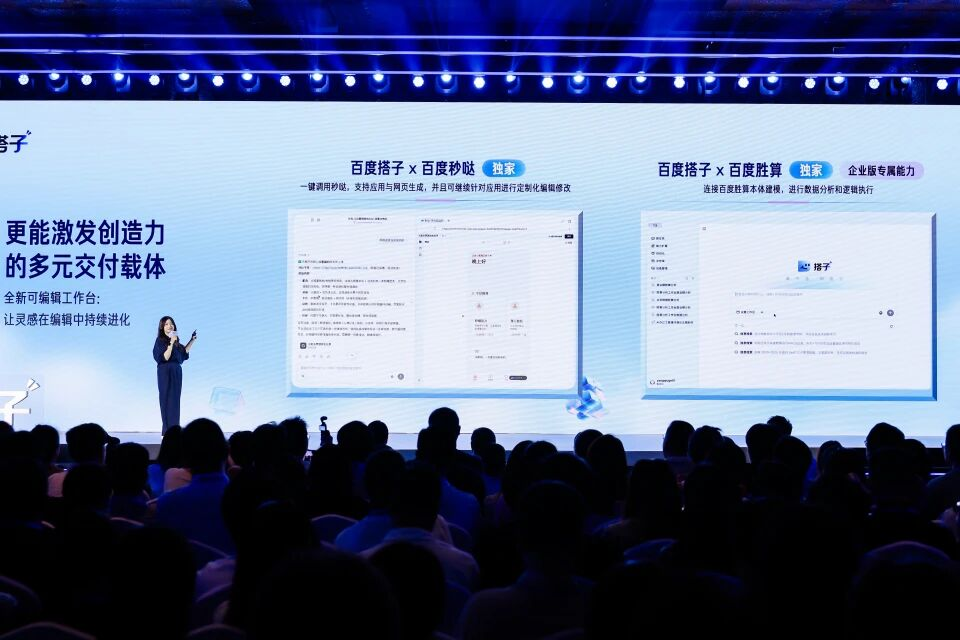
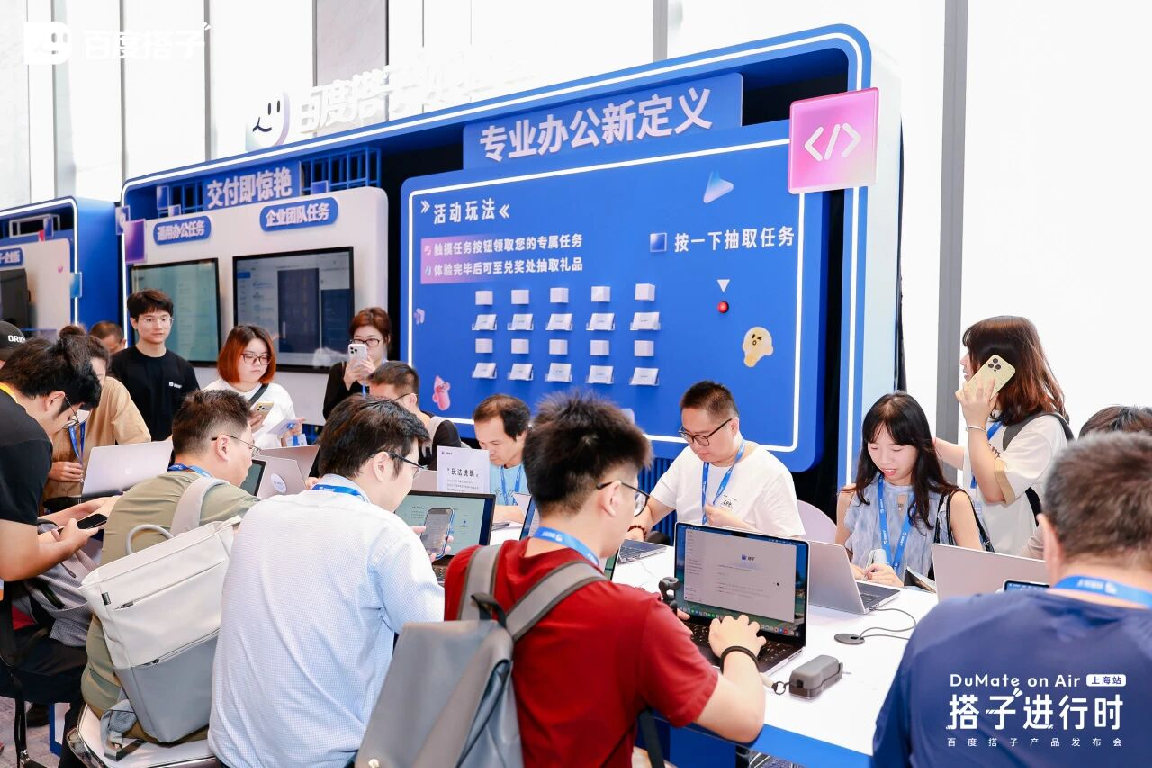
On August 27th, Baidu Taizi held a product launch event called "Taizi Continuous Time" in Shanghai, upgrading its personal version, enterprise version, professional suite, and workbench capabilities around the theme of "stunning delivery".
Outside of the product, the competitive coordinates corresponding to Baidu Tiezi have shifted: when the competition shifts from "who is closer to the user" to "who can stably catch complex work", the ranking is no longer determined by the entrance position, but by whether the task can be continuously completed, whether professional methods can be reused, and whether the enterprise dares to hand over important processes.After Baidu Tuzi entered the core competitive area of AI office, it attempted to find a wider landing space in the industry.
Getting into the top doesn't rely on grabbing the entrance
On August 17th, the AI Product List · Desktop List (PC) released the list for July 2026. According to the ranking, the total monthly active users of AI office desktop in China are about 30 million, with Tencent WorkBuddy and Baidu Tuzi ranking in the top two with 11.1523 million and 6.743 million monthly active users respectively, totaling nearly 18 million, accounting for about 60% of the overall market; Among them, Baidu's monthly live sales increased by 1063.79% compared to the previous month,Ranked first in the growth rate of this list。
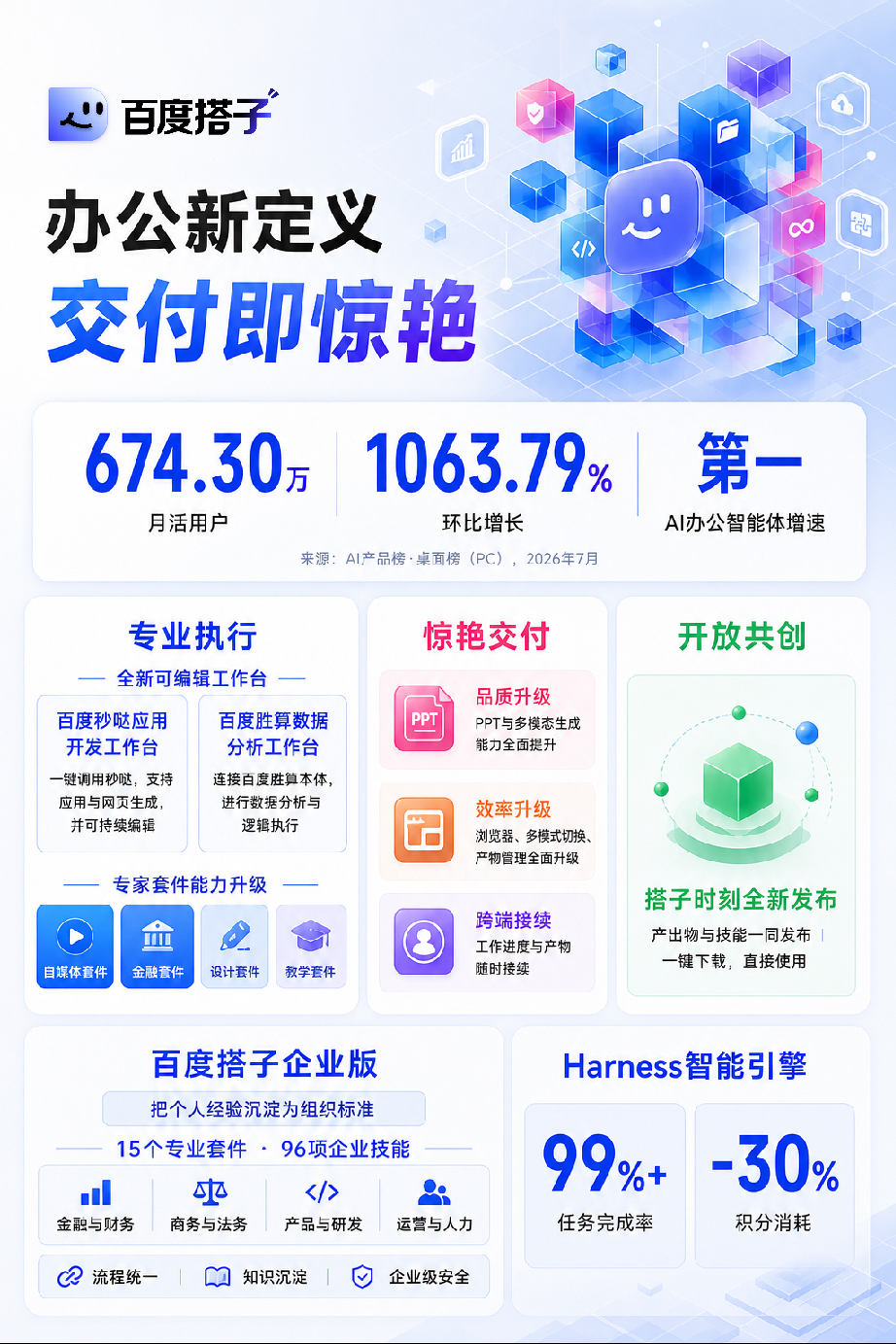
Based on the estimated user base of traditional office software, this market still has about 20 times the growth potential. Putting these numbers back for comparison, the number of appearances of Baidu Tuzi in AI office discussions does not seem to match its actual position.
The reason for the misalignment is hidden in the hottest narrative of the past year. The competition in AI office is almost entirely focused on the entrance: it must first appear at the place where users first come into contact with the intelligent agent, then widen the connection, and finally reduce the single use cost to the point where users are willing to use it every day.
But the entry battle solves the problem of not being seen and not being used to what extent. The work in the hands of users is never a one-time delivery, but a complex and tedious multi link collaboration. If any link in the chain is broken, the previous production will lose its meaning.
The industry's measurement standards have also begun to shift from "whether they will generate" to "whether they can finish the work". After changing tracks, the component of path selection becomes apparent.
Over the past year, different AI office product strategies have formed the narrative thread of the industry. Tencent WorkBuddy is competing for touchpoints, launching an open platform and integrating hardware into the same Agent base; The competition for Doubao work is about connectivity. In addition to the independent desktop client, it has put the entrance into Feishu; Qianwen Office is competing for cost. The standard mode, which will be launched at the end of August, will improve the speed of single task generation and reduce token consumption; And Baidu is competing for delivery, from understanding requirements, breaking down tasks to calling tools, with the ultimate goal of directly producing usable and online results.
Baidu Tuzi does not replicate the existing answers to entrance competition. It bundles professional office, enterprise level capabilities, and complete task delivery together: users provide goals, and the backend search, analysis, generation, file processing, and result return form a closed loop. Finally, the results are handed over, not just a question and answer at the entrance.
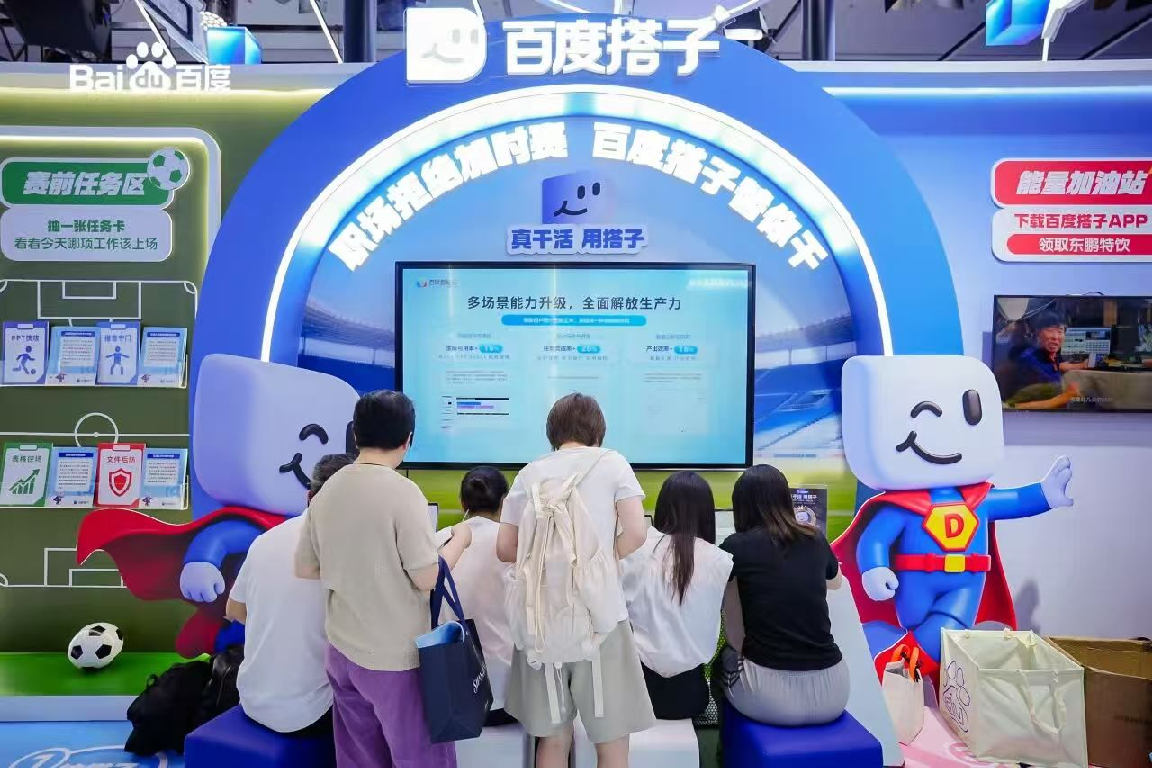
The ability accumulated by Baidu Dianzi on this path has also been repeatedly verified in industry evaluations. On August 6th, the international consulting firm Sullivan and Head Leopard Research Institute released the report "Best Application Practices of AI Agents in China in 2026", and Baidu Tuzi was selected as one of the "Top 10 Most Practical Agents" for its ability to execute tasks and deliver results in office settings. On July 17th, at the 2026 World Artificial Intelligence Conference, it was the only intelligent agent product selected as one of the top ten "treasures of the museum".
The rankings, evaluations, and user growth rates all point to the same conclusion:On a line measured by delivery capability, Baidu Tuzi has become a player that cannot be avoided when discussing AI office.
Real delivery, get the job done
At the press conference on August 27th, Baidu Tuzi placed the upgrade in two areas: one is a package upgrade of personal version, enterprise version, professional suite and workbench capabilities, as well as two workbenches that are connected with Qida and Shengyi; The second is to release DuMateBench, an open co creation ranking defined by Baidu as the industry's first to evaluate the real delivery capabilities of intelligent agents.
A set of user task observations revealed at the press conference explained why "delivery" became the theme of this upgrade. Data shows that 60% of user tasks involve at least three steps: data search, analysis and judgment, content creation, and formatting. 86% of tasks have a clear delivery endpoint, and 95% of users will continue to download, export, share, edit, or publish after obtaining output. Users open office intelligent agents not to get a piece of text, but to push a task to the point where it can be handed over. Only focusing on the generation process cannot meet real needs.
Running a long chain relies on the execution framework, not just the model. The Harness intelligent engine released by Baidu Tuzi connects requirement understanding, task planning, tool calling, runtime environment, memory, and execution feedback into a single link, ensuring that the path and actions of tasks are not deviated or distorted during the execution process that lasts for several hours. According to the on-site data of the press conference, the completion rate of related tasks has reached over 90%, and the point consumption has been reduced by 30%.
This set of changes is intuitively confirmed in the evaluation: the two items with the highest scores on the PinchBench list are the two underlying models under the framework, with scores of 93.3% and 93.2%, respectively; In the original factory scenario, the performance of the same model was 91.6% and 89.0%, respectively. The model itself has not been modified, only the control layer has been changed, which has widened the score. Beyond modeling capabilities, frameworks also determine success or failure.
The standard dispute is also happening simultaneously. The first batch of DuMateBench released at the same time includes more than 200 tasks from real office scenarios, covering six major categories of scenarios, involving multi domain, multi-step, and multi tool collaboration. PinchBench and DeepResearch Bench measure the upper limit of capabilities, while DuMateBench aims to answer another question: the inability of an intelligent body to understand real needs, complete continuous execution, and deliver a usable work result. The fact that this dimension can stand alone on the leaderboard itself indicates the gap between AI agents' ability to only generate and their ability to deliver in reality.
Expanding the boundaries of delivery capabilities from an individual to an organization
Whether AI agent office can move from a personal efficiency tool to a sedimentable organizational ability depends on whether the output can meet the standards of a profession. In order to cross this boundary, Baidu Tuzi played three tricks.
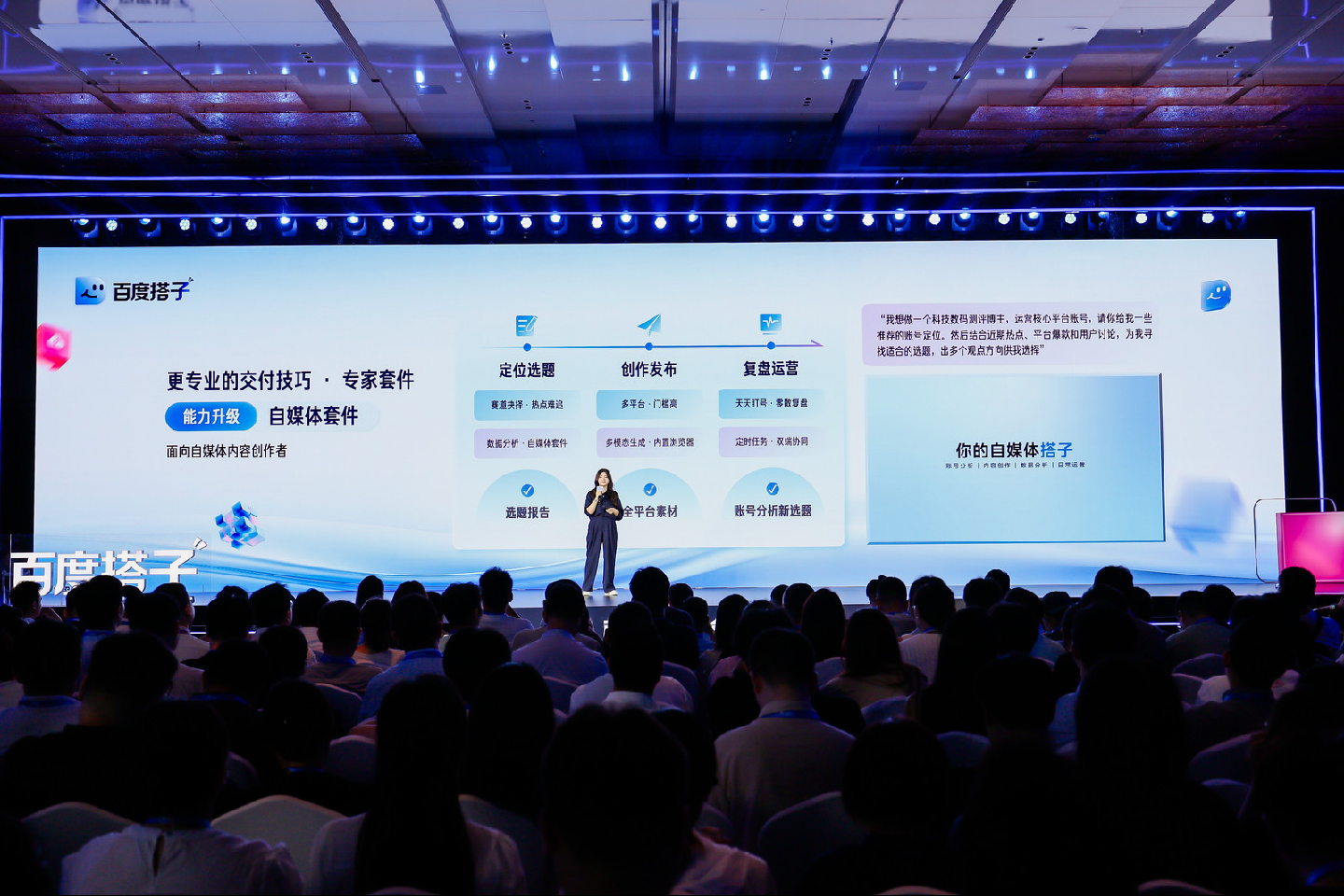
The first trick is to use professional kits to integrate industry methods into intelligent agentsThe professional suite organizes industry knowledge, work steps, tool resources, and delivery requirements into a career process that can be directly implemented. Taking the self media suite as an example, from topic research, hot topic analysis, content creation to multi platform publishing and operation review, a complete set of professional actions are built in, and account data and feedback after publishing will also be returned to the next round of topic selection.
The second trick is the workbench, which allows the output to continue processingThe result generated once often cannot be changed or checked, and users can only rephrase their requirements if they want to make adjustments. After connecting with Miaoda and Shengyi, Miaoda Workbench undertakes application development, and users can continue to modify and generate applications using natural language and visual operations until they are released online; The Winning Platform undertakes data tasks such as business analysis, generating structured analysis reports where each conclusion can be traced back to specific data tables, fields, and calculation processes.
The third trick is the enterprise version, which consolidates personal experience into organizational standardsThe enterprise version has released 15 suites and 96 skills, allowing enterprises to unify and distribute mature processes, templates, and inspection items. In addition to storing materials, the file library also preserves excellent achievements, work methods, and business standards. It can be retrieved and called according to permissions in new tasks, allowing the knowledge base to participate in the next delivery. The enterprise VPC solution ensures its use through data isolation, data encryption, access control, and audit logs, and supports integration into existing systems such as ERP, CRM, and OA.
This set of capabilities is having an impact on a wider range of industry sites. Lv Hang, who runs a sewing classroom in Hangzhou, encountered a different kind of trouble: the vague phrases "I want to look thin" and "I want to commute a bit" used to be used by students. In the past, they had to communicate, draw and revise repeatedly, and sometimes a design rendering would take up a whole day; Nowadays, students express their inspirations, and Baidu Tuzi extracts styles, scenes, patterns, and detail preferences, providing renderings, fabric, craftsmanship, and cost suggestions. This process has already entered daily design communication, lesson preparation, and content operation.
The usage in enterprises is closer to business. Fujian Blue Ocean Blackstone is a new materials company, and Chief Information Officer Zhang Mingjie is not concerned about whether to use AI or not, but how AI can truly enter the business: the company's original business system is responsible for recording business facts, Baidu Taizi is responsible for understanding business problems, combining internal data with external raw material market trends, providing trend judgments and short, medium, and long-term procurement suggestions, and transforming the manual analysis that originally took several days into a verifiable decision report; A meeting recording will also be automatically converted into structured minutes, identifying pending tasks, and then creating projects and writing tasks.
The scenarios where users call Baidu Tiezi are divided into different industries, which jointly verify its ability to land in the industry: it can complete tasks, accumulate experience through self evolution after completion, and can be reused for the next project.
More solid base, larger space
Baidu Tuzi's ability to push its capabilities to its current position within six months is related to the ecosystem behind it.Intelligent agents need to enter business processes, and what they lack is not a single point of capability, but a complete foundation that can stably complete long-range tasksThe delivery of this matter requires collaboration and division of labor at all levels: computing power determines whether long-range tasks can run stably, models determine the starting point of understanding and planning, execution frameworks determine whether paths will deviate, and permission governance and result verification determine whether enterprises dare to hand over processes. Any layer with shortcomings will be discounted by intelligent agents in real business.
Baidu summarizes its AI layout as a "chip cloud model" with four layers of full stack: the chip layer, represented by Kunlun Chip, provides a computing power base; The cloud layer is Baidu AI Cloud, including two sets of infrastructure, AI Infra and Agent Infra; The model layer is supported by the Wenxin Large Model; The intelligent agent layer includes application matrices such as Baidu Tuzi, Miaoda, Fumou, and Yijian.
This full stack layout is not a paper architecture. According to Baidu's Q2 2026 financial report, AI cloud infrastructure revenue reached 7.3 billion yuan, with GPU cloud revenue increasing by 283% year-on-year.
For Baidu Dianzi, office work is the first step, not the end resultThe value of office scenarios lies in their high frequency, complexity, and standardization. Let the intelligent agent run the link first, and the usefulness of this link goes far beyond the office.
When the delivery object changes from a document or a plan to a core process in enterprise production, research and development, and operation, the competition content shifts to another set: whether it can understand the rules in the industry that have not been written into the document, whether it can catch data inconsistencies between multiple systems, and whether it can do actions correctly under compliance constraints. Therefore, this round of competition will not end in the office setting, and the real watershed will move to the industrial setting.
At the starting point of AI office, Baidu Tuzi has already taken the lead; Looking back, relying on the foundation composed of Wenxin, Qianfan, and Harness, its landing space in more core scenarios such as enterprise production, research and development, and operation has just begun to emerge.
JD.com launches' 100 Cities, 100 Billion Plan ': to help 100 cities establish a sunshine procurement platform within one year

The Federal Reserve has raised interest rates by 25 basis points after a three-year hiatus, and there may be another rate hike within the year

Face to face concert, VR music movie is here