Economic Observer Follow
2026-09-14 16:22



Zhang Jiankang | Article
Since around the 1910s, the widespread impoverishment of rural areas, which accommodated over 80% of China's population, has become a concern for academic circles both domestically and internationally. In the mid-1920s to mid-1930s, with the rise of the national survey craze, rural surveys formed a wave of enthusiasm.
The surveys of land use in 22 provinces and 168 regions led by American scholar John Lossing Buck from 1929 to 1933, the surveys of rural economy in Wuxi, Jiangsu and Baoding, Hebei led by Chen Hansheng in 1929 and 1930, the social survey of Ding County, Hebei led by Li Jinghan from 1928 to 1935, and the industrial survey of rural areas in North China led by Fang Xianting from 1930 to 1936, have further convinced some intellectuals that the fundamental reason for China's backwardness is the lack of modernization in rural society.
So, a group of intellectuals began actively exploring ways to solve the rural crisis, gradually forming two major factions: one was the rural construction faction represented by Yan Yangchu, Liang Shuming, and Tao Xingzhi; The other faction is the industrialization faction represented by Wu Jingchao, Ma Yinchu, and He Lian, who advocate for the development of cities to provide relief to rural areas. In the mid-1920s to mid-1930s, the voice of the rural construction faction was significantly higher than that of the industrialization faction.
Fei Xiaotong began to engage with rural issues during the period of rural investigation. He entered the Department of Sociology at Tsinghua University in 1930 to study. At that time, the Department of Sociology at Tsinghua University was influenced by Wu Wenzao, Pan Guangdan, and Chen Da, forming an academic atmosphere that valued field investigations, paid attention to the practical problems of Chinese society, and emphasized the combination of Western theory and Chinese reality. The academic methods of Wu Wenzao and Pan Guangdan had a particularly profound impact on Fei Xiaotong. Wu Wenzao emphasizes "community research" and advocates for understanding the entire Chinese society through in-depth investigation of a specific community (such as a village or township).
Pan Guangdan emphasized that China's problems cannot be observed solely from an economic perspective, but must also examine social organizations, family relationships, and cultural structures. Fei Xiaotong conducted field surveys on Dayao Mountains in Guangxi before 1949, Kaixiangong Village (Jiang Village) in Wujiang County, Jiangsu Province, Lu Village in Lufeng County, Yunnan Province, and some ethnic minority communities, as well as on rural areas in several provinces after 1949, with a view to understanding China's rural problems from the perspectives of family and marriage system, kinship, village organizations, folk trust, economic structure, and land relations, and seeing the impact of Wu and Pan's academic style.
In the summer of 1935, Fei Xiaotong graduated from the Tsinghua University Research Institute and prepared to study abroad in the UK. Before leaving for Britain, he and his newly married wife Wang Tonghui went to Dayao Mountains, Guangxi for an investigation. During the inspection process, accidentally stepping on a trap and getting injured. Wang Tonghui was killed on the way to seek help. Fei Xiaotong then returned to his hometown of Wujiang County, Jiangsu Province (now Wujiang District, Suzhou) to recuperate. During the period of recuperation, while sorting out the investigation data of Dayao Mountains, he investigated the rural areas of his hometown. The sample he selected was a natural village called Kaixiangong Village ("Jiang Village") on the southeast bank of the Taihu Lake Lake. He only conducted field investigations for about two months.
After entering the London School of Economics and Political Science, I followed the advice of my mentor anthropologist Raymond Firth and conducted my doctoral thesis research based on the materials obtained from the Jiangcun survey. But his doctoral thesis was completed under the guidance of Bronis ł aw Malinowski, who is regarded as one of the pioneers of modern social anthropology.
Malinowski attached great importance to Fei Xiaotong's research direction. After completing his doctoral thesis "Peanut Life in China: A Field Study of Country Life in the Yangtze Valley" (translated as "The Life of Chinese Farmers: A Field Study of Rural Life in the Yangtze River Basin" in Chinese, translated as "Jiangcun Economy" when published in Chinese), he recommended it to George Routledge&Sons, Ltd. in London for publication in 1939.
Jiangcun Economy "is mainly a social anthropology work, but it has already touched upon the issue of rural industrialization advocated by Fei Xiaotong in the future to resolve rural crises. And it was Fei Xiaotong's collection of essays titled "Rural Reconstruction" published by Shanghai Bookstore in August 1948 that truly made a comprehensive discourse on rural industrialization.
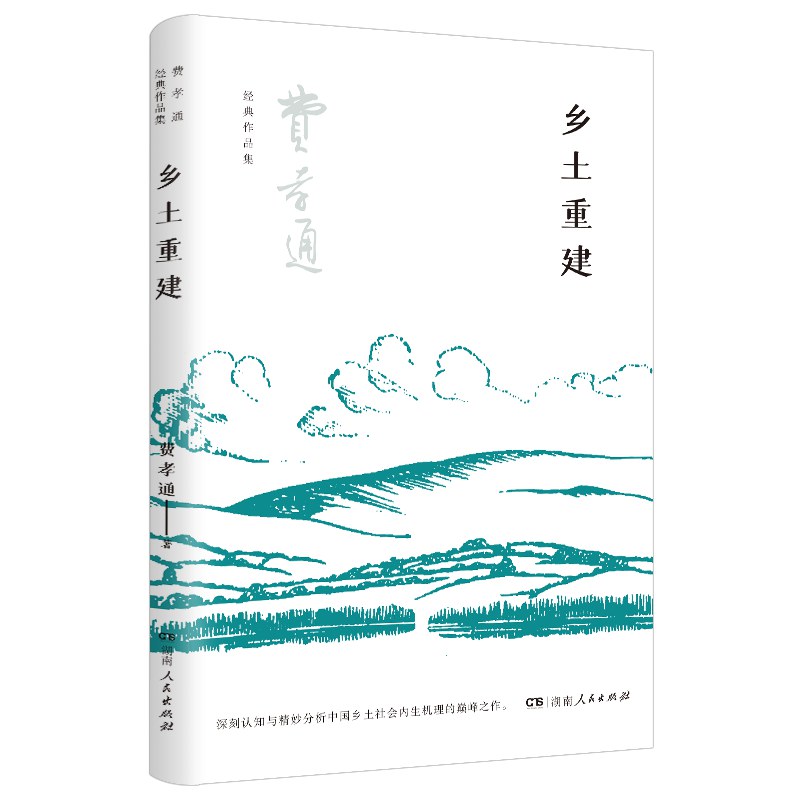
Rural Reconstruction
Written by Fei Xiaotong
Leading Reading Culture | Hunan People's Publishing House
June 2022
The decline of rural areas
In the summer of 1936, taking advantage of his sister Fei Dasheng's promotion of silk industry cooperation in Kaixiangong Village, Wujiang County, Fei Xiaotong chose Kaixiangong Village as the subject of investigation. At that time, he had already clearly felt the decline of Kaixian Gong Village.
People are beginning to consciously control population growth, and the phenomena of infant drowning (especially female infanticide) and miscarriage are increasing. People know that drowning and abortion are not good, but there is no way to avoid further poverty. As boys grow up, they have to divide the family property, which means that the land will be diluted, leading to their sons falling into poverty. Girls cannot inherit the "family line" and will get married when they grow up. They may also take away some of the family property, so raising a daughter is considered a "loss making" thing.
Modern school education is forced to give way to economic activities. The school holidays are particularly long. Even during the designated school hours, there are still very few children attending school. There are over 100 registered students in the school, but there are rarely more than 20 students who attend school on a regular basis. Not only is cultural training considered to be of no help to community life, but more importantly, raising sheep has become an important family sideline, and children need to forage for their captive sheep. Children of appropriate age still need to help adults with agricultural work during busy farming.
The phenomenon of "child brides" is increasing. Organizing a wedding is a very expensive activity. Roughly estimated, the cost of a groom's wedding is equivalent to the annual expenses of a family. In recent years, the village has almost stopped getting married. On the one hand, the high cost has forced more and more male families to choose late marriage, but more importantly, many male families have chosen to adopt a "daughter-in-law". Although the "little daughter-in-law" system has always been underestimated, it is still increasingly accepted by more and more male families because it can save about four fifths of the cost of getting married.
Regular gatherings of larger local groups have basically stopped. Except for the annual 'Liu Huang Meeting', all group gatherings have ceased. On the surface, it is because the government does not agree, believing that those activities are superstitious and extravagant, but the more practical fundamental reason is the depression of the rural economy. When necessities such as food and clothing become unbearable burdens for people, they will not have extra money to hold less urgent social activities such as "going out".
The villagers' savings have decreased. Even if the wedding date is postponed, group gatherings are stopped, and ceremonial expenses are reduced, villagers still often suffer losses. Borrowing between relatives and friends can only solve temporary deficits, and more deficits can only rely on broader borrowing of funds. Although the government has solved some of the funding problems in rural areas through a cooperative credit system, it is still far from enough. Therefore, mutual aid societies that act as collective savings and lending institutions, ships that act as credit agents, and the main way for urban areas to lend money to rural areas - high interest loans - have emerged.
Fei Xiaotong believes that the sample of Kaixian Gong Village has a "relatively broad significance". Like the vast majority of villages in China, it "has a common process" and can "understand some significant characteristics of China's land problems" through it. That is, "the basic problem in rural China, in simple terms, is that farmers' income has decreased to a level that is not enough to maintain the minimum living standard. The real problem in rural China is the problem of people's hunger".
Why did this happen?
From the case of Kaixian Gong Village, there are two main reasons: firstly, the decline in rice prices. Kaixian Gong Village is a typical rural economy in Jiangnan, where rice is the most important output for farmers. Except for about half that must be kept as family rations, the rest must be sold in the market for money to be used for other expenses. However, in recent years, fluctuations in rice prices have reduced farmers' income from selling rice. The second is the decline of family handicrafts. Raising silkworms is the primary sideline of farmers in Kaixian Gong Village. However, the issue of the relationship between rural industry and the global market has led to a lack of regulation between production and demand, resulting in a decrease in silk prices. This, in turn, has directly led to the decline of traditional rural silk reeling industry.
The dilemma of local industry
Faced with the reality of rural poverty caused by the decline of family handicrafts, farmers can only have two choices: either improve their products or give up family handicrafts. Fei Xiaotong believes that the ultimate answer is industrialization replacing household handicrafts, but what was most needed in rural China at that time was the revival of rural enterprises and the improvement of products.
From Kaixian Gong Village, Fei Xiaotong saw two paths for the return of family handicrafts: one was to be replaced by industrialization; The second is to evolve into rural enterprises through technological improvements.
Almost every household in Kaixian Gong Village has a wooden textile machine, but only two are still in operation. The family textile industry has basically gone bankrupt, and the villagers' clothing mainly consists of linen and cotton fabrics, most of which come from outside. The impact of bankruptcy in the home textile industry is twofold: on the one hand, it increases the economic burden on farmers as they have to spend money on clothing. On the other hand, it provides opportunities for young women to work. Young women entering the factory to work as textile workers have gained economic income and improved their family status.
However, the decline of the family silk industry has had a much more profound impact on rural areas.
Although every household in Kaixian Gong Village raises silkworms and engages in silk reeling industry, the raw silk they produce is not used to weave into silk for their own enjoyment, but for export in exchange for cash subsidies for household use. The main business of Kaixian Gong Village is growing rice. On average, about 10 acres of rice fields per household can produce about 60 bushels of rice. In addition to providing enough food for the whole family, there are also about 27 bushels that can be sold for cash. Based on a price of 2.5 yuan per bushel, selling rice can generate approximately 68 yuan in revenue annually.
However, the average household's annual expenditure is about 200 yuan, and the remaining 132 yuan gap is mainly made up by selling raw silk. If it is a tenant farmer family, about 40% of the rice produced is handed over to the landlord, and the rest can only make a living, which puts greater economic pressure on the family. When the silk industry was thriving, each farmer could earn an average profit of about 250 yuan from selling raw silk, which was enough to subsidize household expenses. However, after 1933, the impact of the "Great Depression" on the Chinese economy gradually became apparent, and the price of raw silk dropped significantly. By 1935, the price was only one-third of what it was when the silk industry was thriving, and each farmer could only make an average profit of 45 yuan from selling raw silk, which could no longer balance household expenses.
The decline in raw silk prices is not only due to fluctuations in international market prices, but also due to uneven quality of raw silk produced by rural household handicrafts, which cannot meet the requirements of highly mechanized silk weaving industry. So, the Women's Sericulture School near Hushuguan in Suzhou launched a rural silk reeling industry technology improvement plan, attempting to introduce advanced sericulture and silk reeling technologies through farmer cooperatives, revive rural industry, and increase farmers' income.
Why do reformers choose to revive rural industry instead of establishing modern industry to replace it? The statement of a person in charge of the change plan represents the ideas of the change makers: on the one hand, they believe that the benefits obtained from technological change should belong to the people who participate in production rather than capitalists. On the other hand, it is believed that the silk industry was and should continue to be a rural industry. If the silk industry, like some other industries, is redirected from rural areas to other places, not only will farmers go hungry, but rural girls will also be attracted to work in factories in cities, which will also destroy rural families. They firmly believe that China's industrial development cannot come at the expense of poor farmers.
The ideals of reformers are beautiful, but the challenges they face in reality are difficult for them to solve.
One is the issue of funding. The reformers have attempted to replace traditional wooden machines with new ones and distribute them to each household for operation. However, the quality of the raw silk produced varies greatly and still cannot meet the requirements for export, so it was forced to introduce a collective factory system. The capital required to establish a cooperative factory, with villagers subscribing to a portion of the shares, is far from enough, mainly relying on government credit. The machine was borrowed from the sericulture school. Repaying the loan principal and interest has become a heavy burden for the cooperative factory.
The second issue is the problem of raw materials. The original plan for the silkworm cocoons needed for silk reeling was to be provided by the members, who would pay 70% of the value of the cocoons when delivering them. The funds would be covered by a loan, and the remaining 30% would be postponed until the end of the year. Members believe that it is not cost-effective to produce too many silkworm cocoons, so they only produce the minimum amount of cocoons and keep the rest for their own handicrafts. The factory lacked raw materials and was forced to purchase silkworm cocoons from the market, while also outsourcing to factories in other villages. In the later stage, the number of silkworm cocoons purchased from the market exceeded the supply of members, and the number of silkworm cocoons left by members for their own use exceeded the number handed over to factories. In fact, traditional handicrafts have been revived on a large scale.
Thirdly, there is the issue of labor force. The cooperative factory has introduced steam power and modern production technology, greatly reducing the demand for labor. In the past, there were at least 350 women engaged in silk reeling work in Kaixian Gong Village. After the introduction of the factory system, only 70 people were needed to easily complete the same amount of work, resulting in a large number of "unemployed" women. A family losing the income brought by women's silk spinning may actually become even more impoverished.
The fourth issue is dividend distribution. The cooperative factory plans to compensate for the losses caused to its members by machines replacing manual labor to "squeeze out" some of the labor force. The cooperative factory was profitable in the first few years, and the cash dividends distributed to the members exceeded their share capital. However, after the 1930s, the international price of raw silk fell, directly leading to a significant decline in profits for cooperative factories. The dividends distributed to members have decreased, and they are even more unwilling to hand over silkworm cocoons to the factory. The factory is forced to increase the proportion of raw materials purchased from the market, which occupies working capital and further reduces the cash available for dividends. By the eve of the outbreak of the full-scale resistance war in 1937, dividends had basically ceased.
The fifth issue is management. The ultimate power of the cooperative factory of the Changer Plan belongs to the members' meeting, but the members only care about whether they can receive regular dividends. The female workers who enter the factory only know about production and do not care about the daily management of the factory. Therefore, the management affairs of the factory are actually the responsibility of the village leaders.
Revitalize Local Industries
Fei Xiaotong is confused about the difficulties encountered in the silk industry technology improvement plan: on the one hand, he firmly believes that solving the land problem in rural China, increasing farmers' income, and "restoring rural enterprises is the fundamental measure"; On the other hand, he cannot find a solution to the impact of the expansion of modern factory systems on rural enterprises.
In August 1948, Fei Xiaotong published the book "Rural Reconstruction", which compiled his reflections on rural issues in China over the previous two years. It is not difficult to see from the 14 articles included in the collection that Fei Xiaotong supplemented and improved his rural industrialization ideas through debates with the industrialists.
He admitted that theoretically speaking, "rural and urban areas are interrelated", and in order to increase farmers' income, "only by expanding and smoothing the exchanges between rural and urban areas, and urgently starting from the development of urban areas to stabilize and expand the market for agricultural products, can rural areas have hope for prosperity". However, the history of the past century shows that the development of Chinese cities does not seem to have promoted the prosperity of rural areas. On the contrary, the rise of cities and the decline of rural areas are more like two sides of the same coin. In the early stages of the outbreak of the War of Resistance Against Japan, after some important cities were occupied by Japan, the communication between rural areas and cities was blocked, and the rural areas in the rear did have a brief (if not prosperous) respite.
The reason is simple. The financial nature of traditional Chinese towns far exceeds their commercial nature, let alone industry. In short, towns are not production bases at all, but gathering places for landlords who have left their hometowns. They don't have to provide industrial products to exchange food with rural areas. The rent paid by tenant farmers, the money earned from pawnshops and high interest loans, are enough to provide them with a comfortable life. After the opening of ports, a different type of industrial community emerged along the Yangtze River and coastal areas in China - urban areas. Urban areas are indeed production bases, but the industrial products they import and manufacture have washed away rural household handicrafts, and the necessary food and raw materials are not directly connected with farmers due to inconvenient rural transportation. Instead, they are either purchased from local landlords in the towns or imported from overseas.
So, from the actual situation at that time, Fei Xiaotong believed that rural industrialization was a more realistic path to solve the problem of poverty among farmers.
Fei Xiaotong does not deny the prospect of developing urban industrialization to alleviate the contradiction between people and land in rural areas and increase farmers' income. However, he believes that the existence of small-scale agricultural economy for a long time is an unavoidable reality, because China's rural population is too large. In a short period of time, urban development can absorb 200 million rural population, doubling the per capita land area of farmers, and then using modern agricultural technology to double the yield per mu, which is extremely unrealistic. In contrast, rural industrialization does not require large-scale transfer of labor, and electricity and internal combustion engines make it possible for modern industrial technology to be dispersed to rural areas.
Fei Xiaotong believed that "local industry is an important factor in the formation of China's small-scale agricultural economy," but his advocacy for rural industrialization is not simply to equip traditional handicrafts with modern technology and return to the natural economic state of seclusion, but to transform local industry with new technologies and organizational forms.
Firstly, the development of local industries is not to compete with urban large-scale industries, but to process and even sell the economic crops produced in rural areas into finished products. Economic crops can bring more income to farmers than food crops, but the income from selling raw materials is still limited. However, rough processing or even producing finished products from economic crops for sale can significantly increase farmers' income. So, rural industry should mainly be "light industry, manufacturing industry of daily necessities, and processing of agricultural products as industrial raw materials", serving as an auxiliary to urban large-scale industry rather than a competitor.
However, more importantly, rural industrialization is not achieved through individual farmers' decentralized production and sales, but through the adoption of cooperative factories. Farmers do not have to give up agriculture and only engage in industry. Small factories are scattered in and near rural areas, and the ownership of the factories belongs to the farmers in the factories. The raw materials of the factories are mainly supplied by the farmers' own output, and the most important thing is that the profits of the factories can be distributed to the farmers as much as possible.
Fei Xiaotong's ideas were criticized by the urban industrialization faction at that time, who believed that he was "daydreaming" and "fantasizing". However, when he visited "Jiangcun" three times 45 years later, he saw a modern small-scale silk reeling factory with over 200 workers, two tofu factories, and a textile factory. Only about 41% of farmers' income came from agriculture, with 19% coming from side businesses and 40% from industry. The rise of township enterprises in southern Jiangsu after the 1980s seemed to prove the feasibility of his proposition.

Xilinx officially announced that Wanjie has joined the Mercedes Benz and BMW supercharging camp, with over 600 stations directly connected

OPPO Find X10 tops sales on the standard version track

Technology Show | iQOO16 is now available for sale, under the name of Standard Edition, to meet the requirements of Pro Max product strength