Economic Observer Follow
2026-09-14 16:22


Liang Yue | Literature
In the study of Chinese historiography, there has been a tradition of dividing into different regions since ancient times. As early as the Western Han Dynasty, Sima Qian conducted regional investigations and descriptions of local products, transportation, and customs in his book "Records of the Grand Historian: Biographies of Commodity Colonization". In the late Ming and early Qing dynasties, Gu Yanwu devoted his entire life to writing the "Book of Benefits and Illnesses of Counties and States in the World". He divided the country into northern and southern Zhili and thirteen provinces, and conducted a detailed investigation of the mountain and river situation, taxation system, military defense fortresses, and the suffering of the people in each region.
In recent years, research on regional history has become increasingly abundant. Many scholars define and understand concepts such as locality and region from different perspectives, and choose different spatial scales to conduct historical investigations based on academic demands, thus forming research directions such as local history, regional socio-economic history, and village and town history. In this academic context, the study of regional history in the Ming and Qing dynasties is particularly important.
This importance is reflected, on the one hand, in the large number and rich variety of local documents formed and preserved during the Ming and Qing dynasties, far exceeding previous dynasties, providing a solid data foundation for researchers to trace back from the present to the past; On the other hand, it stems from the characteristics of Chinese society during the Ming and Qing dynasties. The Ming and Qing dynasties were a period of profound changes in traditional Chinese society, characterized by a rapid increase in population, active commodity economy, and enhanced social mobility. The relationship between the state system, local society, and folk forces also became more complex. This deep complexity cannot be covered by a simple narrative of dynastic changes.
However, the exploration of this complexity in academia is clearly imbalanced in terms of regional selection. When we unfold the map of the Ming and Qing empires, our focus is often on the prosperity of Jiangnan, the heavy troops in border towns, the special status of the capital and the capital, and the transportation of goods that affect the national financial lifeline. In contrast, northern Anhui, located between the Huang Huai region, has long been on the edge of historical research. This place lacks both the commercial prosperity of Jiangnan style and the sustained accumulation of cultural centers. Except for the two brief and intense outbreaks of the Red Turban Army at the end of the Yuan Dynasty and the Nian Army in the late Qing Dynasty, this land remained almost silent for hundreds of years.
The traditional explanation for this can be roughly divided into two categories: one is the natural environment theory, which attributes it to "frequent natural disasters"; The second is the theory of social character, which explains social unrest through the local culture of being brave and aggressive. The former easily attributes institutional disasters to natural fate, while the latter inverts causality, using social reactions triggered by poverty and unrest as causes. Both have touched upon certain phenomena, but cannot truly explain why this historical silence and social suffering have lasted for hundreds of years.
Zheng Ning's "Silent Northern Anhui: National Governance and Local Society in the Ming and Qing Dynasties" is a response to this unresolved issue. The author did not understand northern Anhui as a purely backward region, but instead re examined it within the overall governance structure of the Ming and Qing empires. In the author's view, the real question that needs to be answered is not why northern Anhui is so poor, but why does northern Anhui remain in a state of stability and poverty for a long time when state power is always present and the institutional system is never interrupted?
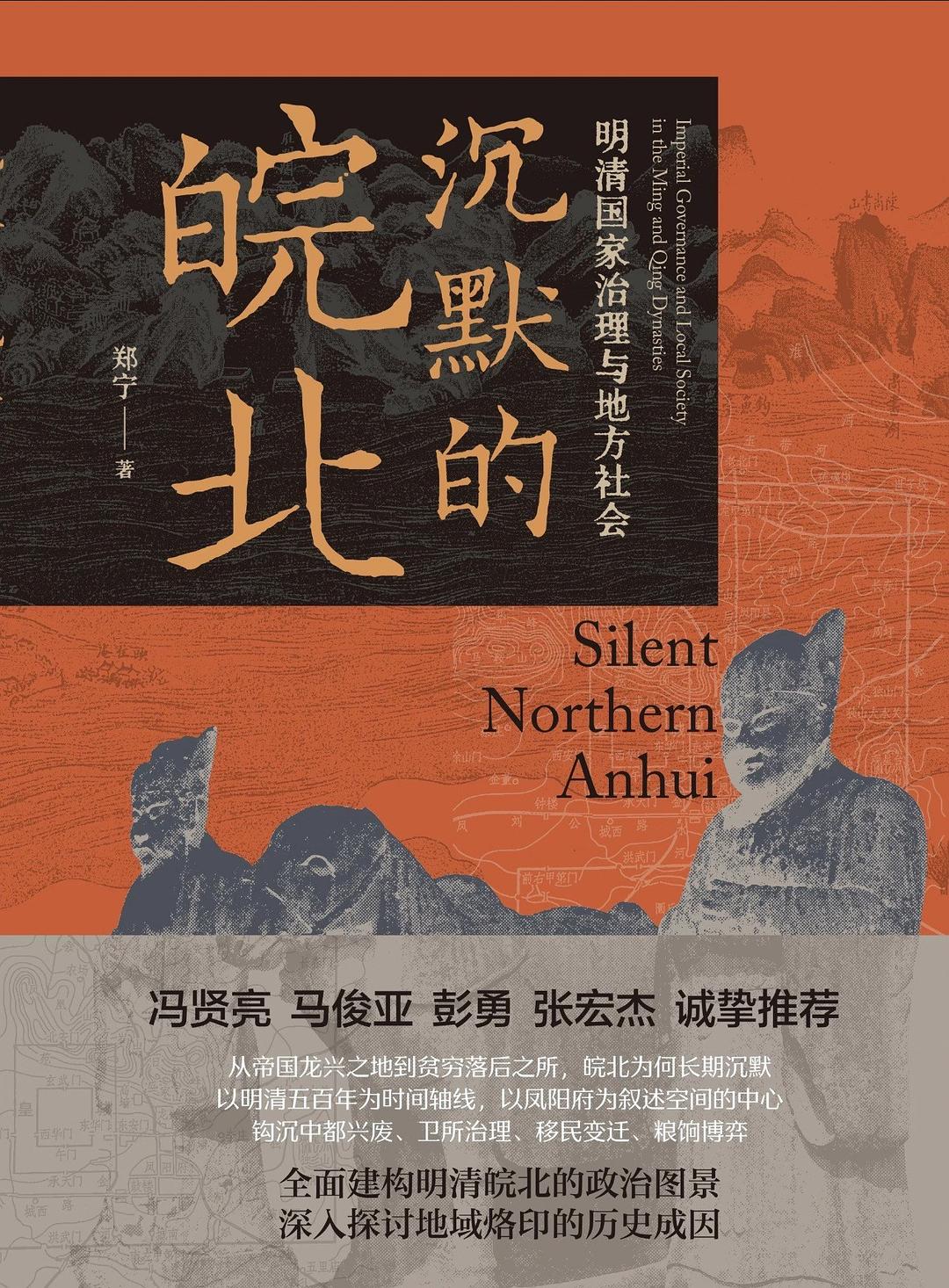
Silent Northern Anhui: National Governance and Local Society in the Ming and Qing Dynasties
Zheng Ning | Written by
Zhonghua Book Company
January 2026
This issue has shaken a narrative premise that we have become accustomed to: people often equate "stability" with the success of governance, as if the continuous operation of the state machinery and the absence of local chaos mean the effective operation of grassroots order. But the experience in northern Anhui shows the opposite possibility: stability may not necessarily be a sign of social health. A region may completely fall into a long-term stagnation without development momentum under the sustained maintenance of state power.
Therefore, the problem consciousness of "Silent Northern Anhui" is not limited to the scope of local history research. Zheng Ning raised a more fundamental question through the peripheral area of northern Anhui: Is the stability of the macro order of the empire a prerequisite for local growth or a root cause of continuous consumption?
Under the Hanging Lake in Northern Anhui
To explore the historical evolution of northern Anhui, we cannot ignore its unique geographical location. In 1128, the Song court opened the Yellow River embankment to prevent the Jin army from advancing southward. Afterwards, the Yellow River occupied the Huai River and entered the sea for a long time, lasting for more than 700 years. As a result, the Yellow River, Huai River, and Grand Canal formed a complex and intertwined water system pattern. After the Southern Song Dynasty, as the economic center shifted southward, successive dynasties increasingly relied on Jiangnan's financial resources to support their national operations. In the Ming and Qing dynasties, the Grand Canal became the main transportation route, and the Xu Huai section adjacent to northern Anhui became a transportation hub for transporting money and grain from Jiangnan to the north.
In this context, the national water management policies related to the Yellow River, Huai River, and transportation during the Ming and Qing dynasties often prioritized ensuring smooth water transport. When there is a conflict between flood control and transportation safety, the imperial central government will not hesitate to choose "beggar thy neighbor" and make some areas in northern Anhui and northern Jiangsu actually undertake flood discharge and storage functions. The most typical example is in the sixth year of the Wanli reign of the Ming Dynasty, when Pan Jixun implemented the strategy of "storing clear water and washing away the Yellow River" to control the river: by raising the embankment of Hongze Lake, raising the water level of the Huai River, using clear water to wash away the sediment of the Yellow River, and ensuring the navigation of the canal. Although this strategy temporarily alleviated the crisis of water transportation, it directly led to Hongze Lake becoming a suspended lake, and the internal water in northern Anhui could not be discharged into the Huai River, ultimately resulting in a vicious cycle of "heavy rain disasters, light rain disasters, and drought without rain".
This governance logic of exchanging local pressure for global stability is not unique to the Ming and Qing transport system. In May of the fourth year of the Zhizheng era (1344) of the Yuan Dynasty, rainstorm fell for more than 20 days in succession in the Yellow River basin, and the river swelled and overflowed. More than ten states and counties, including Jining, Shanzhou, Yucheng, Dangshan, were flooded with water. What is even more deadly is that the water flows northward into the An Mountains and extends into canal sections such as the Kaitong River, directly threatening the transportation system and the two Huai salt fields. For the Yuan court, this was no longer just a local disaster, but a crisis that could shake the country's financial and transportation lifelines.
In the winter of the ninth year of the Zhizheng reign, Tuotuo was appointed as the Prime Minister and was responsible for managing the river. Jialu reintroduced the two strategies proposed during the previous field survey: one is to build a northern embankment to contain the Yellow River's transverse collapse, which will result in relatively lower project costs; The second approach is to simultaneously dredge and divert the river eastward, returning it to its original path, resulting in a larger project scale and cost. In the end, Tuotuo adopted the latter strategy. In April of the eleventh year of the Zhizheng reign, the Yuan court issued an edict appointing Jia Lu, the Minister of Works, as the overall commander of the river defense. He conscripted 150000 laborers from 13 routes including Bianliang and Daming, and also mobilized 20000 garrison troops from Luzhou and other places to participate in the project. As a result, the river control project was fully launched.
From the engineering results, it can be seen that Jia Lu's river management has undoubtedly achieved results. He used the sinking method to connect 27 large ships loaded with stones together, chiseled them into the breach, and forced the Yellow River to gradually return to its original course. Although the transportation route has been restored and the crisis at the national level has been temporarily resolved, for the local society in the Huang Huai region, this grand project means a heavy burden of corv é e labor and huge resource consumption. The technological victory cannot conceal the heavy cost paid for local livelihoods.
In addition to the brief records in official historical books, contemporary literary works have also left vivid evidence for this period of history. Yuan Dynasty poet Sadura wrote on his way to his post in the tenth year of Zhizheng:
Last year, when building a river defense, driving away the husband was like driving away a prisoner.
They waste farming and weaving, and are crying out in Qidongzhou.
Half starving to death, driven by the river.
Even more cruelly, these recruited migrant workers receive almost no compensation. The imperial court nominally allocated funds for river management, but most of them were embezzled by officials at all levels through layers of transfer. River workers engage in high-intensity physical labor day and night, but the food they receive is not enough to satisfy their hunger.
In addition, the excavation of the project has also occupied a large amount of farmland, causing farmers who have lost their land to lose an important source of livelihood. The excavation and relocation of the new river channel disrupted the original water system structure, hindering irrigation of surrounding farmland and causing the fertile soil to gradually become barren over the years. This river control project, under the guise of "pacifying the people", ultimately pushed the people of the Huang Huai region into even more difficult difficulties to overcome.
Zheng Ning took the governance of the Jialu River at the end of the Yuan Dynasty as a starting point, pointing out a sharp and complex contradiction: a water conservancy project that is highly legitimate at the national level may become an unbearable institutional burden for local governments. The cruelty of history lies in the fact that the necessity of national rationality does not equate to the affordability of local society. The farmers in northern Anhui are not blind to their own situation, but what can they do if they see it clearly? Under the tight constraints of registered residence and taxation system, it is almost impossible to escape. Even if they take risks to participate in the civil uprising, after the suppression, the land remains barren, the river pattern remains unchanged, and the pressure of water transportation, water conservancy, and taxation still exists.
The succession of dynasties has not changed this structure, and the pressure borne by local societies will not disappear as a result. What is even more ironic is that the rebellion of the farmers in northern Anhui, who were at a dead end, is often attributed by rulers as evidence of the "fierce folk customs", and in turn becomes a reason for the next dynasty to continue to prevent and suppress this land.
In official narratives and later hymns, river management is often regarded as a major achievement in maintaining the transportation lifeline of the empire. But what Zheng Ning did in the book was to make the world see clearly the cost of the place on the back of the monument. He pointed out that behind this macro engineering lies a typical imperial governance logic: in order to maintain absolute security of the overall order, local regions are destined to bear the spatial cost of institutional arrangements. The long-term economic downturn and ecological deterioration in northern Anhui is not a failure of governance, but the result of the long-term operation of spatial politics.
The heavy burden behind glory
If the Yellow River and its water management system have constrained and compressed the development space of northern Anhui at a macro level, then the political preferential treatment that Fengyang, as an "imperial township," has endured has caused fatal destruction to it in the implementation of specific systems. In the political narrative of traditional dynasties, the imperial homeland usually implies the favor of imperial power and the tilt of resources. However, Zheng Ning revealed another side behind this political rhetoric through a deep analysis of the interaction and interest game between officials and civilians under the identity of the emperor's hometown: the closer one is to the center of power, the less likely they are to share prosperity; On the contrary, Fengyang needs to bear political and institutional burdens far beyond its social capacity.
After Zhu Yuanzhang founded the Ming Dynasty, driven by his obsession with returning home in glory and the political need to settle the Huai Xi Xun Gui group, he mobilized the entire country to build the Zhongdu in his hometown of Linhao (Fengyang). Around this grand political project, palaces, temples, cities, government offices, and other projects were planned and constructed one after another, and Fengyang was once pushed to the center of the empire's political symbol.
But the problem is that Fengyang is neither located at a traditional transportation hub nor in the most developed agricultural area. The war at the end of the Yuan Dynasty caused a significant loss of population and a very weak economic foundation in this area. In order to forcefully prop up the imperial capital, a large number of wealthy people from Jiangnan were relocated to Fengyang in the early Ming Dynasty. The practice of enriching the new capital with immigration is not uncommon in traditional dynasties, but Fengyang's immigration policy has resulted in a unique tragedy. The wealthy households who originally owned farmland and stable livelihoods in Jiangnan were uprooted and relocated to this abandoned land. They were not only deprived of their property, but also included in the special registered residence, and could not move freely from generation to generation.The widely circulated "Fengyang Flower Drum" in later generations - "Since the emergence of Emperor Zhu, there have been nine years of famine in ten years" - vaguely preserves the painful memories of these forcibly relocated people.
In the eighth year of the Hongwu reign (1375), just as the main structure of the Zhongdu Palace was about to be completed, Zhu Yuanzhang issued an edict to halt the construction of Zhongdu. There have always been different opinions on the reasons for the suspension of construction: the most widely circulated among the people is the "Yansheng Incident" - craftsmen who could not bear the hardships of labor and buried cursed objects under the foundation of the palace; According to legend, Zhu Yuanzhang discovered and massacred craftsmen, which in turn affected the direction of the project.
Another widely accepted theory in academia is that the engineering cost is too high and the geographical location of Fengyang is a congenital defect. Scholars estimate that the construction cost of Zhongdu is almost equivalent to several years of national tax revenue. At the same time, ministers repeatedly advised that Zhongdu is located in a remote area and does not have ideal conditions for establishing a capital. Regardless of the reasons, Zhu Yuanzhang ultimately halted the construction of Fengyang Zhongdu. For local societies, although the project has come to a halt, the entire set of institutional structures established around this political project has not been revoked.
In order to maintain Fengyang's symbolic status as the land of dragon prosperity, a relatively dense system of guard stations was established in the early Ming Dynasty. These garrisons are not only responsible for warfare, but also occupy large areas of land. In addition, the Huaixi Gongchen Group, which followed Zhu Yuanzhang to conquer the world, also obtained a large amount of land and local resources in the area. As a result, Fengyang gradually formed a special power structure: on the surface, it was still a Ming dynasty imperial township that enjoyed a high symbolic status; In fact, relying on a relatively independent judicial and management system, the Weisuo has formed a "country within a country". Local governments find it difficult to effectively constrain the population of health centers, while ordinary people have to bear both normal taxes and the additional pressure brought by the military system and the privileged structure. The so-called glory of the imperial homeland has instead become an inescapable political burden.
The original intention of the design of the early Ming Dynasty's garrison system was for military self-sufficiency: the court allocated land to the garrison, and soldiers served as soldiers during wartime and engaged in farming on a daily basis. But by the mid Ming Dynasty, the Wei system gradually deteriorated, and the originally self-sufficient military system became a bottomless pit for sucking local blood. Zheng Ning found through careful examination of official grain storage systems such as Fengyang Warehouse that the grain revenue and expenditure figures on the books were tightly matched, indicating a standardized process; But in actual implementation, it is full of tricks such as silver discount and price increase, layered arrears, and only assigning tasks without allocating money and food. That is to say, although the country retains the design of "military food supplied by the central government" on the books, the actual cost gap is ultimately borne by local governments. Local officials dare not disobey the military grain distribution of the court, and can only shift these burdens to the lowest level farmers.
The Fengyang dilemma illustrates that the heaviest part of imperial governance often lies not in the collapse of the system, but in the continued operation of the system. At the moment when Fengyang was forcibly shaped as the capital, this land no longer belonged to the people living here, but was forcibly elevated as a symbol of maintaining the dignity of the imperial legal system. This may be the deepest price behind the silence in northern Anhui - it has been largely deprived of the possibility of developing according to its own socio-economic logic, and can only serve as a frozen chess piece in the grand imperial game, bearing a fate of poverty and stability.
The absence of gentry and single track governance
When a place is under pressure from the imperial system, if it has a local social structure that can withstand and buffer this pressure, it may not necessarily lead to long-term stagnation.
In the study of traditional Chinese society, "gentry society" is one of the most influential explanatory frameworks. This theory holds that traditional state power usually stops at county offices, and the grassroots order below the county level is mainly maintained by gentry, clans, and township organizations. The gentry who obtained fame through the imperial examination were not only agents of state power in the local areas, but also spokespersons for the local society, forming a crucial buffer zone between the court and the countryside. The state uses them to complete taxation, education, and public security management, and local society also uses them to fight for rights and resist excessive exploitation.
This dual track structure, which was effective in the Jiangnan and southern regions, has completely failed in northern Anhui. Instead, there is a rigid and tense 'single track governance'.
The key reason for the formation of monorail governance is that centuries of continuous flooding and institutional plunder have gradually undermined the economic environment and social foundation on which the traditional gentry class relied for growth. Zheng Ning's extensive historical research shows that the gentry group in northern Anhui did not mainly come from traditional literati families that passed down poetry and books, but rather from military households in self-defense stations.
The Wei system provided them with unique educational resources and imperial examination channels, enabling them to rank among the ranks of successful candidates; After obtaining fame, these military gentry closely linked with hereditary military officials to jointly safeguard the vested interests of the garrison and military households. In other words, their identity, economic interests, and even social prestige have been deeply tied to state power from the very beginning. This makes them more like tentacles of imperial power extending to the grassroots, rather than buffering forces that can represent local society and the state in negotiations.
Due to the lack of a culturally conscious and economically independent gentry group as a social buffer in northern Anhui, the local grassroots society has gradually evolved into a fragile form with loose structure and lack of resilience. Here, there are no powerful clans that protect the villagers, nor are there any commercial guilds that connect interests. The grassroots people are completely shattered, like a pile of scattered sand.
At the same time, the huge grain and salary expenses of the Zhongdu Garrison became a burden that the local authorities could not bear. In order to compete for scarce resources, there was a long-term shirking and internal friction between state and county civil officials and military officials of the Garrison, and the construction of people's livelihoods was completely neglected. Faced with the high-intensity demands of the state machinery on water control and military supplies, highly dispersed populations have no ability to form a stable mutual aid network for self-protection, nor can they form institutional games, and can only struggle to survive near the bottom line. Local officials even had to personally carry the Zhang Shan card and the police stubborn card to the countryside, coercing and enticing them to maintain the most basic order.
The traditional historical perspective tends to view social stability and the absence of large-scale turmoil as clear evidence of successful governance, but Zheng Ning's historical research in northern Anhui tells us that stability is not just one form. Jiangnan relies on developed gentry, clans, and commercial networks to form a benign and stable system with growth potential; Under the suppression of power and the hollowing out of the social structure in northern Anhui, a stagnant passive stability was formed. This single track governance system, which consumed local vitality at the cost, could still be maintained by the powerful state machinery in prosperous times. However, when time came to the late Qing Dynasty, the Qing Empire faced a crisis of rule under the impact of the Taiping Rebellion and other movements, and its internal contradictions began to erupt.
With the loosening of state power, the homeless, hungry, and salt smugglers who have long been suppressed near the bottom line of survival follow the most primitive jungle rules and grow wildly in self-defense and violent groups, eventually converging into the Nian Army Storm sweeping across the Huang Huai region.
The silver bottle burst with a burst of water, and the iron cavalry protruded with the sound of knives and guns.
The stability maintained by high pressure in northern Anhui quickly turned into violent turmoil, without any buffering or transition in between. This is the most fatal dilemma of single track governance: when the state power is strong, relying on top-down power suppression, local areas are constantly compressed and unable to resist, appearing orderly on the surface; Once power loosens and national strength declines, the hollowed out local society instantly loses its support and slides towards chaos. The catastrophic turmoil caused by the Nian army is not the opposite of stability at all; It is precisely another form of this suffocating stability that has been suppressed to its limit.
Therefore, the ups and downs of the hundreds of years of history in northern Anhui cannot be simply attributed to the superficial narrative of disasters, barrenness, and uprisings. People are accustomed to praising Zhu Yuanzhang's great achievement of conquering the world, but rarely examine the long-term shackles brought by the imperial system to Fengyang; People admire the grand layout of the Grand Canal connecting the north and south, but overlook the institutional sacrifices made by northern Anhui for the lifeline of water transportation. History has always favored recording the glorious glory of the victors, but obscured the silent suffering of the sacrificed regions.
The value of Zheng Ning's "Silent Northern Anhui" lies in its ability to go beyond sympathy and depiction of a suffering region. It restrained itself from lightly moralizing attributions such as the incompetence of the ruler or the troublemaking of the people, and instead used solid historical materials to coldly dissect the internal difficulties of traditional Chinese imperial governance. In Zheng Ning's discourse, northern Anhui is no longer just a geographical concept, but has become a key to understanding the traditional Chinese national capacity boundaries. It tells us that the imperial order never distributes governance costs and institutional benefits equally. At the macro level, global stability often comes at the cost of long-term stagnation in certain regions.
Xilinx officially announced that Wanjie has joined the Mercedes Benz and BMW supercharging camp, with over 600 stations directly connected

OPPO Find X10 tops sales on the standard version track

Technology Show | iQOO16 is now available for sale, under the name of Standard Edition, to meet the requirements of Pro Max product strength