2026-09-12 19:10


Today is the last day of the 2026 Bund Conference.
If you have to leave an impression on these three days, the first thing that comes to mind is not which robot has learned a new skill, nor which model has refreshed its metrics. On the contrary, some people.
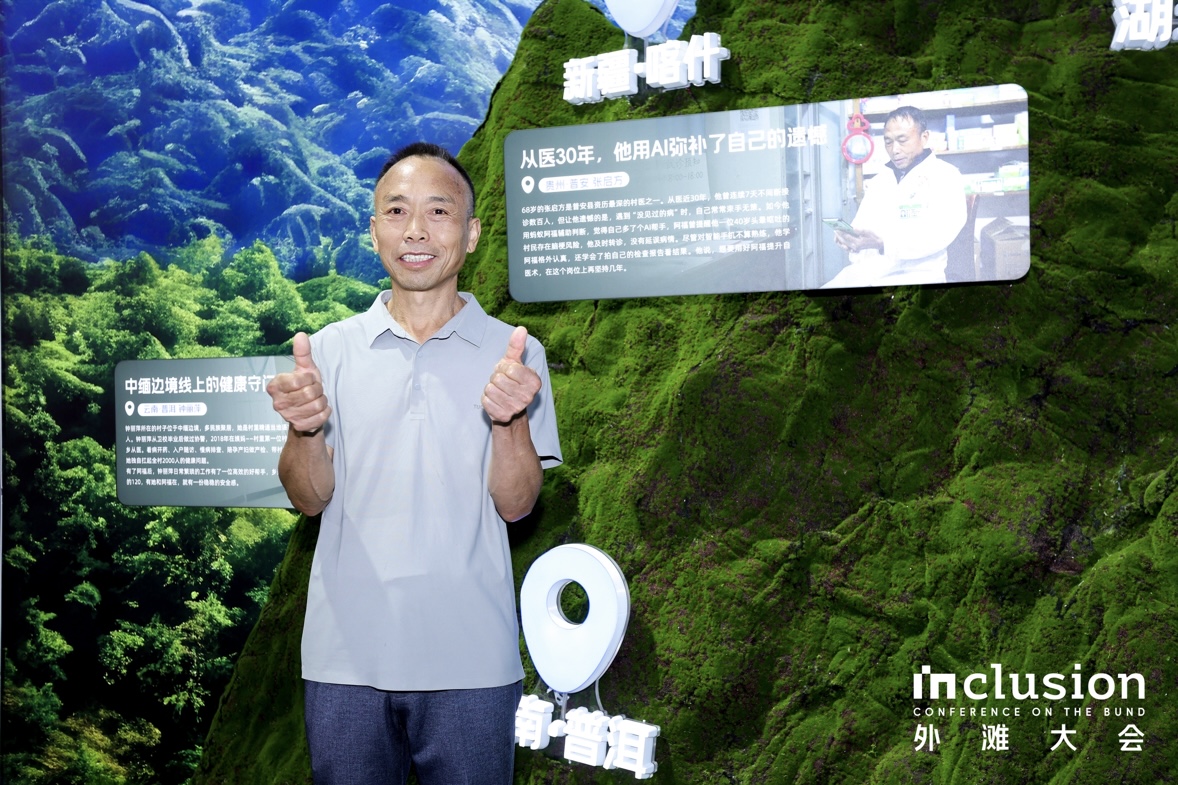
The technology exhibition hall was crowded with people. In the Ant Afu exhibition area, two village doctors from Pu'an County, Guizhou, Zhang Shengyi and Zhang Qifang, despite speaking in dialect, excitedly repeated how they used AI to treat people in the mountains.
On the main forum, writer Liu Zhenyun said that when he goes to Hong Kong, he will look for AI to recommend restaurants, but he would like to ask Ma Yi, Dean of the School of Computing and Data Science at the University of Hong Kong, who was speaking with him, "When will you treat me to dinner
A security guard saw a wheelchair bound audience member at the entrance of the event. After the other party had walked away, he quietly picked up the walkie talkie to remind his colleagues ahead.
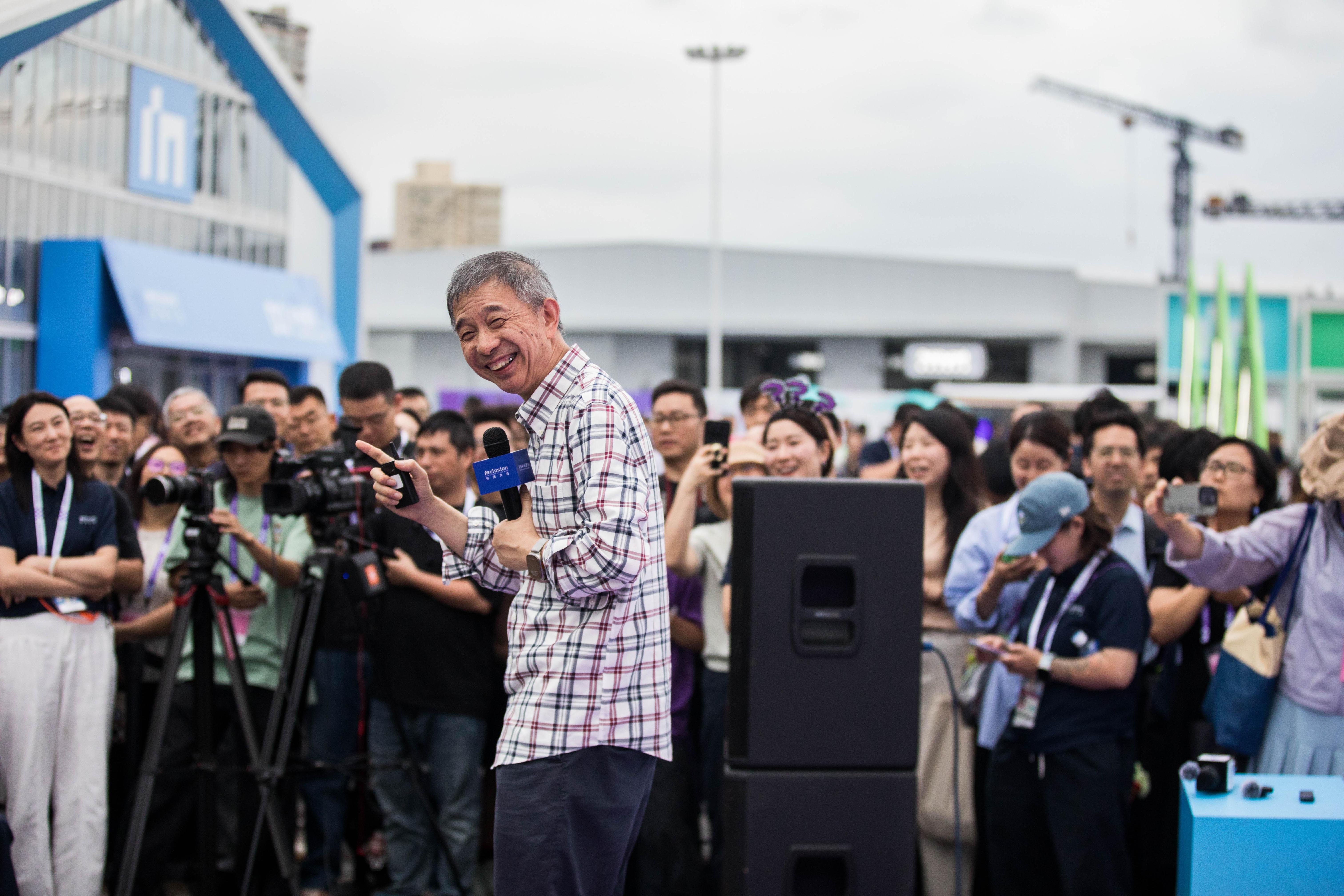
There is also a group of young people standing on the open-air square, surrounding Wang Jian, the director of Zhijiang Laboratory and founder of Alibaba Cloud, listening to him talk about things that are "difficult to find answers".
In this era, AI is running towards faster, more accurate, and more human like directions. The person standing next to it will still hesitate, make mistakes, argue, and change their mind because of someone else's words. These moments that are not up to standard and not so perfect constitute the most vivid part of this year's Bund Conference, and also a rare "living feeling" of a technology conference.
Robots and humans in the exhibition hall
The three key words given at this year's Bund Conference are "intelligent transition", "economic restructuring", and "people-oriented future". The first two words have a high volume. Entering the 15000 square meter exhibition area, one will find that the third word is more specific. It was hidden in an 80 centimeter wide pharmacy passage and also appeared on the sun tanned face of a village doctor. To be precise, it is scattered in every corner of this conference.
In the past few years, robots have mostly been responsible for hot topics at technology exhibitions. Mixing cocktails, shaking spoons, punching, and somersaulting, the more lively the scene, the more people will watch. This year, they really started working.
In the exhibition hall, a real pharmacy has been moved in. The narrowest part of the shelf is only about 80 centimeters, and the medicine boxes are similar in length. The transparent packaging also reflects light. The robot receives the order, crosses the narrow passage, searches for medicine, grabs and sorts, and then delivers it to the window. The whole set of movements is not fancy, but not easy.
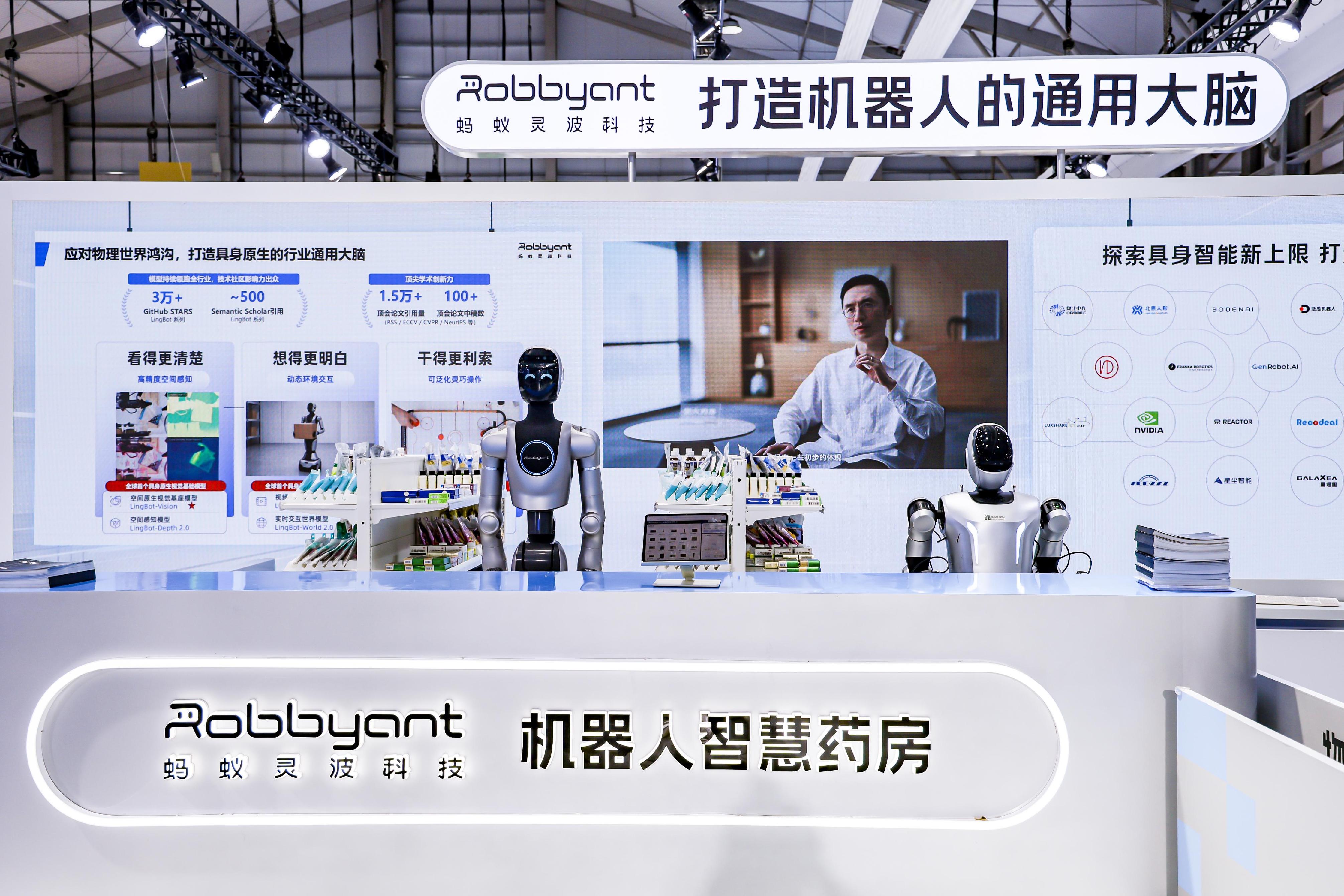
Going to work is much harder than going on stage. Being able to hold a box of medicine accurately, being able to drill workers into dangerous places, and being able to steadily complete an inconspicuous task have become new standards for measuring technology. The value of robots does not lie in how much they resemble humans, but in whether they can share some of the burden for humans.
At this year's exhibition, robots drilled into urban underground pipelines to detect cracks and blockages; Also enter the factory to complete sorting, loading and unloading. The robotic dog even pulled up a rickshaw on site, which was jokingly referred to by netizens as the "cyber carriage of the AI era".
Some attendees said that compared to other technology conferences, the entire exhibition area design of the Bund Conference is more exquisite, better looking, and the flow is more reasonable. More importantly, it focuses more on people themselves.
In the Ant Afu exhibition area, people are more eye-catching than screen introductions. Two village doctors who came from Pu'an County, Guizhou have been excitedly introducing their work. Mandarin is mixed with local accents, and sometimes it needs to be repeated, but the people around still gather more and more.
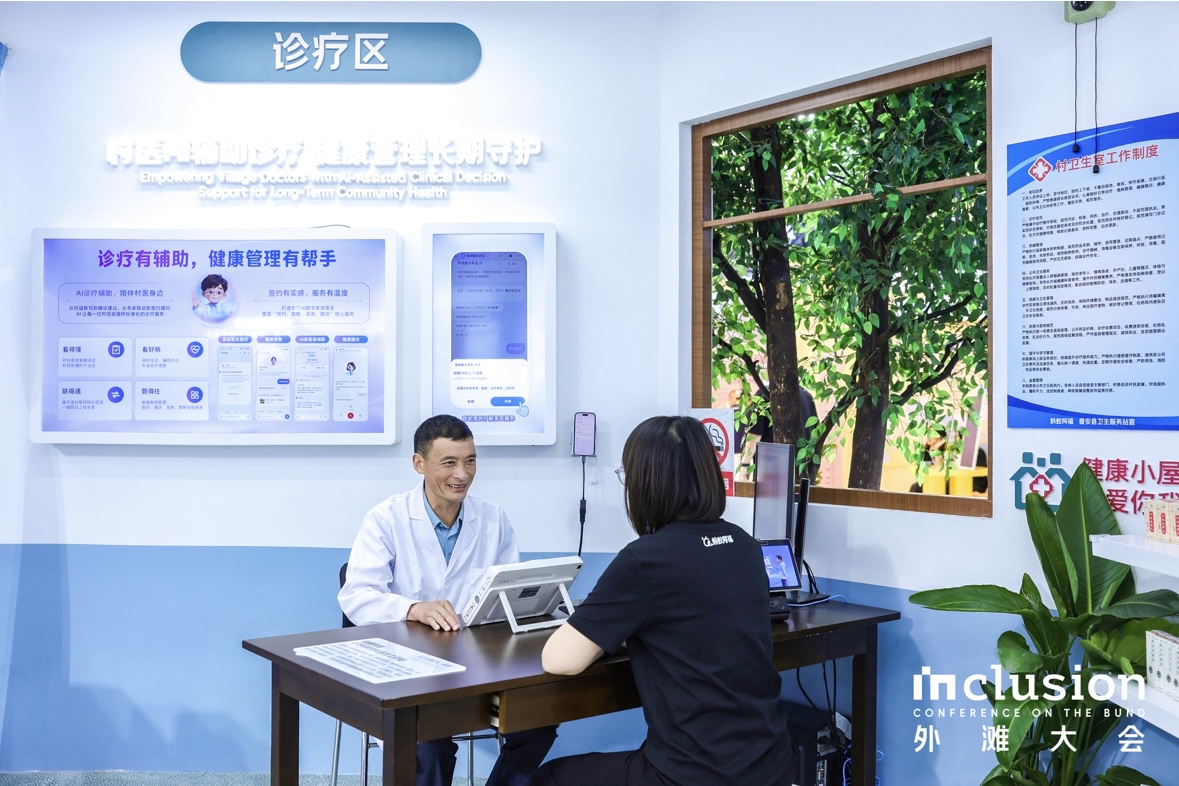
54 year old Zhang Shengyi is one of them. He is not tall, thin and black. He has been a village doctor in the mountains of Guizhou, 2000 kilometers away, for 34 years, guarding more than 1400 villagers in Cotton Village.
In the past six months, he has used AI to assist in the diagnosis and treatment of more than 500 people. A villager insisted on borrowing money to buy folk remedies. He handed over the inspection results to AI analysis and explained them to the other party one by one, finally persuading the person to come back.
Care for people also includes the environment in which they will live. The green exhibition area presents an invisible account to the audience: how many tokens are spent on an AI conversation, the screen converts it into how long a light bulb can last. Every time AI asks a question, there is computing power and electricity behind it. In the era of AI, every kilowatt hour of electricity has its source, and this account also needs to be calculated by someone.
The conference also set up an AI concert for the first time. The virtual idol "Yuri" is on stage with a real band. A fan of house cats said she really likes it and finds it novel. She thinks that AI singing still needs improvement, but its speech is already quite good.
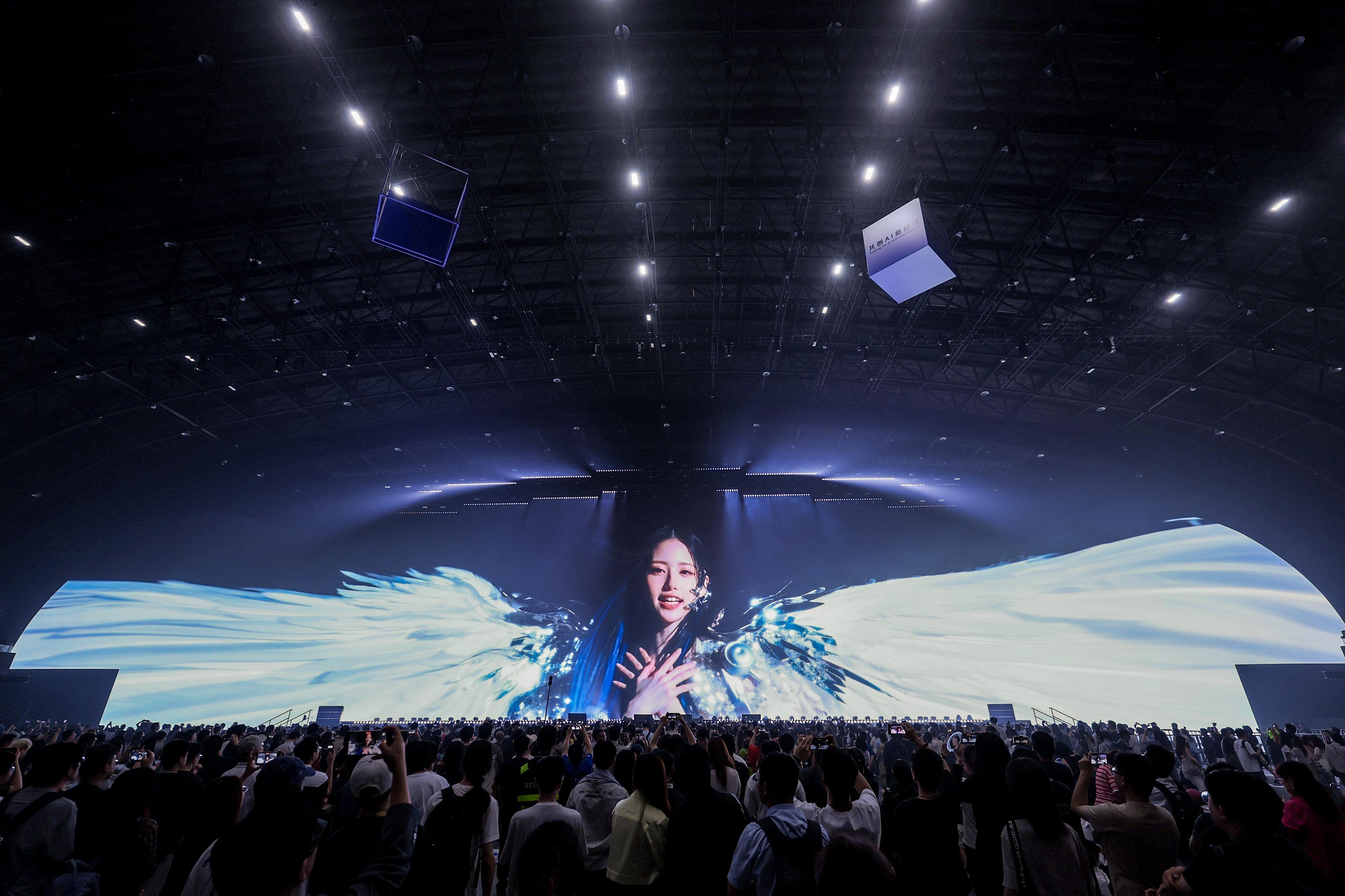
Some young people around me are guessing which one is AI and which one is human from the poster; Some people laugh and say that Youli's "man-machine flavor" is still too strong, and they prefer to listen to humans sing. Although not perfect, it has a sense of being alive.
Collision of ideas without standard answers
In the exhibition hall, machines are busy finishing the work. On the forum, people talk about questions without standard answers.
On the main forum, Liu Zhenyun and Ma Yi discussed the boundary between AI and humans. Liu Zhenyun said that when he goes to Hong Kong, he can ask AI which restaurant is delicious, but he would rather ask Ma Yi in person, "When will you treat me to dinner?" The whole audience laughed.
AI can find restaurants, but friends still have to invite food.
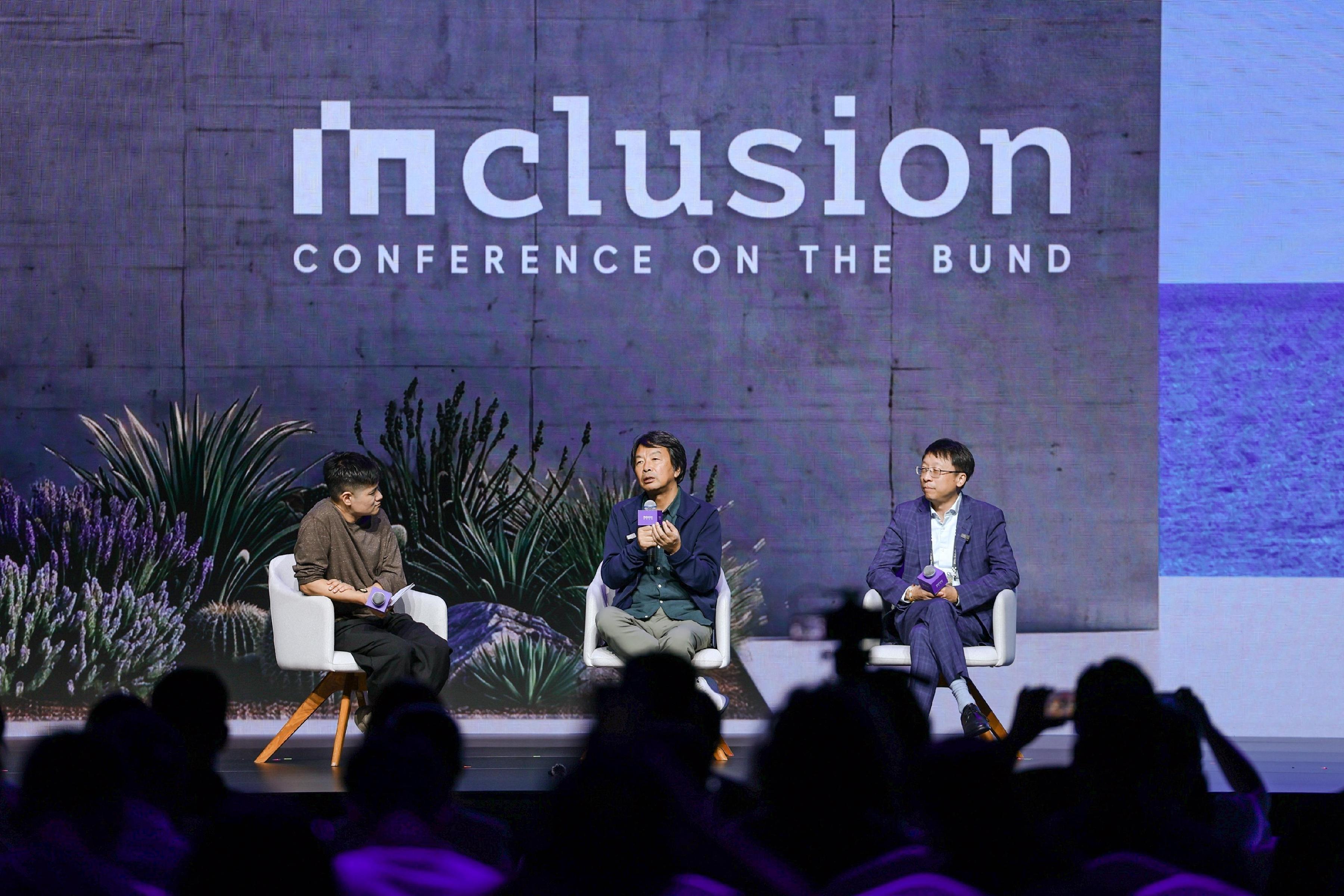
A joke that makes the boundary between humans and AI very clear. Tools can help us find information and make choices, but relationships cannot be outsourced. The so-called friends always eat together, chat, and even argue a few times.
Wang Jian was supposed to appear at the opening ceremony. Due to scheduling conflicts, someone suggested that he record a video or connect online. He politely declined. In his opinion, in the era of AI, meeting has become a very important thing.
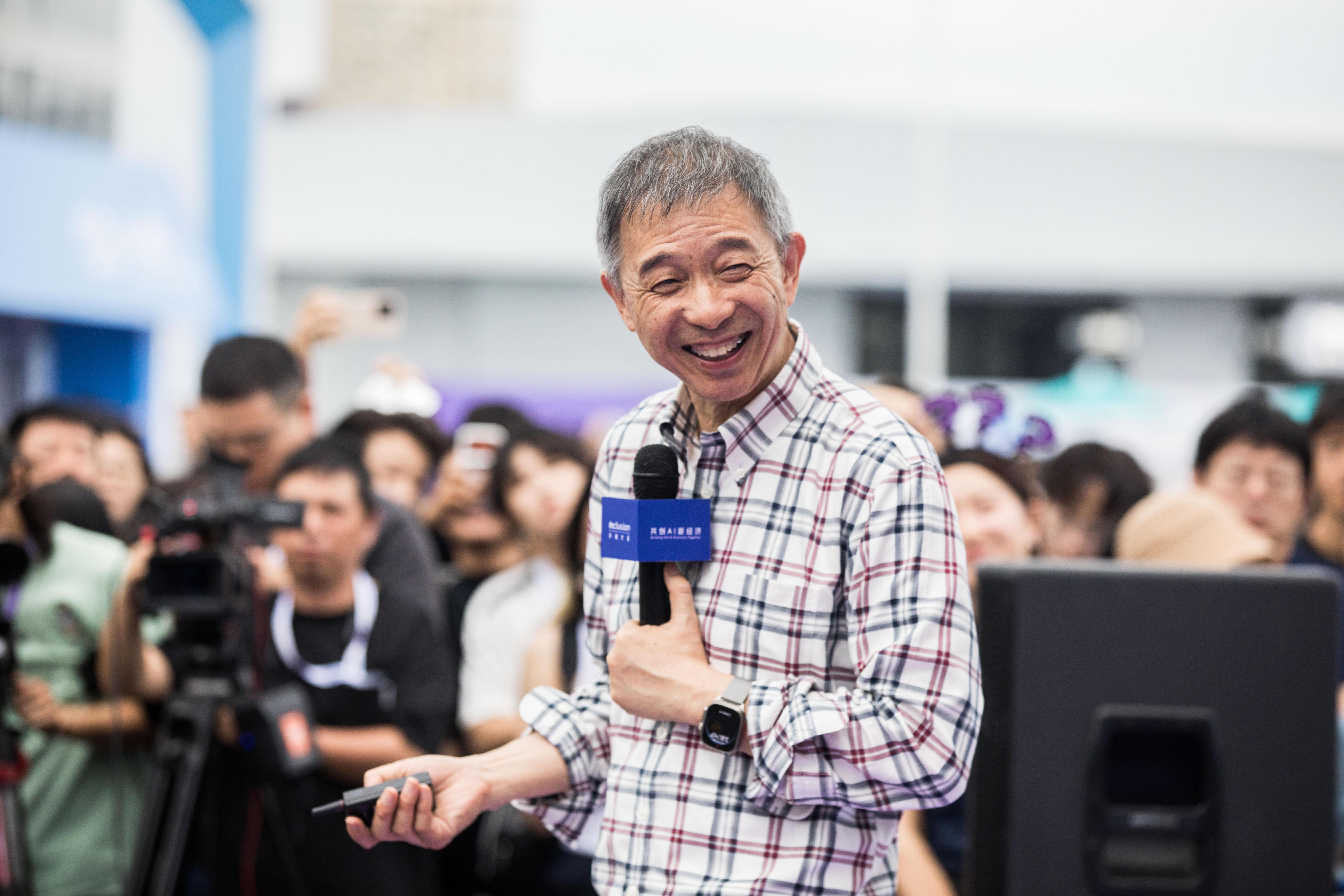
So, on the afternoon of September 10th, there was an additional "Come and meet Dr. Wang Jian" sharing session on the open-air square. Someone stood in the crowd listening, and someone raised their hand to ask a question. Wang Jian's opening remarks were frank: "This is a difficult proposition, there is no answer
He talked about a robotic dog from 2018. At that time, Zhu Qiuguo brought it to the "2050" conference, where the robotic dog lay on the ground, almost unable to stand up, and could only rely on a metal frame and steel wire rope for support. Later, Yunshen became one of the "Six Little Dragons of Hangzhou".
Today's activity is always used to presenting the most complete and beautiful results on the stage. Wang Jian said that imperfection is an inseparable part of perfection.
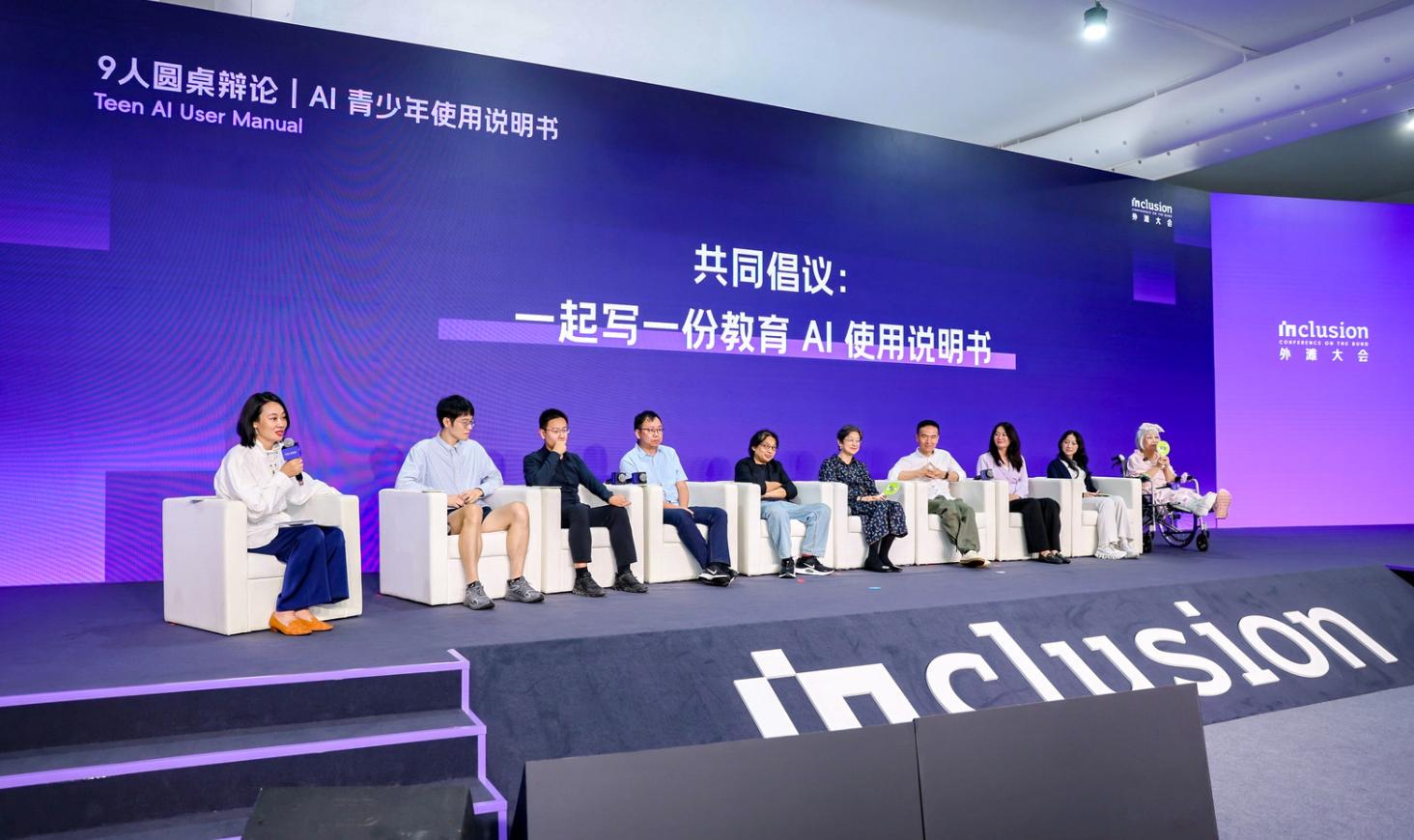
Another educational forum also retained this unevenness. The meeting was originally planned to launch an "AI Youth User Manual" initiative. At the end of the discussion, the guests did not reach a consensus, only a simple consensus was formed: when AI enters basic education, it should not only write "what can be done", but also label side effects and contraindications like drugs. It is important to clarify who is using it, what it is used to solve, and when it should not be used.
If a complete consensus cannot be formed, we will not force a consensus. Compared to submitting a beautiful answer sheet, this divergence is more like the real world.
Are we ready at the crossroads of civilization between silicon-based and carbon based? ”On the forum, Wei Tao, a visiting professor at Peking University and chairman of Ant Computing, reminded that "the most dangerous time for AI is when it answers too well. ”A child using AI to submit beautiful homework does not necessarily mean that they have truly learned. Scores may be inflated by tools, while abilities may remain stagnant.
Writer and scholar Chen Qifan took the camera even further. Who is producing data, maintaining systems, and bearing resource consumption and environmental costs behind an intelligent action? People who enjoy convenience, those who put in effort, and those who bear the consequences should all be seen in the same picture. Humanities not only talk about warmth, but also ask who the cost falls on.
Give back the initiative to people
Attention to people sometimes doesn't even require a forum or exhibition.
A guest talked about a detail they encountered when entering: After a wheelchair bound audience member entered, the on-site security guard waited for him to walk away before picking up the walkie talkie to remind colleagues, "There is a wheelchair bound audience member, please pay attention." He did not ask in person, nor did he turn the attention into a spectator.
This is a very small action. Seeing someone's needs, leaving them with dignity.
This year, on the Bund Hacker Song Festival, 9-year-old Luo Ange didn't understand programming and only used natural language and AI to collaborate. She turned the ancient pottery she learned at a summer camp in the deep mountains of Jiangxi into an online "soil laboratory".
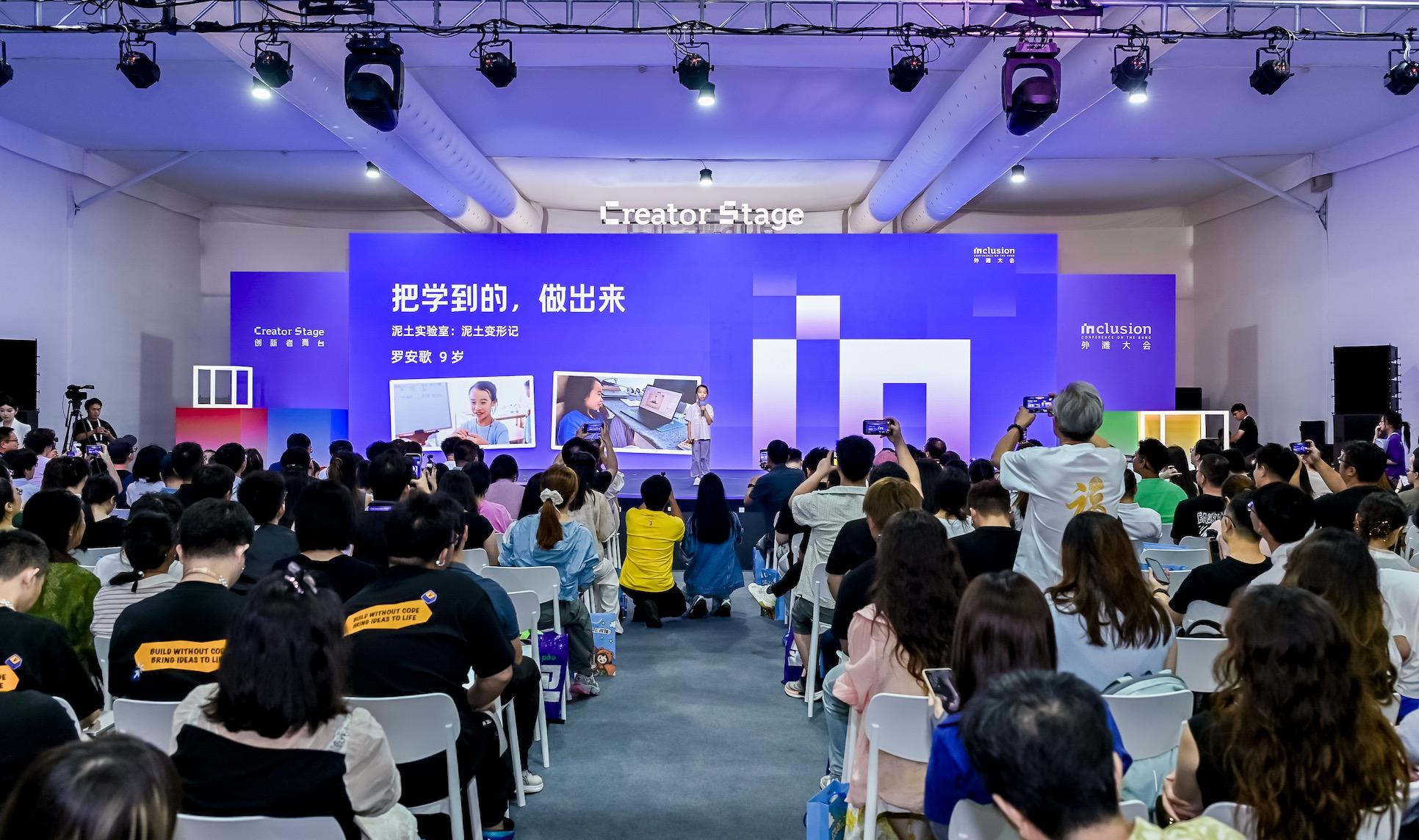
AI has lowered the threshold for making products and made it possible for a person to take the initiative to create something.
To bring initiative and imagination back to the individual.
As AI accelerates cognitive iteration and monopolizes knowledge supply, are humans losing their instinct for imagination? This discussion attempts to rediscover the true essence of human interaction with the world in an era surrounded by algorithms.
Wang Xiaowei, a philosophy professor at Renmin University of China, is concerned about why people in the technological era are increasingly accustomed to "optimizing" themselves. From work, emotions to love, we transform our lives with efficiency, metrics, and methodology, as if everyone is a project waiting to be upgraded.
But life is not a table, and there is no universal algorithm for intimate relationships. True intimacy is when a person can be fully seen without constantly performing the 'better version of themselves'. True life requires the ability to be touched by the world.
Wang Jian mentioned in an outdoor sharing that no one had ever asked Beethoven for a "Fifth Symphony" before it was written: "I need a Fifth Symphony." After the work was created, the world realized that it needed it.
The future is no exception. All futures are created, not simply derived from needs, "said Wang Jian.
Of course, he also said that creation doesn't just happen in the laboratory. Many new ideas come precisely from meeting people. Everyone is 100 kilometers away from space, and perhaps only 5 meters away from what they truly want to do
So, we will continue to meet at the Bund next year.