Economic Observer Follow
2026-09-05 10:35


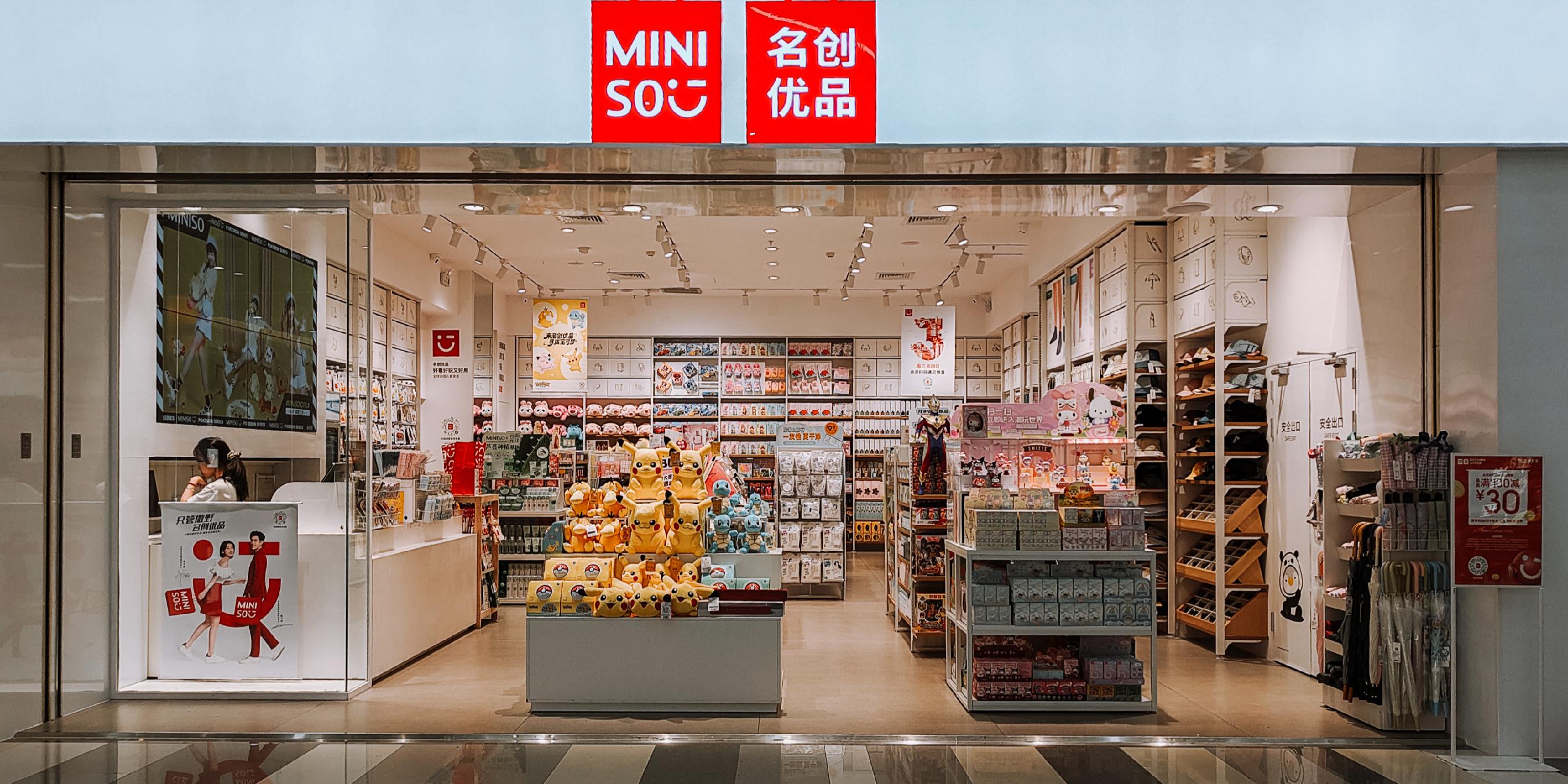
On August 31st, Miniso (09896. HK) experienced a significant decline in its first trading day after the release of its financial report, with a drop of about 13% during trading, reaching HKD 18.3 per share, a new low in nearly two years. On August 28th prior to this, Miniso released a financial report that made investors exclaim they couldn't understand.
In the first half of 2026, Miniso's operating revenue was 11.499 billion yuan, a year-on-year increase of 22.4%, and its net profit (i.e. net profit recorded according to international financial reporting standards, the same below) was 957 million yuan, a year-on-year increase of 5.6%. However, the adjusted net profit was 1.079 billion yuan, a year-on-year decrease of 15.7%, marking the first decline in the same period since 2022.
The largest variable comes from an AI related investment in Miniso. In the first half of the year, Miniso alone generated a net profit of approximately 277 million yuan. Along with Yonghui Supermarket, investments outside of the main retail business contributed over 30% of the net profit of Miniso.
On the investor communication platform, someone asked: Will this retail company, which has over 8600 stores worldwide, rely mainly on investment or its main business for future profits? Should we evaluate its value based on investment or IP operation?
An investment rewrites profits and losses
Looking at the semi annual report of Miniso by quarter, the fluctuation of its net profit is the most obvious. In the first quarter of this year, the net profit was 1.248 billion yuan, a year-on-year increase of 199.7%, setting a new quarterly high since the listing of the Hong Kong stock market in 2022; However, in the second quarter, the net profit was a loss of 292 million yuan, compared to 490 million yuan in the same period last year.
Such fluctuations are directly related to an investment in Miniso. According to the financial report, in the first quarter, its "AI Industry Limited Partnership Enterprise Investment" generated unrealized fair value gains of 875 million yuan, accounting for approximately 70% of the quarter's net profit; In the second quarter, the investment recorded an unrealized fair value loss of 597 million yuan.
In the first half of 2026, the net profit of Miniso was 957 million yuan, a year-on-year increase of 5.6%. The AI industry related investments and two investments from Yonghui have contributed over 330 million yuan to the net profit of Miniso, accounting for more than 30% of the company's current net profit.
At the performance conference in March this year, Zhang Jingjing, CFO of Miniso, stated that in the future, special attention should be paid to a large investment return in profits, which came from Miniso's investment several years ago. At that time, the company was very optimistic about the application prospects of AI technology in the retail industry. Ye Guofu, Chairman and CEO of Miniso Group, further explained that this AI company, MiniMax, "we invested in it at a very low valuation in the early stages, so the current returns are still good.
From the investment map of Miniso, in addition to incubating TOPTOY for independent listing, the main external investments are Yonghui and MiniMax. According to Yonghui's semi annual report for 2026, the company has turned losses into profits, with a net profit of 253 million yuan in the first half of the year. The net profit contribution to Miniso in the current period is over 60 million yuan.
Regarding the company's investment in MiniMax and its impact on its internal operations, a person close to the management of Miniso told the Economic Observer that "this is a pure financial investment". According to their understanding, the project was recommended by investors around Ye Guofu, and the company's finance team participated in the understanding and evaluation. At present, such investments have not yet formed operational synergy with Miniso's retail business.
Regarding Yonghui's investment, the person stated that Ye Guofu currently mainly plays a role by participating in Yonghui's board of directors, identifying core management personnel, and determining strategic directions, and has not been deeply involved in Yonghui's daily operations. In the first half of the year after the delivery, Miniso provided support to Yonghui in some personnel recruitment, and the related work gradually returned to the Yonghui team.
The above-mentioned individuals stated that in terms of channels, MINISO, TOPTOY, and WOW COLOUR (beauty collection stores under MINISO) sometimes negotiate with shopping malls together with Yonghui to strive for better store locations and business conditions; In terms of outsourcing beauty brands, MIN-ISO, WOW COLOUR, and Yonghui have also formed virtual project teams to try joint procurement and negotiate with brand owners.
Regarding the selection criteria for investment projects, whether to consider synergies with the main business, and how to balance external investment and main business investment, the Economic Observer reporter sent an interview outline to Miniso. As of the time of publication, the other party has not responded.
An investor who has been tracking Miniso on Snowball for a long time and continued to increase his position on the day of the stock price drop after the financial report was released told the Economic Observer that his reason for investing in this company is that he believes its "price is significantly lower than its value". For actions such as investing in Yonghui and developing TOPTOY, he believes that this is an attempt by Miniso to extend its supply chain management, product selection, and rapid category iteration capabilities to different retail formats. However, this investor also has concerns that the newly added loans and corresponding interest expenses for the acquisition of Yonghui may increase the financial pressure on Miniso and affect the use of operating cash flow.
Net profit of main business decreased by 15.7%
The main business of Miniso is a different scene.
The net profit of Miniso mainly has two dimensions: one is the net profit under the International Financial Reporting Standards, which reflects the overall profit and loss after the combined effects of operations, investments, and financing; The second is the adjusted net profit defined by the company itself, which excludes the impact of specific items such as changes in fair value of AI investments, Yonghui's after tax gains and losses, and some financing related expenses based on the aforementioned profits. By the first half of 2026, the number of adjustment projects has increased to seven categories.
Miniso has reminded on multiple occasions that adjusted net profit is a metric that is closer to the core business performance defined by the company.
In the first half of 2026, the operating revenue of Miniso was 11.499 billion yuan, a year-on-year increase of 22.4%. The adjusted net profit was 1.079 billion yuan, a year-on-year decrease of 15.7%. After reviewing the financial reports of the same period in previous years, the reporter found that this is the first year-on-year decline in this indicator since 2022. The performance of overseas business is lower than our previous expectations, which has caused a certain drag on the group's profits. "At the performance meeting on August 28th, Ye Guofu admitted that the contribution of overseas business to the group's profits has also decreased from 35% -40% in 2023 to 10% -15% in the first half of 2026.
In the past two years, overseas business has been the growth engine of Miniso. In the first half of 2026, the overseas revenue growth rate lagged behind mainland China for the first time. Miniso has not disclosed its overall overseas revenue, but based on its main business MINISO, MINISO's revenue in mainland China increased by 26.2% year-on-year in the first half of this year, the best level in nearly three years. The growth rate of overseas revenue slowed down to 14.9%, with a revenue growth rate of 9.1% in the second quarter.
Regarding the slowdown in overseas growth, the person close to the management of Miniso told Economic Observer that suitable agents and high-quality store locations are relatively scarce in key markets such as North America and Western Europe. "Once good locations are occupied by others, it may take 8-10 years to be released again. Therefore, Miniso will choose to enter and seize the market position through direct sales first, and then consider returning to a light asset model after the market operation is mature and suitable agents are found. However, when the number of directly operated stores has not yet reached a certain scale, even if some stores have already made profits, the initial investment and mid to back office costs will still drag down the overall profitability level.
Miniso has begun to clearly adjust its overseas direct sales expansion pace. During the performance conference call, Ye Guofu stated that the company will correct its past growth model that overly emphasized scale and store quantity, shifting from prioritizing scale to prioritizing quality in overseas markets. The addition of new direct stores will be evaluated more carefully for investment returns, and the expansion of overseas direct stores will be slowed down in the second half of the year. The main focus will be on improving the single store model, inventory turnover, and localized operations of the existing nearly 800 direct stores. The management expects 2026 to be a year of temporary pressure on profit margins and hopes to see a turning point in profit margins in 2027.
Regarding the domestic market, Ye Guofu stated that Miniso is currently in a critical period of "opening big stores, opening good stores, creating its own IP, and leveraging overseas organizational capabilities", and summarized "IP and big stores" as the two major growth drivers for Miniso's future. According to insiders at Miniso, the company has established a new IP business group and will allocate more energy, resources, and related budgets towards its own IPs.
As one of the key players, Miniso is accelerating the adjustment of its stores, internally referred to as "swapping cages for birds". Represented by MINILAND, amusement park themed stores often cover an area of thousands of square meters. This year's newly launched SUPERMINISO stores have about half of their products being IP products and the other half being non IP household items such as home furnishings, daily necessities, and accessories. In the first half of 2026, Miniso will have a net increase of 59 amusement park stores in China, while a net decrease of 121 regular stores will be achieved, and 189 stores will be renovated. The company stated that the floor area efficiency of amusement park stores is about twice that of ordinary stores, and the average payback period is within one year. The payback period of ordinary stores is about 16 to 18 months.
Miniso has disclosed that its first proprietary IP "YOYO" has entered 53 countries and regions one year after its launch, with related revenue approaching 500 million yuan in the first half of 2026. The management stated that the profit margin of their own IP products is higher than the average level of the company's products, and the inventory turnover period is about 30 to 40 days.
On the IP side, Miniso stated that it will continue to promote both authorized and proprietary IPs in parallel: on the one hand, it will maintain cooperation with external IPs such as Disney, Sanrio, and Harry Potter; On the other hand, by signing artists, product development, marketing and promotion, and global store sales, we incubate our own IP.
The above-mentioned person close to the management of Miniso told Economic Observer that the company internally summarizes this strategic direction as upgrading from retail companies and channel brands to cultural and creative companies and IP operation platforms. In practical work, channel upgrading and product innovation are still the two areas that Ye Guofu pays more attention to.
Starting from the second half of 2025, Ye Guofu will continue to participate in the selection of large store locations and the construction of new stores. At the same time, he will frequently interact with trendy artists and creators, and explore ways to incorporate potential IPs into the company system through exclusive contracts, copyright buyouts, investments, or the establishment of joint ventures.



 Subscribe