21st Century Business Herald Follow
2026-07-10 18:26


21st Century Business Herald reporter Zhang Xu reports from Beijing
Total pressure and structural differentiation; Funds are shifting and new quality productivity is rising. This is a prominent feature of investment in the first half of 2026.
From January to May, the national fixed assets investment (excluding farmers) was 178512 billion yuan, down 4.1% year on year. It is worth noting that under the pressure of overall volume, investment in high-tech industries increased by 4.5% year-on-year from January to May, and investment in electronic circuit manufacturing industry surged by 50.9%.
From the data of the past five months, we can glimpse the characteristics of investment in the first half of this year. According to some existing investment data for the first half of the year, the bulk real estate investment markets in Beijing and Shanghai are booming. In addition, the newly added local bonds for project construction in the first half of the year amounted to about 2.02 trillion yuan, becoming an important support for local infrastructure construction.
Against the backdrop of kinetic energy conversion, funds are accelerating towards high-tech manufacturing, digital economy, new infrastructure, equipment updates, and research and development innovation. An investment transformation centered on "new quality productivity" has already begun. Fu Yifu, a special researcher at Suzhou Commercial Bank, said that looking ahead to the second half of the year, investment is expected to gradually stabilize under policy support. The pace of fiscal funding will accelerate, and new financial instruments will continue to be used, coupled with the low base effect, providing strong support for the overall recovery.
 (Data image)
In the first half of 2026, the clear signal released by China's investment is structural differentiation: on the one hand, the investment performance of traditional driving forces, especially in the real estate sector, is flat, which has dragged down the overall data; On the other hand, new driving forces represented by high-tech industries are rising against the trend, becoming a key force supporting the improvement of investment quality.
Specifically, from January to May, the national fixed assets investment decreased by 4.1% year on year, and after deducting the investment in real estate development, it decreased by 1.2%.
Fu Linghui, spokesman and chief economist of the National Bureau of Statistics, said that the decline in fixed assets investment from January to May had expanded. "The impact of hot and rainy factors in some areas is also an objective reflection of the transformation of new and old development drivers and the transformation of investment from total expansion to quality improvement". He emphasized that observing changes in investment "should not only focus on changes in total quantity and scale, but also pay attention to the situation of investment structure, quality, and efficiency".
However, even real estate investment is not without its highlights. A report released by international commercial real estate services and investment company CBRE shows that in the first half of 2026, the Beijing bulk property investment market recorded a cumulative transaction amount of 25.7 billion yuan, a year-on-year increase of 50%. In addition, the report released by Cushman&Wakefield shows that in the first half of this year, 35 major real estate transactions were completed in Shanghai, with a total transaction amount of 23.3 billion yuan, a sharp increase of 47% over the same period in 2025, and the resilience of the market recovery is prominent.
In the eyes of experts, investment is undergoing structural adjustment and kinetic energy transformation, resources are being redistributed, and investment logic is shifting from "scale expansion" to "quality improvement".
Specifically, from January to May, investment in high-tech industries increased by 4.5% year-on-year, driving a total investment growth of 0.4 percentage points. Among them, investment in high-tech manufacturing increased by 3.4%, and investment in high-tech service industry increased by 6.9%. The segmented fields are particularly bright: investment in electronic circuit manufacturing increased by 50.9%, investment in lithium-ion battery manufacturing increased by 24.9%, investment in aircraft manufacturing increased by 19.7%, and investment in integrated circuit manufacturing increased by 11.0%. Driven by the rapid development of artificial intelligence, investment in the information service industry increased by 13.8%.
Fu Yifu believes that both the manufacturing and service industries have maintained steady growth in related investments, with particularly prominent fields such as electronic circuits, lithium batteries, and aviation manufacturing, reflecting the deep layout of the new energy vehicle and domestic large aircraft industry chains. More noteworthy is that driven by the rapid development of artificial intelligence, the investment performance of the information service industry is strong, and computing power and data infrastructure are becoming the carrier platform for new production factors. The significant increase in the proportion of intellectual property investment indicates that the engine of economic growth is shifting from "laying the foundation" to "stepping up the ladder", and from capital accumulation to technological innovation.
From January to May, overall infrastructure investment increased slightly by 0.6%, driving a 0.2 percentage point increase in total investment. Among them, investment in transportation, warehousing, and postal services increased by 7.1%, investment in water transportation increased by 23.3%, and investment in air transportation increased by 21.7%. The orderly promotion of new infrastructure such as computing power networks and next-generation communication facilities has led to a 30.4% increase in investment in the information transmission industry.
The reporter sorted out the issuance of local bonds, and found that in the first half of 2026, the scale of new local bonds used for project construction was about 2.02 trillion yuan, becoming an important "ammunition" to support local infrastructure construction.
In Fu Yifu's view, the fluctuation of investment structure not only reveals the pain of the transition between new and old driving forces, but also indicates the resilience of future growth.
There are also many highlights in investment trends between regions, such as Inner Mongolia and Gansu, where computing power hubs are located, which are experiencing an investment boom.
Looking ahead to the second half of the year, multiple experts and institutions predict that the investment growth rate is expected to gradually stabilize under the combined effect of policy strengthening and low base effect.
According to Wang Qing, Chief Macro Analyst of Dongfang Jincheng, this year marks the beginning of the 15th Five Year Plan, with a number of major projects starting construction and sufficient reserves of infrastructure projects. The Central Political Bureau meeting held on April 28th clearly proposed to strengthen the construction of the "six networks". On May 28th, the "15th Five Year Plan" for urban renewal was announced, and related projects will be launched quickly. In terms of funding, according to the government work report, the quota for local government special bonds used for project construction will be separately listed and increased this year. By October 2025, 500 billion yuan of new policy financial instruments will be fully deployed, gradually demonstrating the driving effect on infrastructure investment, and subsequent infrastructure investments will receive effective funding support.
As the infrastructure investment with the strongest government control ability, it has made significant efforts at the beginning of the year. The recent slowdown in growth rate is more of a policy rhythm adjustment nature. In the second half of the year, the efforts to stabilize growth may increase, and there is room for acceleration in infrastructure investment. In terms of manufacturing, with the easing of the situation in the Middle East, the promotion effect of the global AI investment boom on domestic manufacturing investment will further become apparent. Coupled with the increased policy support for the transformation and upgrading of the manufacturing industry this year, there is a trend of accelerating the growth rate of manufacturing investment in the later period. ”Wang Qing said.
Fu Yifu believes that looking ahead to the second half of the year, investment is expected to gradually stabilize with policy support. The pace of fiscal funding will accelerate, and new financial instruments will continue to be used, coupled with the low base effect, providing strong support for the overall recovery. But what is more worth looking forward to is a profound transformation in investment logic.
This year marks the beginning of the 15th Five Year Plan, and the 'Six Networks' have entered a comprehensive construction period. This round of construction will deeply integrate' investment in goods' and 'investment in people': pipeline network renovation will enhance urban safety and resilience, communication and computing power networks will promote digital inclusiveness, and logistics networks will create a large number of job opportunities. Each of these will not only strengthen the material foundation, but also improve people's livelihoods and enhance human capital. This' seeing things and seeing people 'approach will organically unify short-term stable growth with long-term sustainable development, providing warm and strong support for investment in the second half of the year and even longer, "said Fu Yifu.
Fu Linghui stated at the press conference that despite the decline in investment growth rate, "the investment structure continues to optimize, and investment has played an irreplaceable and important role in strengthening the foundation, promoting transformation, and benefiting people's livelihoods. As the construction of the "Six Networks" accelerates, the field of new quality productivity continues to expand, and landmark leading projects in high-tech industries are launched one after another, investment is accumulating momentum for longer-term growth.
For example, the logistics network has become the foundation for expanding domestic demand and the link for dual circulation. Lin Tan, a researcher at the China Academy of Transportation Studies at Tongji University and director of the Transportation Industry and Logistics Center, explained to 21st Century Business Herald reporters that the logistics network is the "main artery" of the industrial chain and supply chain operation, and is the fundamental and strategic support that connects production, distribution, circulation, and consumption links.
Increasing investment in the construction of logistics networks will fully reflect the new investment concept of combining investment in goods and investment in people, further leveraging its multi node, long link, and cross regional networking characteristics, promoting the upgrading of logistics networks into strategic infrastructure for industrial transformation and consumption upgrading, and playing a more important leading, foundational, and guiding role in the process of modernizing new and old driving forces, "said Lin Tan.
In addition, according to policy arrangements, this year we will focus on expanding effective investment in areas such as "artificial intelligence+" infrastructure, urban renewal, national water networks, and new energy systems. In terms of institutional and mechanism innovation, we will comprehensively carry out "soft construction" work in central investment projects, promoting the formation of a long-term mechanism for project construction implementation and operation maintenance. We will also leverage the role of the National Entrepreneurship Investment Guidance Fund to guide and drive social capital to support technological innovation and the development of emerging industries.
Regarding the importance of developing high-tech industries, Su Jian, a professor at Peking University School of Economics and director of the National Economic Research Center, told 21st Century Business Herald reporters that from the perspective of international competition, China is facing an increasingly complex international environment. Only by occupying a certain position in emerging and future industries such as artificial intelligence and aviation can China have sufficient competitiveness and enhance its international status.
From the perspective of economic development laws, with the development of the Chinese economy, the structure of resource endowment has changed and is currently in a capital intensive stage. Only by further enhancing the technological content of industries and elevating China's position in the global value chain can we achieve further economic development, "said Su Jian.
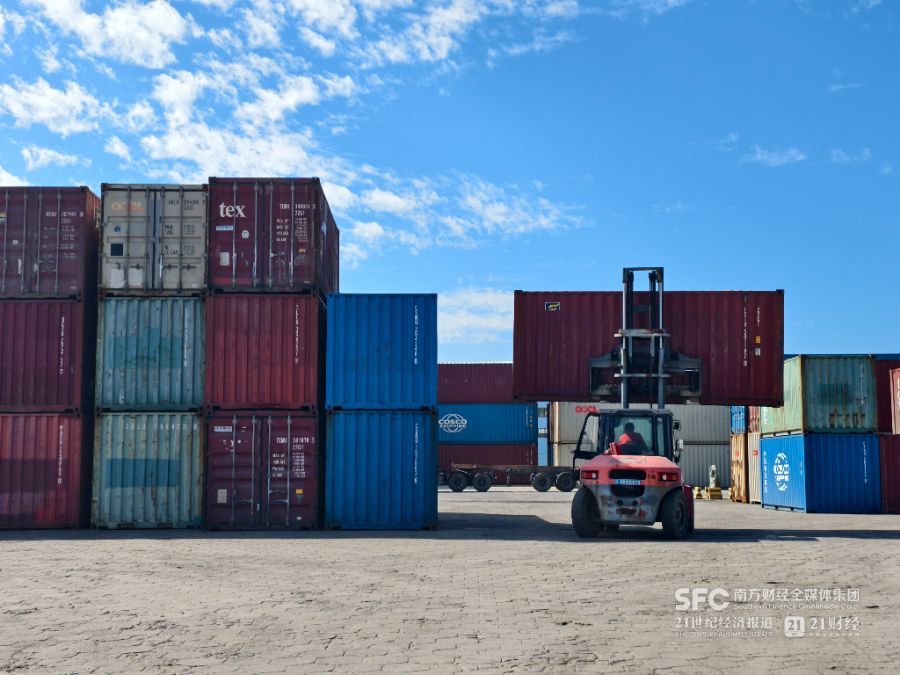 Container Terminal Photography: Zhang Xu


 WeChat registration or login