Economic Observer Follow
2026-07-03 08:27


Economic Observer reporter Lao Yingying
On July 2nd, the rapidly rising technology stocks in the A-share market suffered a heavy blow: the CSI Semiconductor Index (H30184) plummeted 8.31%; The Guozheng Chip Index (980017) plummeted by 8.74%; Storage concept stock leader Zhaoyi Innovation (603986. SH) hit the limit down.
Has the wolf really arrived? In fact, in the past few months, global investors have been flocking to semiconductor stocks. Of particular note is the investors' enthusiasm for semiconductor leveraged products.
In early January 2026, investor Mr. Zheng started buying Southern Double Long Hynix (07709. HK), which tracks the performance of SK Hynix's individual stocks, through Hong Kong Yingli Securities. The first purchase price was HKD 20 per share, and he bought 5 lots (100 lots for 1 lot) at that time. Afterwards, he continuously took advantage of the pullback to increase his holdings, with a peak position of 24 lots. In late April, he started selling, but later bought at positions such as HKD 40, HKD 80, and HKD 90. In June, he began to continuously reduce his holdings. On June 26th, Mr. Zheng still had 8 positions in his hand, with an overall profit of nearly HKD 200000.
But starting from June 26th, the Southern Double Long Hynix experienced a wave of decline. On July 2nd, the product experienced an intraday drop of up to 30%. On July 2nd, Mr. Zheng increased his holdings by 5 lots at the position of HKD 115. He told reporters that fluctuations in the product have become normal, but it will rebound after each deep adjustment, and there is also room for repair after this adjustment.
During the interview, the reporter also learned that another investor had previously sold their Southern twice as long Hynix, but resumed buying on July 2nd. The investor said that they would buy 2 lots on the same day, and if the market continued to decline, they would increase their holdings in batches.
The full name of Southern Double Long Hynix is "Southern Dongying SK Hynix Daily Leverage (2x) Product", issued by Southern Dongying Asset Management Co., Ltd. (hereinafter referred to as "Southern Dongying") in the Hong Kong market in October 2025. After the product was listed, it quickly gained market attention and popularity. On June 25th, the product briefly rose to HKD 193.65 per serving during trading, setting a new historical high with a cumulative increase of over 1000% for the year; The scale once exceeded HKD 130 billion, up 200% from HKD 42 billion at the beginning of May, making it the world's largest individual stock leverage and reverse product.
In addition to the Hong Kong market, this trend has also swept across the United States and South Korea, with investors' "big bets" on semiconductor leaders in the global artificial intelligence (AI) industry chain without exception.
Bloomberg macro strategist Simon White recently wrote that as of the end of June 2026, the total asset size of leveraged and reverse leveraged stock ETFs in the United States has approached $200 billion, with buying and selling demand from rebalancing alone reaching over $50 billion on some trading days, setting a new historical high. According to data released by Goldman Sachs' global fixed income and equity teams, as of May 27, 2026, the asset management scale of global leveraged/reverse individual stock leveraged ETFs has reached the $60 billion mark, doubling from early April.
The leveraged products tracking SK Hynix and Samsung Electronics, which were newly launched in South Korea at the end of May, also staged a "money making myth", attracting over $2 billion in funds on the first day of listing.
Double Long
On October 16, 2025, Southern Dongying launched Southern Double Long Hynix on the Hong Kong Stock Exchange. According to publicly available information, the investment objective of this product is to track the performance of SK Hynix stock and provide a daily leverage return of 2 times.
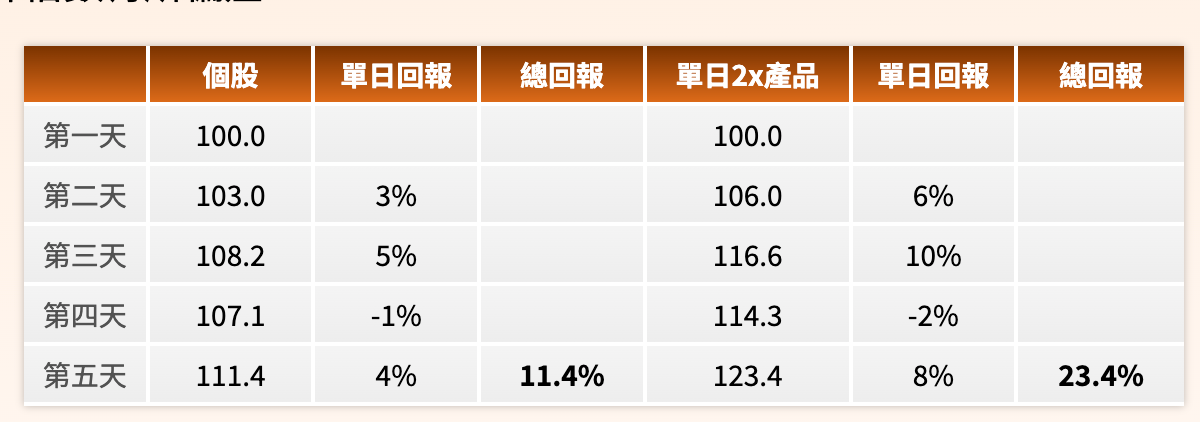
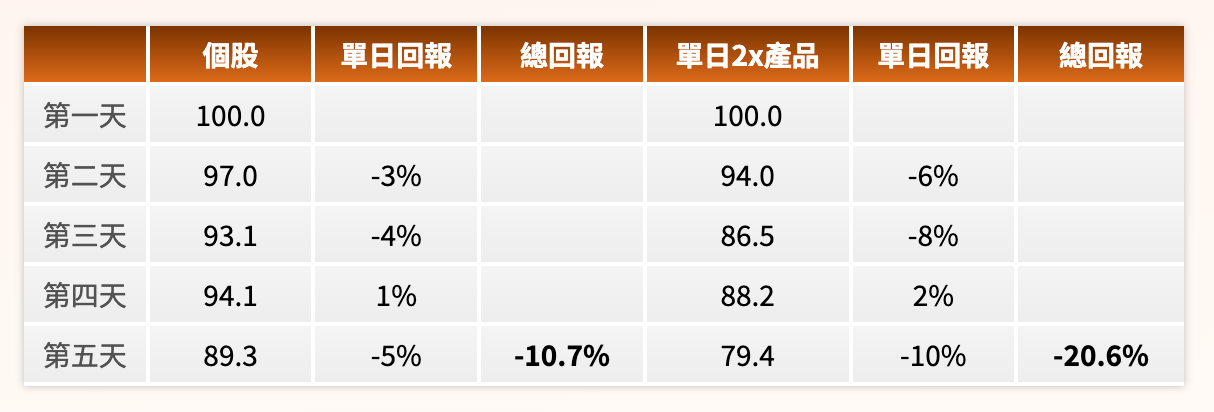
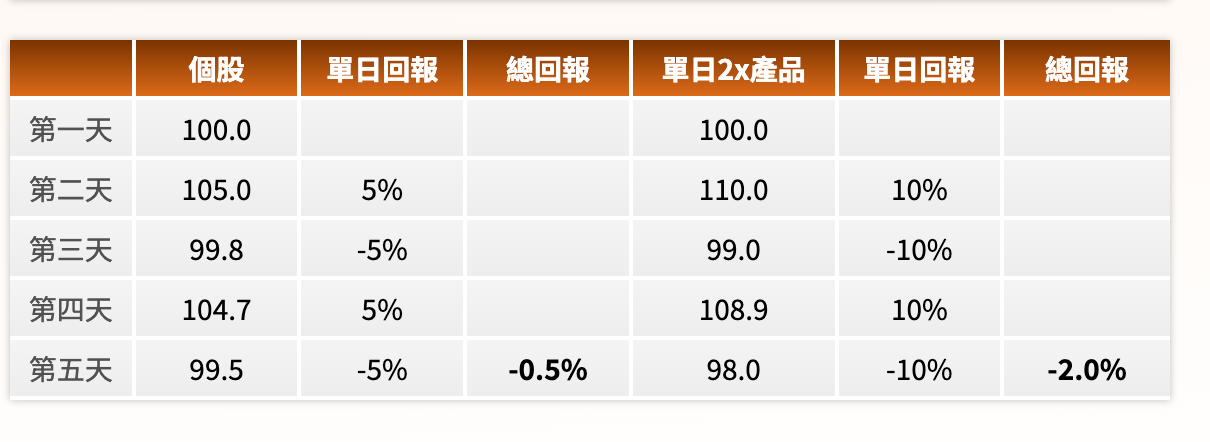
According to the product information, this is a leveraged product for individual stocks. Unlike traditional exchange traded funds, this product seeks leverage investment performance relative to the underlying stocks and is limited to daily performance. That is to say, the product will synchronously amplify the rise and fall of SK Hynix's individual stocks, and regardless of how much the individual stocks rise and fall, the volatility of the product will be correspondingly amplified by two times; And the product only guarantees a daily performance of twice the target stock. If the position is held for more than one day, the cumulative return will not be equal to twice the fluctuation level of the target due to compound interest effects and volatility losses.
Southern Dongying told Economic Observer reporters that thanks to the enterprising efforts of Hong Kong regulatory authorities and the mature mechanism of the Hong Kong market, Hong Kong issued individual stock leverage products of Korean AI concept stocks several months earlier than South Korea, and comprehensively surpassed South Korean domestic products in terms of scale, trading volume, and stable product operation; At that time, SK Hynix launched the world's only leveraged exchange traded product in Hong Kong, aiming to provide investors with double profit opportunities and seize SK Hynix's leapfrog growth in the AI driven semiconductor market.
Prior to the launch of this product, in the second quarter of 2025, SK Hynix had surpassed Samsung Electronics to become the world's top selling DRAM supplier. Between 2020 and 2024, SK Hynix's annual revenue, operating profit, and net profit have achieved compound annual growth rates of 20%, 54%, and 58%, respectively.
Compared to Mr. Zheng, Mr. Chen appears more cautious. In mid to early May, Mr. Chen bought 6 lots of Hynix at twice the long position of 95 Hong Kong dollars per share in the south. Soon after, the product fell back to the range of 80 Hong Kong dollars to 90 Hong Kong dollars, resulting in a loss of principal. Fortunately, the product later saw another wave of rise, and he decisively sold it at 143 Hong Kong dollars. He held it for about a month and made a profit of about HKD 12000.
Mr. Chen told the Economic Observer reporter that the product has significant fluctuations and the resulting losses are unbearable, making it unsuitable for long-term holding. He also stated that without a Korean stock account, he cannot invest in SK Hynix stocks and can only buy this product. The overall stock price of Hynix is showing an upward trend, and doubling the long position will result in a positive compound interest effect, but there may also be significant losses in volatile market conditions.
Long term bull market:
Long term bear market:
Fluctuating market conditions:
(Performance of products and underlying stocks in different market conditions)
According to the product information, assuming the stock price of the target stock is 100 on the first day, leveraged products will amplify returns. However, when held for a longer period of time, the actual return may deviate from its own leverage ratio. As shown in the above figure, in a long-term bull market, the return of double long leveraged products exceeds twice that of related stocks (23.4%>11.4% x 2=22.8%), and the return is better than that of individual stocks; In a long-term bear market situation, the decline of double long leveraged products is greater than the decline of related individual stocks; In the context of market volatility, the returns of double leveraged products are also inferior to the performance of related stocks.
According to data provided by Southern Dongying, as of June 16th, the returns of Southern Double Long Hynix in 1 month, 3 months, 6 months, from the beginning of 2026 to the present, and since the establishment of the product, have reached 196.73%, 255.05%, 1143.23%, 755.72%, and 1675.71%, respectively.
Global Popularity
Before launching the Southern Double Long Hynix, on May 28, 2025, Southern Dongying launched the Southern Double Long Samsung (07747. HK) and Southern Double Short Samsung (07347. HK).
When launching this pair of leveraged products that track individual stocks of Samsung Electronics, Southern Dongying stated that as a global technology giant, Samsung Electronics is the largest listed company in South Korea by market value, with a large local investor base and has consistently ranked among the world's highest listed companies by market value. However, looking at the global market, there were no leveraged or reverse products related to Samsung Electronics at that time; Considering the similar trading time zones between Hong Kong and South Korea, and in line with the company's advantages in leverage and reverse products, this pair of products has been launched as a new tool for strategic trading and risk hedging.
The scale of leveraged products tracking Samsung Electronics' individual stocks is also constantly expanding. As of mid June, the size of Samsung, which was twice as long in the south, reached HKD 34.5 billion. On the basis of a 216% increase in size in May, it once again achieved a growth rate of over 50% in June.
A Hong Kong investor told reporters that his investment philosophy is not to choose individual stocks, not to invest in specific sectors, but to target a certain direction and increase leverage for investment. He firmly believes in the profitability of storage technology giants and predicts that by 2027, the profitability of the three major storage giants, Micron Technology, Samsung Electronics, and SK Hynix, will be 25% to 40% higher than market consensus. Therefore, he bought Southern Double Long Hynix and Southern Double Long Samsung in January 2026. In addition, he also bought a 3x long leveraged product that tracks the New York Stock Exchange semiconductor index.
In addition to the hot demand for semiconductor leverage products in Hong Kong stocks, semiconductor leverage products in the US stock market have also seen an influx of funds. According to data from Direxion Fund issuers, in mid June, the three times long semiconductor ETF (SOXL) in the US hit a historic high, with a year-on-year increase of 462%; The asset size has increased from 12.677 billion US dollars at the end of 2025 to 33.553 billion US dollars at its peak in June this year, a growth of 165%.
On May 27, 2026, 16 individual stock leverage products focusing on Samsung Electronics and SK Hynix with double leverage and reverse leverage were listed in South Korea. On the first day of its launch, the new product was highly sought after by funds, with a total asset size of 16 products directly exceeding 4.3 trillion Korean won (equivalent to approximately 2.76 billion US dollars). According to data disclosed by the Korean Stock Exchange, from June 8th to June 12th, the cumulative trading volume of four single stock leveraged products of the two major ETF brands, KODEX and TIGER, reached 33.65 trillion Korean won.
In addition, with the continuous rise in the stock prices of Chinese A-share technology giants, Wall Street leveraged giants have also recently set their sights on Chinese A-share related stocks. For example, on June 10th, ProShares, a well-known leveraged product issuer in the United States, submitted a document to the US Securities and Exchange Commission, planning to launch double long leveraged products that track multiple A-share technology leaders such as Zhongji Xuchuang, Xinyisheng, Tianfu Communication, and Zhaoyi Innovation.
Potential Risk
The other side of the popularity of leveraged products also brings potential risks.
Goldman Sachs futures trading expert Robert Quinn pointed out in the latest issue of Goldman Sachs Weekly Brief that the global leverage chain has extended to every corner: retail investors have flooded into nearly $200 billion in leveraged ETF products, institutions have piled up positions through TRS (Total Return Swap), traders' leverage has reached its mid year historical peak, and the Korean market has evolved into a "huge self reinforcing feedback loop". Once the financing chain breaks somewhere, the chain may collapse or happen overnight.
Wang Hongying, President of the China (Hong Kong) Financial Derivatives Investment Research Institute, stated in an interview with the Economic Observer that such products achieve leverage returns by signing swap contracts with securities firms and investing in stock swaps. Securities firms need to reset their positions daily to ensure that the net value of leveraged trading remains consistent with the overall trend of ETF products.
He also stated that this type of ETF trading product with built-in leverage is essentially a financial derivative trading tool. When the market experiences significant fluctuations, the returns and risks will be simultaneously amplified. From the perspective of market trading mechanisms, if market makers stop quoting at the end of the trading session, there will be valuation distortion in the market price. Coupled with the leverage nature of the product itself, investors' losses will sharply increase, and in extreme cases, the investment principal may even return to zero.
Wang Hongying further explained using leveraged ETF products in the Korean market as an example that such products in the Korean stock market belong to swap trading and must be provided with liquidity by market makers to maintain normal market trading. According to the trading rules of the South Korean stock market, market makers are not required to fulfill their active quoting obligations ten minutes before the daily closing. In this case, if the relevant ETF products are traded at market price, the market will experience significant price fluctuations due to discontinuous quotes, directly causing distortion in the valuation of ETF products and resulting in investment risks.
On June 18th, the Financial Supervisory Authority of South Korea released a report stating that from May 27th to June 12th, the maximum drawdown of Samsung Electronics' stock was 18.0%, corresponding to a drawdown of 35.9% for a 2-fold leveraged ETF; SK Hynix's stock retraced by 19.1%, and its leveraged ETF retraced by 38%. The South Korean Financial Supervisory Authority has warned that under the 30% limit on individual stock price fluctuations, the theoretical maximum daily loss for 2-fold leveraged products can reach 60%.
For ordinary individual investors, Wang Hongying suggests that the current high trading heat and capital accumulation in the semiconductor industry, coupled with the aforementioned issue of discontinuous pricing, will further exacerbate the volatility of the valuation system of semiconductor leveraged ETFs. From the perspective of retail investors, this type of product is only suitable for short-term speculative operations. Investors can buy at the right time when market prices plummet and sell in a timely manner when prices rise, earning short-term spread returns. But this type of product is not suitable for medium to long term holding, as there is great uncertainty in long-term investment returns, and investors are more likely to face huge losses.



 WeChat registration or login


 Subscribe