Economic Observer Follow
2026-07-02 11:31



Fu Weigang/Wen
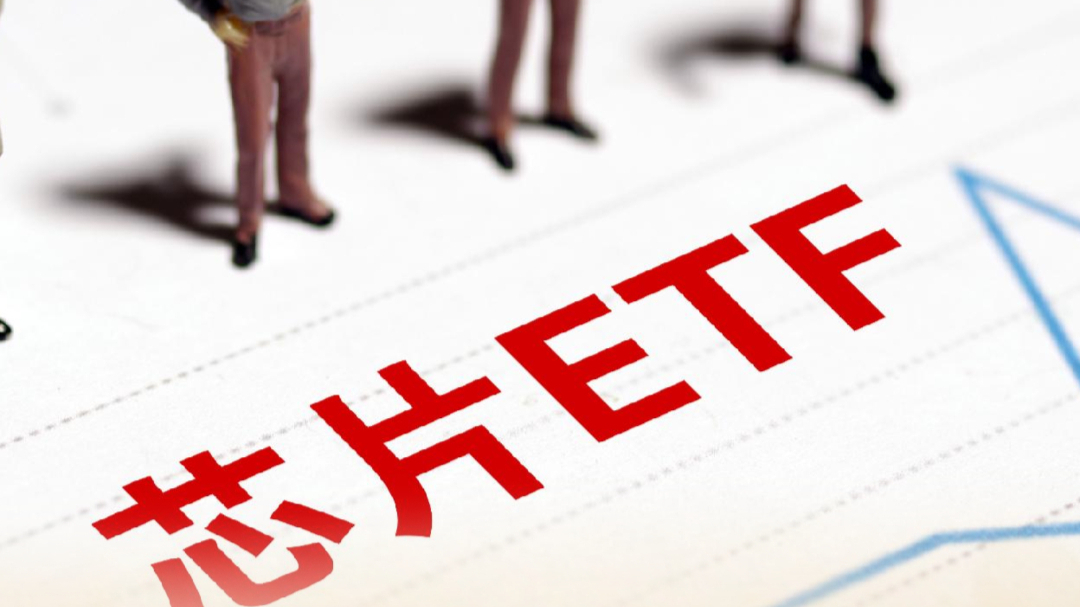
On June 30, 2026, Cambrian's total market value was set at over one trillion yuan, becoming the first trillion yuan company in the history of the Science and Technology Innovation Board. This day is also a microcosm of a bigger change: among the top ten stocks in the A stock market, five of them belong to technology stocks.
If you want to find a few footnotes for this moment, Ningde Era, Zhongji Xuchuang, and Cambrian are the three most suitable ones. The market value of the three companies is in the trillion dollar range, but they belong to three completely different categories, forming a spectrum from "profit realization" to "narrative overdraft". And this spectrum is almost the entire story of the past, present, and future of A-share technology stocks.
20 years of supporting role
For a long time, technology stocks were just supporting role of A-shares. In the past 20 years, banks, energy, Baijiu and real estate have taken turns to dominate the market capitalization list. Technology companies are either not large enough to rank in the forefront, or their profits are not stable enough, or their valuations are still being weighed down by the "story telling" label. The history of the three trillion dollar companies today is precisely a reflection of this dilemma.
CATL was born from ATL, a battery factory acquired by TDK in Japan. Its founder, Zeng Yuqun, did not return to his hometown CATL until 2011 to start anew. Zhongji Xuchuang's predecessor was a motor equipment manufacturer that was on the verge of delisting. In 2017, it acquired a shell from Suzhou Xuchuang for about 2.8 billion yuan and barely squeezed into the optical module track. Cambricon was removed from Huawei's supply chain and lost its largest customer in 2019, resulting in long-term losses. When it listed on the Science and Technology Innovation Board in 2020, it was still an unprofitable company. They were all once marginalized players who were not favored.
At that time, A-shares only had two faces when pricing technology stocks: one was to treat them as cyclical stocks, giving them a very low P/E ratio, and their fluctuations completely following the industry's prosperity; Another approach is to hype it up as a subject matter, fueling violent fluctuations. When the concept rises, chickens and dogs soar to the sky, but when the tide recedes, chicken feathers spread everywhere. Among them, only a middle ground that acknowledges growth while adhering to pricing logic is missing.
One of the most fundamental differences between A-shares and US stocks in the past 20 years is that technology companies cannot raise capital commensurate with their technological content, and capital cannot find technology targets that can be realized in the long term.
The deeper reason lies in the funding structure and institutional environment. The market, dominated by retail investors and with a high turnover rate, naturally prefers short and fast-paced themes; Without sufficient patient long-term funding, it is difficult to provide stable pricing for technology companies that require years of research and development to deliver. That's also why the same technology story can patiently cultivate profits on NASDAQ, but often gets hyped up first and then dropped off in A-shares.
Climbing to the top and differentiation
Today, the situation experienced a structural reversal for the first time. The total market value of the semiconductor sector has historically surpassed that of banks, reaching the top of the Shenwan level industry. According to the China Association of Listed Companies, the market value of private listed companies has risen to about 37.5%, surpassing about 29.8% of state-owned enterprises and becoming the single largest ownership sector. Among the top ten by market value, technology stocks account for five seats. The capital market is using prices to reorder the protagonists of the next phase of China's economic growth.
This repricing did not come out of thin air, but was the result of the combination of three forces. One is the global AI computing cycle, which pushes optical modules and computing chips from the edge to the forefront; Secondly, domestic substitution under external chip regulation has opened up a certain domestic space for semiconductor equipment and design; The third is the warm breeze from the policy perspective. The implementation of the Law of the People's Republic of China on the Promotion of the Private Economy and the repeated emphasis on new quality productivity in regulation have made the market dare to give higher valuations to private technology enterprises. The resonance of the three factors led to the collective peak of technology stocks on the market value list.
But what is more worth pondering than reaching the summit is the differentiation of color. Despite having a market value of trillions, the gold content of the three companies is vastly different.
Ningde Times is the most solid end of this spectrum, with a revenue of approximately 423.7 billion yuan in 2025; The net profit attributable to the parent company was about 72.2 billion yuan, a year-on-year increase of about 42%, equivalent to earning nearly 200 million yuan in a day; The power battery has been ranked first in the world for 9 consecutive years, with a P/E ratio of only about 25 times. This trillion dollar market value is supported by real and huge profits, which is closer to the pricing of the US stock market that combines scale and reasonable premium.
Cambrian stands at the other end, achieving its first annual profit in 2025 with a net profit attributable to the parent company of approximately 2.1 billion yuan; But after the market value exceeded one trillion, the P/E ratio reached about 369 times. Its valuation is essentially the pricing of the national narrative of "domestic substitution" in the capital market, overdrawing performance after 2027, making it extremely sensitive to policies and emotions, rising and falling quickly.
Zhongji Xuchuang falls in the middle, with a revenue of approximately 38.2 billion yuan in 2025; The net profit attributable to the parent company is approximately 10.8 billion yuan, doubling year-on-year; Overseas revenue accounts for over 90%, deeply embedded in the global AI supply chain centered around Nvidia and Google. The rolling P/E ratio of Zhongji Xuchuang is about 140 times, which seems not low, but due to the continued doubling of profits, the forward P/E ratio has fallen back to about 50 times. It represents a type of performance that is realizing growth.
Looking at the three companies together, the "now" of A-share technology becomes clear: this is not a single phenomenon, but a spectrum where the market is simultaneously pricing "realized profits," "growth in progress," and "unrealized options. This is not only a maturity of A-share pricing power, but also indicates that the market is finally willing to pay for "growth and global competitiveness"; It also planted the hidden danger of differentiation, because the risks behind these three colors are completely different in magnitude.
It should be noted that market value is ultimately a reflection of market expectations, not the share of output, employment, and assets. According to revenue, total assets, taxation, and credit allocation, the state-owned sector remains the cornerstone, and the size of banks, energy, and telecommunications is far greater than that of a few technology stocks. The fact that private enterprises surpass state-owned enterprises in market value and their true weight in the real economy are two things that cannot be replaced by each other. The capital market's initial judgment is only a directional one, rather than an established structural reversal.
Which end do you converge towards
So, the real question surfaced: In the future, which end will this spectrum converge towards?
One possibility is the Cambrian period. The market continues to pay for narrative, high valuations are maintained by emotions and policies, but profits have been slow to keep up. The end of this road is fragile: once the narrative is falsified, the retreat will be very intense. Since the beginning of this year, several technology leaders have experienced a pullback of 36% to 43%, and the crowded holdings and foreign leverage tools will further amplify the volatility.
One possibility is' Ningde ization '. Enterprises transform narratives into real profits, convert the high valuations given by the capital market into ammunition for research and development investment and global expansion, and ultimately use performance to realize valuations. Ningde Times has invested billions of yuan in research and development, with overseas revenue accounting for 30%, and is following this path.
A useful reference is the Hong Kong stock market and the US stock market. In the Hong Kong stock market, Tencent, a company with solid profits, has a P/E ratio of only about 14 times and has been discounted for a long time. Behind Nvidia's high valuation of about 40 times in the US stock market is a real profit of billions of dollars.
The way A-share technology has to go is to find its own position between the two: neither as a long-term undervalued depression, nor as a narrative foam separated from profits.
The future of A-share technology depends on how many "Cambrian" periods can eventually become the "Ningde era", which requires three conditions.
One is genuine global competitiveness, not just a closed narrative of domestic substitution. A company that can secure orders in overseas markets and from global customers has a foundation for profitability. The second is a sustainable profit model, rather than being tied to a single customer or theme. The lesson of the Cambrian era, which was almost shut down after being cut off by Huawei, is not far away. The third is the cultivation of pricing discipline in the capital market itself, shifting from "speculating on expectations" to "recognizing performance", making high valuations subject to profit testing.
We also need to see that state-owned assets have not withdrawn from this round of technological rise, but have existed in a different way. It has retreated to bottleneck, heavy asset, and short-term difficult to profit links such as wafer manufacturing and semiconductor equipment, giving up market-oriented and fast acting tracks such as optical modules, consumer electronics, and software to private enterprises.
SMIC, which ranks among the top in terms of market value, is a representative of this side: without actual controllers, with deep involvement of national funds, the valuation anchor is more focused on strategic value rather than current profits. The division of labor between state-owned enterprises and private enterprises in the technology industry chain itself is another layer of meaning of the change in the ownership structure of A-shares.
We can also see this clearly with a simple conversion: the required profit is equal to the market value divided by the price to earnings ratio, and the required revenue is equal to the profit divided by the net profit margin.
According to this ruler, Ningde Times has truly earned the profit requirement corresponding to a trillion yuan market value; The Cambrian period corresponds to profits that may only appear after 2027. The market value can be achieved in one step, but profits need to be earned year by year, and the time difference in between is where the risk exposure lies.
Three trillion dollar companies, like three mirrors, reflect the origin and destination of A-share technology stocks. In the past, technology was a supporting role, and the valuation fluctuated between low multiples and theme hype. Now, for the first time, technology has taken the lead in pricing, but there are both good and bad, with varying degrees of quality. In the future, the real watershed is not who can rise to trillions, but who can build profits above trillions.
The capital market has already taken the lead over the real economy and cast the protagonist of the "next stage of China's economy" in their hearts. Is this vote correct or not? It will be up to these companies to answer with profits. Trillion market value is not the end, but the beginning of a big test: the test is not how high the market value can soar, but how long the condition can be maintained.


 WeChat registration or login



 Subscribe