Economic Observer Follow
2026-06-09 09:05


Economic Observer reporter Wang Yajie
At the National Energy Administration's "Artificial Intelligence+" Energy Field Promotion Conference held in Shenzhen at the end of May 2026, Zhang Lei, Chairman of Far East Technology Group (hereinafter referred to as "Far East"), made a rather "disruptive" statement in front of many energy central enterprise leaders in the audience - the power system is not a supporting system of artificial intelligence, but the main project of artificial intelligence.
Also present at the scene are giants such as China National Petroleum Corporation, State Grid Corporation of China, and State Energy Group. Yuanjing is the only private new energy enterprise invited.
Although Far East's wind power installation in 2015 ranked among the top in the world, the company's special feature is not its wind turbine manufacturing, but an experiment hidden deep in the Gobi Desert in Chifeng, Inner Mongolia: using the wind and light in the desert to produce green ammonia that can be sold to international chemical giants.
Just three months ago, Farview announced that its commercial green ammonia production would be shipped from Lianyungang, China to Lotte Precision Chemicals in South Korea. Farview claims that this is the world's first commercial delivery of green ammonia. This action has made Yuanjing one of the system level players who have successfully completed everything from wind turbines, energy storage, electrolytic cells, dynamic synthesis of green hydrogen ammonia, to the certification of end products for overseas markets.
The green hydrogen industry has been shouting slogans for many years, but has been suppressed by the three major mountains of cost, technology, and market. What has Yuanjing achieved in Chifeng? Is this link truly sustainable?
Break The Deadlock
The hydrogen energy industry has an 'impossible triangle': green electricity is unstable, chemical plants need to operate continuously, and there must be someone willing to pay for the green premium at the end, "said an operations manager of the hydrogen energy sector under the National Energy Group to an Economic Observer reporter." In the past, everyone was breaking through at a single point, and Far East was the first to solve the three dimensions in one system
The Economic Observer found that in the past few years, green hydrogen projects have been signed intensively, but there are only a few million ton projects that have truly been put into operation and achieved commercial sales. Most projects are stuck in the deadlock of "chicken or egg first", with downstream users waiting for green ammonia prices to decrease and upstream waiting for economies of scale to dilute costs, making it difficult for anyone to take the first step.
Yuanjing's green hydrogen ammonia project in Chifeng aims to cut through this dead end with a single blow.
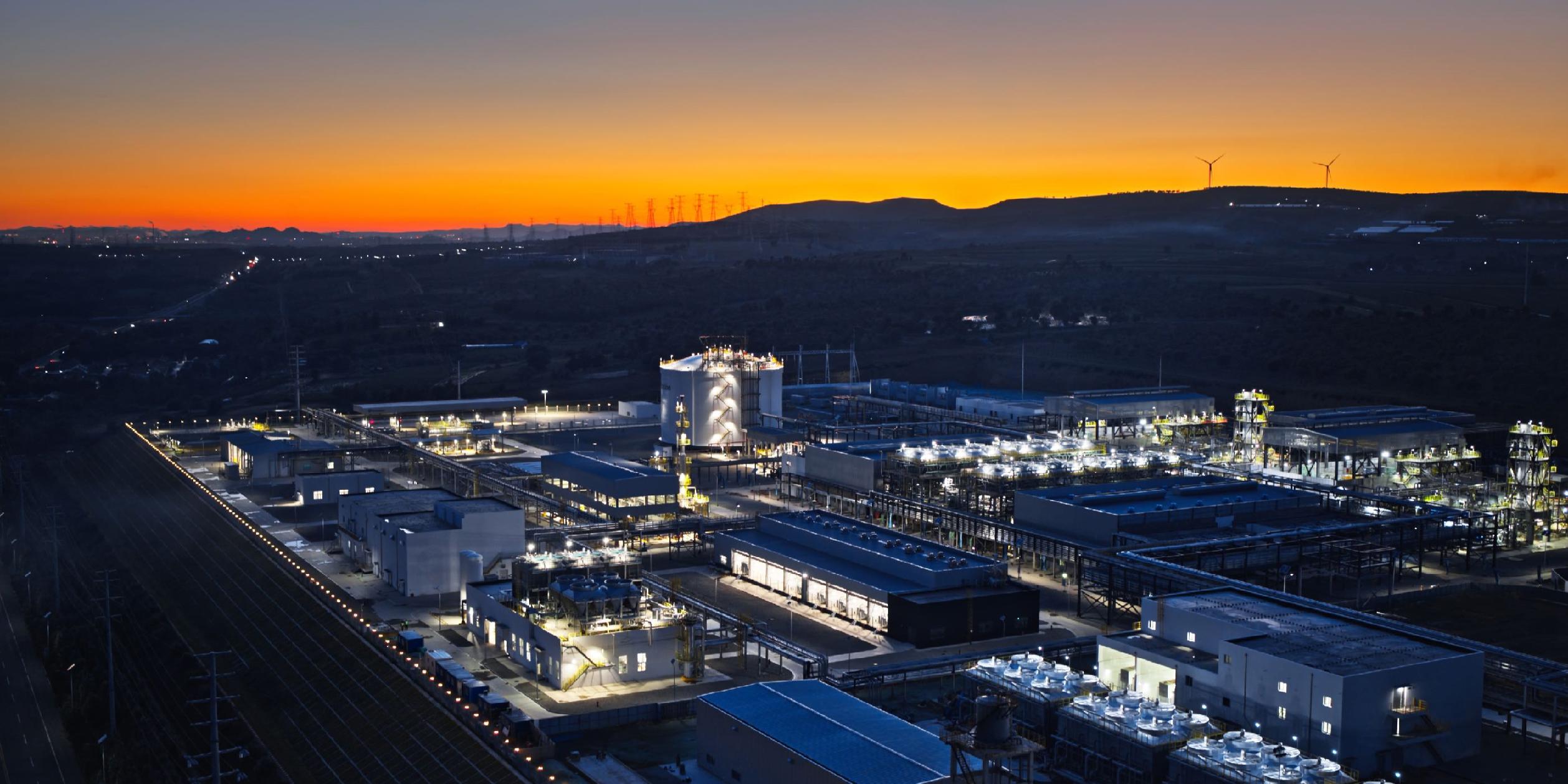
The initial 320000 ton project of the 1.52 million ton green hydrogen ammonia project in the long-term plan has been completed and put into operation. The factory is located in Yuanbaoshan Industrial Park, Chifeng High tech Industrial Development Zone, about 300 kilometers away from the nearest seaport Jinzhou Port and less than 500 kilometers away from the mouth of Bohai Bay. This is the closest clean energy city in Inner Mongolia to the sea.
One of the reasons why Yuanjing chose this location is that the average annual wind speed in Chifeng exceeds 6 meters per second, and the light resources are also among the top in the country. More importantly, this place is close to the port, so green ammonia does not have to bear too high land transportation costs when going out to sea.
But good scenery resources are just the starting point. The real challenge is to make the fluctuating green electricity and the chemical plants that require continuous operation coexist harmoniously. Wind and solar power generation depends on the weather, but when the clouds float over, the power drops by half. Once the synthetic ammonia factory is shut down, the cost of restarting can reach millions of yuan.
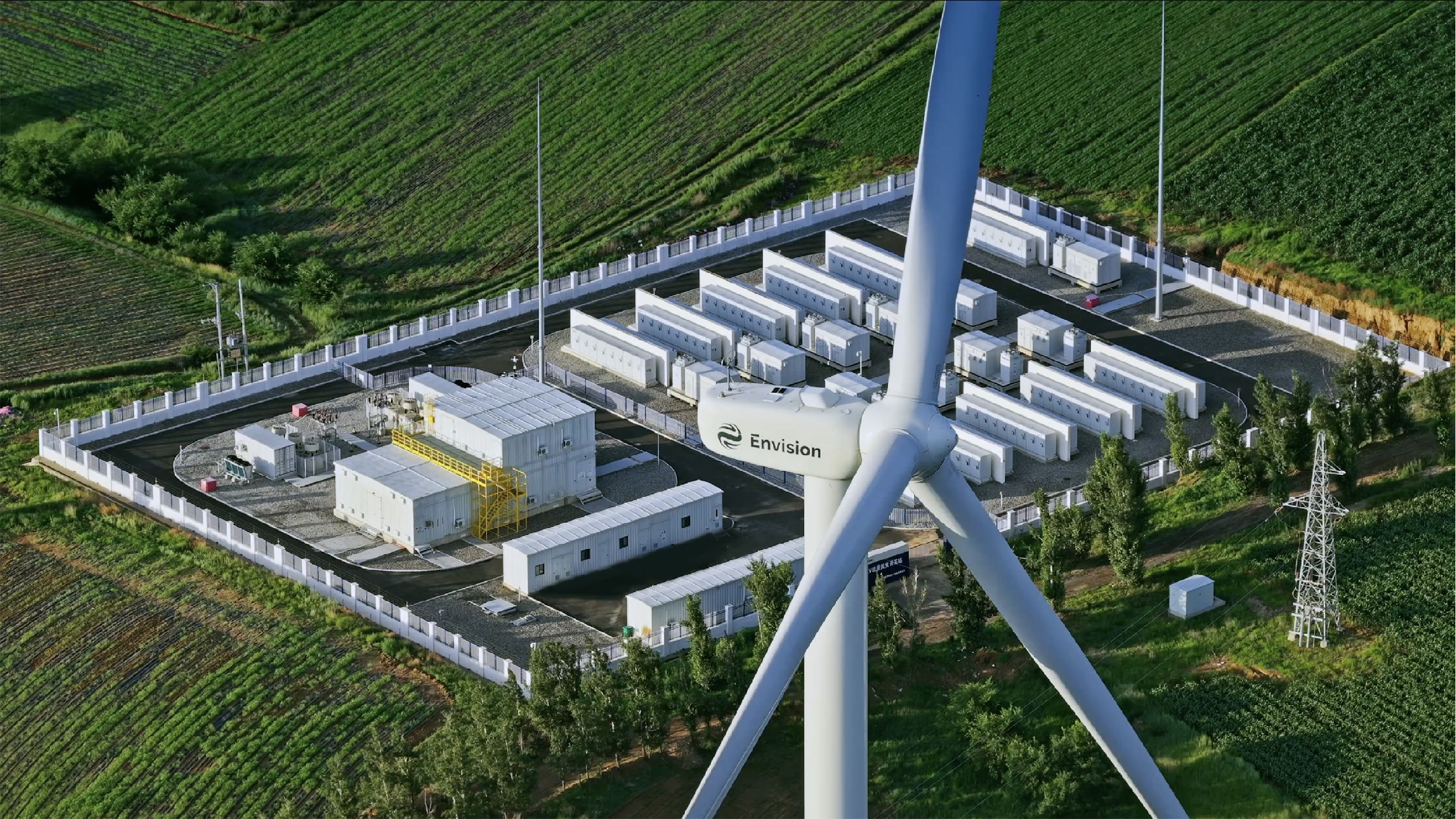
The long-term plan is to independently develop a grid type energy storage system combined with artificial intelligence (AI) power system. According to the official introduction of Yuanjing, they have built a large-scale independent new power system in Chifeng Park. Not relying on the power grid, relying on wind, solar and energy storage for self balancing. The intelligent IoT operating system EnOS predicts wind and solar power output at millisecond speed, while reverse adjusting the electricity load of the electrolytic cell and air separation unit, keeping the power generation end and the power consumption end dynamically matched at all times.
This is equivalent to installing an intelligent brain in the chemical plant. When the wind is strong, it will produce more hydrogen, and when the wind is weak, it will reduce the load. The factory will follow the wind, rather than forcing the wind to follow the factory, "an industry insider familiar with the technical solution of the project told reporters.
In terms of vision, the implementation of this strategy will make the Chifeng factory the world's first "fully dynamic green chemical plant", which can stably produce green liquid ammonia with 100% green electricity under isolated grid operation.
A person in charge of a relevant department of the Inner Mongolia Autonomous Region Energy Bureau told reporters, "In the past, we believed that off grid hydrogen production could only be a small demonstration, but this project has shown us that large-scale off grid hydrogen production does have economic possibilities. This is of great significance for the consumption of new energy in Inner Mongolia
By 2025, the installed capacity of wind and solar power in Inner Mongolia Autonomous Region will exceed 150 million kilowatts, and the problem of wind and solar power curtailment still occurs in some areas. On site consumption of wind and solar power is one of the most urgent needs in the autonomous region.
Who will foot the bill
Technology is working, who will pay for the product? This is the most realistic test for the commercialization of green ammonia.
In late February 2026, according to Farview, the world's first bulk shipment of green ammonia was shipped from Lianyungang, and the buyer was Lotte Precision Chemicals from South Korea. This is a global specialty chemical giant with strict internal standards for raw material carbon footprint.
This batch of goods is not laboratory samples for trial use, but chemical raw materials officially delivered according to international commercial contracts.
Yu Feng, Senior Vice President of Far East Energy, told Economic Observer reporters that the green ammonia products produced by Far East have passed the renewable ammonia certification of France's Bureau Veritas International Inspection Group. The credibility of carbon footprint is the lifeline for green ammonia to enter the international market. If there is no endorsement from international authoritative institutions, the so-called green ammonia is just talking to itself in the eyes of international buyers.
Yuanjing played two cards. In May 2025, the first phase of its Chifeng project obtained the renewable ammonia certification issued by the French Bureau Veritas International Inspection Group; Two months later, we obtained the International Sustainability and Carbon Certification (ISCC) Plus certificate, which comes with greenhouse gas emission targets.
According to Farview, this means that Farview's green ammonia has obtained a "passport" to the international market. In January 2026, the EU Carbon Border Adjustment Mechanism (CBAM) officially entered the substantive implementation stage, and products such as steel, fertilizers, and chemicals imported into the EU are required to pay carbon tariffs based on their carbon emissions. As a zero carbon chemical raw material, the value of the certification system for green ammonia is becoming increasingly prominent.
The person in charge of hydrogen energy business at Farview Energy told reporters that obtaining ISCC certification is not something that can be done with money. The audit team of the international certification body starts tracing from the moment the wind turbine generates electricity, and the carbon emissions of the entire chain must be accurately measured. Data falsification cannot pass the inspection. The person in charge of hydrogen energy business at Farview Energy told reporters that Farview undertook the first practice of the entire green ammonia ISCC certification rules, reviewed key terms such as energy and power sources, carbon emission intensity, project additionality, time and geographical relevance, and ultimately obtained international certification with a lower GHG (greenhouse gas emissions) value.
After obtaining certification, market applications are also following suit. In August 2025, a ship completed the world's first ship to ship green ammonia fuel refueling operation, using fuel produced from the Far East Chifeng project. This refueling has verified the complete chain from "green electricity ammonia production - transportation - refueling - ship operation".
Shipping giants such as Maersk and Dafei have successively ordered ammonia fuel powered ships, and the decarbonization schedule of the International Maritime Organization is forcing ship owners to make fuel choices. According to the forecast of DNV, the annual demand for ammonia fuel in the global shipping industry will reach 250 million tons by 2050.
In September 2025, Mufan Power, invested by Yuanjing Investment, produced the world's first hydrogen ammonia dual fuel gas turbine unit in Chifeng. This equipment is 100% domestically produced and can flexibly switch between hydrogen, ammonia, and natural gas fuels. The annual power generation of a single unit can reach up to 70 million kWh. It enables green ammonia not only to be exported, but also to generate electricity locally, achieving a local cycle of "wind and solar green ammonia zero carbon power".
The emergence of this gas turbine has formed a complete closed loop for the zero carbon industrial park in Chifeng. Ammonia is no longer the end product, but the energy carrier, "commented a chief engineer of a leading domestic energy equipment enterprise.
Computing Power Table
The commercialization story of green ammonia is not yet finished, and Farview has begun to explore a new direction, which is "computer and electronics collaboration".
The long-term plan is to integrate green electricity, green computing power, and green hydrogen energy based on a 2GW (gigawatt) renewable energy power system in Chifeng. According to publicly available information from Farview, the PUE (Power Utilization Efficiency) of its Chifeng Artificial Intelligence Data Center (AIDC) can be controlled within 1.25, while the global average for data centers is around 1.5.
Zhang Jian, Chief Engineer of Farview Hydrogen Energy, explained the logic behind this by relying on Farview AI power system to achieve second level intelligent response for power generation and hydrogen production: the "Tianji" meteorological model predicts wind and solar changes in advance and automatically increases the load of the electrolytic cell before the wind speed increases; The "Tian Shu" energy large-scale model optimizes production scheduling in real time. When there are fluctuations in wind and solar power, the dynamic synthetic ammonia device can also automatically adjust production load based on hydrogen production, ensuring stable and safe load regulation by minimizing hydrogen storage capacity.
"The vision is to use computing power as the regulator and stabilizer of the power system, while using green power to reduce computing costs." An IDC (Internet Data Center) industry practitioner analyzed the reporter, "This logic is completely reasonable in theory, and the key is implementation. By deeply coupling computing power, a load with high reliability requirements, with volatile green power, there are no other mature cases to refer to, which means there is no mature experience to learn from, and the vision needs to step on its own path."
Based on the innovation of physical AI technology and self-developed battery and power electronics full stack, Farview has created a power base for AIDC from the generation end to the consumption end: the grid side achieves flexible allocation through "wind solar distribution and storage+green power direct connection"; On the station side, grid type energy storage is used to smooth load fluctuations; Replace traditional UPS (uninterruptible power supply) with DC energy storage system on the load side to solve the power quality problem of high-density GPU (graphics processing unit) clusters.
This all scenario coverage scheme enables Far sighted AIDC to shift from being "powered" to "actively dispatching", achieving synergy between the power system and computing power system.
If this dual anchor mode runs smoothly, it is expected to significantly alleviate the cost pressure of a single chemical route. The core bottleneck restricting the large-scale replacement of grey hydrogen with green hydrogen is electricity prices. If wind and solar power can only be sold to chemical plants, the investment return of the entire project will be very fragile when the market price of green ammonia is low. The addition of computing power is equivalent to adding a high net worth second buyer to the project who is willing to pay for green premiums and has stable demand.
This has aroused the interest of technology companies such as Tencent. In 2025, Tencent and Yuanjing reached a cooperation agreement to conduct experiments on computing task orchestration in Chifeng. For Internet giants eager to realize their carbon neutral commitment, 100% green power driven computing power can meet the dual needs of business expansion and ESG (environment, society and governance) assessment at the same time.
However, there are differences in the industry regarding whether PUE ≤ 1.25 is considered extreme in off grid green electricity scenarios. ”The above IDC practitioner added, "If the immersed liquid cooling scheme is adopted, the municipal power supply in the first tier cities can also be less than 1.1. Chifeng's advantages lie in good air cooling conditions and long natural cooling time, but it is not the only one in terms of technological progressiveness. I think the real focus of the vision model is not the PUE figure itself, but the synergy of 100% green power supporting computing and sharing the same set of energy system with industrial load. In terms of energy infrastructure, this may be more valuable than specific numbers. ”
Yuanjing also plans to build a larger scale integrated base of "computing power+energy" in Ulanqab, called the "Yuanjing Xinghe Base". Zhang Lei compared it to China's Stargate, but currently there is limited public information and the industry is still monitoring its implementation progress.

Xilinx officially announced that Wanjie has joined the Mercedes Benz and BMW supercharging camp, with over 600 stations directly connected
OPPO Find X10 tops sales on the standard version track

Technology Show | iQOO16 is now available for sale, under the name of Standard Edition, to meet the requirements of Pro Max product strength


 Subscribe