2026-05-30 15:23


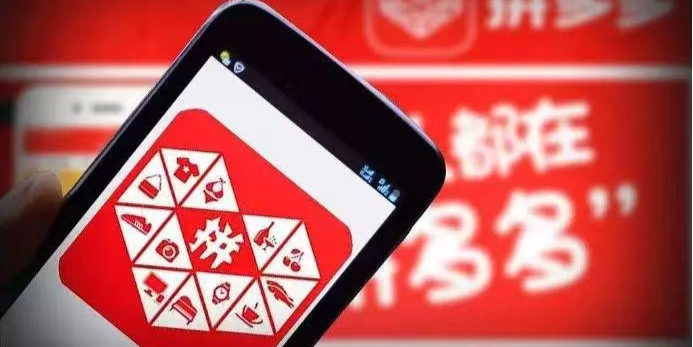
In April 2026, a boss in Guangzhou who operated women's handbag foreign trade logged into Temu's merchant backend as usual, and the system suddenly popped up a "Foreign Trade Comprehensive Service Agreement" waiting to be signed. The contracted party is a company called "Shanghai Xinpinmupudong E-commerce Co., Ltd. This somewhat unfamiliar name is backed by Pinduoduo's billion dollar strategy - the new Pinduoduo.
On May 27th, one month later, Pinduoduo released its first quarter financial report for 2026. Revenue of 106.2 billion yuan, a year-on-year increase of 11%; Net profit was 12.5 billion yuan, a year-on-year decrease of 15%. The management of Pinduoduo explained that the decline in profits was due to the "100 billion support" plan and continuous investment in the heavy warehouse supply chain. And Xin Pinmu is the most core and expensive vanguard in this heavy warehouse battle.
Continuing to heavily warehouse the supply chain will be the company's core strategy for the next decade, "said Zhao Jiazhen, Co CEO of Pinduoduo, during a conference call. The supply chain he referred to is no longer simply a collection of logistics and merchants, but points towards a broader goal: leveraging billions of dollars to transform China's powerful manufacturing capabilities into brand capabilities, and systematically incubating Chinese brands for the global market. This is interpreted by the outside world as Pinduoduo launching a charge towards the "third Pinduoduo" after the domestic main website and cross-border platform Temu.
The charge has been sounded
The new Pinham did not emerge out of nowhere. It is the first substantive carrier of Pinduoduo's "Three Years to Build a Pinduoduo" strategy proposed in December last year. In the first quarter of this year, Xinpinmu Company was officially established in Shanghai, with an initial cash injection of 15 billion yuan and a planned cumulative investment of 100 billion yuan over the next three years.
Unlike the previous light platform models of Pinduoduo and Temu, the new Pinduoduo has chosen a heavy asset path. Its core model is summarized as "platform customization, factory direct supply, and buyout underwriting". This means that the platform's role has completely transformed from a transaction matchmaker to a deeply involved industry operator.
The new Pinham team is already in action. According to media reports, the project is secretly operated by an independent team of about a hundred people, and the vast majority of Pinduoduo and Temu's internal employees are unaware of its progress. One of the team leaders is Beimo (Huaming), who once led the business of Kuaituan. At present, the team has penetrated into major industrial belts across the country and is making efforts in the three core categories of clothing, home furnishings, and outdoor. They are in intensive negotiations with manufacturers of sub categories such as down jackets, assault jackets, and shirts.
According to sources close to Pinduoduo, potential partners include well-known domestic brands such as Bosideng, Yagor, and Camel. Xinpinmu has extremely strict requirements for suppliers: they require complete supply chain and independent design capabilities, overseas OEM experience and relevant export qualifications, and usually mature factories with annual sales of several billion yuan.
Buyout underwriting is the key to attracting mature factories. Xinpinmu promises to prepay a portion of the payment when placing an order, and the annual scale of a single contract can reach tens of millions or even billions of yuan. The platform will design products based on market data and popular trends, providing detailed production guidelines. Factories only need to produce according to standards without bearing any inventory or sales risks.
The first batch of self operated brand products incubated by Xinpinmu are expected to be launched in the US and European markets in the third quarter of 2026, and will not involve domestic sales for the time being.
Zhao Jiazhen also mentioned during the earnings conference call that the New Pinduoduo team is deeply involved in the industry, accelerating the integration of supply chain resources, collaborating with globally renowned IPs for deep co creation, incubating brands for different markets and categories, fully empowering the supply chain to move towards branding, and promoting the value transition of the supply chain system.
He also stated that under the self operated model of the new Pinduoduo brand, the platform directly brings the certainty of sales to the industry chain, giving the manufacturing side the confidence to invest in product research and development and process innovation, significantly reducing trial and error costs and uncertainty in the branding process. By internalizing the risks at the manufacturing end as the responsibility of the platform, the platform empowers the supply chain with certainty and creates a win-win situation for all parties: the manufacturing end breaks away from homogeneous competition and focuses on quality upgrading, while consumers enjoy quality goods at reasonable prices. Pinduoduo will further deepen the foundation of the supply chain and ultimately achieve platform reengineering.
The confidence of Xin Pinmu
Why does Pinduoduo dare to invest billions of dollars in such a heavy adventure at this moment? The answer lies in the backend supply chain capabilities accumulated over the past decade and the front-end market space opened up by Temu overseas.
According to Pinduoduo's first quarter 2026 financial report, transaction service revenue reached 56.3 billion yuan, a year-on-year increase of 20%, surpassing online marketing revenue for the first time and becoming the company's largest source of revenue. Financial reports and analysis generally believe that the strong growth in trading service revenue is mainly due to Temu's global expansion.
According to third-party data, Temu's GMV in the first quarter was between $22.4 billion and $28 billion, a year-on-year increase of approximately 40% to 92%. Goldman Sachs reports that its GMV growth rate remained stable compared to the previous quarter. In terms of users, Temu's business has covered over 120 countries and regions worldwide. As of the end of the first quarter, Temu's global monthly active users (MAUs) have reached approximately 530 million, a year-on-year increase of 42%. Its global cumulative download volume has exceeded 1.2 billion times.
Temu has accumulated hundreds of millions of users worldwide in four years, successfully verifying the ability of China's supply chain to sell globally.
In this environment, the strategic value of Xinpinmu is more prominent. If Temu is solving the problem of "how to sell Chinese goods overseas", New Pinduoduo needs to solve the problem of "how to make Chinese goods sell more expensive", no longer relying on extreme low prices, but on brand premiums.
The coupling of front-end and back-end constitutes the core competitive logic of New Pinduoduo. With the huge global traffic pool of Temu, the self operated brands incubated by New Pinduoduo can directly reach hundreds of millions of active users worldwide without going through a long cold start. As Chen Lei said, he hopes to drive the next stage of growth in global business with tangible supply chain investment.
For Pinduoduo, the formation of the new Pinduoduo model is mainly due to Pinduoduo's over 10 years of deep cultivation and accumulation in the supply chain field.
Since its inception, Pinduoduo has been rooted in industrial belts, from Yiwu small commodities to Guangzhou clothing, from Nantong home textiles to Cixi small home appliances, from Bozhou herbal tea to Cao County Hanfu. Pinduoduo has a deep understanding of the production capacity, cost, and quality of small and medium-sized manufacturing enterprises that cannot be compared to other platforms. A typical portrait of a business in an industrial belt is a small factory with an annual output value of several million to tens of millions of yuan. It has mass production capabilities and cost advantages, but lacks both brand operation and design talent. When all peers are doing the same thing, homogeneous competition becomes the only outcome.
Zhao Jiazhen specifically mentioned at the financial report meeting that years of experience in cultivating industrial belts have shown that many small and medium-sized manufacturing enterprises are limited by talent, information, and scale, and have long been trapped in homogeneous competition, unable to complete the brand transition. What New Pinm needs to do is to use the resources and certainty of the platform to help these factories overcome that hurdle. The platform will set standards, do quality control, and provide sales channels, and the factories only need to achieve the ultimate in production.
The ambition of an online Costco
In March of this year, Duan Yongping, known as the "Chinese Buffett," gave a concise judgment on the new Pinduoduo on Snowball: "This is actually what Costco looks like. Pinduoduo doesn't need to snatch customer business, just support explosive product companies and supervise quality. If an online brand only has around 4000 SKUs, it will be quite impressive in 10 years. "
This sentence points out the ultimate imagination of New Pinham.
Costco's business model has been studied worldwide: with 924 stores worldwide, each maintaining only about 4000 SKUs, a long-term gross profit margin of around 11%, almost only covering operating costs, and the real profit comes from membership fees. Its own brand Kirkland only has about 600 SKUs, but it contributes nearly one-third of the sales, with annual sales exceeding 90 billion US dollars.
The number 4000 SKUs is not just a casual statement. It covers about 80% of the high-frequency consumption needs of a household. The extreme concentration of SKUs means that the purchase volume of individual products is extremely large, and the platform has strong bargaining power. Consumer behavior has shifted from "comparing prices across multiple platforms" to "making decisions within a single system". Costco has verified the feasibility of this road for 43 years.
The logic of Xinpinmu and Costco is similar, but the starting point is completely different. Costco relies on the experience of buyers to select products, while New Pinduoduo relies on massive transaction data from Pinduoduo. The categories with high repurchase rates, specifications that are prone to explosive products, and user price sensitive ranges can all be verified by data. Costco requires users to pay a membership fee before entering the system, while New Pinduoduo relies on hundreds of millions of active users and can directly complete the cold start of new products.
More importantly, Costco adopts a heavy asset buyout model, which requires pre stocking and assuming inventory risks; The new Pinduoduo may move towards a single SKU authorization model, where the platform sets standards, conducts quality supervision and brand endorsement, and production is completed by factories. Each SKU can be evaluated separately and dynamically eliminated, with much greater flexibility than traditional brand systems.
But what Duan Yongping emphasized was not fast, but slow. He said, 'It will be quite impressive in 10 years.'. In the first ten years after the establishment of Costco, it expanded from one store to nearly 200, and the number of members exceeded 10 million. This speed is almost unimaginable in today's Internet world.
For Pinduoduo, the strategic significance of the new Pinduoduo has gone beyond the business level. In December 2025, Pinduoduo will implement the joint chairman system, with Chen Lei and Zhao Jiazhen taking on different responsibilities, and the company's strategic focus will shift towards "heavy warehousing in the Chinese supply chain". In the first quarter of this year, Pinduoduo achieved a revenue of 106.2 billion yuan, an increase of 11% year-on-year, but its net profit decreased by 15% year-on-year to 12.5 billion yuan, marking the second consecutive decline in net profit in the first quarter. After the performance was released, Pinduoduo's US stock fell more than 10% at one point.
Zhao Jiazhen's response to this is: We do not focus on short-term financial performance, but prioritize the healthy development of the platform ecosystem. Chen Lei also stated that no matter what fluctuations or challenges we face in the short term, we will never forget our original intention.
This is related to Pinduoduo's long-term investment in New Pinduoduo. When Internet giants collectively burn money to roll AI, Pinduoduo chooses to invest 100 billion yuan in supply chain branding.
Zhao Jiazhen said a sentence at the financial report conference, perhaps the best footnote to New Pinm: "No matter how innovative the front-end model is, returning to the essence of e-commerce, the competition between different e-commerce platforms or business models ultimately boils down to the competition of underlying supply chain capabilities
If Temu is Pinduoduo's second venture, then New Pinduoduo is its third. The first two startups helped Pinduoduo grow from scratch to a trillion dollar scale. Can we 'create another Pinduoduo' for the third time? Pinduoduo has already revealed its cards, and the next step is to wait for market validation.
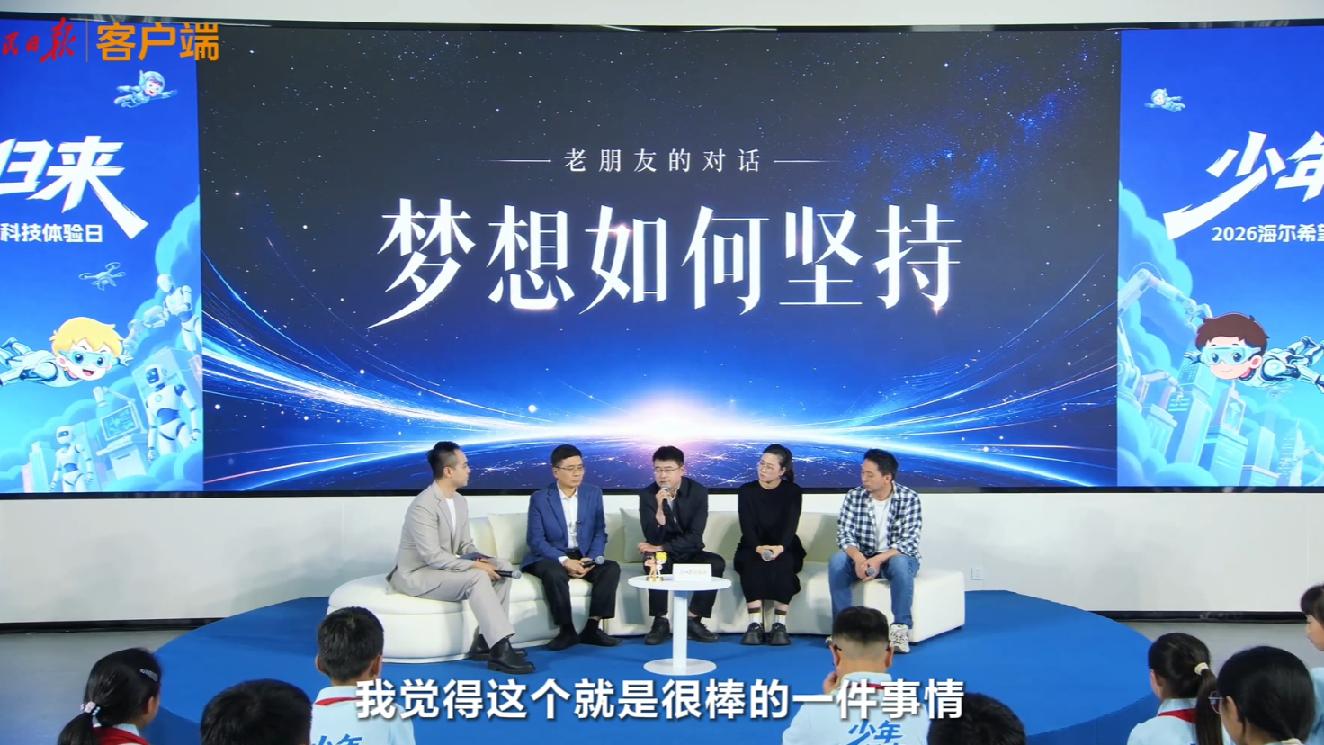
In the live broadcast of the 2026 Haier Hope Primary School Children's Day Science and Technology Experience Day, Mei Feng, Chairman of the China Youth Foundation, praised Haier: cooperating with Haier for public welfare can be divided into three levels: public donation, resource linkage, and value co creation. Haier adheres to long termism and a sense of social responsibility, making public welfare projects more in-depth and effective.

CEO of Bangyao Biotechnology responds: has never been subject to regulatory interviews due to BD
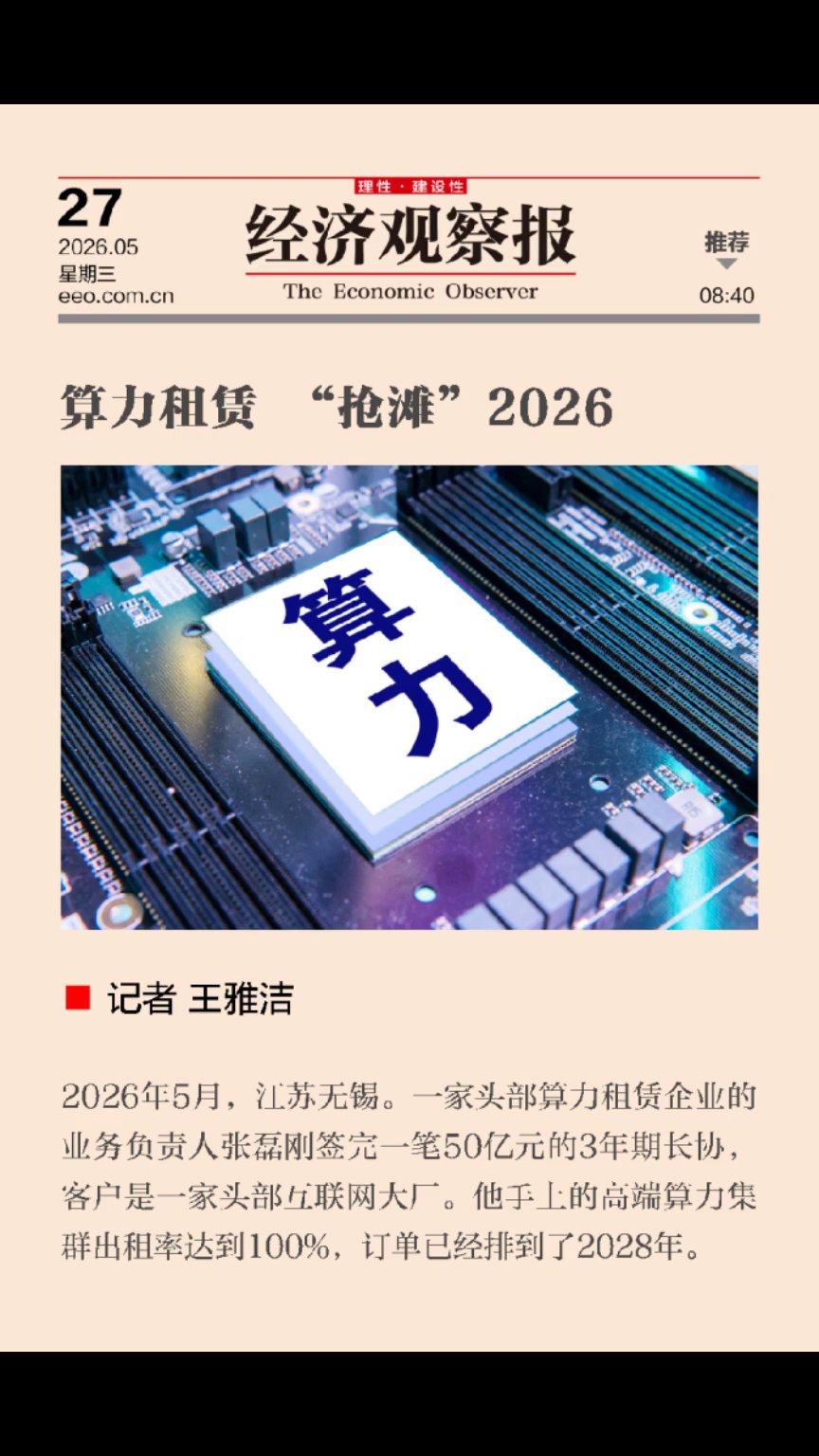
Computing power leasing 'grabbing the beach' in 2026


 WeChat registration or login