Economic Observer Follow
2026-05-29 11:34


Economic Observer reporter Zheng Chenye
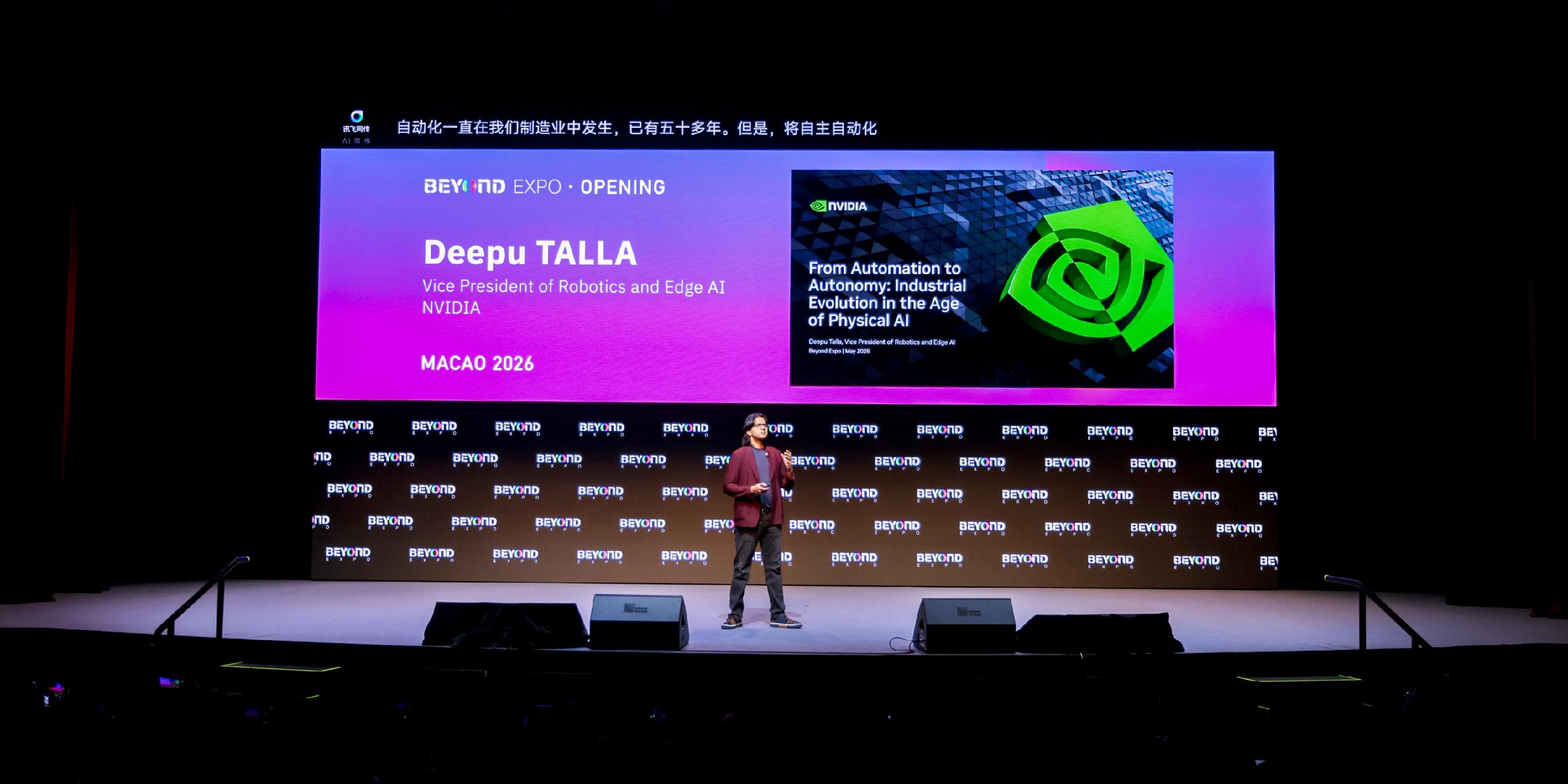
At the opening ceremony of BEYOND Expo 2026, Deepu Talla, Vice President of Robotics and edge computing of Nvidia, talking about the threshold of AI (Artificial Intelligence) from software to hardware, said that in the digital world, the cost of AI mistakes is very low, because a wrongly written email can be rewritten once, and an unsatisfied picture can also be regenerated, but in the physical AI scene of robots and automatic driving, the consequences of mistakes may be very serious: a robot's one capture error may break the product or even cause harm to people, and a autonomous vehicle's one misjudgment may lead to a traffic accident.
Or, in physical AI scenarios, due to the lack of a "human" backstop, the accuracy must be close to 100%. This is also the main reason why AI has made rapid progress in the fields of text, images, and code in the past few years, but its implementation in factories, hospitals, and roads has been much slower than expected.
BEYOND Expo is one of the largest international technology expos in Asia, founded by the Macau Science and Technology Association. It is held annually in Macau and has been held for six consecutive years. This year, nearly 800 companies participated in the exhibition.
The Economic Observer reporter noticed at the exhibition that the categories with the highest exhibition density this year are robots and AI glasses, with over 18 companies participating in humanoid robot related exhibitions and at least 6 companies participating in AI glasses related exhibitions. Over the past year, AI has started to enter hardware devices such as robots and glasses from screens and dialog boxes. However, based on the experience of reporters at the exhibition site, there is still considerable room for improvement in the maturity of most products.
The industry trend is changing, and the flow of capital is also adjusting. Mark Nicholas Cutis, Managing Director of Abu Dhabi Investment Council (ADIC), a Middle Eastern sovereign wealth fund, also said at the opening ceremony of the exhibition that ADIC has sorted out 112 Chinese robotics companies and is selecting 10 of them as investment targets. In addition, Nvidia is also increasing its investment in AI hardware startups and has brought over 50 partners and startups to participate in this exhibition.
The signal is very clear that industry resources that have been highly focused on large models and computing power in the past two years are shifting towards AI hardware.
Robots and AI Glasses
Working 10 hours a day, making hundreds of cups of coffee, each cup taking about 100 seconds, there has not been a single operational error - this task is being completed daily by a humanoid robot in more than 10 provinces and cities across China, including Beijing, Shanghai, Guangdong, and Zhejiang. Moreover, the coffee machine operated by this robot is not customized, and any ordinary commercial coffee machine available online can be used.
The "Aibao Smart Magic Cube" exhibited by Zhifang at the booth is the system that completes the above work. It places a humanoid robot into a standardized service space to make coffee and ice cream for customers face-to-face. Ge Zhenwei, the head of the Zhifang brand, told Economic Observer reporters at the exhibition that the company plans to deploy 1000 Aibao Zhimo cubes nationwide within three years.
In addition to commercial services, Zhifang's robots have also landed in fields such as semiconductor manufacturing, automobile manufacturing, and airport luggage truck recycling, and have reached nearly 500 million yuan in humanoid robot orders with Huike, the world's third-largest panel factory. Zhifang was founded in 2023 and was able to secure orders of this size within three years, which indirectly indicates that the downstream market's demand for humanoid robots is growing rapidly.
AI glasses are another category with high exhibition density at the exhibition. IFlytek, XREAL, and Alibaba Qianwen all exhibited AI glasses at this exhibition. Three years ago, AI glasses were still a niche field, with only Meta and a few startup companies typically participating in international technology exhibitions.
The core reason why glasses can become AI carriers is that they can be placed on the nose bridge 24/7. Due to the continuous acquisition of information seen and heard by the user through the front facing camera and microphone, AI can provide responses directly within the field of view, without the need for the user to reach for their phone or open an app. For scenarios that require real-time assistance such as cross language communication, meeting minutes, and business travel, the interaction mode of AI glasses is more natural than that of mobile phones.
On May 28th, iFlytek globally launched its iFlytek AI glasses at the exhibition site: the whole machine weighs 40 grams, which is about 20% lighter than similar products; Supports real-time translation in 122 languages, with subtitles directly projected onto the lens. At the same time, it is equipped with the "lip motion recognition noise reduction" function, which can capture the speaker's lip movements through the front camera and lock the target sound in a noisy environment with multiple people.
Kong Changqing, Director of the Speech Translation Department at iFlytek Research Institute, told Economic Observer that this technology has improved recognition accuracy by 30% to 40% in noisy scenes.
The reporter saw on site that the AI assistant GlassClaw built into this pair of glasses completed a complete demonstration at the press conference - the wearer used voice commands to ask it to collect exhibition business information, search for cooperation cases across the network, generate cooperation plans, and finally send them to the designated person via email, without using a mobile phone or computer throughout the process. This means that if this ability is stable and reliable in daily use, AI glasses will be upgraded to a portable assistant that can independently perform multi-step tasks.
In response to this, Lin Huijie, General Manager of the Wearable Devices Business Department of iFlytek, stated in an interview with the Economic Observer that the AI glasses category is transitioning from technology enthusiasts to early mass markets, and "there will be an explosion in the next 1 to 2 years".
But XREAL founder Xu Chi's judgment is slightly different. He stated at the opening ceremony of the exhibition that the AI glasses industry is still in its early stages and has not yet ushered in its own "iPhone moment". He also stated that when the iPhone was released in 2007, the rules were written by American companies, and Chinese companies could only watch from a distance; In the field of AI glasses, there are already a large number of Chinese companies deeply involved. XREAL products cover more than 40 countries and regions, with overseas revenue accounting for over 70%. The cooperation with Google in the AR glasses field has been ongoing for over two years.
Alibaba's Qianwen AI glasses are also showcased in the exhibition area. After integrating with the Qianwen model, this pair of glasses does not need to wait for user instructions. AI can perceive the environment and actively push suggestions on its own.
IFlytek glasses are good at language translation, XREAL is good at AR space display, and Qianwen glasses need to be an AI intelligent agent entrance - the three have different main directions, but they are betting on the same thing: the carrier of the next generation AI portable assistant is likely to be a pair of glasses rather than a mobile phone.
Compared to service robots that are already in commercial operation and AI glasses that are about to be launched, humanoid robots have the largest number of spectators at the exhibition, but they are also the farthest away from being widely used in daily life.
Zhang Tao, founder of Purdue Robotics, said at the opening ceremony of the exhibition that the "ChatGPT moment" of embodied intelligence will take at least 3 to 5 years. His logic is that autonomous vehicles can be seen as robots with lower degrees of freedom, and effective algorithms typically require over 10 million hours of real machine data; The degree of freedom of humanoid robots is much higher than that of cars, requiring millions to billions of hours of data accumulation. Most companies are just beginning to build their data systems.
Zhang Tao believes that meeting technical standards is only a necessary condition. In addition, embodied intelligence also requires a product that can be used by ordinary consumers at low cost and without barriers. He gave an example that OpenAI's big model capabilities were already strong before the release of ChatGPT, but it wasn't until it was introduced to the public in the form of chatbots that there was a massive influx of users; Robots also need a similar product form to naturally enter consumers' lives like buying mobile phones or household appliances.
At present, most of the humanoid robots at the exhibition are aimed at industrial scenarios and commercial displays, which is still quite far from this standard.
New Location in Asia
In the era of big models, competition in the AI industry mainly focuses on algorithms and computing power. However, once AI moves from software to hardware, the required industrial capabilities are different: making robots requires precision manufacturing and mature component supply chains, while making AI glasses requires collaboration in optics, acoustics, chips, and lightweight processes.
Semiconductor manufacturing, electronic component supply chain, precision machining, battery technology, these essential industrial links for AI hardware are highly concentrated in China, Japan, and South Korea. Matt White, Global AI Chief Technology Officer of the Linux Foundation, also said at the opening ceremony of the exhibition that there are about 300000 top AI researchers worldwide, of which about half are in China.
BEYOND Expo co-founder He Jiandong also stated that Asia is not only about AI software and model innovation, but also about advanced manufacturing, hardware innovation, and infrastructure. In order for AI to enter the real world, it needs places that can manufacture it. In the era of big models, the competitive advantage lies in the strongest algorithms and computing power, but when AI requires large-scale hardware carriers, the side with manufacturing capabilities and supply chain density will have a greater advantage.
Asia has advantages in manufacturing, but Chinese AI hardware companies still face significant challenges in selling their products globally.
Mark Nicholas Cutis, Managing Director of the Abu Dhabi Investment Council, said at the opening ceremony that when evaluating Chinese robotics companies, his biggest concern is not the technology itself, but whether the founders truly understand business. He believes that Chinese entrepreneurs who have grown up in the highly competitive domestic market have strong competitiveness, but this does not mean that they can directly move their way of doing things in Shenzhen overseas.
Taking Stuttgart, a major hub of the German automotive industry, as an example, he said that it is the headquarters of Mercedes Benz and Porsche, and its business culture is completely different from Shenzhen. In such a market, it is necessary to adjust the pace, respect cultural differences, and establish relationships with local partners.
XREAL founder Xu Chi also stated at the opening ceremony of the exhibition that doing business overseas for Chinese companies is like playing tennis. If you play all three sets at 6-0 and then leave after finishing the beat, the other party will not invite you again in the future. He believes that globalization cannot be a zero sum game, and must be achieved through concessions and synergy, making the other party feel that cooperation is rewarding. He said that XREAL spent three years building localization teams in Silicon Valley, Seoul, and Tokyo, and now global media mentions that XREAL no longer adds the prefix "Chinese". "When a brand is no longer deliberately prefixed with a country, it is truly internationalized.
Zhang Tao from Purdue Robotics believes that in their overseas strategy, companies should prioritize breadth - not by first penetrating the market of a certain country, but by expanding globally through overseas channel partners. Over the years, they will naturally select key markets with fast growth and high profits, and then increase investment. According to its introduction, starting from 2021, the company has established local offices and local employee teams in the United States, Japan, South Korea, Germany and other places.
Zhang Tao also emphasized that attending overseas exhibitions requires going for several consecutive years. If you go this year and don't go next year, customers will suspect that the company has problems. In other words, in the overseas B2B market, trust needs to be exchanged over time.
In addition, in Zhang Tao's view, the survivors of the future robotics industry must also be "hexagonal warriors": hardware ontology, base models, AI intelligent agents, commercialization capabilities, and so on, each of which cannot have any shortcomings.
Regarding the development trend of the robotics industry, Deepu Talla believes that once the issue of "accuracy" is resolved, the speed of scale will be very fast, and in the next 10 to 20 years, there may be tens of billions of robots worldwide.
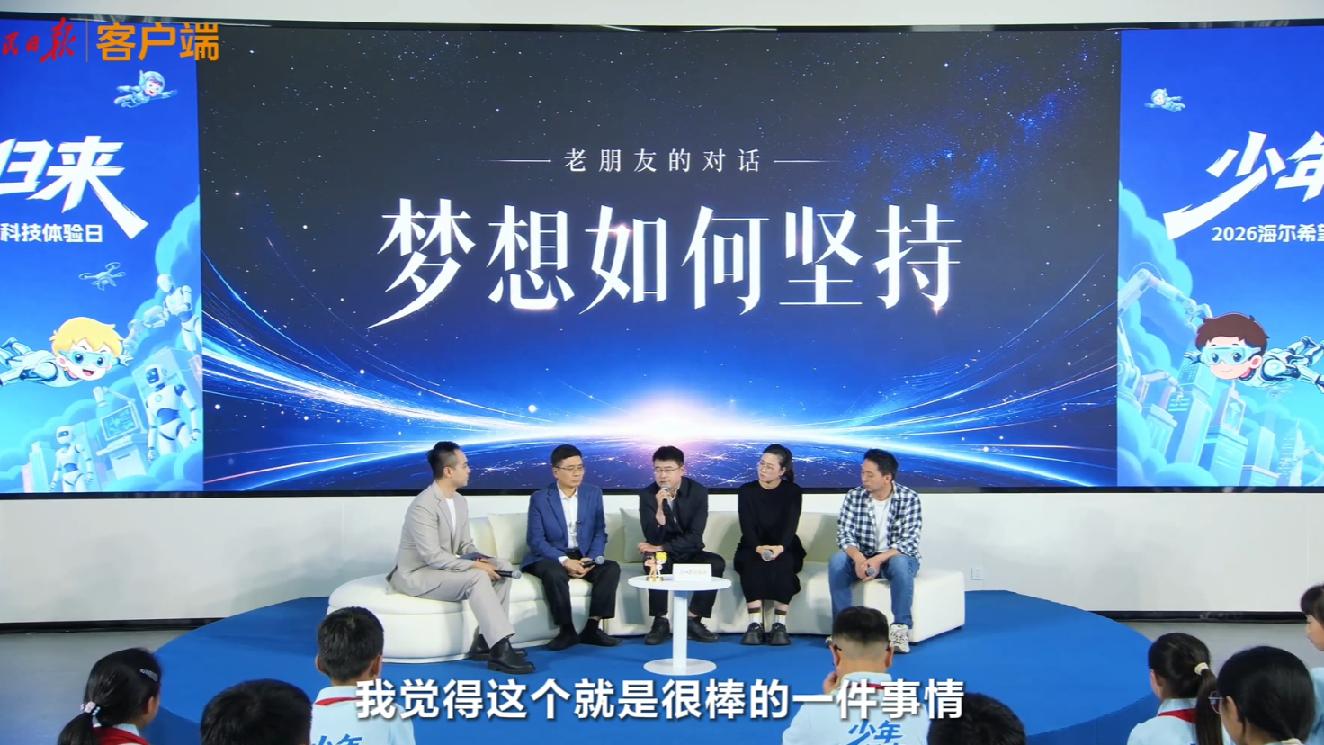
In the live broadcast of the 2026 Haier Hope Primary School Children's Day Science and Technology Experience Day, Mei Feng, Chairman of the China Youth Foundation, praised Haier: cooperating with Haier for public welfare can be divided into three levels: public donation, resource linkage, and value co creation. Haier adheres to long termism and a sense of social responsibility, making public welfare projects more in-depth and effective.

CEO of Bangyao Biotechnology responds: has never been subject to regulatory interviews due to BD
Computing power leasing 'grabbing the beach' in 2026


 WeChat registration or login


 Subscribe